


Is Windhoek, Namibia Safe? A 2026 Travel Safety Guide
Namibia's calm capital, the road-trip gateway to Sossusvlei + Etosha, the South-African-style property-crime context, malaria in the north, and the realistic risks.

Windhoek is one of the safer African capitals for tourists. Crime against visitors is moderate; tourist-area crime is mostly opportunistic property. The realistic risks are the South-African-style property-crime context (smash-and-grab from cars, opportunistic theft), the long-distance road-trip logistics (most visitors fly in + drive south to Sossusvlei or north to Etosha — distances + remote roads are the real story), malaria in the northern Caprivi Strip, and the standard advisories for African self-drive.
Namibia sits at Level 1 on the US State Department's advisory list. UK FCDO is similar. The honest framing: Windhoek is small (~430,000), modern + small-feeling. Christuskirche, the Independence Memorial Museum, Joe's Beer House (the famous restaurant), and the Daan Viljoen game park (30 min) are the visitor anchors. Most visitors spend 1-2 nights then start their Namibian road trip.
| Night safety | 52/100 |
|---|---|
| Scam / petty-crime risk | Medium |
| Violent crime (tourists) | Medium |
| Most common scams | Hosea Kutako Airport taxi quotes; township tour cold pitch; lodge transfer scams |
| Safer neighbourhoods | Eros, Klein Windhoek, Olympia |
| Data sources cited | 4 |
| Last verified |
What the score means — 77/100
- Air quality (88) — clean desert.
- Personal safety (76) — moderate. Tourist neighbourhoods safer than the periphery.
- Healthcare (76) — Mediclinic Windhoek is excellent private; serious cases evacuate to Cape Town or Joburg.
- Transport (76) — sparse; rental car is the standard for tourists.
Areas — Eros, Klein Windhoek, Olympia, CBD
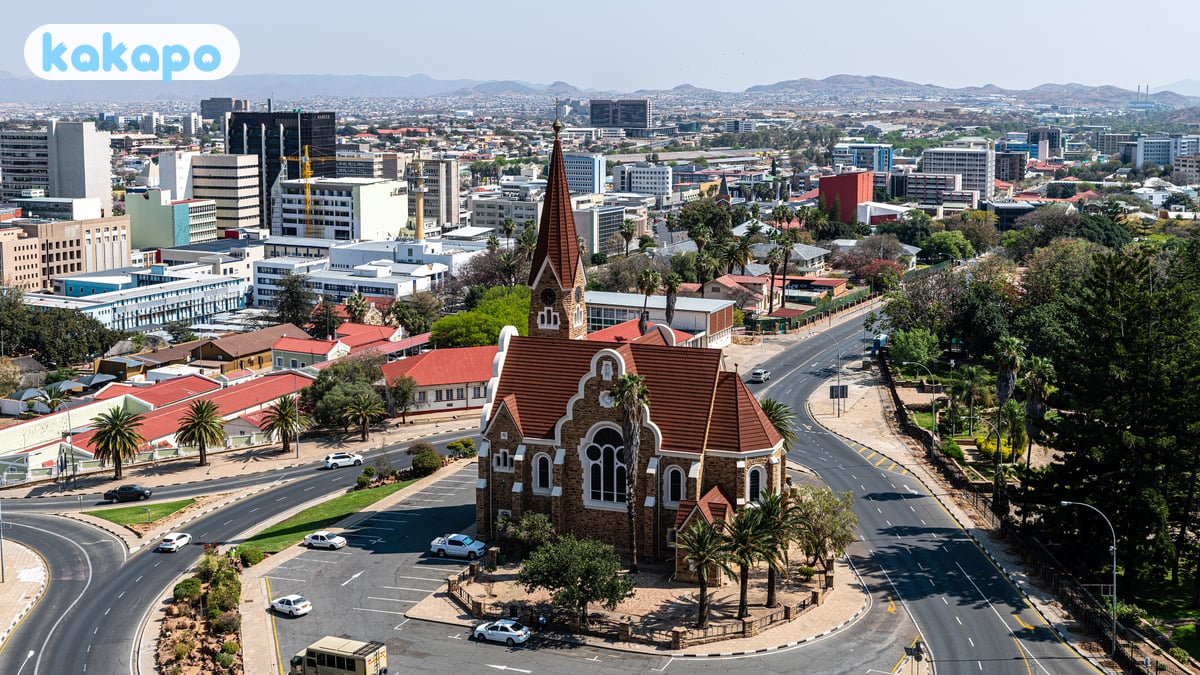
Recommended for visitors: Eros + Klein Windhoek + Olympia (gentrified residential, hotels, restaurants), CBD (daytime — Christuskirche, Independence Avenue), Avis (game-lodge-style on the city outskirts).
Stay aware: Katutura (large former-township; visit only with reputable township-tour operator), some CBD areas at night, around the Hosea Kutako Airport corridor (long lonely highway).
Self-drive road-trip prep
- Most Namibia visits are self-drive: 4WD highly recommended for gravel roads (much of the country).
- Distances: Sossusvlei (Sesriem) is 5h south; Etosha is 5h north; Swakopmund is 4h west.
- Don't drive at night: wildlife on roads + remote breakdowns.
- Refuel often: petrol stations are sparse outside major towns.
- Bring: spare tyre + jack, plenty of water, satellite phone for very remote routes.
- Reputable rental: Asco, Avis, Caprivi Car Hire — confirm tyre + recovery cover.
- Border crossings: simple to South Africa + Botswana; longer to Angola.
Standard southern Africa rules
- Don't walk at night: even in nice areas. Always Uber/registered taxi.
- Smash-and-grab from cars: lock doors; don't leave bags visible.
- Don't display: jewellery, watches, expensive cameras.
- ATMs: inside bank branches/malls only; daytime.
- If carjacked: don't resist; hand over the car.
Malaria + health
- Malaria: present in Caprivi Strip (north-east) + Etosha (seasonally). Antimalarial prophylaxis recommended for those areas.
- Yellow fever vaccination: required if arriving from a yellow-fever country.
- Bug spray: DEET 25-50%.
- Tap water: technically safe in Windhoek; bottled standard.
Self-drive Namibia — what Windhoek is the staging ground for
Most international visitors fly into Windhoek for one reason: to start a self-drive trip through Namibia. Self-drive is the standard tourist mode — the country has the population of Manchester spread over France-sized territory, and most lodges are 200-500 km apart on gravel roads.
- 4x4 vs 2WD: most main attractions (Etosha, Sossusvlei, Swakopmund, Damaraland) need 4x4 with full kit (2 spare tyres, jerry cans, sand traction boards). The major rental brands (Avis, Britz, plus a handful of Namibia specialists) all kit out 4x4 packages for self-drive; compare via the Namibia Tourism Board's licensed-operator list before paying a deposit.
- Rooftop tents: the standard mid-range setup. Easy to deploy, lifts you off the ground. Daily rate $80-150 for the rig.
- Gravel-road driving: most Namibian roads outside cities are graded gravel. Speed cap: 80 km/h. Reduce to 60 in soft sand or washboard. Rollovers from over-correction are the #1 tourist accident.
- Distances: Windhoek-Sossusvlei 350 km (6h). Windhoek-Etosha 480 km (5h on tar). Windhoek-Swakopmund 360 km (4h).
- Fuel: petrol stations 100-250 km apart on main routes. Always fuel when you can; carry 20-40 L spare on remote routes. Cash + card both accepted but card readers fail in remote spots.
- Cell signal: MTC has good coverage in towns and along main roads; non-existent in Skeleton Coast, parts of Kaokoland. Carry a Garmin inReach or similar for off-grid backup.
- Wildlife on the road: don't drive after sunset. Kudu, oryx, warthog crossing the road at speed are the most-reported tourist fatalities.
- Recovery insurance: rental excess is often $2,000-5,000. Many travel insurance policies don't cover gravel-road damage. Buy explicit "windscreen + tyre + recovery" add-on; it's worth it.
Scams — minor by African standards
- Hosea Kutako Airport taxi quotes: drivers approaching arrivals quote NAD 600-1000 for a 45 km ride to Windhoek centre. The official airport-shuttle rate is NAD 250-350. Most reputable car-rental operators include a pickup; otherwise, Bolt operates around Windhoek (limited drivers from airport).
- "Township tour" cold pitch: random men offer "Katutura township tours" outside hostels and lodges. Legitimate operators (Faces of Namibia, Katu Tours) need pre-booking. The cold pitch is usually unlicensed.
- Petrol-station card-skimming: rare but documented at Engen and Caltex stations on the outer Windhoek edge. Pay inside; insist on chip+PIN over swipe.
- Counterfeit NAD notes: the 200-dollar note is the most-faked. Standard Bank, FNB, Bank Windhoek ATMs give clean cash.
- "Lodge transfer" scams: outside the Windhoek tourist office, some operators offer "private transfers" to Sossusvlei lodges at half the price of your booked transfer. Confirm with your lodge before redirecting any payment.
- Currency confusion: Namibian dollar is pegged 1:1 with South African rand. ZAR is accepted everywhere in Namibia; NAD is not always accepted in SA. Don't accumulate NAD cash if you're crossing into SA after.
Transport — Hosea Kutako Airport
- Hosea Kutako International Airport (WDH): 45 km east of city — long drive on the B6.
- Pre-booked transfer: NAD 400-700 ($25-40).
- Eros Airport: small in-city airport for charter flights to Sossusvlei + Etosha.
- Bolt + Yango: limited driver pool in Windhoek.
- Walking: CBD walkable in daytime.
Money + cost
- Currency: Namibian dollar (NAD); 1:1 pegged to South African rand. ZAR widely accepted.
- Cards: universal in Windhoek.
- Tipping: 10%; safari guides $10-20/day.
- Cost: hotels NAD 1,200-3,000/night; safari lodges much more.
- Tap water: safe in Windhoek.
Practical info — emergency numbers
- Police: 10111.
- Ambulance: 211 (E-Med Rescue).
- Mediclinic Windhoek: +264 61 433 1000.
- Roadside assistance (E-Med): 211.
Bring: a Namibian SIM (MTC, Telecom Namibia), USD/EUR cash backup, contactless card, travel insurance with full medical + medical-evacuation cover. Drive in daytime only; refuel often.
Frequently asked questions
Is Windhoek safe to visit in 2026?
Yes — Windhoek scores 78/100 and is one of the safer African capitals for tourists. Namibia sits at US State Department Level 1 (the lowest advisory tier) and UK FCDO is similar. Compared to Johannesburg or Nairobi, Windhoek is a different operating reality: small (~430,000), modern, with a much milder property-crime baseline than its southern-African neighbours. The realistic risks are South-African-style: smash-and-grab from cars, opportunistic theft, ATM-vicinity awareness, and the standard 'don't walk at night even in nice areas' rule. Most visitors spend 1-2 nights then leave on a self-drive road trip — Windhoek is the staging ground, not the destination.
Is Windhoek safe at night and which areas should I stay in?
Yes in the recommended areas, less so on the periphery. Eros, Klein Windhoek, and Olympia are the gentrified residential bases — hotels (Hilton, Avani, Galton House), restaurants, and walking-distance street life that's safe into the evening. The CBD around Independence Avenue and Christuskirche is fine in daytime but uncomfortable after dark — visible homelessness and occasional aggressive begging. Katutura, the large former-township, should only be visited with a reputable township-tour operator (Faces of Namibia, Katu Tours) in daytime. The Hosea Kutako Airport corridor is a long lonely 45 km highway; pre-book transfers rather than walking off the airport rank cold. Don't walk anywhere at night — Uber, Bolt, or a registered taxi every time.
What scams should I watch for in Windhoek?
Most patterns are inherited from the South-African operating manual. Hosea Kutako Airport taxi quotes of N$600-1,000 for a 45 km transfer (the real rate is N$250-350 — book through your rental car or hotel). 'Township tour' cold pitches outside hostels by random men — legitimate operators need pre-booking. Petrol-station card-skimming on Engen and Caltex stations on the outer Windhoek edge (pay inside, insist on chip+PIN over swipe). 'Lodge transfer' scams outside the tourist office offering half-price private transfers to Sossusvlei — confirm with your booked lodge before redirecting any payment. Counterfeit N$200 notes — Standard Bank, FNB, Bank Windhoek ATMs give clean cash.
Can you drink tap water in Windhoek?
Yes — Windhoek tap water is safe and famously well-treated. Namibia's NamWater operates the Goreangab Water Reclamation Plant, which has been producing potable drinking water from a combination of dam and recycled water since 1968 — Windhoek was one of the first cities in the world to do direct potable water reuse. The water tastes fine. Bottled is the cultural default at restaurants but not necessary for safety. The bigger water-related issue is dehydration on the self-drive trips into the desert — carry 4-6 L per person per day in the Sossusvlei and Etosha areas, refill at lodges, don't trust borehole water from random farm taps.
How does Namibian currency work and what's the deal with the South African Rand?
The Namibian dollar (NAD or N$) is pegged 1:1 to the South African rand (ZAR), and ZAR is accepted everywhere in Namibia as if it were local currency. NAD, however, is NOT widely accepted in South Africa — don't accumulate NAD cash if you're crossing into SA after your Namibia trip. ATMs at Standard Bank, FNB, and Bank Windhoek give clean N$ cash and most accept foreign cards; cards work universally in Windhoek itself. The self-drive route is where cash matters: petrol stations 100-250 km apart accept cards but readers fail in remote spots, so carry N$2,000-4,000 in small notes per week of road-trip travel. Decline DCC at terminals (always pay in N$, not your home currency).
Sources
Run a business in Windhoek?
Show visitors your Windhoek business is a safe choice. The free Verified by Kakapo badge puts Windhoek's live safety score on your website, links back to your verified page, and updates itself. No cost.
Get the free badge →