


Is Strasbourg, France Safe? A 2026 Travel Safety Guide
Strasbourg is one of France's safer big cities. The honest concerns: Christmas market security and crowds, La Petite France cobbles, tram navigation, and crossing into Germany.

Strasbourg is one of France's safer mid-sized cities. Crime is moderate, the tram network is excellent, and the historic core is protected by pedestrianisation. The realistic concerns are seasonal — the Christmas market in December brings 4 million visitors and an enhanced-security perimeter (pedestrian barriers, bag checks) since the 2018 attack — and the slippery cobbles of La Petite France in winter rain.
France sits at Level 2 on the US State Department advisory (terrorism, baseline). UK FCDO is similar. The Vigipirate plan is at "urgence attentat" nationally — visible armed police is normal, especially around the Cathédrale, Place Kléber, and the European Parliament during plenary weeks.
Strasbourg is mid-sized (~290,000 residents). The Cathédrale Notre-Dame, La Petite France, the Grande Île (UNESCO), the European Parliament district, and Christmas market month are the defining experiences. The German border is 4 km away — Kehl is a tram ride.
Strasbourg sits in the Alsace region at the confluence of the Ill and Rhine rivers, and its identity is layered French-and-German — annexed by Germany 1871-1918, restored to France, occupied 1940-1944, restored again. The Alsatian language (a German dialect) survives among older speakers; the architecture is half-timbered Germanic; the cuisine is choucroute and flammekueche; the wine is Riesling and Gewürztraminer. It is one of the official seats of the European Union — the European Parliament holds its monthly plenary sessions here (Strasbourg, not Brussels), as does the Council of Europe and the European Court of Human Rights. During plenary weeks, the city sees 6,000+ MEPs, staff, and journalists, and hotel prices spike.
The 2026 details worth knowing in advance: the CTS tram network (6 lines) accepts contactless tap-on-board at €1.90/single (no need for paper tickets); €4.60 buys a 24-hour pass. The Christmas market security perimeter (introduced after the December 2018 attack at Rue des Orfèvres) continues to apply — controlled entry points with bag checks at Place Broglie, Place de la Cathédrale, Place Kléber, Place du Marché-aux-Poissons, and Place Gutenberg. Tram D runs across the Pont de l'Europe to Kehl in 15 minutes, free movement in Schengen with carry-your-passport spot checks. The Crit'Air sticker (~€3 from certificat-air.gouv.fr) is mandatory if driving in.
| Solo female safety | 86/100 |
|---|---|
| Night safety | 67/100 |
| Scam / petty-crime risk | Medium |
| Violent crime (tourists) | Low |
| Most common scams | pickpockets at the Cathédrale Notre-Dame; pickpockets in the cathedral square; tourist-priced restaurants in La Petite France |
| Safer neighbourhoods | La Krutenau, Place Kléber, European Quarter |
| Data sources cited | 4 |
| Last verified |
What the score means — 85/100
- Transport (90) — six-line tram network, walkable, well-lit at night.
- Healthcare (88) — Hôpitaux Universitaires de Strasbourg (Hautepierre) is a major university hospital.
- Personal safety (86) — high; pickpocketing and bike theft are the main concerns.
- Air quality (82) — middle of the Rhine valley; winter inversions push particulate up; cycle infrastructure helps.
Christmas market — late November to December 24
- Dates: late Nov to Dec 24 (Strasbourg ends earlier than most French markets).
- Volume: ~4 million visitors over a month. Place Broglie (the original 1570 market), Place de la Cathédrale, Place Kléber (the giant tree), Place du Marché-aux-Poissons, the village across at Place Gutenberg.
- Security perimeter: pedestrian-only zone with controlled entry points (bag checks). Set up after the December 2018 attack at Rue des Orfèvres.
- Crowd density: shoulder-to-shoulder Sat-Sun afternoons + 6-9pm. Pickpockets work the crush — front pocket, bag in front.
- Vin chaud (mulled wine): €3-4 in returnable cup. Watch the alcohol — pavement gets icy and the queues thin slowly.
- Hotel prices: 2-3× normal. Cross to Kehl (Germany) for cheaper, 15 min by tram D.
La Petite France — cobbles, canals, half-timbered houses
- La Petite France: the medieval tanners' quarter on islands in the Ill river. The most photographed area.
- Cobbles: irregular granite, very slippery when wet (Strasbourg gets ~115 rain days/year). Sturdy shoes with grip.
- Canal-side fences: low or absent in places. Watch children and inebriated friends.
- Boat tours: Batorama from Palais Rohan, €15. The covered boats are fine in any weather; open boats only in summer.
- Tourist-priced restaurants: the streets directly facing the canals are 30-40% more expensive than equivalent food a few streets back.
Trams, cobbles, and the cyclist city
- Trams: 6 lines. €1.90 single, €4.60 24-hour. Tap-on, validate.
- Tram tracks + bikes: a real injury source. Cyclists' tyres get caught in tram-rail grooves and they fall. Cross tracks at 90°.
- Pedestrians and trams: trams move quietly. They have right of way. Look both ways even on what looks like a footpath.
- Cycling: Strasbourg has the densest cycle network in France — 600+ km. Vélhop public bikes from €1/hour.
- Bike theft: high. Use the bike's own lock + a second D-lock for anything left more than 30 min.
The German border — Kehl is a tram ride
- Tram D crosses the Pont de l'Europe to Kehl in 15 min. Free movement (Schengen) — no passport check normally.
- Spot checks: French/German police occasionally random-check at the bridge. Carry ID.
- Pre-paid French SIMs: roam free in EU including Germany; American/UK roaming may add charges.
- Currency: euros both sides. No conversion needed.
- Cheaper Germany: groceries, hotels, petrol. Many Strasbourgeois shop in Kehl on Saturdays.
- Driving across: ULEZ-equivalent (Crit'Air) sticker required to drive in Strasbourg. Order ahead — ~€3 from certificat-air.gouv.fr.
Cathédrale Notre-Dame and Place Kléber
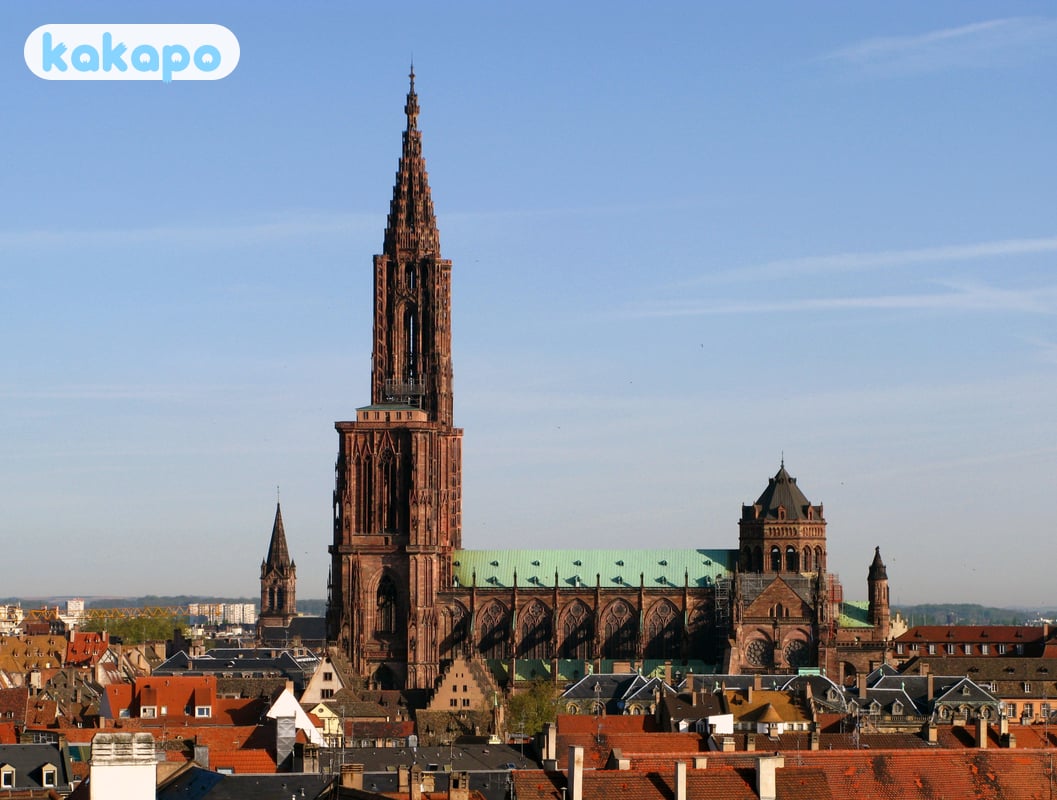
- Cathedral: free entry; the platform/tower is €8 and 332 steps. Astronomical clock 12:30pm daily (€5 ticket sold same morning).
- Pickpockets: the cathedral square + interior is a known pickpocket spot during high season + Christmas.
- Place Kléber: the central square. Free wifi, big tree at Christmas, summer concerts. Safe at all hours.
- Solo women: Strasbourg is comfortable solo at any hour in the centre.
- Late-night neighbourhoods: Krutenau (south of Petite France) is the bar/student area, lively + safe.
Rhine floods, river quays, weather extremes
- Rhine floods: the Ill (city river) and the Rhine flood occasionally; January-March highest risk. Modern dykes hold; the riverside cycle paths can close for days.
- Heatwaves: summer 35°C+ stretches getting longer. Limited AC in older hotels — confirm before booking.
- Tick-borne disease: TBE (encephalitis) is endemic in Alsace forests. If you're hiking the Vosges, repellent + check yourself.
- Pollen: high in spring along the Rhine.
- Best months: May-June, September-October, plus the Christmas market if you want the experience.
Neighbourhood-by-neighbourhood breakdown
- La Petite France — the medieval tanners' quarter on islands in the Ill river, with the four covered bridges (Ponts Couverts), the Barrage Vauban dam-and-viewpoint, and the half-timbered postcard scenes. The most-photographed area; canal-facing restaurants run 30-40% above equivalents two streets back. Cobbles are slippery in wet weather (~115 rain days/year); canal-side fences are low or absent in places.
- Grande Île (UNESCO) — the entire historic centre of Strasbourg is on the Grande Île, encircled by the Ill. UNESCO World Heritage since 1988 (extended in 2017 to include the Neustadt). Pedestrianised core; trams cross the edges.
- La Krutenau — the student bar quarter south of Petite France, on the south bank of the Ill. Cheap-to-mid restaurants, late-night bars, lively until 2am. Where Strasbourg students drink. Comfortable for solo women.
- European Quarter (Quartier Européen) — north-east of the centre on the Ill's outer bend. European Parliament (the Louise Weiss building with the dramatic curved-glass facade), Council of Europe, European Court of Human Rights. Tours possible when Parliament is not in session. Hotel prices spike during plenary weeks.
- Cathédrale Notre-Dame — the 142 m Gothic spire (single-spire because the south tower was never built), the astronomical clock that performs at 12:30 daily (€5 ticket sold the same morning), and the cathedral square. Pickpockets work the cathedral interior and square during high season and Christmas market. Tower-platform access €8, 332 steps.
- Tram network — six lines covering the city and suburbs. €1.90 single, €4.60 24-hour pass, contactless tap-on. Trams run quietly and have right of way — look both ways even on what looks like a footpath. The D line is the famous one — crosses to Kehl, Germany.
- Kehl, Germany — 15 min by tram — Tram D crosses the Pont de l'Europe to Kehl in 15 minutes. Free movement (Schengen) with occasional spot checks (carry ID). Groceries, hotels, petrol cheaper in Germany; many Strasbourgeois shop Saturday in Kehl. Currency euro both sides.
- EU Parliament context — Strasbourg is one of three official seats of the European Parliament (Brussels and Luxembourg are the others). Monthly plenary weeks bring 6,000+ MEPs, staff, and journalists; hotel prices spike. The "two-seat" arrangement is a long-running EU political compromise.
- Place Kléber + the Christmas market core — the central square with the giant tree at Christmas, the Place Broglie (the original 1570 Christmas market site), Place de la Cathédrale, Place du Marché-aux-Poissons, and Place Gutenberg. The market footprint sits inside a hardened security perimeter (controlled entry, bag checks) introduced after the December 2018 attack.
- Cycling — Strasbourg has the densest cycle network in France (600+ km). Vélhop public bikes from €1/hour. Bike theft is high — use the bike's own lock + a second D-lock for anything left more than 30 min. Tram-rail bike falls (tyres caught in the groove) are an injury source; cross tracks at 90°.
- Stay aware — Strasbourg has no specific tourist no-go zones. The area around the train station thins after midnight but isn't unsafe. The Neuhof outer suburb has higher reported crime but no tourist relevance.
If it's your first time visiting
- Best arrival: TGV from Paris Gare de l'Est to Strasbourg in 1h45m for ~€30-100 advance — the right answer. From Frankfurt, ICE/TGV in 2h with a change at Karlsruhe. Strasbourg Airport (SXB) handles regional flights but has limited international connections; most international visitors fly via Paris CDG or Frankfurt. Driving requires the Crit'Air sticker (~€3 from certificat-air.gouv.fr) to enter Strasbourg's Clean Air Zone.
- CTS tram + bike system: 6 tram lines accept contactless tap-on at €1.90/single, €4.60 for 24 hours. Vélhop public bikes from €1/hour — use the bike's own lock + a second D-lock if leaving for more than 30 min (bike theft is high). Cross tram tracks at 90° to avoid bike-tyre falls.
- Best neighbourhood for your first night: within the Grande Île for walking-distance to everything. Hotel Cour du Corbeau (in a 16th-century courtyard, €180-300), Hôtel Cathédrale (Place de la Cathédrale, €150-250), Hôtel des Rohan (€120-200). Avoid booking near the European Parliament unless you're attending — it's a 25-min tram from the centre.
- Christmas market planning — the market runs late November to December 24 (Strasbourg ends earlier than most French markets). ~4 million visitors over a month. Hardened pedestrian perimeter with bag checks since the December 2018 attack at Rue des Orfèvres. Saturday-Sunday 6-9pm is shoulder-to-shoulder; weekday mornings before 11am are calm. Hotel prices triple — cross to Kehl by Tram D (15 min) for half-price German rooms.
- Pickpocket discipline: phone and wallet in front pocket; bag in front in the Christmas market crush at Place Broglie and Place de la Cathédrale. Inside the cathedral too. The market draws ~4 million visitors — wallets get lifted from back pockets and open totes.
- Petite France footing: granite cobbles get glassy in Strasbourg's ~115 annual rain days. Sturdy shoes with grip. Canal-side fences are low or absent — watch your footing after a few glasses of Alsace Riesling.
- Food anchors: Maison Kammerzell (the iconic 1467 half-timbered restaurant on the cathedral square, choucroute €25-30), Au Crocodile (Michelin-starred, €80-150), La Vignette (winstub-style Alsatian, €25-40), Le Tire Bouchon (winstub classic). Try choucroute garnie (sauerkraut with sausages), flammekueche (Alsatian thin-crust pizza), bretzel, and Alsace Riesling/Gewürztraminer wines. Tarte flambée is the local pizza equivalent.
- Cycling tour — the 600+ km cycle network is genuinely useful. Velhop bikes plus a self-guided route covers Petite France, the European Quarter, the Orangerie park, and the Rhine river-edge in a leisurely 3-4 hour loop.
- Currency + cards: euro. Cards universal; contactless everywhere. Always pay in EUR on terminals (DCC adds 5-10%). Tipping is rounding-up (5-10% if service was good). Kehl prices in Germany are euro too — no currency conversion needed across the border.
- Common rookie mistakes: showing up to the Christmas market without realising the security perimeter (allow 15-20 min queues to enter on December weekends); booking centre hotels in November-December without realising the 2-3× price spike; not crossing to Kehl for cheaper hotels; cycling without crossing tram tracks at 90° (the groove catches tyres); driving in without the Crit'Air sticker (~€68 fine); confusing the Strasbourg airport (small, regional) with Frankfurt/CDG for international arrivals; underestimating Petite France cobble slippage in rain.
Practical info — emergency numbers
- European emergency: 112.
- Police: 17.
- SAMU (medical): 15.
- Hôpital de Hautepierre: +33 3 88 12 80 00.
Bring: a rain shell, sturdy shoes with grip, a contactless card (Apple Pay/Google Pay accepted nearly everywhere), warm layers Nov-Mar, and an EHIC/GHIC for healthcare.
Frequently asked questions
Is Strasbourg safe to visit in 2026?
Yes — Strasbourg is one of France's safer mid-sized cities, scoring 86/100 here. France sits at US State Department Level 2 (exercise increased caution) and UK FCDO flags terrorism only as a baseline national risk. The Vigipirate plan is at 'urgence attentat', so armed police around the Cathédrale, Place Kléber and the European Parliament during plenary weeks is normal, not a sign of acute threat. Violent crime is low; pickpocketing and bike theft are the main day-to-day issues. The Christmas market has run a hardened pedestrian perimeter with bag checks since the December 2018 Rue des Orfèvres attack.
Is Strasbourg safe at night?
Yes, the Grande Île and Krutenau (the student bar quarter south of Petite France) are comfortable at any hour, and the six-line tram network is well-lit and patrolled. The cobbles of La Petite France are the real night hazard — granite setts get glassy in Strasbourg's ~115 annual rain days, and canal-side fences are low or absent in places, so watch your footing after a few glasses of Alsace wine. Trams run quietly and have right of way; don't step onto what looks like a footpath without checking both directions. Solo walking home from Place Kléber to a Grande Île hotel is routine.
Is Strasbourg safe for solo female travellers?
Very. The Grande Île is pedestrianised, small enough to walk end-to-end in 20 minutes, and busy until midnight in summer and through the Christmas market. Krutenau and the cathedral area are the standard solo evenings out. The defining annoyances are pickpockets working the cathedral square interior and the Christmas market crush — keep your phone out of back pockets and your bag in front in the Place Broglie / Place de la Cathédrale crowd. Trams are safe late; the D line to Kehl runs into the evening. No specific harassment pattern stands out versus other French cities.
Can you drink tap water in Strasbourg?
Yes. Strasbourg tap water is drawn from the Rhine alluvial aquifer, tightly monitored, and fine to drink everywhere in the city and in Kehl across the border. Restaurants will bring a free carafe d'eau on request — you don't need to buy bottled. Public drinking fountains run in the warm months around Place Kléber and the parks. Hardness is moderate so kettles scale a little but there's no taste issue. The only practical exception is the older fountains in Petite France that are decorative rather than potable — they're signed 'eau non potable' if so.
What's the biggest scam to avoid in Strasbourg?
Pickpocketing in the Christmas market crush and inside the cathedral, not con scams. The market draws ~4 million visitors over a month and the Saturday-Sunday 6-9pm density on Place Broglie and Place de la Cathédrale is shoulder-to-shoulder — wallets, phones and passports get lifted from back pockets and open totes. The secondary trap is canal-facing restaurants in Petite France, which run 30-40% above equivalent food a few streets back without any quality bump. Tram-rail bike falls (tyres caught in the groove) are an injury source rather than a scam, but cross tracks at 90°.
How heavy is Christmas market security and is it still worth going?
Yes, it's worth it, but plan around the perimeter. Since the December 2018 attack, the entire market footprint — Place Broglie (the original 1570 market), Place de la Cathédrale, Place Kléber with the giant tree, Place du Marché-aux-Poissons and Place Gutenberg — sits inside a pedestrian-only zone with controlled entry points and bag checks. Queues to enter on December weekends can run 15-20 minutes; weekday mornings before 11am are calm. Hotels in the centre run 2-3× normal rates in December — tram D to Kehl in Germany is 15 minutes and rooms there are half the price.
Sources
Run a business in Strasbourg?
Show visitors your Strasbourg business is a safe choice. The free Verified by Kakapo badge puts Strasbourg's live safety score on your website, links back to your verified page, and updates itself. No cost.
Get the free badge →