


Paris Métro Pickpocket Scams 2026: Lines & Stations
The exact lines, stations, and choreographed patterns that the Préfecture de Police flags every quarter — and what to do once a hand is in your pocket.

Pickpocketing is the single most common crime reported by tourists in Paris, and the Métro accounts for the largest single share of those reports. The single most useful fact: it's not random. The Préfecture de Police's quarterly tourism-crime briefings consistently flag the same five lines, same seven stations, and same handful of choreographed techniques — and once you know the pattern, the risk drops sharply.
The Paris Métro carries ~4.1 million passengers a day across 16 lines and 308 stations. Single-ticket fare is €2.15 in 2026 (paper t+ tickets discontinued in 2024; replaced by Navigo Easy contactless card or contactless bank card). The RATP's own crime data, published annually, shows pickpocketing concentrated almost entirely on the seven tourist-circuit stations and the four lines linking them.
The pattern matters: Paris pickpockets are organised, choreographed, frequently underage (so prosecution is light), and work in teams of 3-5. They're not opportunists. They board specific trains at specific stations, work specific moves, and exit at specific stations. The defence is almost entirely about understanding the choreography.
| Night safety | 68/100 |
|---|---|
| Scam / petty-crime risk | High |
| Violent crime (tourists) | Low |
| Most common scams | pickpocketing on the Paris Métro; petition-signature scam at Trocadéro; ring-find scam near the Eiffel Tower |
| Safer neighbourhoods | Montmartre |
| Data sources cited | 4 |
| Last verified |
The five most-targeted Métro lines in 2026
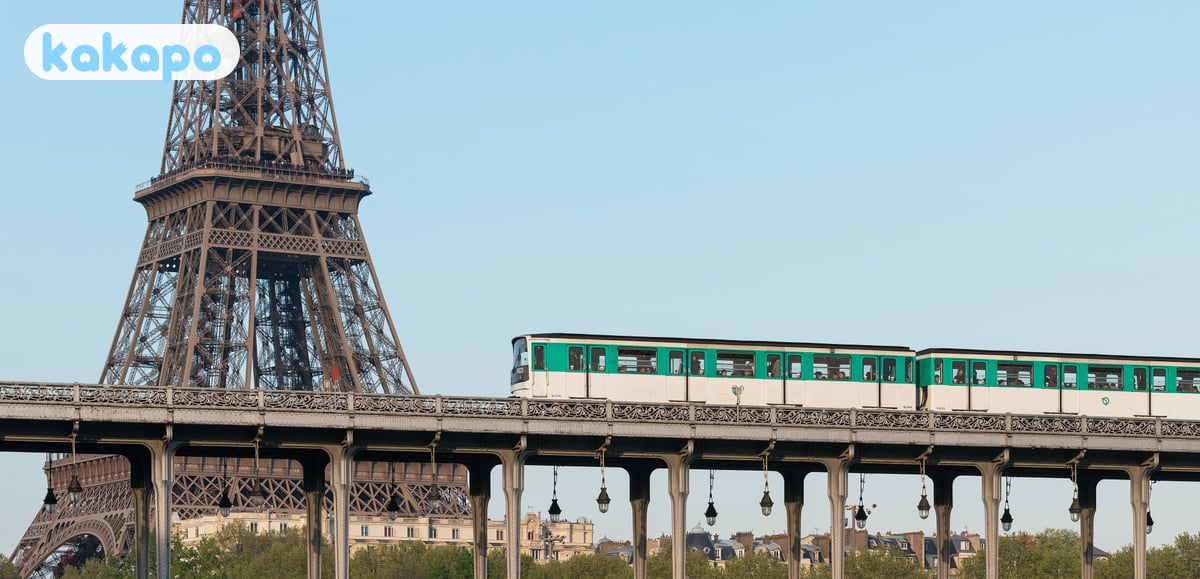
- Line 1 (yellow) — the tourist artery: La Défense → Champs-Élysées → Concorde → Louvre-Rivoli → Hôtel de Ville → Bastille. The single most pickpocketed line. Peak risk between Charles de Gaulle-Étoile and Bastille.
- Line 4 (purple) — Gare du Nord → Châtelet → Saint-Michel-Notre-Dame → Montparnasse. The north-south spine; high pickpocketing density particularly between Gare du Nord and Châtelet.
- Line 2 (blue) — Anvers (Sacré-Cœur), Pigalle, Barbès-Rochechouart, Nation. Concentrated risk around the Montmartre stops.
- Line 6 (light green) — Trocadéro (Eiffel Tower viewpoint), Bir-Hakeim. Hits the Eiffel Tower tourist circuit.
- RER B (blue) — Charles de Gaulle Airport → Gare du Nord → Châtelet-Les Halles → Saint-Michel → Denfert-Rochereau. The first train tourists ride from CDG; this is where many pickpocketing incidents happen because tourists are jet-lagged, luggaged, and standing in doorways.
The seven highest-risk stations
- Châtelet / Châtelet-Les Halles — Europe's largest underground interchange. The labyrinthine passages between RER A, RER B, RER D and Métro lines 1, 4, 7, 11, 14 are pickpocket teams' favourite environment: tourists confused, frequently checking phones for directions, easy to bump in narrow corridors.
- Gare du Nord — Eurostar arrivals + RER B from CDG. Pickpocket teams meet new arrivals at the platform exits; the long underground passage to the Métro is a known hot-spot.
- Saint-Michel-Notre-Dame — Notre-Dame / Latin Quarter tourist mass. Pickpocket teams ride between here and Châtelet on Line 4 / RER B.
- Concorde, Tuileries, Louvre-Rivoli — Louvre area, Line 1. Peak tourist density, peak risk.
- Charles de Gaulle-Étoile — Arc de Triomphe and Champs-Élysées. Pickpockets work the long passage between the Métro Line 1, Line 2, Line 6 platforms and the RER A.
- Trocadéro — the Eiffel Tower photo-stop. Both surface and underground.
- Anvers, Barbès-Rochechouart — the Sacré-Cœur entry stations.
The choreographed techniques
- The gate-bump (most common): two team members tail you to a ticket barrier. One pushes past on your right just as you tap your Navigo; the second is on your left, hand into the unzipped pocket of your day-bag, and exits behind a turning train.
- The door-rush: you stand near a train door. Two team members board behind you, sandwich you. As the doors close, one steps off — with your wallet — leaving you on a departing train.
- The petition-signature: at surface entrances to stations (especially Trocadéro, Sacré-Cœur, Eiffel Tower) — a young woman approaches with a clipboard ("do you speak English? Sign for the deaf?"). While you read, a team-mate reaches into your bag.
- The ring-find: a person near you "finds" a gold-coloured ring on the platform floor, offers it to you, asks for €20-50 for "good luck". The ring is brass. While you discuss, an accomplice works your bag.
- The escalator-pause: in long station corridors (Châtelet, Saint-Lazare), the first team-member stops suddenly on a moving walkway / escalator. The bumping behind you is the cover for the lift.
- The map-show: a group of teenagers spreads a large Métro map at chest height in front of you, asking for help. Hands underneath the map work pockets.
What actually defends you
- Bag worn front, hand on top: this single move stops 80% of attempts. Pickpockets target distracted, back-faced bags; a hand-on-bag tourist gets walked past.
- Front-pocket phone, front-pocket wallet: your phone is the highest-value target (~€800 resale for a current iPhone) and the easiest grab from a back pocket or a half-open jacket pocket. Front trouser pocket, hand resting near it.
- Refuse all clipboard, ring, and map approaches: keep walking, "non merci", do not engage. Genuine charities do not fundraise on Métro platforms.
- Stand back from doors if you can; if you can't, hold your bag across your chest.
- Don't film on the platform: phone-out-of-pocket for filming is the highest-risk moment. Lift snatchers ride Line 1 and Line 6 specifically for this.
- Watch for the "huddle": 3-5 teenagers loitering near a turnstile, on a platform, in a passage. Not always pickpockets but the bias is heavy enough that the move is to walk past.
If you're pickpocketed
- On the platform: there is almost always an RATP agent in a glass kiosk; shout to them and they will radio the station police. A pickpocket who is still on the platform can sometimes be intercepted at the next exit.
- The phone is gone: it's likely already at Stalingrad or Pigalle being passed up the chain. Apple Find My / Android Find My Device will show the route but will not recover the phone. Report the IMEI to the police anyway for insurance.
- Plainte (police report): you have 24 hours to file at any commissariat. The "Pré-Plainte en Ligne" portal allows pre-filing online to speed up the in-person visit. English-speaking duty officers exist at the 1er, 18e, and Gare du Nord commissariats.
- Card cancellation: your home bank's 24/7 line. Most cards are stopped within 10-15 minutes; fraudulent charges before the call are usually reimbursed.
- Lost passport: your embassy; emergency travel documents take 24-48 hours. UK 01 44 51 31 00; US 01 43 12 22 22; Australia 01 40 59 33 00.
- Insurance receipts: ask for a copy of the plainte (récépissé de dépôt de plainte) at the commissariat — insurers require it.
Frequently asked questions
Which Paris Métro line has the most pickpockets in 2026?
Line 1 (yellow) — the tourist artery from La Défense through Champs-Élysées, Concorde, Louvre to Bastille. Line 4 (purple) and RER B (from CDG airport) are the next two. The Préfecture de Police's quarterly briefings have flagged these same lines consistently since 2019.
Which Métro stations should I be most careful at?
Châtelet / Châtelet-Les Halles is the highest-risk station — Europe's largest underground interchange, with long confusing corridors that pickpocket teams favour. Gare du Nord, Saint-Michel-Notre-Dame, Concorde, Charles de Gaulle-Étoile, Trocadéro, and the Sacré-Cœur stops (Anvers, Barbès-Rochechouart) round out the top seven.
What is the 'petition-signature' scam?
A young woman approaches with a clipboard, asking 'do you speak English? Sign for the deaf children?'. While you read the petition, an accomplice reaches into your bag from behind. It's run at the surface entrances to Trocadéro, the Eiffel Tower, and around Sacré-Cœur. There are no real charities collecting signatures on Métro platforms — refuse all approaches.
How do I avoid being pickpocketed on the Paris Métro?
Bag worn on your front with a hand on top — this alone defeats most attempts. Phone and wallet in front trouser pockets, not back pockets or jacket pockets. Refuse all clipboard, ring-find, and map-out approaches. Stand back from train doors. Don't film with your phone out on the platform. Watch for huddles of 3-5 teenagers.
What do I do if my phone is stolen on the Métro?
Shout for the RATP agent on the platform (always a glass kiosk). Use Find My / Find My Device to lock the phone remotely — recovery is unlikely but the device can be bricked. File a plainte at any commissariat within 24 hours; pre-file online at pre-plainte-en-ligne.gouv.fr to speed up. Cancel any cards stored in the phone immediately.
Is the RER B from CDG airport safe?
Yes for the journey itself, but pickpocketing on the RER B between CDG and central Paris is well-documented — jet-lagged tourists with luggage standing near doors are prime targets. Keep your bag in front of you, your phone and wallet in front pockets, and your luggage between your knees rather than in the door area.
Are children pickpocketing on the Paris Métro?
Yes — a significant share of organised Métro pickpocketing in Paris is carried out by minors, partly because French juvenile-justice processing is light. Teams of 3-5 children/teenagers working a single carriage is a known pattern; the choreography is the same as adult teams. Treat clusters of unaccompanied teenagers near the turnstiles or train doors as a signal to move.
Sources
Run a business in Paris Métro?
Show visitors your Paris Métro business is a safe choice. The free Verified by Kakapo badge puts Paris Métro's live safety score on your website, links back to your verified page, and updates itself. No cost.
Get the free badge →