


Is Seminyak (Bali), Indonesia Safe? A 2026 Travel Safety Guide
Motorbike crashes, drink-spiking and methanol at clubs, beach rip currents, the digital-nomad scene, traffic, and the realities of Bali's upscale beach district.

Seminyak — population ~5,000 (residential) plus a fluctuating 30,000+ tourists at peak — is Bali's upscale beach-and-club district, 7 km north of Kuta and 14 km north of Denpasar Airport. It's where international visitors who want the Bali beach scene without Kuta's full backpacker-bar intensity end up. Crime against tourists is generally low compared to Kuta; the area is well-policed; English support is universal.
The honest concerns are the standard Bali ones, intensified at Seminyak by the upscale-club density. Motorbike crashes are the #1 Bali tourist medical event island-wide — Seminyak's narrow scooter-snarled streets and the rural roads to Canggu have the same risks. Drink-spiking has been documented at Seminyak clubs (Mrs Sippy, La Favela, Potato Head Beach Club have all had reports over the years); methanol-tainted spirits remain a Bali-wide risk (the November 2024 Vang Vieng cluster killed 6 — Bali had its own historic 2009 cluster killing 4, and lower-key reports continue). Beach rip currents at Seminyak Beach (and Petitenget south, Double Six north) are documented; the open Indian Ocean swell is real. The digital-nomad social scene at Canggu (10 km north) attracts a transient expat population with associated drug-and-incident pattern. The standard Bali fake-police, jet-ski-scam, dengue, motorbike-licence issues all apply.
The US State Department lists Indonesia at Level 2; UK FCDO has no specific Seminyak advisories but warns about scooter accidents, drink-spiking, methanol. Both note the standard tropical-disease and natural-disaster context.
| Night safety | 65/100 |
|---|---|
| Scam / petty-crime risk | Medium |
| Violent crime (tourists) | Low |
| Most common scams | fake police shake-down on Sunset Road |
| Safer neighbourhoods | Seminyak, Canggu |
| Data sources cited | 4 |
| Last verified |
What the score means — 80/100
- Personal safety (80) — moderate-high. Scams and drink-spiking pull the score; violent crime against tourists is rare.
- Transport (64) — Ngurah Rai International Airport (DPS, 14 km south); Grab and Gojek; chaotic motorbike traffic; no urban rail; private driver hire common.
- Healthcare (84) — BIMC Hospital Kuta and BIMC Nusa Dua (international standard); Siloam Hospitals Bali; serious cases medevac to Singapore (90 min flight).
- Air quality (80) — moderate; traffic-emissions; coastal location helps; less polluted than Denpasar.
Motorbike crashes — the #1 Bali tourist injury
- The numbers: Bali Police record ~3,000 motorbike crash injuries to foreign tourists per year. Seminyak streets at the chaotic end.
- Why crashes happen: inexperienced riders; left-side driving (Indonesia drives on the LEFT, opposite to Europe and Americas); unfamiliar small-engine semi-automatic scooters; pothole-and-sand-on-corners; rain making roads slippery; no helmet; no protective clothing.
- Legal requirement: International Driving Permit (1968 Vienna — most countries' 1949 IDP technically not valid here, though enforcement variable) endorsed for motorcycles + your home licence. Police checkpoints at tourist areas do check.
- Insurance: most travel insurance voids motorbike claims without licence + correct IDP. Confirm policy text BEFORE renting.
- Helmets: legally required; Bali police enforce, with on-the-spot fines (often negotiable).
- If you crash: BIMC Hospital Kuta (5 km south of Seminyak) handles tourist orthopaedics; serious cases medevac to Singapore.
- Don't ride: at night, in rain, after any alcohol, without proper protective clothing.
- Alternatives: Grab/Gojek (cheap; avoid surge), private driver hire ($30-60/day for full-day with vehicle).
Drink-spiking and methanol at Seminyak clubs
- Drink-spiking pattern: documented at Seminyak's club venues (rotating list — Mrs Sippy, La Favela, Potato Head, La Plancha have had historic reports). Sedatives (GHB, Rohypnol) plus alcohol; victims wake robbed, sometimes worse. Standard precautions.
- Defences: don't accept open drinks from strangers; never leave drinks unattended; go in pairs/groups; spike-detection wristbands (Drink-Wise) available at some Bali pharmacies.
- Methanol poisoning: Bali's own historic 2009 cluster killed 4 tourists; the November 2024 Vang Vieng (Laos) cluster killed 6 backpackers. Methanol is colourless and tastes similar to ethanol; symptoms (vision changes, breathing difficulty) appear 12-72 hours after consumption.
- Defences against methanol: stick to bottled beer (Bintang, locally brewed) at reputable bars; avoid free shots; if drinking spirits, only sealed-bottle products at upscale venues; absolutely avoid backpacker-bar arak shots.
- If you suspect methanol exposure: get to BIMC immediately — antidote (fomepizole or ethanol-based) is time-critical; 12-hour delay can mean blindness or death.
- Drugs: Indonesia has the death penalty for drug trafficking; severe penalties for possession. The 2002, 2005 Bali Nine cases reminded everyone. Don't bring or buy.
- Magic mushrooms: openly served at some Seminyak/Canggu venues but illegal; police occasionally enforce against tourists.
Beach rip currents at Seminyak/Double Six/Petitenget
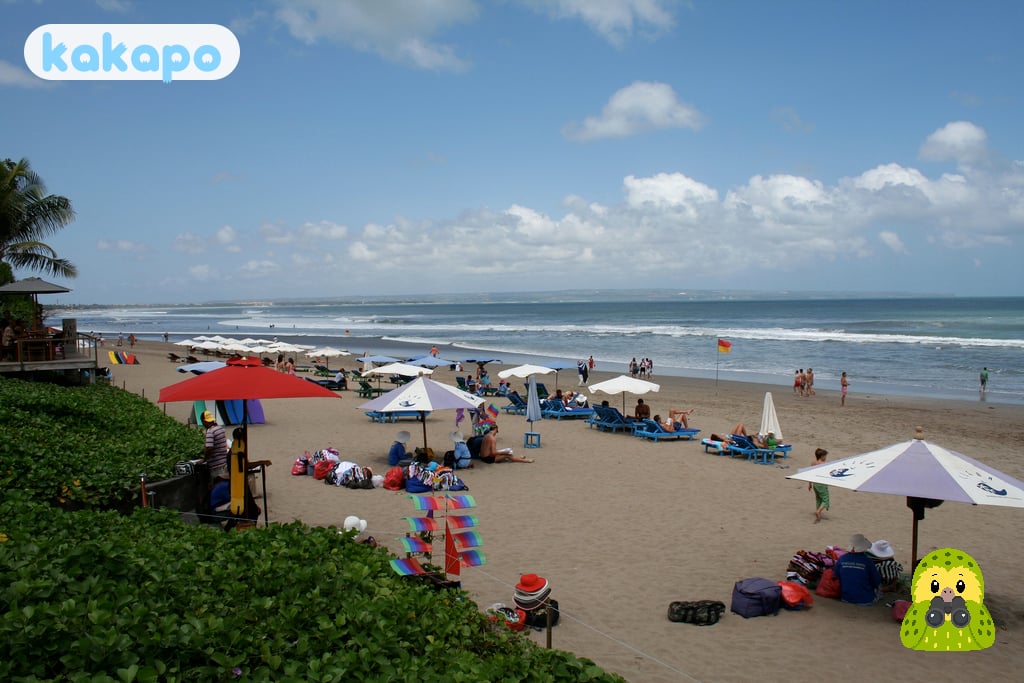
- The geography: Seminyak Beach faces the open Indian Ocean; full ocean swell; consistent surf. Beautiful for surfing and sunsets; dangerous for inexperienced swimmers.
- Rip currents: documented at Seminyak Beach, Double Six (north), Petitenget (south). Rips form between sandbars; pull swimmers seaward fast.
- Lifeguards: Bali Surf Life Saving (BLS) patrols main Seminyak/Kuta beach areas in season; flags marked daily. Outside flagged areas no patrol.
- Drownings: 5-10 tourist drownings per year on Bali; many at Seminyak/Canggu/Kuta beach belt.
- If caught in a rip: don't fight the seaward pull (it will exhaust you in 1-2 minutes). Float, raise arm to signal, swim parallel to the beach until the current releases.
- Surfing: Seminyak has decent intermediate breaks; many surf schools (Rip Curl School of Surf, Pro Surf School Bali). Reef cuts and reef-shoe needs apply.
- Box jellyfish: occasional reports in Bali waters but not the lethal Australian variety; bluebottle stings common.
- Sunset crowds: La Plancha, Ku De Ta, Potato Head — beach clubs with sunset cocktails; pickpocket precautions in crowds.
The 'fake police' shake-down and other Bali scams
- The pattern: a uniformed officer (sometimes genuinely badged, sometimes fake) pulls over a foreign motorbike rider on a quiet road; cites a "violation"; demands "fine" in cash IDR 200,000-2,000,000 ($15-130).
- Where: Sunset Road (the main Kuta-Seminyak axis), the road to Canggu, the road to Ubud.
- Defences: have your IDP and home licence ready; helmet on always; refuse to pay any "fine" without official ticket and station-based payment; ask to be taken to the police station to pay (this usually ends the encounter).
- Currency-exchange scam: "no commission" exchange booths in Seminyak short-change with sleight-of-hand. Use PT Central Kuta Money Changer or Pringgodani (reputable chains with visible counters).
- Taxi metre scams: "broken meter — fixed price IDR 250,000 to airport" is the classic. Use Grab or Bluebird/Silver Bird taxis only.
- Jet-ski scam: less prevalent in Seminyak (more at Tanjung Benoa) but happens; never hand over passport; document jet-ski before paddling out.
- "Donation" temple-area scam: at Tanah Lot or Uluwatu, "guide" demands IDR 100,000+ "temple donation" beyond actual ticket. Pay only at official ticket counter.
The Canggu digital-nomad context
- Canggu: 10 km north of Seminyak; in the past decade has become a global digital-nomad hub (coworking spaces — Dojo Bali, Outpost; surf-and-yoga lifestyle; long-term expat community).
- Implications for visitors: large transient foreign population; some venues feel more like Brooklyn than Bali; rapid construction has reshaped the area.
- Drug culture: Canggu has a documented party-and-drug scene (cocaine, MDMA, ketamine, psilocybin); Bali Police periodically raid; foreigners caught face severe Indonesian narcotics law (death penalty for trafficking, life for possession).
- Housing rentals: Bali's rental market for digital nomads has produced friction with Balinese communities; some areas have "no foreigner rental" pushback.
- Indonesia's 2024 KUHP: criminalised cohabitation outside marriage and extramarital sex; takes effect 2026 (3-year transition). Foreigners technically affected but enforcement against tourists very rare; hotels haven't refused unmarried couples.
- Modesty in non-resort areas: bikinis fine on Seminyak/Canggu beaches; modest dress (covered shoulders/knees) in nearby Balinese villages and at temples.
- Religious processions: occasional road closures for ceremonies; respectful patience.
Areas — Seminyak, Petitenget, Canggu, Kuta
Recommended bases: Seminyak central (Eat Street / Jl Kayu Aya) — boutique hotels (W Bali, Anantara, Alila, The Legian), high-end beach clubs walking distance. Petitenget (north of Seminyak) — quieter; villa rentals; near Tanah Lot day-trip. Canggu (10 km north) — digital-nomad scene, surf, yoga, beach clubs (Finns Beach Club). Kuta (south of Seminyak) — backpacker-bar district; loud; cheaper; Bali Bombing Memorial.
Stay aware: Sunset Road late at night — fake-police checkpoints. Seminyak/Kuta clubs late-night — drink-spiking precautions.
There are no genuinely dangerous neighbourhoods in Seminyak.
Money, food, emergency numbers
- Currency: Indonesian rupiah (IDR). $1 ≈ IDR 16,000.
- Cards: hotels and chains yes; markets and small restaurants cash. ATMs at BCA, Mandiri.
- Tipping: not traditional but increasingly expected at upscale restaurants; round up; tip private drivers and guides IDR 50,000-100,000/day.
- Food: Balinese (babi guling, nasi campur, satay lilit); upscale international (Sarong, Mama San, Métis, Da Maria); beach-club food (Potato Head, Ku De Ta). Bali "belly" GI illness affects 30-50% in first week — bottled water; busy stalls; antibiotic ointment for cuts.
- Tap water: not drinkable. Bottled universal.
- Visa: e-VOA at DPS for most Western nationalities, $35 for 30 days extendable.
- Heat / UV: 26-32°C with humidity year-round; SPF50+; reef-safe at marine areas.
- Nyepi (Day of Silence): usually March; entire Bali shuts down for 24 hours including airport; check dates.
- Emergency: 112 (universal); 110 (police); 113 (fire); 118/119 (ambulance); Tourist Police +62 361 224 111.
- Hospitals: BIMC Kuta (+62 361 761 263); Kasih Ibu (+62 361 300 3030); Siloam Bali (+62 361 779 900).
- SIM: Telkomsel (best), XL, Indosat at any Indomaret (cheaper than airport).
Frequently asked questions
Is Seminyak safe to visit in 2026?
Yes — Seminyak scores 76/100 here. The US State Department lists Indonesia at Level 2 ('exercise increased caution') and UK FCDO has a similar advisory; the main reasons are the broader Indonesia security context (volcanic eruptions on Java, occasional terrorism, the 2002 and 2005 Bali bombings remembered annually) rather than tourist crime in Bali. Seminyak itself is the upmarket-resort strip — calm, walkable along Jalan Kayu Aya/Petitenget, with a strong I Gusti Ngurah Rai International Airport security perimeter. The realistic risks: scooter accidents (the #1 cause of foreign-tourist hospitalisation in Bali), rip currents at Seminyak Beach, dengue (year-round), the methanol-poisoning risk from cheap bootleg arak, and the broader Bali drug-law severity.
Is Seminyak safe at night?
Yes — Seminyak's bar and restaurant strip (Ku De Ta, Potato Head Beach Club, La Plancha, the Jl. Kayu Aya strip) stays busy until 02:00-03:00 and is well-policed by the Tourist Police (Pol-PP) and resort security. Use Grab or Gojek rather than walking long distances after dark; the side streets connecting beach to Jl. Petitenget are unlit and have occasional motorcycle phone-snatch incidents. Avoid the methanol-bootleg arak drinks (several fatalities most years); stick to imported spirits at licensed venues. Indonesia's drug laws are extreme — even small recreational amounts carry serious prison sentences.
What scams should I watch out for in Seminyak?
Several specific patterns. Taxi-meter manipulation at the airport — use Grab or the official Blue Bird (Bali Taksi) rank only; avoid unmarked drivers in the arrivals lounge. Scooter-rental damage scams — photograph every existing scratch and dent before signing, and use a known operator (your hotel can recommend); rentals from random shops often demand passport-as-deposit, which Indonesian law actually prohibits. ATM-skimming is a persistent Bali issue; use BCA, Mandiri or BNI machines inside bank branches during business hours, never standalone ones near tourist drags. Currency exchange — only use authorised PVA Berizin booths showing the official licence sticker (rate-skim tricks involve fast counting and 'oh sorry it's wrong' redoes).
Can you drink tap water in Seminyak?
No — tap water in Bali is not safe for visitors to drink. The Denpasar/Bali municipal supply is treated but pipes are old, and the high water table mixes with septic runoff in many areas. All restaurants and resorts serve bottled or filtered water; major hotels have in-room filtered options. Stick to bottled (Aqua, Pristine) or refill at the increasingly common Refill Bali stations that have started replacing the bottle-waste cycle. Ice in tourist restaurants is generally safe (made from filtered water); roadside warungs' ice is more variable. Use bottled water for brushing teeth on a short trip. Most cases of 'Bali belly' are actually contaminated food/ice rather than tap water.
How dangerous are the scooters and the surf?
Both are real and the #1 visitor-injury sources. Scooters: foreign-tourist scooter accidents fill Bali's emergency rooms every day. Always wear a helmet (rentals provide them; they're poor quality but mandatory legally), wear closed shoes, never ride wet roads (Bali tropical downpours flood streets in minutes), and never ride drunk. Many travel-insurance policies exclude scooter accidents if you don't hold a valid motorcycle licence in your home country — read the small print. Surf at Seminyak Beach: the beach break looks gentle but generates serious rip currents, particularly at high tide and during the May-October dry-season swells. Multiple drowning deaths every year, mostly foreign tourists. Swim between the red-and-yellow flagged zones where Bali Beach Rescue patrol; never alone, never drunk, never after dark.
Sources
Run a business in Seminyak?
Show visitors your Seminyak business is a safe choice. The free Verified by Kakapo badge puts Seminyak's live safety score on your website, links back to your verified page, and updates itself. No cost.
Get the free badge →