


Is Sarajevo, Bosnia and Herzegovina Safe? A 2026 Travel Safety Guide
The siege history, residual landmines beyond the city, the divided-state political context, winter air pollution, and the realistic risks of a remarkable Balkan capital.

Sarajevo is significantly safer than its 1990s reputation suggests. Crime against visitors is rare; Bosnian hospitality is genuine. The realistic risks for visitors are the residual landmine issue (still relevant outside city limits in some areas), the political-administrative complexity of the divided state (mostly invisible to tourists), the genuinely bad winter air quality (Sarajevo's basin geography traps wood-and-coal smoke), and standard caution about photography near the divided-city border or military buildings.
Bosnia and Herzegovina sits at Level 2 on the US State Department's advisory list ("exercise increased caution due to terrorism and landmines"). The "landmines" language is real but specific — landmines from the 1992-95 war remain in some rural areas; demining has cleared most of the obvious risk but warning signs still appear in marked-mined zones outside Sarajevo. UK FCDO is similar.
The honest framing for first-time visitors: Sarajevo is a charged, layered city — Ottoman, Austro-Hungarian, Yugoslav, post-war. The Old Town (Baščaršija), the Latin Bridge (where Archduke Franz Ferdinand was assassinated, triggering WWI), Vrelo Bosne, the Tunnel of Hope museum, and the Trebević cable car are the anchors. The "Sarajevo Roses" — sidewalk shell-impact craters filled with red resin — remain throughout the city as memorial.
The 2026 context worth understanding before you visit: the 1992-1995 Siege of Sarajevo was the longest siege of a capital in modern warfare — 1,425 days under Bosnian Serb forces, ~14,000 killed including ~1,600 children. The siege ended with the Dayton Peace Agreement in December 1995, which also created the two-entity political structure that Bosnia still operates under (Federation of Bosnia and Herzegovina, where Sarajevo sits; and Republika Srpska). The Srebrenica genocide (July 1995) happened ~150 km east of Sarajevo and is a separate, equally important history with its own memorial sites — but Srebrenica itself is not within Sarajevo's geographic scope and most siege-era memorialisation in Sarajevo is specifically about the siege of this city. Treat all of this with seriousness; Sarajevans will discuss the war if asked but most prefer to talk about the present.
| Night safety | 58/100 |
|---|---|
| Scam / petty-crime risk | Low |
| Violent crime (tourists) | Low |
| Most common scams | landmines in rural areas; photography near military buildings; transport scams at the central bus/train station |
| Safer neighbourhoods | Marijin Dvor, Ilidža |
| Data sources cited | 4 |
| Last verified |
What the score means — 78/100
- Personal safety (82) — high. Crime against tourists is rare; Sarajevans look out for visitors.
- Transport (74) — trams, buses, walkable centre.
- Healthcare (70) — Koševo and Abdulah Nakaš are the major hospitals. Serious cases evacuate to Vienna or Belgrade.
- Air quality (70) — pulled down by winter pollution.
Landmines — the realistic version
- The legacy: Bosnia is one of the most-mined countries in Europe. ~2-3 million mines were laid 1992-95.
- 30 years of demining: most populated areas, all tourist sites, all roads, all marked walking trails are clear. Several mine-action organisations (BHMAC, Mine Action Centre) have made systematic progress.
- Current risk to visitors: very low if you stick to marked paths, roads, and tourist areas. Higher if you wander cross-country in rural Bosnia.
- Marked danger areas: red signs (skull and crossbones, Cyrillic + Latin warning) mark mined zones. Heed them absolutely.
- What this means in Sarajevo: zero practical impact on city tourism. The siege-era frontline ran around the city; mines remain in some hillsides outside.
- Hiking: stick to marked paths. Don't shortcut through unmarked terrain.
- If you find suspicious metal: don't touch. Note location, leave, call 112.
The siege history — what to know before you visit
- The Siege of Sarajevo (1992-1996): 1,425 days, the longest siege of a capital city in modern warfare. ~14,000 killed including ~1,600 children. Most siege-era sites are now museums.
- Tunnel of Hope (Tunel Spasa): the 800m hand-dug tunnel under the airport runway that supplied besieged Sarajevo. ~25 m of it is preserved as a museum. Sober and essential.
- Sarajevo Roses: shell-impact scars in pavements where 3+ people died — filled with red resin as memorial. Don't step on them deliberately.
- The Olympic bobsled track: 1984 Olympic venue, used for sniping during the siege, now graffitied ruin in Trebević forest. Atmospheric.
- The Sniper Alley: now Zmaja od Bosne street. The "Holiday Inn" where journalists stayed is now Hotel Holiday — still functioning.
- Tour guides who lived through the siege: many; their personal accounts are powerful. Sarajevo Funky Tours, War Tour Sarajevo are reputable.
Areas — Baščaršija, Marijin Dvor, Ilidža
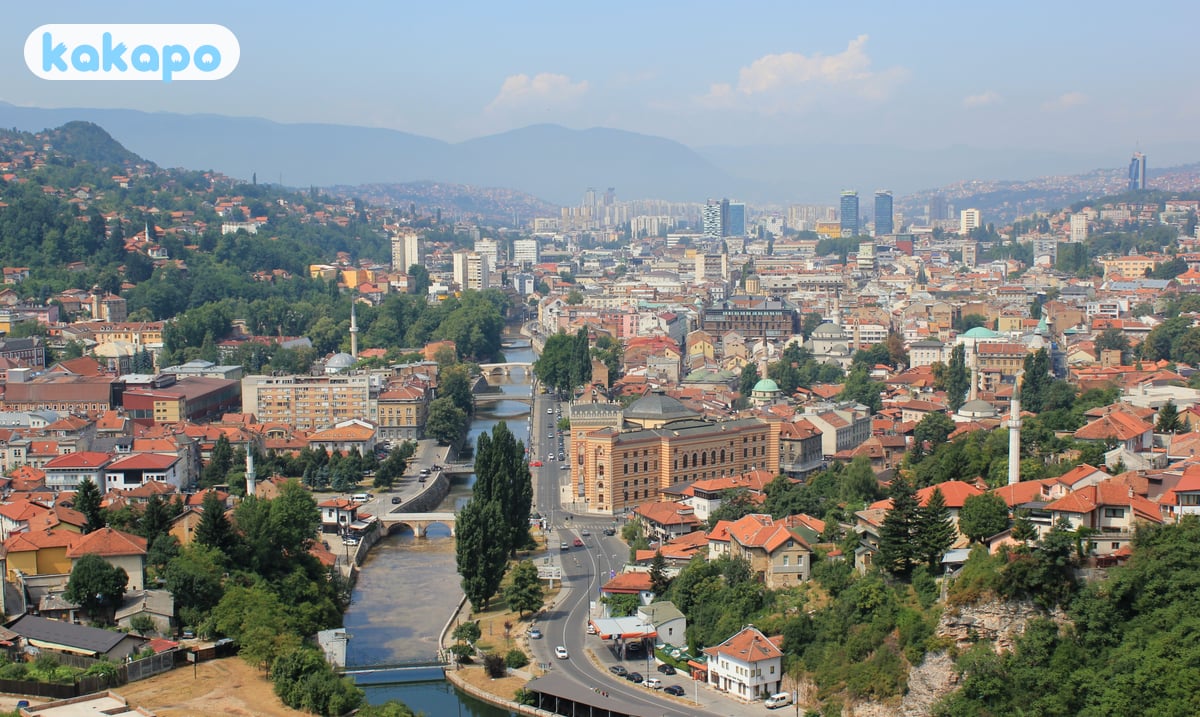
Recommended for visitors: Baščaršija (the Ottoman Old Town — bazaars, Sebilj fountain, Gazi Husrev-beg Mosque). Stari Grad / Ferhadija (the Austro-Hungarian shopping street). Marijin Dvor (modern centre). Ilidža (suburb with Vrelo Bosne — the source of the Bosna river, scenic park, horse-carriage rides).
Stay aware: around the central bus/train station at night.
Sarajevo has no specific "no-go" zones for tourists.
Winter cold and air pollution
- December-February: -5 to 5°C standard, occasional -15°C. Snow common.
- Air pollution: Sarajevo sits in a basin. In winter, the inversion traps wood-and-coal smoke from heating. PM2.5 regularly exceeds 200 (WHO limit 25).
- Asthmatics: bring inhalers. Check Sarajevo's air-quality index before booking.
- N95 masks: useful on the worst days.
- Best season: April-June, September-October.
Transport, taxis, the airport
- Trams: the iconic 1885 line through the city. €0.90.
- Buses + trolleybuses: extensive.
- Trebević cable car: rebuilt 2018 (after siege destruction). 9 min to Trebević viewpoint. €11 round trip.
- Taxis: insist on the meter. CTaxi and Sarajevo Taksi are reputable. Bolt operates.
- Sarajevo International Airport (SJJ): 12 km south-west. Bus 36 €0.90. Airport taxi €15-20.
- Driving in winter: snow chains/winter tyres legally required Nov 1 - Apr 15.
Money and the divided-state context
- Currency: Bosnian Convertible Mark (BAM/KM). $1 ≈ KM 1.80. Pegged to the euro at fixed rate (KM 1.95583 = €1).
- Cards: accepted in tourist areas; cash is still common.
- Two entities: Bosnia consists of Federation (Sarajevo, Mostar) and Republika Srpska (Banja Luka, Pale, parts of border zones). Sarajevo is in the Federation. Crossing between entities is invisible — no border, no checks.
- Photography: don't photograph border posts or military installations.
- Tipping: 5-10%.
- Tap water: safe.
- Local food: ćevapi, burek, sogan-dolma, baklava. Cheap and excellent.
Neighbourhood-by-neighbourhood breakdown
- Baščaršija — the Ottoman bazaar quarter and the city's tourist heart. Cobbled lanes of coppersmiths, kebab shops and çevabdžinice, the Gazi Husrev-beg Mosque (1531), Morića Han caravanserai, and the central square with the iconic Sebilj wooden fountain (1753). Lively day and night; safe; the call to prayer is part of the soundscape. Eat ćevapi at Željo or Mrkva for the local benchmark (KM 8-12).
- Sebilj fountain — the Ottoman wooden water-pavilion in Baščaršija's main square. Pigeons, photographs, the start of every walking tour. The "drink and you'll return" superstition holds for tap water — Sarajevo's mountain-spring water is safe and good.
- Latin Bridge (Latinska Ćuprija) and the assassination spot — the small Ottoman stone bridge over the Miljacka where Gavrilo Princip assassinated Archduke Franz Ferdinand and Sophie on 28 June 1914, triggering World War I. The Sarajevo Museum on the corner (KM 4) explains the moment in detail. Quiet plaque, easy to miss; the building's display panel is the key marker.
- Marijin Dvor — the transitional district between Ottoman Baščaršija and Austro-Hungarian Stari Grad / modern Centar. The Bosnian History Museum (KM 5, includes the "Besieged Sarajevo" permanent exhibition with reconstructed siege apartment) is here, as is the National Museum (Zemaljski Muzej). The Holiday Inn (now Hotel Holiday) where journalists stayed throughout the siege is on the boulevard just west.
- Sniper Alley (now Zmaja od Bosne street) — the main boulevard between the airport and the city centre, exposed to Bosnian Serb sniper positions in the surrounding hills throughout the siege. Hundreds of civilians were killed walking or running across. Now a normal boulevard with the Holiday Hotel, the Twist Tower, the US Embassy. The history is invisible if you don't know; with context, every building tells the siege story.
- Tunnel of Hope (Tunel Spasa) — the 800-metre hand-dug tunnel under Sarajevo Airport runway that connected besieged Sarajevo to Bosnian-government-controlled territory beyond. About 25 metres of the tunnel are preserved as a museum at Butmir (10 km from centre, KM 10 entry, allow 90 minutes). The most-affecting siege site; you walk through it.
- Mt Trebević and the cable car — the Trebević massif rises directly south-east of the city. The cable car (rebuilt 2018 after siege destruction) runs from Bistrik above Baščaršija to a viewpoint at 1,160m, KM 22 round-trip, 9 minutes each way. From the top: panoramic views, the abandoned 1984 Olympic bobsled track (used for sniping during the siege, now graffitied ruin in the forest, atmospheric and entirely safe). Don't hike off the marked trails — residual landmines remain in some hillsides.
- Tram network — Sarajevo's iconic 1885 tram (Europe's first municipal electric tram, contested with Budapest) still runs the east-west spine through the centre. Single ticket KM 1.80 from kiosks (or KM 2 from driver), tap your ticket into the machine. Trolleybuses run north-south. The tram is how locals move and how visitors should too.
- Yugoslav war context, responsibly — the siege ran 5 April 1992 to 29 February 1996 under Bosnian Serb forces. Dayton Peace Agreement December 1995 ended the war and created the two-entity state structure. The Srebrenica genocide (July 1995) happened in eastern Bosnia, not Sarajevo, and has its own memorial centre at Potočari — a 3-hour drive from Sarajevo, do not confuse with Sarajevo siege memorials. Sarajevans talk about the siege if asked; let them lead, don't probe. The Sarajevo Roses (red-resin-filled shell-impact craters in pavements where 3+ people died) are throughout the city — don't step on them deliberately.
- Sarajevo International Airport (SJJ) — 12 km south-west, the Butmir suburb. Bus 36 to centre KM 1.80; airport taxi KM 25-40 (insist on the meter or use Bolt). The Tunnel of Hope museum is a 5-minute walk from the airport perimeter — combine your arrival or departure with a visit.
If it's your first time visiting
- Best arrival: Bus 36 from Sarajevo International Airport (SJJ) to the centre for KM 1.80 (about €0.90), 25 minutes. Bolt or a metered taxi works for KM 25-40 (€13-20). From Mostar (2 hours south, breathtaking train ride through the Neretva canyon, KM 12), from Belgrade (8 hours by bus, €30-40), or from Dubrovnik (5 hours by bus along the Adriatic and inland).
- Best neighbourhood for your first night: a hotel within 10 minutes' walk of Baščaršija. Hotel Europe (the historic 1882 grand, €120-180), Hotel Astra Garni (€70-100), Boutique Hotel Old Town (€80-130), Hotel President Sarajevo (€90-140). Avoid the airport-area hotels — convenient for arrivals but you'll miss the city.
- Do a war-history walking tour with a survivor — Sarajevo Funky Tours and War Tour Sarajevo are run by guides who lived through the siege; their personal accounts are powerful and respectful. €15-25 per person for 3-4 hours, covers Baščaršija, Sniper Alley, the Latin Bridge, and reaches the Tunnel of Hope museum. Book through TripAdvisor or your hotel concierge.
- Tunnel of Hope as a half-day — taxi or organised tour to Butmir (€10-15 each way), KM 10 entry, allow 90 minutes. Combine with the National Museum and the Bosnian History Museum's "Besieged Sarajevo" exhibition for a sober but essential afternoon.
- Food worth seeking out: ćevapi at Željo (the locals' benchmark, KM 12 for 10 pieces with somun bread), Mrkva (the rival, also excellent), burek at Buregdžinica Bosna (KM 5-8), sogan-dolma (stuffed onions) at Inat Kuća (the "Spite House" with the Habsburg-era story), baklava and Bosnian coffee at any kafana. The Sarajevo food scene is one of Europe's most under-priced and under-appreciated.
- Trebević cable car morning — KM 22 round-trip, 9 minutes each way, panoramic views and the abandoned Olympic bobsled track. Go on a clear morning before the afternoon valley haze. Stay on marked trails; do not hike cross-country (residual landmines in some hillsides).
- Currency and cards — the Bosnian Convertible Mark (BAM/KM), pegged to the euro at KM 1.95583 = €1. Cards accepted in tourist areas; cash is still common for small purchases, kafanas, and bus tickets. ATMs at major banks (UniCredit, Raiffeisen, Sparkasse); always pay in BAM, not "your home currency" (DCC adds 5-7%). Money changers (mjenjačnica) post fair rates.
- Don't step on Sarajevo Roses — the red-resin-filled shell-impact craters in pavements mark spots where 3+ people died during the siege. They are throughout the city centre. Walk around them, don't photograph them as backgrounds for selfies. The Roses are memorial sites, not decoration.
- Common rookie mistakes: confusing Srebrenica with Sarajevo siege history (different geographies, different memorials — Srebrenica memorial is at Potočari, 3 hours east); hiking off marked trails on Trebević (residual landmines); ignoring the Sniper Alley context when walking Zmaja od Bosne (the boulevard has a hidden history); photographing the police, military or border infrastructure; assuming the city is dangerous (it isn't — the 1990s reputation is 30 years out of date); and pushing locals into siege conversations they didn't choose (let them lead).
Practical info — emergency numbers
- European emergency: 112.
- Police: 122.
- Ambulance: 124.
- Mine Action hotline: 1265.
- Koševo Hospital: +387 33 297 000.
Bring: warm layers if Nov-March, sturdy walking shoes, a contactless card, an unlocked phone (BH Telecom, m:tel, Eronet prepaid SIMs), and travel insurance documentation.
Frequently asked questions
Is Sarajevo safe to visit in 2026?
Yes — significantly safer than its 1990s reputation suggests. Sarajevo scores 78/100 here. Bosnia and Herzegovina sits at US State Department Level 2 ('exercise increased caution due to terrorism and landmines'); UK FCDO is similar. Crime against tourists is rare and Bosnian hospitality is genuine. The realistic risks are the residual landmines outside city limits (tourist sites and roads are fully clear, marked danger zones in some rural hillsides), the divided-state political context (mostly invisible to tourists), the genuinely bad winter air quality from basin geography, and standard caution about photography near military buildings.
Is Sarajevo safe at night?
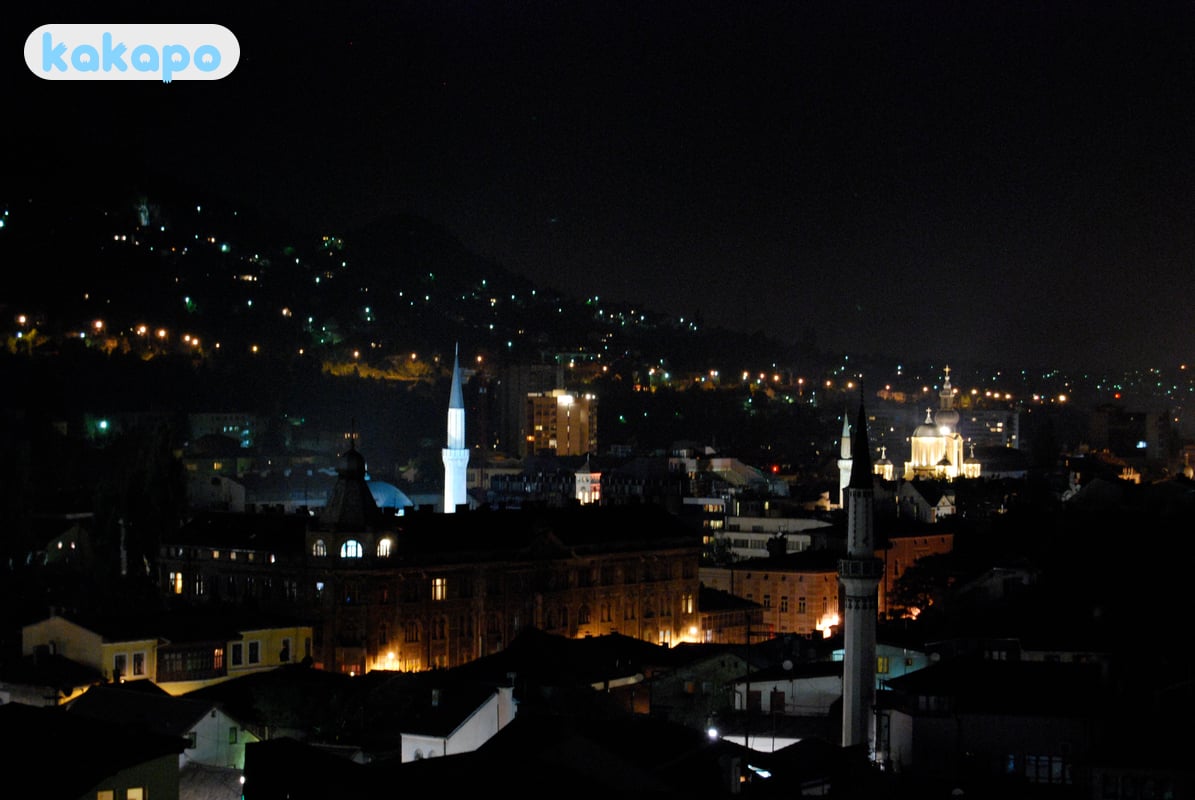
Yes. Baščaršija, Ferhadija, and Marijin Dvor stay alive and well-policed late. Walking back from a Baščaršija dinner to a central hotel is routine. Sarajevans look out for visitors and the centre is genuinely calm at night. Awareness around the central bus and railway stations late at night — rough sleepers, occasional persistent begging. Don't walk the Trebević forest paths or the abandoned Olympic bobsled track after dark — not crime risk, but unmarked drops and the residual mine concern in some hillsides.
Is Sarajevo safe for solo female travellers?
Yes. Bosnia ranks well for solo-female safety — low street harassment, low aggression, Sarajevans actively help visitors. Solo dining in Baščaršija and the centre is routine. Standard precautions on late-night walks back from the bus station. Use Bolt or CTaxi for late-night distance. For day-trips and hikes, join a guided group (Sarajevo Funky Tours, War Tour Sarajevo) rather than solo cross-country walking — the landmine risk is the only reason.
Can you drink tap water in Sarajevo?
Yes — Sarajevo tap water is safe and drinkable, drawn from springs in the surrounding mountains (Vrelo Bosne is the famous source). Restaurants will serve it on request. Public fountains in Baščaršija and the centre are drinkable. Carry a refillable bottle.
What's the biggest scam to avoid in Sarajevo?
Honestly, Sarajevo has very little scam culture — the city's tourism economy is young, prices are low, and the hospitality culture is genuine. The handful of patterns: street-taxi meter 'forgotten' on rides from the airport or bus station (insist on the meter or use Bolt; CTaxi and Sarajevo Taksi are reputable), DCC card-readers asking you to pay in your home currency rather than BAM (always pay in BAM, the local Convertible Mark pegged at KM 1.95583 = €1), and inflated 'tourist menu' pricing right on the main Baščaršija bazaar lane (walk one street out for normal prices). Money changers post fair rates — use exchange offices (mjenjačnica) with posted rates, not street offers.
Are landmines still a real risk for visitors in Bosnia?
Low for normal tourists, but real and worth understanding. Bosnia is one of the most-mined countries in Europe — ~2-3 million mines were laid 1992-95 and demining (BHMAC, Mine Action Centre) has been ongoing for 30 years. All tourist sites, all roads, all marked walking trails, and all populated areas are fully clear. The residual risk is in some rural hillsides marked with red skull-and-crossbones signs (Cyrillic and Latin warnings); heed them absolutely. For Sarajevo city tourism the practical impact is zero — walk the Old Town, the museums, the Tunnel of Hope, the Trebević cable car as you would any European city. For hiking and day-trips, stick to marked paths and join a guided group rather than wandering cross-country. If you ever find suspicious metal, don't touch — note location, leave, call 112 or the Mine Action hotline 1265.
Sources
Run a business in Sarajevo?
Show visitors your Sarajevo business is a safe choice. The free Verified by Kakapo badge puts Sarajevo's live safety score on your website, links back to your verified page, and updates itself. No cost.
Get the free badge →