


Is Hyderabad, India Safe? A 2026 Travel Safety Guide
The Charminar Old City crowds, summer 42°C heat, the 2020 monsoon flood legacy, the airport distance, the tech-corridor commute, and the realities of India's biryani capital.

Hyderabad — population ~10 million metro, the capital of Telangana state and one of India's biggest tech hubs (HITEC City / Cyberabad) — is one of South India's better-organised big cities. Crime against tourists is generally low; English support is universal; the city is calmer than Delhi or Mumbai, with a distinct historical character (Nizam-era palaces, Old City Mughal heritage, the famous biryani).
The honest concerns are about heat, monsoon, and a few specific tourism friction-points. Pre-monsoon summers (April-June) regularly hit 40-44°C; the basin geography traps the heat; tourists faint at the Charminar in midday May. Charminar Old City is dense, working, and pickpocket-prone in the surrounding bazaars (Laad Bazaar, Madina). The October 2020 floods (most devastating in 100 years) killed 50+ across Telangana and inundated central Hyderabad for weeks. Rajiv Gandhi International Airport (HYD) is 30 km outside city centre — getting in/out at peak times runs 90-120 min. The HITEC City tech corridor is 25 km from Charminar Old City; the two halves of Hyderabad feel like different cities. Air pollution is moderate-to-poor in winter.
The US State Department lists India at Level 2; UK FCDO has no specific Hyderabad advisories. Both note the standard road-safety, monsoon, and tropical-disease context.
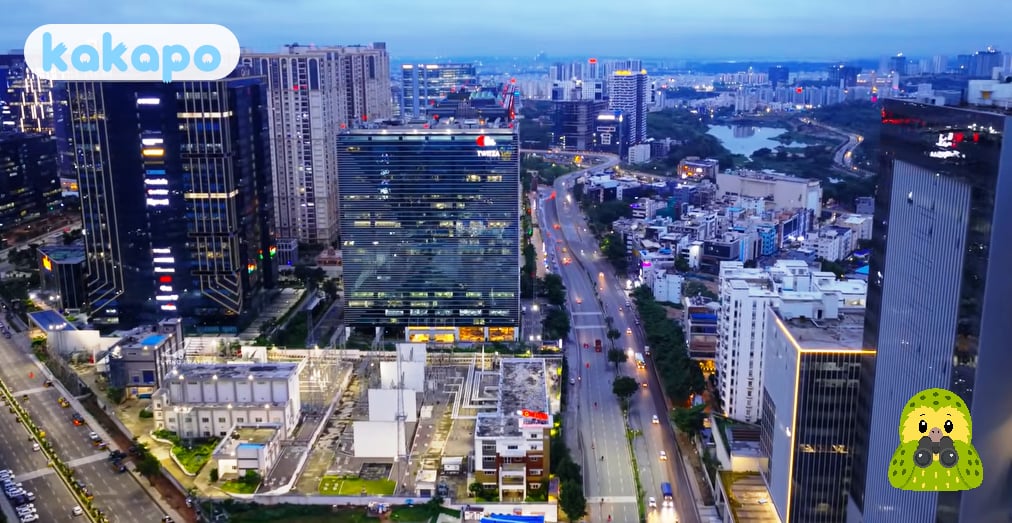
The texture of Hyderabad in 2026 is two cities held together by the Outer Ring Road. On the western side, HITEC City and Gachibowli are glass-and-steel campuses where a Microsoft engineer's evening commute on the Blue Line Metro from Raidurg to Ameerpet costs INR 60 and a flat white at Roastery Coffee House on Jubilee Hills Road No. 36 runs INR 320. On the eastern side, the Charminar bazaars still operate on the rhythm of the Mecca Masjid azaan, and a plate of haleem at Pista House on Shah Ali Banda Road during Ramadan runs INR 280-350 with a queue that wraps the block. The Hyderabad Metro's three lines (Red, Blue, Green — air-conditioned, INR 10-65) opened the western half to budget travellers; the L&T-operated airport metro extension to Shamshabad finally broke ground in 2024 but won't open until 2027, so Rajiv Gandhi International (HYD) is still a 30 km Ola ride (INR 600-900) or the Pushpak airport bus (INR 250) for now. Banjara Hills' Road No. 12 and Jubilee Hills' Road No. 36 are the restaurant and rooftop-bar spines; Hussain Sagar's Necklace Road is the evening walk; Tank Bund's Buddha statue is the postcard. The 2026 monsoon outlook from the IMD is "normal to above normal" — meaning a repeat of the 2020 Hayatnagar / LB Nagar inundation is plausible if a single 24-hour cell parks over the catchment.
Hyderabadis themselves operate in three languages — Telugu, Urdu, English — often in the same sentence. The local greeting "Adaab" (Urdu) and "Namaste" (Telugu) are interchangeable depending on which neighbourhood you're in; English alone gets you everywhere a foreign visitor needs to go. The pearl markets at Pathergatti behind the Charminar — Sri Jagdamba, Mangatrai, Krishna — are the legacy trade (cultured pearls from the freshwater pearl-culture industry, not deep-sea), and the rule for visitors is the same as any pearl market on earth: buy from named establishments with paperwork, not from the men with velvet trays on the steps. A modest single strand at Mangatrai runs INR 8,000-25,000 with certificate; the street price for the same look is INR 1,500 and dyed glass.
| Night safety | 59/100 |
|---|---|
| Scam / petty-crime risk | Medium |
| Violent crime (tourists) | Low |
| Most common scams | auto-rickshaw scams in Old City; fake pearl sellers at Pathergatti; pickpocketing in Charminar bazaars |
| Safer neighbourhoods | Banjara Hills, Jubilee Hills, HITEC City |
| Data sources cited | 4 |
| Last verified |
What the score means — 78/100
- Personal safety (80) — moderate-high. Pickpocket precautions in Old City; women's safety reasonable by Indian-city standards.
- Transport (74) — Hyderabad Metro 3 lines (Cyberabad-Old City covered); Rajiv Gandhi International Airport (HYD); auto-rickshaws and Ola/Uber dominant.
- Healthcare (90) — Apollo Hospitals (the original Hyderabad chain), Yashoda, AIG, KIMS, Rainbow — Hyderabad is one of India's leading medical-tourism hubs. Excellent private care.
- Air quality (64) — moderate-poor; winter PM2.5 100-200 normal; vehicle emissions and construction dust dominant.
Charminar and the Old City — crowds and pickpockets
- Charminar: 16th-century four-minaret triumphal arch; Hyderabad's icon; entry INR 250 foreigner. Climbable but steep stairs and tight at top — closed during peak crowds for safety.
- Surrounding Old City: Laad Bazaar (bangles), Madina market, Pathar Gatti — dense, working, atmospheric. Pickpocketing risk peaks at Friday afternoons (post-jumma at Mecca Masjid) and Ramadan evenings.
- Mecca Masjid: one of India's largest mosques, adjacent to Charminar. Modest dress (covered shoulders/knees, head covering for women in some areas), no shoes inside.
- Best timing: weekday mornings (08:00-10:00) before crowds; evenings (after 17:00) for atmospheric photography; avoid Friday afternoons and major Muslim festivals if you want quiet.
- Defences: front-zip bags only; phones not in back pockets; valuables in inside pockets.
- Don't carry expensive cameras casually: high-end DSLRs attract grab-and-run from passing motorbikes.
- Auto-rickshaw scams: Old City auto drivers offer flat-fare "Charminar-Golconda-Qutb Shahi tomb tour INR 1,500" — convenience trade-off; better via Ola/Uber for fixed pricing.
Summer heat — April-June brutal
- Pre-monsoon (April-June): 38-44°C; loo (hot dry wind) in May; nights barely below 28°C in May-June; the Deccan plateau basin traps heat.
- Heatstroke: India recorded thousands of heat-related deaths in 2024; Telangana among affected states. Tourists who underestimate are over-represented in ED admissions.
- Defences: heavy hydration (3-4L water/day); ORS sachets at every chemist; indoor mid-day breaks (Inorbit Mall, Forum Sujana, GVK One are AC-cold); avoid 11:00-15:00 outdoor activities; cotton long sleeves (paradoxically cooler).
- Best windows: October-March (cool, dry, peak tourist 18-30°C); avoid April-June.
- Cool weather (Nov-Feb): pleasant; mild evenings; light shawl.
- Sun: at 17°N latitude, UV is strong year-round; SPF50+.
Monsoon and the 2020 catastrophic flood
- Southwest monsoon: June-September. Hyderabad averages 800mm annual rainfall, most in this window.
- October 2020 floods: Hyderabad's worst in 100 years. 32cm of rain in 24 hours (vs typical monthly 18cm); 50+ killed across Telangana; central Hyderabad (Hayatnagar, LB Nagar, parts of Old City) inundated for weeks.
- Why so devastating: rapid pre-2020 construction had drained or built over many of Hyderabad's historic flood-storage tanks; drainage overwhelmed.
- What floods now: low-lying districts and underpasses in central Hyderabad, parts of OMR (HITEC City corridor), Hayatnagar.
- Don't wade flood streets: leptospirosis (Telangana saw a post-2020 spike); sewage backup; electrocution.
- Best windows: October-March (post-monsoon, dry).
- If a Red Alert is issued: stay at hotel; HYD airport rarely shuts but flights delayed; stock 24h water.
- Tap water: not drinkable. Bottled (Bisleri, Aquafina) universal.
Rajiv Gandhi Airport — the distance and outer ring road
- Rajiv Gandhi International Airport (HYD): 30 km south of city centre. Frequently cited as one of the world's better-managed airports.
- Airport to city: outer ring road (well-maintained 6-lane); ~45-90 min depending on traffic. Pushpak airport bus INR 250 (60-90 min). Pre-paid taxi INR 800-1,200; Ola/Uber INR 600-900; airport taxi (Meru) reliable.
- HYD to Hitec City corridor: 30-45 min via outer ring road in light traffic; 90-120 min in peak.
- HYD to Charminar Old City: 45-75 min depending on traffic.
- Build buffer time: peak hour (07:00-10:00 morning, 17:00-20:00 evening) traffic on the airport route is real.
- Hyderabad Metro Airport line: under construction 2026; not operational yet.
HITEC City and the tech-corridor commute
- HITEC City / Cyberabad: India's third-biggest IT hub (after Bengaluru and NCR Delhi); Microsoft, Google, Amazon, Facebook campuses; ~500,000 IT workforce.
- Distance from Old City: 25 km — the two halves of Hyderabad are essentially separate cities. Most international visitors stay either in HITEC City (business) or central Hyderabad (tourism), not both.
- HITEC City accommodation: international chain hotels (Westin, ITC Kohenur, Hyatt Hyderabad, Marriott); restaurant clusters around Inorbit Mall and Hitec City Metro station.
- Hyderabad Metro Blue Line: connects Nagole-Raidurg (covers HITEC City). Fast, AC, INR 10-65.
- Traffic: ORR helps but tech-corridor commute (HITEC City to airport, or HITEC City to Old City) at peak is brutal — 90-120 min for what should be 30-45.
- Don't book HITEC City hotel and Old City tourism on a tight schedule.
Areas — Banjara Hills, Jubilee Hills, Old City, Secunderabad

Recommended bases: Banjara Hills / Jubilee Hills — leafy upscale, mid-luxury hotels (Taj Krishna, Park Hyatt Hyderabad, Trident); restaurant clusters; central enough for tourism without Old City chaos. Begumpet / Secunderabad — more central; older business hotels. Old City (Charminar/Pather Gatti) — atmospheric heritage stays (Falaknuma Palace by Taj — extreme luxury); not the practical base for general tourism. HITEC City — business-focused; tech-corridor convenient.
Stay aware: Old City after dark — parts of the Pather Gatti and Charminar back-alleys are uncomfortable for solo women after 21:00; pre-arrange Ola back to hotel.
There are no genuinely dangerous neighbourhoods in central Hyderabad for daytime visiting.
Neighbourhood-by-neighbourhood breakdown
- Banjara Hills — the leafy upscale heart, organised by numbered roads (Road No. 1 through Road No. 14). Road No. 12 is the restaurant spine (Olive Bistro, Farzi Cafe, Fusion 9); Road No. 1 has the Taj Krishna and the GVK One mall. The Banjara Hills Metro Blue Line stop is at Yousufguda — a 5-min Ola away. Comfortable any hour for foreign visitors.
- Jubilee Hills — Banjara's even-tonier neighbour, Road No. 36 the famous restaurant strip (Soul Garage Cafe, Toscano, Driver's Cafe), Road No. 45 the celebrity-residence strip. Park Hyatt Hyderabad sits at the western edge. Pricier, quieter, leafier; near-zero street friction.
- HITEC City / Madhapur / Gachibowli — the tech corridor, anchored by Cyber Towers, Mindspace IT Park and the DLF complex. Inorbit Mall and Forum Sujana are the AC refuges; Hitec City and Raidurg are the Blue Line Metro termini. Westin, ITC Kohenur, Marriott, Trident are the business hotels. Quiet evenings — most workers commute home rather than stay out.
- Charminar / Old City (Pathergatti, Laad Bazaar) — Hyderabad's historic Mughal-era core around the four minarets. Mecca Masjid, Chowmahalla Palace, Salar Jung Museum within a 1-km walk. Dense, working, photogenic; the pearl shops and bangle bazaars are the trade. Stay alert for pickpockets in Laad Bazaar; women may experience verbal harassment after dark. Go for the mornings or the evening photography hour, Ola back to Banjara Hills by 21:00.
- Begumpet / Secunderabad — the older central business strip with the Begumpet railway station and the colonial-era cantonment. The original ITC Kakatiya and the Taj Deccan are here; more mid-range business hotels than upscale. Convenient for both the airport route and the Charminar without committing to either half.
- Hussain Sagar / Necklace Road / Tank Bund — the lake at Hyderabad's geographic centre with the 18m Buddha statue on Gibraltar Rock and a 2km waterfront promenade. Lumbini Park, Eat Street and the NTR Marg viewpoint are the evening anchors; locals walk the Necklace Road circuit at sunset. Generally safe; pickpockets work the eat-street crowds.
- Kondapur / Kothaguda — newer mixed residential-commercial sprawl between HITEC City and the ORR, with the Botanical Garden, Sarath City Capital Mall and a growing restaurant scene. Quiet at night; primarily a workforce residential zone.
- Falaknuma — the southern hill crowned by the Taj Falaknuma Palace (the converted Nizam's residence; INR 60,000+ per night and worth a high-tea visit at INR 3,500 even if you're not staying). The surrounding neighbourhood is working-class and not where visitors base; arrive and leave by Ola.
If it's your first time visiting Hyderabad
- Getting in: Rajiv Gandhi International (HYD) at Shamshabad is 30 km south of centre. Pushpak airport bus to Begumpet / Secunderabad / HITEC City INR 250, 60-90 min. Ola/Uber to Banjara Hills INR 600-900, 45-75 min off-peak (90-120 min in the 17:00-20:00 window). Pre-paid taxi counter inside the terminal INR 800-1,200. Never take touts approaching at arrivals.
- Hyderabad Metro: three lines (Red Miyapur-LB Nagar, Blue Nagole-Raidurg, Green Parade Ground-Falaknuma not fully open). AC, INR 10-65 per ride, runs ~06:00 to 23:00. Buy a Smart Card at any station counter for INR 100 + INR 100 deposit, or tap with the TSavaari app. Women's coach at the front.
- Where to stay: Banjara Hills (Taj Krishna $180, Park Hyatt $220, Trident $160) for restaurants and central touring; HITEC City (Westin $180, ITC Kohenur $200) for tech meetings; Falaknuma Palace ($800+) for a once-in-a-lifetime. Avoid first-time stays in Old City unless you specifically want the heritage homestay experience.
- Day 1 plan: morning at Charminar + Chowmahalla Palace + Laad Bazaar (08:00 start, beat the heat and crowds), lunch biryani at Shadab or Shah Ghouse near the Mecca Masjid (INR 350-500/head), afternoon nap, evening Hussain Sagar boat ride to the Buddha statue (INR 75 ferry) + Eat Street dinner. Calibrate, then push outward.
- Biryani institutions: Paradise (Secunderabad original, INR 400-600 for the famous mutton dum), Bawarchi (RTC Cross Roads, INR 350), Shah Ghouse (Old City, INR 300-450), Pista House (Old City, also haleem in Ramadan). All have multiple branches — the original locations are generally the best.
- Pearl shopping: only at named Pathergatti shops with paperwork — Mangatrai, Sri Jagdamba Pearls, Krishna Pearls. A simple south-sea cultured strand INR 8,000-25,000; baroque freshwater INR 2,500-6,000. Decline the street vendors on the Charminar steps — almost all are dyed glass.
- Cash + UPI: ATMs at every metro station and mall (HDFC, ICICI, SBI). UPI (PhonePe, Google Pay, Paytm) dominates locally; foreign Visa/Mastercard works at hotels and chain restaurants but not at small biryani houses or auto-rickshaws. Carry INR 3,000-5,000 for street-level spending.
- Monsoon caveat: if visiting July-October, check the IMD short-term forecast daily — Hyderabad's drainage hasn't been substantially fixed since the 2020 flood, and a single intense rain cell can shut roads in Hayatnagar, LB Nagar, and parts of the ORR within 2 hours. Don't try to drive through standing water; wait it out at the nearest mall.
- Common rookie mistakes: under-budgeting time for the airport (30 km, 90 min at peak); booking HITEC City hotel and Old City tourism on a tight schedule (the two halves are 25 km apart); drinking tap water (no, never); over-photographing women at the Charminar (genuinely poor form); accepting auto-rickshaw "tour packages" rather than using Ola for fixed pricing.
Money, food, emergency numbers
- Currency: Indian rupee (INR). $1 ≈ INR 84.
- Cards: hotels, malls, chain restaurants yes; small Old City shops cash. UPI dominant locally.
- Tipping: 10% restaurants if not on bill; INR 50-100 hotel porters.
- Food: Hyderabadi biryani is the local headline (Paradise, Bawarchi, Shadab, Pista House are the famous chains); haleem (Ramadan specialty), kebabs, double ka meetha (bread pudding), Irani chai. Vegetarian Telugu cuisine excellent at Chutneys, Minerva.
- Tap water: not drinkable. Bottled.
- Alcohol: Telangana has more permissive alcohol laws than neighbouring Andhra Pradesh; bars and restaurants licensed; restaurants in Banjara/Jubilee Hills.
- Emergency: 112 (universal); 100 (police); 101 (fire); 108 (ambulance); 1091 (women's helpline).
- Hospitals: Apollo Health City (+91 40 2360 7777); Yashoda Hospitals (+91 40 2455 4455); AIG Hospitals (+91 40 6629 6699); KIMS Hospitals (+91 40 4488 5000).
- SIM: Airtel, Jio, Vi at airport — passport + visa to register.
Frequently asked questions
Is Hyderabad safe to visit in 2026?
Yes — Hyderabad scores 76/100. UK FCDO and US State Department both treat India at low-advisory baseline with the standard nation-wide notes on terrorism, demonstrations and women's safety; neither flags Telangana or Hyderabad specifically. Hyderabad has a reputation as one of India's calmer major cities, distinct from Delhi or Mumbai patterns. Violent crime against visitors is rare. The realistic risks are: aggressive driving and pedestrian-crossing on the Hi-tec City / Banjara Hills routes, Charminar Old City crowd density (women travellers report more catcalling here than in HITEC City), summer heat (April-June regularly 40-44°C), and monsoon flooding (October 2020 produced the worst flooding in a century, and the drainage problem isn't fixed).
Is Hyderabad safe at night?
Mostly yes, with neighbourhood variation. HITEC City, Gachibowli, Madhapur, Jubilee Hills, Banjara Hills and the Hussain Sagar lakefront are well-lit and busy until late. Old City around Charminar empties out by 21:00 and the lanes behind the Mecca Masjid aren't where you want to walk solo as a tourist after dark — go for the night-photography hour, leave by 21:30. Uber and Ola both work reliably 24/7; Hyderabad Metro runs to about 23:00 on the three lines. Rajiv Gandhi International Airport (HYD) at Shamshabad is ~30km south — pre-book the airport cab or use the airport-licensed taxi counter, never the touts.
What's the biggest risk to be aware of in Hyderabad?
Road traffic. Hyderabad's road-traffic injury rate is one of the higher reads in urban India; the road layout (radial from Old City, with the ORR ring road and the Inner Ring Road overloaded by tech-corridor commuting) produces aggressive lane-cutting, two-wheeler weaving and pedestrian fatalities. Use Uber/Ola rather than walking long distances; if you cross a multi-lane road, do it at a pedestrian signal with locals around you. Second is monsoon flooding — between July and October, low-lying areas (parts of Saidabad, Falaknuma, parts of Banjara Hills) can flood within hours; check IMD warnings and don't drive through standing water.
Can you drink tap water in Hyderabad?
No — do not drink tap water in Hyderabad. The municipal supply (HMWSSB, drawing from the Krishna and Godavari) meets Indian standards at the plant but the distribution network has cross-contamination issues, and almost no resident drinks unboiled tap. Drink bottled (Bisleri, Aquafina, Kinley) and check the seal is intact — refill scams happen. Hotel rooms in the 3-star-plus tier all provide bottled water; the 5-stars (Taj Falaknuma, ITC Kohenur, Park Hyatt) also have filtered drinking-water dispensers. Brushing teeth with tap is generally fine for short trips; ice and salad-washing — only in established restaurants.
Is the Charminar Old City safe for tourists?
Yes, in daylight, with the standard urban-India caveats. The Charminar, Mecca Masjid, Chowmahalla Palace, Laad Bazaar (the bangle market) and the Salar Jung Museum are the heritage core and they're crowd-dense rather than dangerous — pickpocketing, persistent touts and the photography-fee shake-down are the friction. Women travellers report more verbal harassment here than in HITEC City; dressing modestly (covered shoulders, knees) and travelling in a small group helps. Avoid solo evenings in the laneways behind the masjid. Eat at the named legacy spots (Pista House for biryani / haleem in Ramadan, Shah Ghouse) rather than random street stalls if you're not stomach-acclimatised.
Sources
Run a business in Hyderabad?
Show visitors your Hyderabad business is a safe choice. The free Verified by Kakapo badge puts Hyderabad's live safety score on your website, links back to your verified page, and updates itself. No cost.
Get the free badge →