


Is Hvar, Croatia Safe? A 2026 Travel Safety Guide
Hvar is comfortably safe but has the Adriatic's most concentrated party-yacht culture. The honest concerns: ferry from Split, summer crowds, the fortress climb, and the public-behaviour fines.

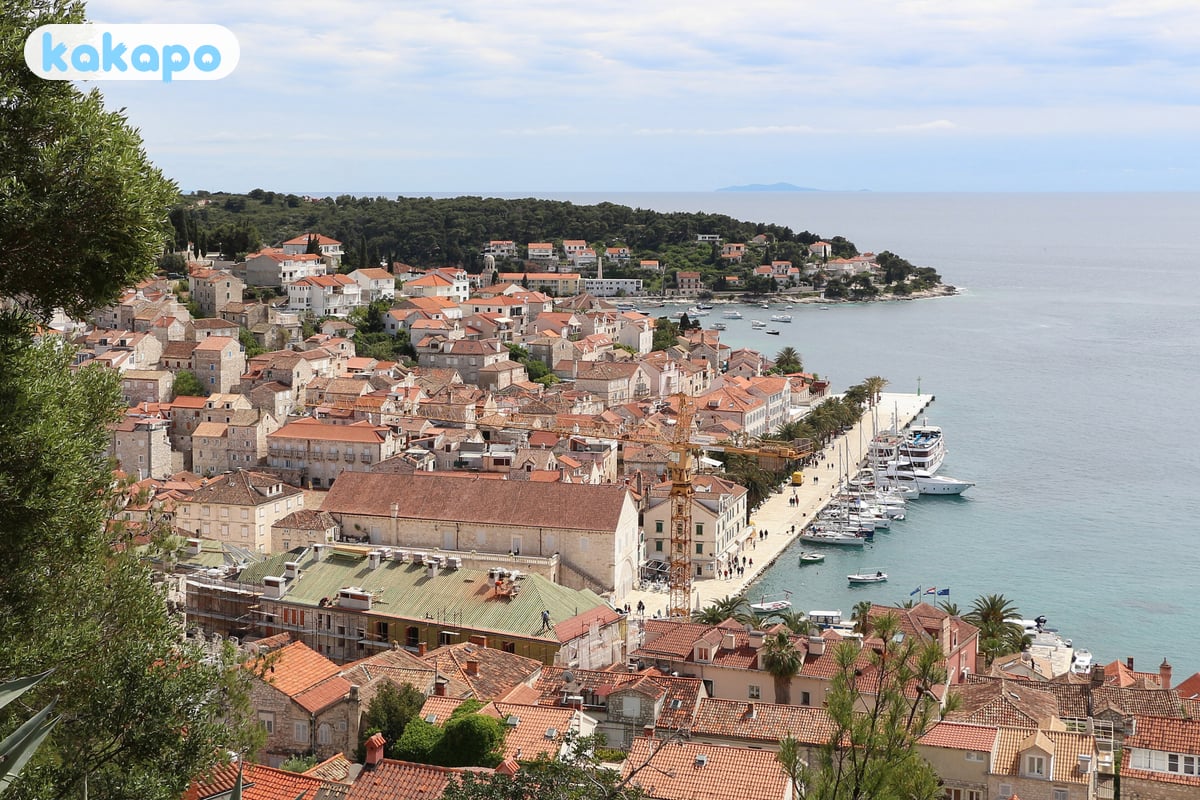
Hvar is one of the Croatian Adriatic's safer islands by ordinary-crime measure but one of its most concentrated yacht-party hubs. Crime against tourists is mild. The realistic concerns are environmental and behavioural: the ferry from Split in afternoon wind; summer over-tourism that turns Hvar Town into a slow-shuffle 11pm scene; the "Hvar Town vs. Stari Grad" choice that affects whether your week is calm or party-loud; the cobbled steep climb to the Spanish Fortress (Fortica); and the much-publicised local fines for "offensive behaviour" — drunkenness in public, walking shirtless, sleeping on benches — that catch out tourists who treat Hvar like Mykonos.
Croatia sits at Level 1 on the US State Department's advisory list. UK FCDO carries no specific warning. The honest framing for visitors: Hvar is small (~11,000 island residents), with two main settlements — Hvar Town (party + yacht hub) and Stari Grad (UNESCO calmer cultural town). The 2017+ "respectable behaviour" by-law enforcement has reduced but not eliminated the bachelor-party reputation.
The defining experiences: Hvar Town main square + St Stephen's Cathedral, the Spanish Fortress (Fortica), Pakleni Islands boat trips (Palmižana + Jerolim), Stari Grad Plain (UNESCO ancient Greek field divisions still used), Hula Hula sunset bar, and the lavender fields inland.
| Solo female safety | 84/100 |
|---|---|
| Night safety | 86/100 |
| Scam / petty-crime risk | Medium |
| Violent crime (tourists) | Low |
| Most common scams | DCC card-reader scam; public-behaviour fines for drinking in public spaces; over-tourism in Hvar Town |
| Safer neighbourhoods | Stari Grad, Jelsa, Hvar Town |
| Data sources cited | 4 |
| Last verified |
What the score means — 89/100
- Air quality (92) — Adriatic island, very high.
- Personal safety (84) — high. Petty theft + alcohol-related minor incidents at peak.
- Transport (78) — Jadrolinija + Krilo ferries from Split + Drvenik; in-island buses; small + walkable centres.
- Healthcare (76) — Hvar Town clinic + Stari Grad. Complex cases evacuated to Split.
Ferry from Split — sea state
- Operators: Jadrolinija, Krilo (Kapetan Luka), TP Line.
- Fast catamaran (passenger only): Split ↔ Hvar Town ~1h, ~€11. The convenient option for tourists.
- Car ferry: Split ↔ Stari Grad 2h, €5 passenger / €40 car. Stari Grad is 20 km from Hvar Town.
- Sea state: Adriatic afternoon wind ("maestral") + bora wind from northern mountains can cancel sailings; Jadrolinija slower ferries run when fast ones don't.
- Sea-sickness: stugeron beforehand if prone.
- Last fast ferry to Split: typically 6-8pm; book online to guarantee a seat.
- Drvenik option: car ferry from Drvenik (mainland, near Makarska) to Sućuraj on east end of Hvar — quicker by car.
Summer over-tourism — and the way to dodge
- The reality: Hvar Town's compact harbour fills with mega-yachts + day-tour catamarans + cruise tenders July-August.
- Peak compression: 6-11pm summer; Riva harbour-front shoulder-to-shoulder.
- Strategy: stay in Stari Grad or Jelsa instead — calmer, cheaper, day-trip Hvar Town. Or stay in Hvar Town in May/June/September.
- Best months: late May, June, September, early October. October light is excellent.
- Hotel prices in July-August: triple. Yacht-charter port fees push restaurants tourist-priced.
- Pickpockets: low base rate; minor uptick in late-night Hvar Town crush.
Public-behaviour fines — what to know
- The reality: since 2017 Hvar Town enforces fines for "offensive behaviour": drinking in public spaces, walking shirtless away from beach, sleeping on benches, vomiting in public, climbing on public art.
- Standard fines: €150-€700 depending on offence.
- Police enforcement: visible + persistent. Police have spoken/written warning power before fines but routinely fine repeat offenders.
- Beach attire on streets: the rule that catches out tourists most. Cover up walking back from beach.
- Drinking on the harbour: legal in licensed bars; not in the street.
- Drunken loud groups: warned/fined.
- Drugs: Croatian law strict; small possession can mean fines + arrest.
Fortica (Spanish Fortress) — the climb
- What it is: 16th-century fortress 100 m above Hvar Town. €5 entry.
- The climb: 20-30 min uphill on cobbled paths from harbour. Steep + can be slippery.
- Footwear: trainers with grip; not sandals.
- Summer heat: little shade. 7-9am or after 6pm; sunset is the move.
- Ramparts: stone parapets; children can climb. Hold hands at edges.
- Hydration: bring water; café at top is overpriced.
Pakleni Islands + boat day trips
- Pakleni Islands: small archipelago 5-15 min off Hvar Town. Palmižana, Jerolim, Sveti Klement.
- Water taxis: from Hvar Town harbour; €5-€10 each way.
- Sea conditions: usually calm. Maestral afternoon wind picks up.
- Sea urchins: rocky entries; aqua shoes useful.
- Jellyfish: occasional summer waves; vinegar at lifeguard stations.
- Naturism: Jerolim has a popular naturist beach; not on Palmižana main beach.
- Boat-rental + skippered tours: ~€100-€500/day depending on size + skipper.
Money, language, the basics
- Currency: euro (Croatia switched 2023). Cards everywhere; cash for some markets.
- Tipping: 10% in restaurants standard.
- Language: Croatian; English very widely spoken in tourism.
- Tap water: safe.
- "Don't pay in EUR" (DCC): card-reader scam, takes 7-10%. Always pay in EUR direct.
- ATMs: bank-branch (Erste, OTP, Zaba) for the best rate.
Practical info — emergency numbers
- European emergency: 112.
- Mountain + sea rescue (HGSS): 112.
- Police: 192.
- Hvar Health Centre: +385 21 717 099.
- Split General Hospital (KBC Split): +385 21 556 111.
Bring: trainers with grip for the fortress, sun protection (UV 9-10 summer), refillable water bottle, swimwear, smart-casual evening clothes, a contactless card, and travel insurance.
Frequently asked questions
Is Hvar safe to visit in 2026?
Yes — Hvar scores 84/100 here, comfortably safe by ordinary-crime measures. Croatia sits at US State Department Level 1 and UK FCDO carries no specific warning. Crime against tourists is mild. The realistic concerns are environmental and behavioural: the Split-Hvar ferry can cancel in afternoon maestral or bora winds; summer over-tourism turns Hvar Town's harbour shoulder-to-shoulder from 6-11pm; the cobbled climb to the Spanish Fortress (Fortica) gets slippery; and the much-publicised 2017+ public-behaviour fines (€150-700 for drinking in public spaces, walking shirtless away from beach, sleeping on benches, vomiting in public) catch out tourists who treat Hvar like Mykonos.
Is Hvar safe at night?
Yes. Hvar Town main square (Pjaca), the harbour, Stari Grad and Jelsa are all comfortable late and well-policed. The reputation has shifted since the 2017 behaviour by-laws — police enforcement is visible and persistent. Solo walking from a Pjaca dinner back to a Hvar Town hotel is routine. The yacht-crowd party scene at Hula Hula sunset bar, Carpe Diem and similar venues stays inside licensed premises rather than spilling into the streets the way it did pre-2017. Drink-spiking is rare. The Fortica climb is dim after dark and not recommended without a torch. Stari Grad is sleepy and safe.
Is Hvar safe for solo female travellers?
Yes. Hvar is one of the easier Adriatic islands for solo women — low harassment, friendly atmosphere, and small enough that you'll recognise harbour staff repeatedly. Solo dining at Pjaca-area konobas works fine. Day-trip water taxis to Pakleni Islands (Palmižana, Jerolim, Sveti Klement) at €5-10 each way are solo-routine. Stari Grad is calmer and family-saturated. The yacht-party Hvar Town scene at peak is loud but not threatening. Standard awareness in late-night bar density; spiking incidents are rare. Naturist beach at Jerolim is a personal choice — Palmižana main beach is clothed.
Can you drink tap water in Hvar?
Yes — Hvar tap water meets Croatian/EU standards and is safe to drink throughout both Hvar Town and Stari Grad. The island is fed by mainland pipelines and local sources, well-treated. Restaurants will serve tap water (voda iz slavine) on request, though bottled is the cultural default and the yacht-crowd norm. Carry a refillable bottle — UV is 9-10 in summer and the Fortica climb has no shade. On Pakleni Islands day-trips bring water from town; the islands have limited infrastructure. The Adriatic is bathing-quality but not drinkable raw and seriously salty if swallowed.
What's the biggest scam to avoid in Hvar?
There isn't much of a scam scene on Hvar — the island is small enough that reputation matters and the behaviour by-laws have professionalised the harbour. The closest things to traps: cruise-day konoba overcharging on the Hvar Town Riva (ask for the cjenik before sitting), pop-up water-taxi operators to Pakleni Islands at marked-up prices over the established €5-10 boats, DCC card-reader markups (always pay in EUR — Croatia adopted the euro 2023), and 'private boat tour' touts on the Riva promising things the boat doesn't deliver. Verify what's included before paying. ATMs at bank branches (Erste, OTP, Zaba) beat freestanding tourist-zone machines.
What public behaviour will actually get me fined on Hvar?
Specifically: drinking alcohol in public spaces outside licensed bars (€150-700), walking shirtless or in swimwear away from the beach (€500 if reported), sleeping on benches in the Pjaca or harbour (€500), vomiting in public, climbing on public art and monuments, and any loud disruptive drunk-group behaviour after late-night warnings. Police have spoken-warning power before fines but routinely fine repeat offenders, and the 2017 by-laws are visibly enforced. The rule that catches out tourists most is the beach-attire-on-streets one — cover up walking back from the beach to your hotel. Drinking in licensed harbour bars is fine; walking around with a beer is not. Drugs are a separate stricter category — Croatian possession law can mean arrest.
Sources
Run a business in Hvar?
Show visitors your Hvar business is a safe choice. The free Verified by Kakapo badge puts Hvar's live safety score on your website, links back to your verified page, and updates itself. No cost.
Get the free badge →