


Is Aspen, Colorado Safe? A 2026 Travel Safety Guide
The 2,400m altitude, backcountry avalanche risk, Independence Pass closures, summer wildfires, and the realistic risks of America's most expensive ski-resort town.

Aspen is one of the safer US tourist destinations. The town itself is small, walkable, and very low-crime. The realistic risks are environmental: the altitude (2,400 m base, 3,800 m+ at ski-area summits — real altitude effects), backcountry avalanche risk for off-piste skiers, winter mountain-pass closures (Independence Pass is closed from snow Oct-May), summer wildfire smoke episodes, and the surprising cost of everything (Aspen has long been America's most expensive ski-resort town).
The honest framing for first-time visitors: Aspen is small (~7,000 residents), in the Roaring Fork Valley. Four ski areas (Aspen Mountain "Ajax", Aspen Highlands, Buttermilk, Snowmass) on one ticket. Maroon Bells (the most-photographed peak in North America), the Aspen Music Festival summers, the Hunter S. Thompson legacy, and the Independence Pass + Crystal Mill summer drives are the visitor anchors.
The thing that surprises first-time visitors most isn't the snow or the cost — it's the split personality. Aspen runs two parallel economies: the billionaire one (Gucci on Galena Street, $400 chairlift tickets at the window, the Caribou Club private membership), and the ski-bum one (the seasonal-worker housing in the Marolt and Truscott complexes, the $4 Coors Light at Mountain Chalet, the locals' line at Big Wrap). Both are real, and a careful first-time visitor can move between them on the same day. The locals call the Snowmass-to-Aspen RFTA bus the "ski-bus shuttle" and ride it free, even in mink coats — there is genuinely no other practical way between the four mountains.
In 2026 the practical changes since pre-pandemic: the Aspen-Snowmass IKON / Mountain Collective ski-pass overlap has stabilised (most international skiers arrive on one of these); the RFTA Velocity Route now runs Aspen-Glenwood Springs faster with electric buses; the Maroon Bells reservation system is mandatory mid-May through October and bookable at aspenchamber.org; and Pitkin County's new ban on single-use plastic at restaurants is enforced.
| Night safety | 87/100 |
|---|---|
| Scam / petty-crime risk | Low |
| Violent crime (tourists) | Low |
| Most common scams | high-priced ski lift tickets at Aspen Mountain; expensive dining options in downtown Aspen |
| Safer neighbourhoods | Downtown Aspen, The West End, Snowmass Village |
| Data sources cited | 4 |
| Last verified |
What the score means — 85/100
- Personal safety (92) — exceptional. Tourist-area crime essentially zero.
- Air quality (92) — pristine alpine; some summer wildfire-smoke episodes.
- Healthcare (84) — Aspen Valley Hospital is small but quality; complex cases evacuate to Denver or Grand Junction.
- Transport (78) — small town walkable; Aspen Airport + free RFTA bus to ski mountains.
Altitude — what to know

- Aspen base: 2,438 m (8,000 ft). Aspen Mountain summit: 3,418 m. Highlands Bowl: 3,777 m.
- Day 1-2 effects: faster fatigue, dehydration, occasional headache, sleep disruption.
- Mitigations: drink double water, no alcohol day 1, sleep at lower altitude (Glenwood Springs 1,750 m) for first night if budget allows.
- Skiing at altitude: harder than at sea-level resorts. Build in rest days.
- Sun: severe at altitude + snow reflection. Sunscreen + sunglasses mandatory.
- Heart conditions: consult doctor before. People have had heart attacks at Aspen Mountain summit.
Avalanche + backcountry skiing
- On-piste (resort): well-managed, ski patrol, avalanche control.
- Backcountry (off-piste, sidecountry): serious avalanche risk. Aspen Highlands Bowl is in-bounds but extreme; Hike-to-it terrain.
- Independence Pass + Castle Creek: backcountry access points; require beacon, shovel, probe + experience.
- CAIC (Colorado Avalanche Information Center): daily forecast at avalanche.state.co.us.
- Don't go off-piste alone; don't go without training.
- Snow safety guides: hire from Aspen Expeditions or Powder Tours.
Independence Pass + Maroon Bells
- Independence Pass: 3,687 m alpine pass. Closed October-May (snow). Spectacular summer drive.
- Maroon Bells: most-photographed peak. Reservation required in summer for parking + bus access. Book 1-2 weeks ahead at Aspen Chamber site.
- Crystal Mill: famous wooden water mill 35 km west. 4WD-only access; rough road.
- Ashcroft ghost town: 19 km up Castle Creek. Easier drive.
- Hiking: Maroon Bells - Snowmass Wilderness has the famous Four Pass Loop (28-mile, multi-day).
Wildfire smoke
- Western US wildfire season: July-October.
- 2018 Lake Christine fire: came close to El Jebel.
- AQI: can spike to hazardous on bad days. Asthmatics bring inhalers.
- Outdoor activities: cancelled if AQI > 200.
Transport — RFTA, Aspen Airport, the drive
- RFTA (Roaring Fork Transit): free bus from town to all 4 ski mountains. Excellent.
- Aspen-Pitkin County Airport (ASE): small; weather-cancellation common in winter. Direct flights from Denver, LAX, NYC, Dallas, Chicago.
- Eagle County Airport (EGE): 1.5h drive. Bigger; alternative.
- Denver Airport (DEN): 4-5h drive (no public transit). Reliable backup.
- Driving from Denver: I-70 west, then Glenwood Springs, then Highway 82 east. Snow chains required Nov-April. Don't drive in snowstorms.
Money + the cost story
- Currency: US dollar.
- Tipping: 18-22% restaurants; ski-instructor $50-100/day per family.
- Cost: hotels $400-1,500/night peak season; non-resort $250-400 shoulder.
- Dining: $40-150/person mid-range. Ajax Tavern, The Little Nell.
- Lift tickets: $250-300/day window; pre-purchase saves significantly.
- Tap water: excellent.
The four mountains and Aspen's neighbourhoods
- Aspen Mountain ("Ajax") — the original; rises directly from downtown Aspen, no beginner terrain, mostly intermediate-to-expert. The Silver Queen Gondola from Durant Avenue is the icon. Bell Mountain bumps, Walsh's tree run, the FIS World Cup downhill course.
- Aspen Highlands — locals' favourite; expert terrain including the famous Highland Bowl (a 45-min hike from Loge Peak to 3,777 m / 12,392 ft summit, the highest in-bounds hike in North America — beacon, shovel, probe + experience required). Free RFTA shuttle from town.
- Buttermilk — beginner-and-park mountain; site of the Winter X Games every January. Best place to learn; quietest of the four. Highly recommended for families with kids in ski school.
- Snowmass — by far the largest acreage (3,400+ acres vs Ajax's 675); intermediate paradise, the Cirque area for experts, Elk Camp for families. The Snowmass Base Village is a self-contained resort 20 min west of Aspen by free RFTA.
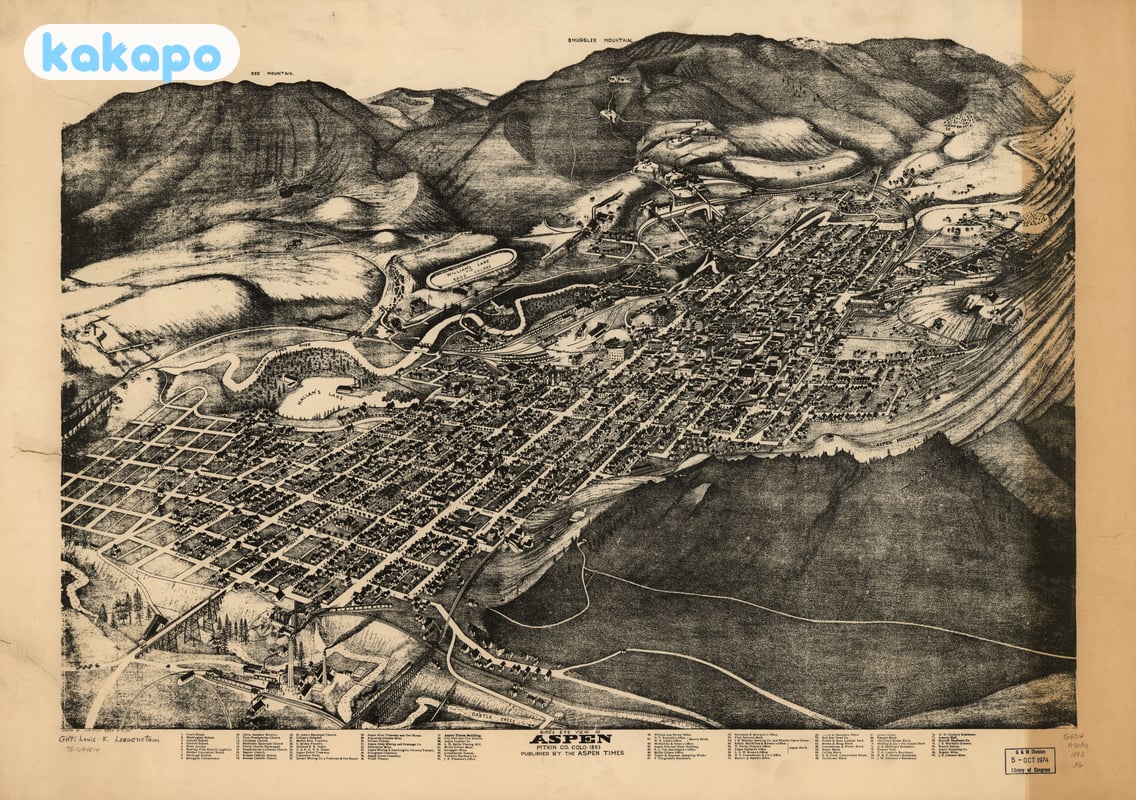
- Downtown Aspen grid — Galena, Cooper, Hyman, Durant streets in a tight grid; the Wheeler Opera House, the Jerome Hotel, the Caribou Club, the Aspen Art Museum, the Hotel Jerome bar where Hunter S Thompson held court. Walkable end-to-end in 10 minutes.
- The West End — residential Victorian district west of downtown; the Hotel Jerome, the Music Tent (Aspen Music Festival, June-August), quieter B&Bs.
- The East End — Snowmass Drive and the trail to Smuggler Mountain; the dawn-patrol "Smuggler Hike" is a local ritual.
- Snowmass Village — separate town 20 min west; Snowmass Base Village, Snowmass Mall, family-friendly, cheaper hotel rates than central Aspen.
- Maroon Bells (summer) — the most-photographed peaks in North America, 16 km west of Aspen. Reservation required mid-May through October — book at aspenchamber.org 1-2 weeks ahead. Parking $10 reservation + $10/vehicle; or the RFTA Maroon Bells shuttle $16 round-trip from Aspen Highlands.
- RFTA (Roaring Fork Transit) — the free local bus running Aspen-Snowmass-Highlands-Buttermilk-Maroon Bells. Genuinely excellent; runs 06:00-02:00 in ski season. Don't rent a car if you're staying in town.
- The ski-bum vs billionaire split — Galena Street boutiques ($400 ski-pants, $25 cocktails at Caribou Club) and the Locals' Line ($4 Coors at Mountain Chalet, $14 sandwich at Big Wrap) coexist within two blocks. Both are accessible; you choose your altitude.
If it's your first time visiting
- Best arrival airport: Aspen-Pitkin County Airport (ASE) is 6 km from town with direct flights from Denver, LAX, Dallas, Chicago, NYC — but weather cancellations are common in winter (the airport sits at 7,820 ft and visibility minimums are demanding). Eagle County (EGE) is 1.5h drive, bigger, more reliable. Denver (DEN) is 4-5h drive with no public transit option — Colorado Mountain Express shuttle $100-150 one-way, or rent at DEN.
- Public transport: RFTA buses are free in-valley and run every 15-20 min Aspen-Snowmass; the free Aspen "downtowner" minibus also runs door-to-door within town in winter (call 970-429-2645). Don't rent a car if you're staying in Aspen or Snowmass — parking is $30-50/day and the RFTA is faster.
- Best neighbourhood for your first night: Downtown Aspen for walkability to bars and Ajax base; the West End for quieter Victorian B&Bs; Snowmass Village for cheaper family-friendly rates and bigger terrain.
- Day 1, altitude-friendly: sleep in Glenwood Springs (1,750 m) the first night if budget allows; drink double water from Denver onward; no alcohol day 1; ski half-days for the first 2 days. Heart-condition visitors should consult a doctor before — there have been heart attacks at Ajax summit.
- Common rookie mistakes: buying lift tickets at the window for $250-300/day (pre-purchase Aspen Snowmass passes 1-2 weeks ahead via aspensnowmass.com saves $80-120/day; IKON and Mountain Collective passes include Aspen days), showing up at Maroon Bells without a reservation (mid-May through October you'll be turned around at the gate), driving Independence Pass in winter (it's CLOSED October-May, not optional — Google Maps will still try to route you over it), under-tipping ski instructors ($50-100/day per family is the local norm), wearing cotton in -15°C wind (merino wool base layer, not cotton).
- Currency and tipping: USD. 18-22% at restaurants, $1-2 per drink at bars, $5-10/day for housekeeping, $50-100/day for ski instructors per family. Sales tax + lodging tax adds ~10-12% to quoted hotel rates.
- Book lift tickets, instructors and Maroon Bells reservations 2-4 weeks ahead — window-rate tickets are $250-300/day; passes prebooked through aspensnowmass.com run $180-220/day. Ski school at Treehouse (Snowmass) for kids; Aspen Mountain Ski + Snowboard School for adults.
- Don't go off-piste without training. Aspen Highlands Bowl is in-bounds but extreme — you need beacon, shovel, probe and the avalanche-control gate must be open. Backcountry beyond the boundary ropes requires a CAIC daily forecast check (avalanche.state.co.us) and a guide (Aspen Expeditions, Powder Tours). People die every winter doing this without preparation.
Practical info — emergency numbers
- Emergency: 911.
- Aspen Police non-emergency: 970-920-5400.
- Aspen Valley Hospital ER: 970-925-1120.
- Mountain Rescue Aspen: 911 dispatch.
- CAIC avalanche forecast: avalanche.state.co.us.
Bring: layered ski gear, sun protection (high-altitude UV), winter outer-layer, ice cleats for icy days, plenty of water, a contactless card, US-valid travel insurance with adventure-sports + altitude cover.
Frequently asked questions
Is Aspen safe to visit in 2026?
Yes — Aspen is one of the safer US tourist destinations. The town itself is small, walkable, and very low-crime. The realistic risks are environmental: the 2,438m base altitude (3,777m at Highlands Bowl), backcountry avalanche risk for off-piste skiers, the Independence Pass closure October-May, summer wildfire smoke episodes, and the surprising cost of everything. The US sits at Level 1 on the general State Department advisory.
Is Aspen safe at night?
Yes — Aspen town at night is essentially crime-free. The downtown core around Cooper Avenue and the Hyman Avenue Mall has restaurants and bars open late with a notably affluent and low-friction nightlife scene. Standard alpine-resort precautions apply: walk the icy sidewalks in winter with care, use ice cleats on extreme-cold nights, and don't try to drive Independence Pass or Castle Creek in snowstorms after dinner. RFTA buses to Snowmass and the ski mountains run until late.
Is Aspen safe for solo female travellers?
Yes — among the safer US destinations for solo women. The town is small, well-lit, walkable, and the population is heavily tourism-oriented. The genuine non-gendered risks are altitude, backcountry avalanches if off-piste skiing or hiking alone (don't), and winter mountain driving from Denver. Hotel staff, ski-school instructors, and RFTA bus drivers are all helpful with logistical questions.
Can you drink tap water in Aspen?
Yes — Aspen's tap water is excellent and comes from pristine alpine sources (Castle Creek and Maroon Creek). The City of Aspen Water Department publishes annual quality reports. Tap is the norm in restaurants and is offered free with meals. A refillable bottle is essential — altitude dehydrates faster than visitors expect, and you should be drinking double your normal water intake during the first 1-2 days.
What's the biggest scam to avoid in Aspen?
There isn't a meaningful scam culture in Aspen. The recurring practical traps are window-price lift tickets ($250-300/day) versus pre-purchase savings (book Aspen Snowmass passes 1-2 weeks ahead via the official site), Maroon Bells parking access for visitors who didn't book a reservation (required in summer; book at Aspen Chamber site), backcountry guide quality variation (Aspen Expeditions and Powder Tours are established and reputable), and rental car / SUV pressure at Aspen Airport that may exceed what you need — RFTA buses cover all four ski mountains free.
How serious is the altitude really?
Real. Aspen base is 2,438m (8,000ft) and Highlands Bowl tops out at 3,777m. Day 1-2 effects include faster fatigue, dehydration, occasional headache, and disrupted sleep — these are normal. Mitigations: drink double water from the moment you land in Denver, avoid alcohol on day 1, and if budget allows sleep your first night at Glenwood Springs (1,750m) before climbing to Aspen. Skiing at altitude is genuinely harder than at sea-level resorts, so build in rest days. People with heart conditions should consult a doctor before travelling — there have been heart attacks at the Aspen Mountain summit. UV is severe at altitude with snow reflection; sunscreen and sunglasses are mandatory.
Sources
Run a business in Aspen?
Show visitors your Aspen business is a safe choice. The free Verified by Kakapo badge puts Aspen's live safety score on your website, links back to your verified page, and updates itself. No cost.
Get the free badge →