What happened
Just after 8am on Tuesday 18 August, two Qantas aircraft on the ground at Sydney Kingsford Smith Airport were given taxi instructions that put them on the same piece of pavement. Flight QF589 had landed from the Gold Coast and was tracking west along taxiway Lima. Flight QF405, preparing to depart for Melbourne, was cleared to turn onto that same taxiway. The crew of the Melbourne aircraft saw the inbound jet, braked normally and stopped to let it pass.
Nobody was injured. The Australian Transport Safety Bureau, the independent federal investigator, has classified the event as an "incident" rather than the more serious category it reserves for near collisions, stating that there was no immediate risk of collision and that the departing aircraft braked normally before coming to a stop (ABC News).
What makes it worth a traveler's attention is not the event on its own. It is that this is the fourth ground conflict at the same airport in under a month, and the ATSB announced on 21 August that it would investigate (Reuters, via Free Malaysia Today).
The three earlier events, as reported by the ABC:
- 27 July. A Qantas Boeing 737 was cleared to cross the main runway while a QantasLink aircraft was landing on it.
- 9 August. A Jetstar aircraft braked sharply to avoid a Boeing 777 that was under tow. One cabin crew member was injured. Two airport workers were subsequently stood down.
- 14 August. A Virgin Australia flight received takeoff clearance that was immediately withdrawn, because a Qantas aircraft had been cleared to cross the same runway a little over 1,200 metres ahead of it.
Each was caught, and in each case the layers of protection that aviation is built around did what they are supposed to do. The crews saw the conflict, or the controller caught it, and the aircraft stopped. That is the system working, but four in four weeks at one airport is a pattern rather than a coincidence, and the ATSB has said explicitly that it wants to understand whether the events share common contributing factors rather than treating each as an isolated case.
Airservices Australia, the government body that provides air traffic control, said each incident is being investigated on its individual facts and that it will continue to review operational events and take any action required to maintain safe operations. Qantas noted that its aircraft were cleared by air traffic control in each case and said it would support the ATSB investigation.
One piece of context has come up repeatedly in Australian reporting. A significant set of airspace and procedural changes for the Sydney basin took effect on 9 July, tied to the opening of the new Western Sydney International airport, and an air traffic controller had separately raised concerns about how well prepared the system was for that transition (Simple Flying, The New Daily). Whether that is actually the cause is exactly what the investigation is for. A preliminary ATSB report is expected within roughly six to eight weeks, with a final report considerably later. Preliminary reports set out the sequence of events and do not usually assign cause.
Why it matters for travelers
It is worth being straightforward about the size of this risk, because aviation stories are easy to read as more frightening than they are.
Runway incursions and taxiway conflicts are among the most common categories of safety occurrence at busy airports anywhere in the world. Large international airports record them regularly. They are taken seriously precisely because the worst case is catastrophic, but the overwhelming majority resolve exactly as these four did, with a crew stopping and a report being filed. Nothing in this cluster suggests that flying into or out of Sydney is unsafe, and no airline, regulator or government has advised anyone to change travel plans.
The realistic effect on your trip is operational rather than physical. When a regulator opens a systemic investigation into ground movements at an airport, the usual near term response from the air navigation service provider is to increase separation, slow down taxi flows, hold aircraft longer before crossing runways, and generally trade throughput for margin. At an airport with Sydney's constraints, that shows up as delay.
Sydney Airport is unusually easy to congest. It handles a very large share of Australia's international traffic from a compact site inside the city, it operates under a legislated cap of 80 aircraft movements per hour, and it has a strict overnight curfew between 11pm and 6am with only narrow exemptions. Those three facts together mean that Sydney has very little capacity to absorb a bad morning. A delay early in the day propagates through the schedule, and a delay late in the day can run into the curfew, at which point a flight does not simply depart late. It is cancelled or diverted, and you are overnighting somewhere.
So the honest framing is this. The chance that an air traffic control error hurts you is remote. The chance that heightened caution at Sydney costs you a connection over the next couple of months is meaningfully higher than usual, and that is the thing worth planning around.
What to do
Give yourself buffer on connections. If you are transiting Sydney, avoid the tightest legal connection the booking engine will sell you, particularly for international to domestic transfers. Sydney's international terminal (T1) and its domestic terminals (T2 and T3) are on opposite sides of the airfield and are not walkable. You move between them by the Airport Link train, which takes a few minutes but charges a station access fee on top of the fare, by the transfer bus, or by taxi or rideshare. Add the time for immigration, baggage reclaim and a second security screening, and a two hour connection is comfortable while a one hour connection is optimistic on a good day and unrecoverable on a bad one.
Fly earlier in the day. Morning departures are the least exposed to accumulated delay and have the most rebooking options behind them if something goes wrong. This matters more than usual right now.
Be careful with the last flight of the night. Anything scheduled to depart Sydney after about 9pm sits close enough to the 11pm curfew that a moderate delay becomes a cancellation. If you have a choice, take the earlier service, and if you do not, know in advance what your airline's policy on accommodation is.
Keep your seatbelt fastened while the aircraft is moving on the ground. The only injury across these four events was to a cabin crew member during a sudden brake application while taxiing. Ground manoeuvring is exactly when unsecured passengers get hurt, and it is the cheapest precaution available to you.
Do not schedule anything unmissable for the day you land. Same day cruise departures, same day onward international flights on a separate ticket, and same day weddings or meetings are the bookings that turn an ordinary delay into a lost trip. If you cannot avoid it, arrive a day early.
Check your cover. Confirm whether your travel insurance covers missed connections and delay expenses, and remember that protections differ sharply depending on whether your journey is one ticket or two separate ones. On a single ticket the airline reaccommodates you. On separate tickets the second airline owes you nothing.
Follow official sources rather than social media. The ATSB publishes its investigation notices and reports directly, and your airline's app is the fastest reliable notice of a schedule change. Footage of ground incidents circulates with very little context and tends to make routine events look dramatic.
Sydney's wider safety picture
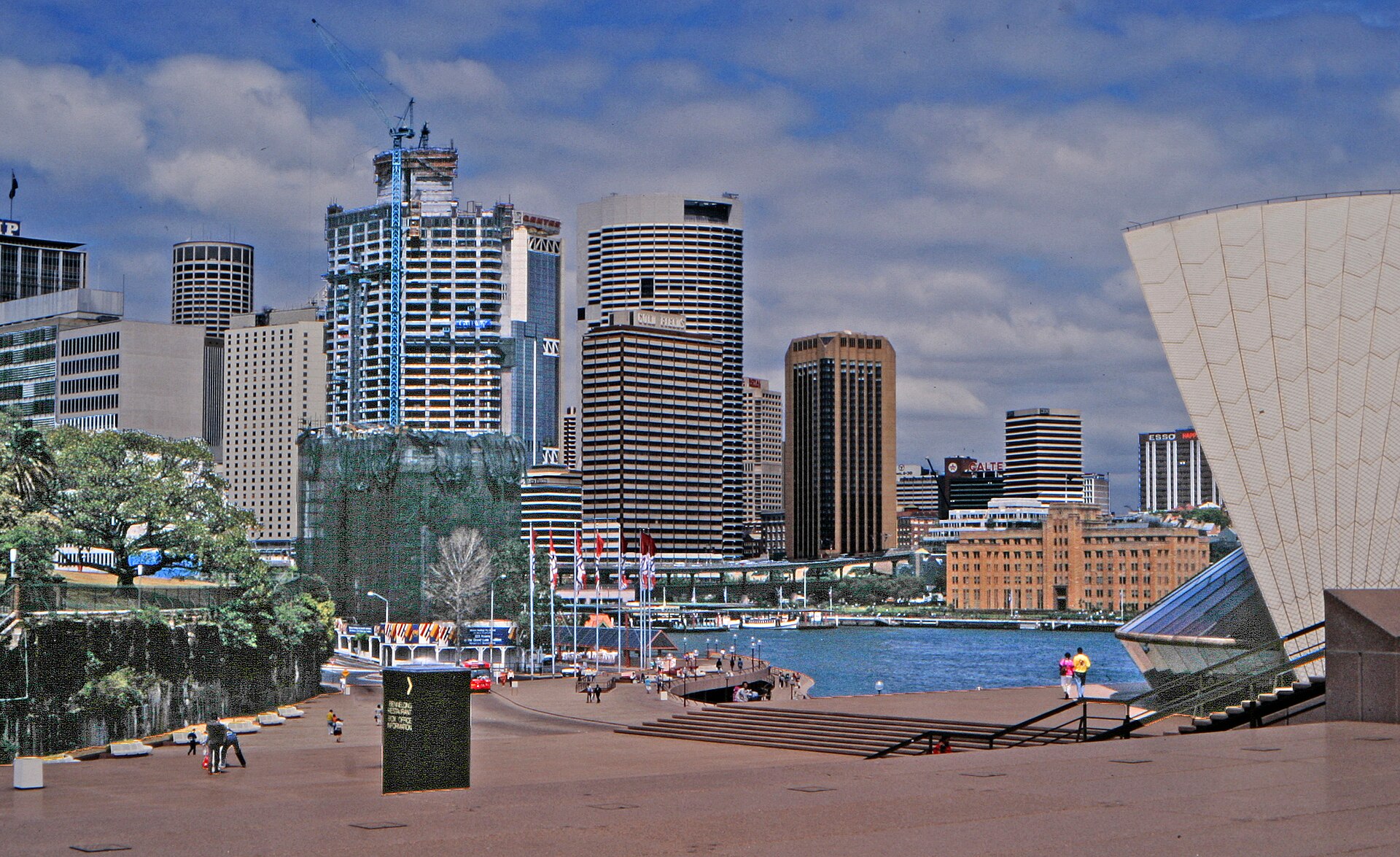
Sydney scores 86 out of 100 in Kakapo's safety assessment, which places it among the safer major cities in the world for visitors, and nothing in this aviation story changes that. Violent crime against tourists is rare, emergency services are reliable and reach almost everywhere quickly on 000, hospital care is excellent, tap water is safe, and the city is comfortable to walk and use public transport in at most hours.
The risks that actually affect visitors to Sydney are mundane and mostly environmental. Opportunistic theft happens in nightlife areas and on crowded transport, particularly around Kings Cross, Darling Harbour and the central business district late at night, and it is the standard advice that applies: keep your phone out of your back pocket and do not leave a bag on the back of a chair. Alcohol related trouble is the most common source of late night incidents in a handful of entertainment strips, and it is easily avoided by leaving before things sour.
The genuinely underrated risk in Sydney is the water. Rip currents at ocean beaches injure and kill visitors every year, including strong swimmers who did not recognise what they were swimming in. Swim between the red and yellow flags at patrolled beaches, and if you are caught in a rip, do not swim against it. Summer brings heat and, in bad bushfire seasons, smoke that can affect anyone with a respiratory condition. Sun exposure is stronger than most northern hemisphere visitors expect, and sunburn is the injury that spoils more Sydney holidays than anything on this page.
For drivers, traffic keeps to the left, and the combination of unfamiliar orientation and heavy toll road usage catches out visitors more often than any criminal risk does.
None of this shifts because of what happened on taxiway Lima. We have left Sydney's safety score unchanged, and we will update this page if the ATSB's preliminary report finds something that changes the picture for passengers.
Cited sources
Reporting from the outlets below.
-
1
Net Fourth Sydney Airport runway safety incident in almost as many weeks being investigated (ABC News)
-
2
Freemalaysiatoday Australia investigates fourth close call at Sydney airport in less than a month (Reuters)
-
3
Simpleflying Qantas Taxiway Near-Miss Marks Sydney's 4th Close Call Incident In A Month, ATSB Investigates (Simple Flying)
-
4
Com Watchdog to probe fourth close shave at Sydney airport (The New Daily)
Frequently asked questions
Is Sydney safe to travel to right now?
Australia's transport safety watchdog is investigating a fourth runway or taxiway conflict at Sydney Airport since late July, after two Qantas jets were given conflicting taxi instructions on 18 August. No one was hurt in the latest event, and the practical risk to travelers is delay rather than danger. See Kakapo's live Sydney safety report for the up-to-date composite score, neighbourhood-by-neighbourhood breakdown, and per-source advisories from US State Dept, UK FCDO, Canadian government, and Australian Smartraveller.
What happened in Sydney?
Sydney Airport under investigation after a fourth air traffic control close call in under a month. Australia's transport safety watchdog is investigating a fourth runway or taxiway conflict at Sydney Airport since late July, after two Qantas jets were given conflicting taxi instructions on 18 August. No one was hurt in the latest event, and the practical risk to travelers is delay rather than danger. This is a incident based on reporting from major travel-news outlets — see the cited sources below for the original coverage.
Should I cancel my trip to Sydney?
Most travel-safety events do not require cancelling a planned trip. Read the "What it means for travelers" section above for the specific guidance, check the live Sydney safety report for the current overall score, and consult your travel insurance for cancellation eligibility. Kakapo updates the Sydney safety profile as new advisories land.
Where can I find more travel safety news?
Kakapo publishes new travel-safety updates as events develop, sourced from BBC, Reuters, the Guardian, Al Jazeera, Deutsche Welle, France 24, US State Dept, and UK FCDO. Visit the live travel-news feed at kakapo.travel/travel-news for the latest.