What happened
German Interior Minister Alexander Dobrindt confirmed on Friday that a hidden weapons depot discovered in woodland in Brandenburg, the state that surrounds Berlin, is assessed by German security services as having been placed there on the orders of Russian intelligence. The cache was found last October during an investigation that has only now been made public, and according to reporting by the broadcasters NDR and WDR together with the newspaper Sueddeutsche Zeitung, it held live firearms and ammunition in a professionally prepared hiding place.
Germany's domestic intelligence agency, the Federal Office for the Protection of the Constitution, describes the site as a classic tradecraft arrangement known among intelligence officers as a dead letterbox: a concealed drop point known only to the person who fills it and the person who empties it, so that the two never have to meet. Euronews reported that investigators believe the depot was stocked for agents working on behalf of Moscow. Bloomberg reported that German officials link the find to preparations for so called hybrid attacks, and further reporting says federal prosecutors are pursuing a suspect who was arrested in Romania on suspicion of intelligence activity and of preparing a serious act of violence against the security of the state.
The Russian embassy in Berlin has not commented publicly on the reports. Moscow has previously dismissed similar German accusations.
What investigators say the cache was for
The phrase German officials have used is kinetic operations, which in this context means acts of physical violence carried out by a person rather than sabotage of infrastructure or activity online. That is a significant escalation from the pattern Germany has documented over the past two years, which has mostly involved arson attempts, parcel devices, drone overflights of military and civilian sites, and recruitment of low level operatives through messaging apps.
The head of the domestic intelligence service, Sinan Selen, warned earlier this year that Russian services could attempt targeted killings in Germany, and named the categories of people considered most exposed: executives in the defence industry, exiled Russian and Belarusian opposition figures, and prominent supporters of Ukraine. Nothing in the current reporting suggests tourists, public spaces, transport hubs, or crowded events were part of the planning. That distinction matters, and it is the reason this story does not change the practical risk picture for a visitor to Berlin.
It does, however, sit alongside a run of related events that travelers may have already noticed. Drone sightings forced temporary halts at German airports earlier this month, and Berlin has been dealing with the aftermath of a January power blackout that a city commission concluded was a deliberate attack. The German security debate this summer is about a sustained campaign of low level pressure rather than about any single incident.
Why it matters for travelers
The honest answer is that it matters indirectly rather than directly. Three things follow from a story like this one.
First, the security posture in Berlin tightens in visible ways. That means more uniformed and armed federal police at Hauptbahnhof, more presence around the government quarter and around embassies, and more frequent bag checks at museums, parliament buildings, and large events. None of it is aimed at visitors, but it changes how long things take. Give yourself extra time for anything that involves a security screening, particularly the Reichstag dome, which already requires advance registration and photo identification.
Second, disruption in Germany this year has tended to arrive through transport rather than through street crime. Airport operations have been paused at short notice because of drone sightings, and rail services have been suspended for hours at a time because of cable fires and infrastructure incidents. The practical consequence for a traveler is not danger, it is a missed connection.
Third, demonstrations. Berlin sees frequent protest activity connected to the war in Ukraine, to Russian policy, and to Middle East politics, and news like this reliably produces gatherings outside the Russian embassy on Unter den Linden and near the Brandenburg Gate. Berlin protests are usually well policed and peaceful, but they close streets, reroute buses, and occasionally lead to tense standoffs. Walking around one costs you five minutes. Walking through one can cost you a great deal more.
What to do
Around the government quarter and embassies
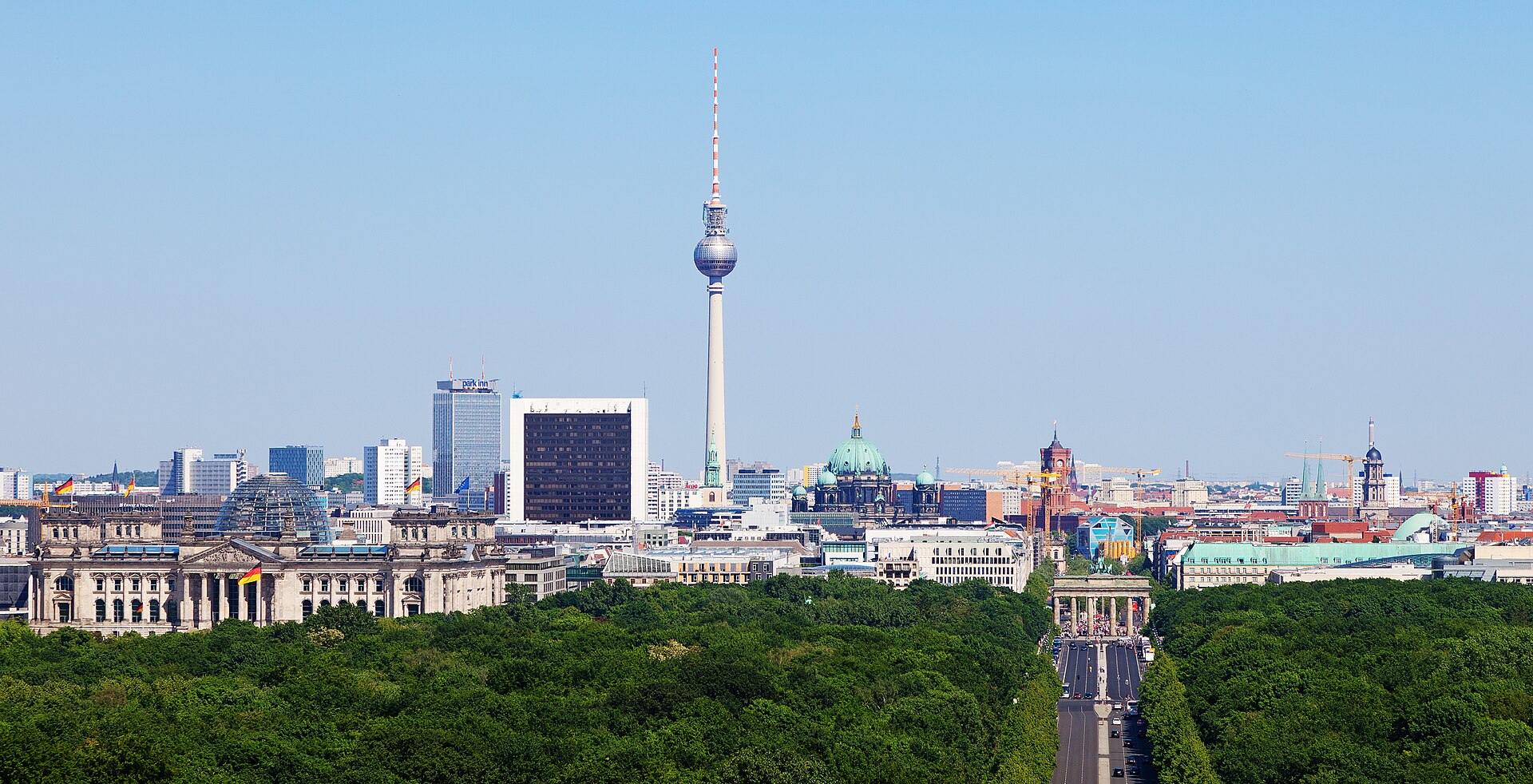
The stretch of Unter den Linden between the Brandenburg Gate and Friedrichstrasse holds the Russian embassy and sits directly beside the main tourist route. If you see barriers, police vans, or a crowd forming, cross to the far side or detour one block north along Behrenstrasse. Do not film police lines or individual officers at close range. Photography in public is legal in Germany, but a camera pushed into an operational cordon attracts attention you do not want on a trip.
The Reichstag, the Chancellery, and the surrounding ministries all have standing security arrangements that can change without notice. If your booking is time stamped, check the Bundestag visitor service the morning of your visit rather than assuming.
Getting around
Berlin Brandenburg Airport has been the site of drone related pauses this summer, in common with several other German airports. Build a buffer of at least three hours between a connecting flight and anything unmissable, and keep your airline's app notifications switched on rather than relying on departure boards.
On the ground, the S-Bahn and U-Bahn are running normally and remain the fastest way across the city. Use the BVG or DB Navigator app for live diversions. Night services run on the U-Bahn on Friday and Saturday nights and on the night bus network the rest of the week, and they are safe to use, with the usual caveat that the last carriage of a late train is the loneliest place on it.
Emergency numbers are 112 for medical and fire and 110 for police. Both work from any phone without a SIM.
If you are out in Brandenburg's forests and lakes
The day trips that take visitors out of the city, Potsdam, the Spreewald, Wandlitz, the lakes north and east of Berlin, run through exactly the kind of woodland where this depot was found. The realistic risk to you is zero, but the correct response if you ever come across a buried container, a sealed package, or firearms in the open is the same as it is anywhere: do not touch it, note where you are, move away, and call 110. Brandenburg forests also hold a great deal of unexploded ordnance from the Second World War, which is a far more common reason for a walker to encounter something dangerous. Stay on marked trails, and pay attention to seasonal forest fire warnings, which run high through late summer and can close paths at short notice.
The risks that actually affect visitors in Berlin
It is worth restating what the numbers say about visitor risk in this city, because the news cycle and the day to day experience are very different things.
Pickpocketing is the offence that affects travelers most, and it clusters in predictable places: Alexanderplatz, Hauptbahnhof, Warschauer Strasse, the U8 and U1 lines, the Christmas and street markets, and any crowded platform at a shift change. Keep your phone out of your back pocket and your bag in front of you on escalators and in doorways.
After that comes traffic. Berlin's cycle lanes are busy and often sit between the pavement and the road, so pedestrians step into them without looking. Electric scooters compound it. Look left before you step off any kerb.
Drug dealing and occasional aggression persist in a few known pockets, principally Goerlitzer Park, parts of Kottbusser Tor, and the area around Leopoldplatz. These are neighbourhood problems rather than tourist targeting, and they are easy to avoid after dark simply by not cutting through parks at night. Violent crime against visitors remains rare, and the city's medical infrastructure is excellent, with Charite among the best hospital systems in Europe.
Berlin's overall safety picture
Kakapo scores Berlin at 82 out of 100, which places it firmly in the safe band and reflects a city with strong policing, reliable emergency response, high quality healthcare, and dependable infrastructure, held back slightly by opportunistic theft and by night time incidents in a handful of districts. This week's disclosure does not move that score. An intelligence operation aimed at named individuals does not change the probability that a visitor has a bad night on the U8.
What has changed over the past year is the texture of the background risk in Germany. Travelers should expect more visible security, more short notice transport interruptions, and more news stories of exactly this kind for as long as the war in Ukraine continues. The correct response is planning slack rather than anxiety: a buffer before flights, a look at the news the morning of a big travel day, and a habit of stepping around crowds rather than into them.
The bottom line
A weapons cache placed by a foreign intelligence service in the woods outside a European capital is a serious story about European security. It is not a reason to change a trip to Berlin. Go, keep your bag in front of you on the U-Bahn, leave extra time at the airport, and give any protest you come across a wide berth.
Cited sources
Reporting from the outlets below.
Frequently asked questions
Is Berlin safe to travel to right now?
German security services say a professionally concealed weapons depot found in woodland outside Berlin was set up on the orders of Russian intelligence and was meant to arm agents for acts of violence. The people at risk are specific individuals, not visitors, and nothing about day to day travel in Berlin changes, but expect a visibly heavier security posture. See Kakapo's live Berlin safety report for the up-to-date composite score, neighbourhood-by-neighbourhood breakdown, and per-source advisories from US State Dept, UK FCDO, Canadian government, and Australian Smartraveller.
What happened in Berlin?
Hidden weapons cache in a Brandenburg forest near Berlin tied to Russian intelligence: what travelers should know. German security services say a professionally concealed weapons depot found in woodland outside Berlin was set up on the orders of Russian intelligence and was meant to arm agents for acts of violence. The people at risk are specific individuals, not visitors, and nothing about day to day travel in Berlin changes, but expect a visibly heavier security posture. This is a incident based on reporting from major travel-news outlets — see the cited sources below for the original coverage.
Should I cancel my trip to Berlin?
Most travel-safety events do not require cancelling a planned trip. Read the "What it means for travelers" section above for the specific guidance, check the live Berlin safety report for the current overall score, and consult your travel insurance for cancellation eligibility. Kakapo updates the Berlin safety profile as new advisories land.
Where can I find more travel safety news?
Kakapo publishes new travel-safety updates as events develop, sourced from BBC, Reuters, the Guardian, Al Jazeera, Deutsche Welle, France 24, US State Dept, and UK FCDO. Visit the live travel-news feed at kakapo.travel/travel-news for the latest.