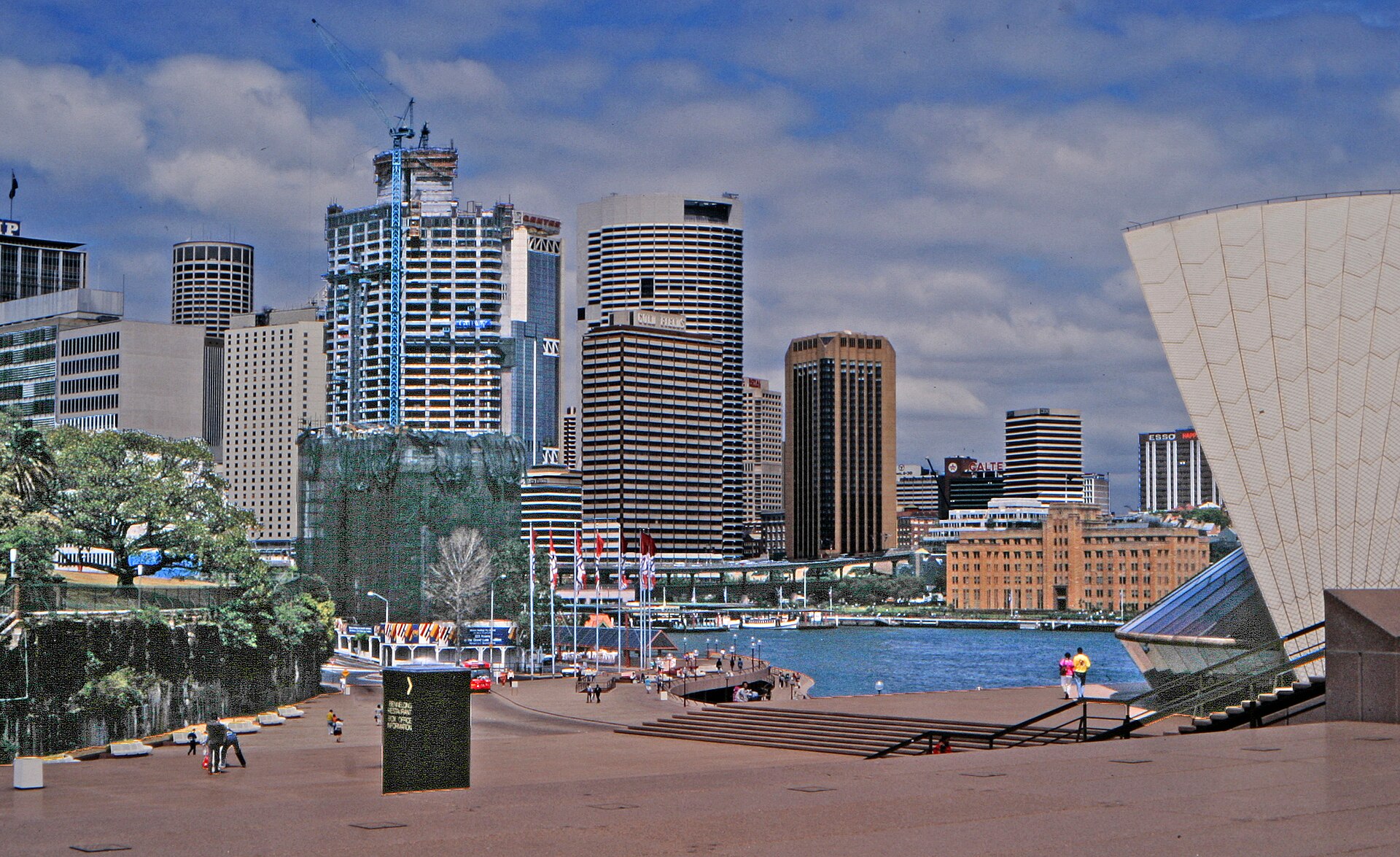
Australia's aviation safety regulator has been warned that air traffic controllers at Sydney Airport have "grave concerns" about a redesign of the city's airspace, and the federal government was formally notified of that warning on Thursday 20 August. For travellers, the practical effect is almost entirely about delays rather than danger, but it is worth understanding what has actually been said and what it changes about how you plan a trip through Australia's busiest airport.
What happened
On 9 July, new airspace rules took effect across the Sydney Basin. They are part of a once in a generation redesign of how aircraft are routed in and out of the region, driven by the opening of the new Western Sydney International airport, which needs its own approach and departure paths carved out of airspace that Sydney Airport has effectively had to itself for decades.
In June, before those rules went live, an experienced air traffic controller lodged a confidential complaint with the Australian Transport Safety Bureau (ATSB). According to Guardian Australia, which revealed the complaint, the controller said the changes had been rushed and had come with "inadequate training for controllers, of all experience levels". The complainant said a large group of Sydney controllers "hold grave concerns about the project" and that they "have minimal confidence in their ability to handle the new airspace and procedures under normal traffic levels". Controllers were being asked to absorb roughly 1,000 pages of new training material without an adequate timetable to do it in.
The most striking line in the ATSB's own written response is the comparison the complainant drew. The bureau recorded that the reporter "is concerned there are similarities to the (air traffic controller) situation in Washington whereby the controllers were pleading with their local management for changes to be made in the months leading up to the mid-air collision". That is a reference to the January 2025 collision between an airliner approaching Ronald Reagan National airport and a Black Hawk helicopter, which killed 67 people and was the deadliest crash on American soil in more than two decades.
Both the operator and the regulator pushed back. The Sydney Terminal Control Unit told the ATSB the complainant "may or may not be across all the procedural or safety work that has occurred to this point", and said the new manuals and procedures had been carefully developed and approved, with extra supervision and monitoring in place and planned restrictions on what newly qualified controllers can work. The Civil Aviation Safety Authority (CASA) said it was satisfied that Airservices Australia had implemented appropriate training, procedures and operational support, and promised continued oversight. Notification to the federal transport minister, Catherine King, was the final step in that process.
The complaint has landed in the middle of a run of three safety occurrences at Sydney Airport in a matter of weeks. In late July, a Qantas flight was initially cleared to cross a runway in front of another aircraft that had just landed. Early on Sunday 9 August, a Jetstar aircraft narrowly avoided colliding with a Qatar Airways aircraft on the tarmac, after which a controller and a tug driver were temporarily stood down for mandatory drug and alcohol testing. A few hours later the same day, a Virgin aircraft aborted its takeoff when a Qantas aircraft began crossing the runway ahead of it.
That third event became a story in its own right because of how it was reported. Airservices Australia chief executive Rob Sharp said the aircraft remained more than a kilometre apart and that clearances were rescinded in time, so in his organisation's view it "didn't meet the mandatory reporting requirements", as the Guardian reported. It was referred to the ATSB four days after it happened. ATSB chief commissioner Angus Mitchell said he was seeking reasons for the delay, called the runway incursion and loss of separation "a transport safety concern", and opened an investigation that will look at "any organisational or systemic issues". The ATSB also disclosed that there was a "supervisory or training situation" in the tower at the time: the controller who issued the initial takeoff clearance was an experienced worker undertaking an endorsement check, monitored by another experienced controller who promptly ordered the clearance cancelled. All three occurrences are under investigation.
Why it matters for travellers
The honest framing is that none of this makes flying into or out of Sydney unsafe in any way you should factor into a decision about whether to travel. Every one of the three occurrences ended with the safety system working: clearances were cancelled, a takeoff was aborted, a monitoring controller caught a colleague's error. The ATSB says there are around 60 runway incursions a year in Australia, and that they rarely involve major airports or large aircraft, which is exactly why a cluster of three at Sydney drew national attention. Commercial aviation in Australia remains among the safest forms of transport in the world, and nothing in the complaint, the CASA response or the ATSB investigations changes that baseline.
What the story does tell you is something more useful and more mundane: Sydney Airport is running with less operational slack than it should have, and that shows up in your itinerary as delay risk.
The root cause is staffing. As Guardian Australia explained in its analysis of the delays, 140 experienced controllers aged 56 or over accepted a redundancy package in 2021 when the pandemic had most aircraft on the ground, and recruitment has never caught up. Nationally, Airservices says it has a record number of controllers, 1,073 as of July this year against 985 in December 2020, but demand has grown faster, with the new Western Sydney airport and a takeover of the airspace at Ballina both added to the workload. Training a controller takes about two years, and a newly qualified controller cannot simply backfill a retiring veteran: after 18 months of training they may only be endorsed for one position in a Sydney tower, such as the domestic taxiways, and would need further training to work international taxiways or runways. The pipeline is narrow at the entrance too. Civil Air president Scott Nugent says roughly 2,000 people apply for around 15 jobs, and every successful applicant must relocate to Melbourne for mandatory training.
The consequence for passengers is direct. When the roster is short, controllers increase the spacing between aircraft to preserve safety margins, and greater spacing means fewer movements per hour. As Nugent put it, if you are doing the work of two people you can only take half as many planes. On Saturday 8 August, the day before the two Sunday occurrences, more than 150 flights passing through Sydney were delayed because of a lack of controllers. This is not a one off: in February 2024, two controllers not showing up for a shift at Sydney triggered cascading delays and cancellations across the country.
Minister King has said improved rostering practices will be introduced in September, and that a new simulator has been installed to expand training capacity in Sydney. Six controllers are currently training, with another 15 expected to start before the end of 2027. Those are real fixes, but they are 2027 fixes. Plan around the delay risk for the rest of this year and into next.
What to do
Fly early in the day. Delay propagates forward through an aircraft's rotations, so a 7am departure is far less exposed than a 6pm one. This matters more at Sydney than at most airports because of the legislated 11pm to 6am curfew: a flight that slips far enough into the evening does not just leave late, it can be cancelled outright and rebooked to the next morning.
Do not book tight connections through Sydney. Allow at least 90 minutes for a domestic to domestic connection, and two to three hours if you are connecting between the international terminal (T1) and the domestic terminals (T2 and T3). Those terminals are not walkable from each other. You need the T-Bus or one stop on the airport rail line, which realistically costs 15 to 25 minutes once you include waiting, and you clear security again on arrival at the domestic side.
Keep the last leg of the day free. If you are arriving into Sydney on a long-haul flight and continuing to Hobart, Cairns, Queenstown or anywhere else with a thin schedule, consider an overnight in Sydney rather than a same-day connection. A missed onward flight on a route with two daily services is a far more expensive problem than a hotel night.
Turn on airline notifications and check status before you leave for the airport. Air traffic flow restrictions at Sydney are typically known a few hours ahead, and the airlines push them out through their apps well before the departure boards catch up.
Give yourself margin on the way to the airport, not just at it. The airport rail stations at the domestic and international terminals are the most reliable option and take about 13 minutes from Central, though they carry a station access fee on top of the fare. Road access to the airport is heavily congested at peak times and rideshare pickup zones can add 10 to 15 minutes on their own.
If you are delayed or cancelled, act immediately rather than queuing. Call the airline or use the app while you are standing in the service queue, whichever connects first. Australia has no equivalent of the EU's fixed compensation regime for delays, so what you get depends on your airline's conditions of carriage and, for anything expensive, your travel insurance. Keep boarding passes and written notice of the delay reason, because insurers will ask for both.
How this fits Sydney's overall safety picture
Sydney holds a Kakapo safety score of 86, which puts it comfortably in the group of large cities where the great majority of visitors have no safety incident at all. Violent crime rates are low by international standards, the city centre and the well-visited harbourside areas are safe to walk at night, public transport is well lit and well used, and emergency services respond reliably on 000. The realistic risks for a visitor are the ordinary ones: opportunistic theft around Circular Quay, Darling Harbour and the busier nightlife strips, drink spiking in late night venues, and the two environmental hazards that actually injure tourists in Australia every year, which are rip currents at ocean beaches and sun and heat exposure. Swim between the red and yellow flags at patrolled beaches such as Bondi, Manly and Coogee, and treat unpatrolled stretches of coast with real caution.
We have not changed Sydney's score in response to this story. Nothing here shifts the risk a visitor actually faces on the ground, and aborting a takeoff or cancelling a clearance is the safety system doing its job, not failing. What has changed is the reliability of the schedule you are booking, and that is worth building into your plans. Treat Sydney Airport as an airport that will probably run late this year, give yourself buffers you would not need in Singapore or Tokyo, and the disruption becomes an inconvenience rather than a ruined itinerary.
We will update this page if the ATSB investigations report findings, if CASA changes its position on the airspace redesign, or if further occurrences are recorded at Sydney.
Cited sources
Reporting from the outlets below.
-
1
The Guardian Sydney air traffic controllers have 'grave concerns' about collision risk after airspace redesign
-
2
-
3
Frequently asked questions
Is Sydney safe to travel to right now?
A whistleblower complaint to Australia's transport safety bureau says Sydney controllers have grave concerns about airspace rules introduced on 9 July, and the federal government was notified on 20 August. Flying remains safe; the practical effect for travellers is delay risk at Australia's busiest airport. See Kakapo's live Sydney safety report for the up-to-date composite score, neighbourhood-by-neighbourhood breakdown, and per-source advisories from US State Dept, UK FCDO, Canadian government, and Australian Smartraveller.
What happened in Sydney?
Sydney air traffic controllers warn regulators of collision risk after July airspace redesign. A whistleblower complaint to Australia's transport safety bureau says Sydney controllers have grave concerns about airspace rules introduced on 9 July, and the federal government was notified on 20 August. Flying remains safe; the practical effect for travellers is delay risk at Australia's busiest airport. This is a advisory based on reporting from major travel-news outlets — see the cited sources below for the original coverage.
Should I cancel my trip to Sydney?
Most travel-safety events do not require cancelling a planned trip. Read the "What it means for travelers" section above for the specific guidance, check the live Sydney safety report for the current overall score, and consult your travel insurance for cancellation eligibility. Kakapo updates the Sydney safety profile as new advisories land.
Where can I find more travel safety news?
Kakapo publishes new travel-safety updates as events develop, sourced from BBC, Reuters, the Guardian, Al Jazeera, Deutsche Welle, France 24, US State Dept, and UK FCDO. Visit the live travel-news feed at kakapo.travel/travel-news for the latest.