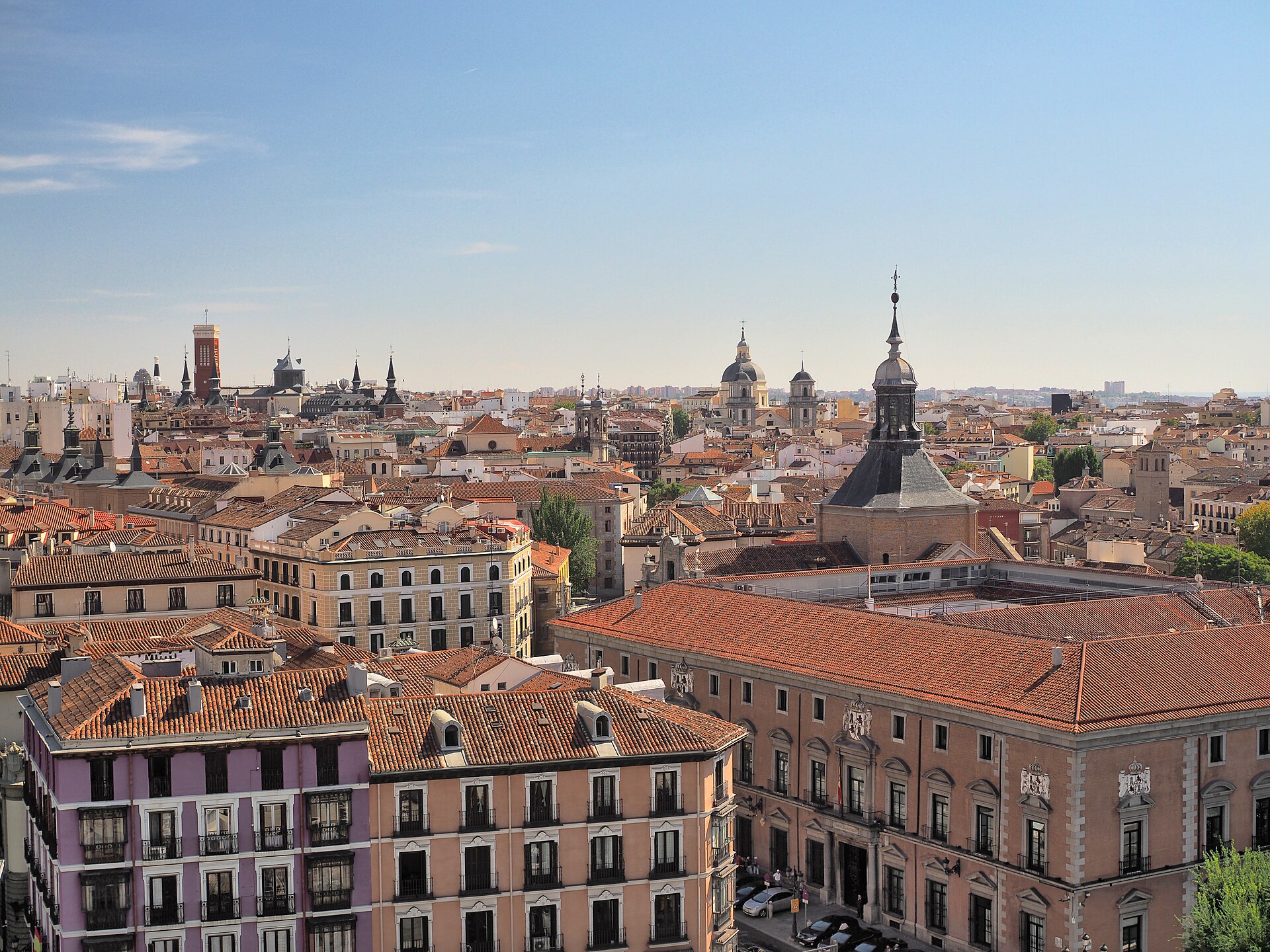
Spain is having one of its hardest fire and flood summers on record, and the two hazards arrived on the same weekend. On Saturday 22 August a forest fire in the Sierra Calderona, inland from Valencia, forced roughly 1,000 people out of their homes, while 150 kilometres away on the Catalan coast flash floods trapped drivers in their cars and emptied a campsite. Madrid itself is not burning and its streets are not flooded, but the capital is the hub that most visitors pass through, and both events sit on routes and day trips that Madrid based travellers use constantly.
What happened
The fire started near Gátova, an inland village of about 450 residents northwest of Valencia, inside the Sierra Calderona Natural Park. Local reporting attributes it to a lightning strike late on Thursday night. By Friday evening more than 400 hectares had burned and flames were moving close to built up areas, so the regional authorities ordered an evacuation of around 1,000 people. Spain's Military Emergency Unit, the UME, worked through the night alongside firefighting helicopters and aircraft, and the Valencia regional civil protection minister put buses on standby for residents without their own transport (Deutsche Welle).
At almost the same time, the Costa Dorada in Catalonia was dealing with the opposite problem. Overnight rain flooded streets in El Vendrell, Coma-ruga and Torredembarra, with several towns recording close to 200 litres per square metre in a matter of hours according to the Meteorological Service of Catalonia. Emergency crews carried out more than 200 rescue operations, pulling people from vehicles and flooded buildings. Two walls collapsed, one at the port of Roda de Berà about 75 kilometres southwest of Barcelona and one at a nearby campsite, injuring at least seven people between them. Around 300 campers were evacuated and many spent the night in a sports centre.
This is the tail end of a season that has already been severe. EU Copernicus data cited by Deutsche Welle puts the area burned in Spain this year at more than 297,000 hectares, and roughly 150,000 hectares of that burned in July alone. The month that matters most for Madrid was July, when two fires in Ávila and Madrid provinces merged into a single blaze of around 15,000 hectares roughly 50 kilometres west of the capital. About 60,000 people were evacuated from that zone, part of roughly 80,000 evacuations nationally, and the fire burned through the grounds of the Madrid Deep Space Communications Complex at Robledo de Chavela. Evacuees were allowed home from 29 July. Sixteen deaths have been linked to the 2026 fires across the country.
The background to all of this is money as much as weather. Spanish spending on wildfire prevention fell from about 364 million euros in 2009 to about 144 million in 2024, even as the number and scale of fires climbed, while spending on fighting fires once they start stayed flat. Economists quoted by Deutsche Welle put the economic impact of the 2022 fire season at roughly 7.1 billion euros (Deutsche Welle). That matters to travellers only in one practical way: prevention gaps mean the pattern repeats, so treat summer fire risk in Spain as a normal planning input rather than a freak event.
Why it matters for travellers in Madrid
Madrid is not a high risk destination. Its overall safety score on Kakapo is 82, which puts it comfortably in the safe band, and nothing this month changes that. The UK Foreign Office has not advised against travel to any part of Spain because of heat, fire or flooding, and no Spanish airport closure or nationwide rail suspension has been announced in connection with this weekend's events (FCDO Spain travel advice).
What does change is the reliability of the things travellers do around Madrid rather than inside it. Three specific exposures are worth understanding.
The first is the day trip belt. The Sierra de Guadarrama, El Escorial, Ávila, Segovia and the pine country west and northwest of the city are the exact corridor that burned in July. Those areas are recovering, some trails and picnic areas remain closed, and the same terrain stays flammable through September. A booked hiking day out of Madrid is the single most likely piece of an itinerary to be cancelled at short notice.
The second is long distance transport. Fires close to track have suspended high speed services in Spain in recent seasons, and flooding on the Mediterranean corridor can do the same on the coast side. Nothing is suspended today, but a fire that starts on a Tuesday can close a line on a Wednesday, so the risk is worth planning around rather than checking once before you fly.
The third is heat itself. Spain has had repeated heatwaves this summer with AEMET special warnings in force for extended stretches, and heat is the hazard that actually hurts most visitors. It is far more likely to spoil a trip than fire or flood, and unlike them it is entirely predictable.
What to do
Check three feeds, not one. AEMET publishes daily heat, storm and fire risk warnings by province, colour coded yellow, orange and red. Check the Madrid province warning and the province you plan to travel to, because they often differ. For rail, check Renfe or Adif on the morning of travel rather than the night before. For fires specifically, regional civil protection accounts on social media move faster than national news.
Treat afternoons in Madrid as indoor time. Between roughly 14:00 and 19:00 in August, plan museums, the Prado, Reina Sofía, Thyssen, a long lunch or a siesta. Move walking tours, Retiro, Malasaña and rooftop time to early morning and after 20:00. Madrid genuinely comes alive at night, so this is not a sacrifice. Carry water, use the shaded side of the street, and remember that many older apartments and small hostels have no air conditioning, which is worth checking before you book.
Rethink the western day trips if there is a red fire warning. On days when Madrid, Ávila or Segovia province is at extreme fire risk, swap the sierra for a city. Toledo, Alcalá de Henares and Aranjuez are reachable by Cercanías or bus and keep you in built up areas. If you do go into the countryside, tell someone your route, do not rely on a single mountain road, and leave immediately if you see smoke rather than waiting to be told. Causing a wildfire in Spain, including through a discarded cigarette, is a criminal offence.
On the coast, take flash flood warnings literally. If you are pairing Madrid with Valencia, Tarragona or Barcelona, understand that Mediterranean autumn storms can drop a month of rain in a few hours. Do not drive into standing water, do not camp in a dry riverbed or on a low lying campsite when an orange or red rain warning is active, and move to higher floors rather than to a car park if water rises. This weekend's injuries came from collapsing walls and trapped vehicles, which is the normal pattern.
Keep flexibility in the booking, not in the plan. Refundable rates and a rail ticket you can change cost a little more in August and are worth it. Travel insurance that covers weather disruption is the cheapest part of a Spanish summer trip.
Madrid in context
None of this should push anyone away from Madrid. The city's real risks for visitors are mundane and well understood, and they have not shifted. Pickpocketing is the main one. Sol, Gran Vía, the Rastro market on Sundays, Atocha and Chamartín stations and the Metro line 1 and line 5 corridors are where teams working distraction techniques operate, and the Foreign Office flags street crime and airport luggage theft as the everyday concerns rather than anything violent. Keep a phone out of a back pocket, keep a bag closed and in front of you on the Metro, and carry a photo of your passport separately from the passport.
Violent crime against tourists is rare, the Metro is safe and well lit late into the night, and Madrid's central districts stay busy well past midnight in a way that itself provides safety in numbers. Emergency number 112 works from any phone in any language, and the Policía Nacional runs a tourist assistance service near Plaza Mayor for reporting thefts.
Madrid's night safety is one of the stronger parts of its score, and that is not an accident. The city's habit of eating late and walking home late means streets that would be empty elsewhere are populated here. The practical advice is unchanged: use licensed taxis or Cabify rather than unmarked cars, stay on lit main streets when leaving nightlife areas like Malasaña, Chueca or La Latina, and be a little more careful around Lavapiés and the streets immediately south of Gran Vía very late at night.
The short version
Spain's fire and flood season is real, is worse than usual, and is happening in places travellers based in Madrid visit rather than in Madrid itself. The right response is planning, not cancellation. Check AEMET the morning of any day trip, keep the sierra plans flexible through September, respect heat warnings in the capital, and treat coastal rain alerts as instructions rather than information. Madrid remains a safe, straightforward city to visit, and August evenings there are still one of the best things in Europe.
Cited sources
Reporting from the outlets below.
-
1
Deutsche Welle Spain battles forest fire a short drive from flash flood (Deutsche Welle, 22 August 2026)
-
2
-
3
Wikipedia 2026 Spain wildfires: season overview, Avila and Madrid province fires
-
4
UK Government UK FCDO Spain travel advice: safety and security
-
5
Aemet AEMET: Spanish State Meteorological Agency warnings
Frequently asked questions
Is Madrid safe to travel to right now?
A wildfire inland from Valencia forced about 1,000 evacuations on 22 August while flash floods on the Catalan coast triggered more than 200 rescues. Madrid is unaffected directly, but the fire belt west of the capital and the summer heat make day trips and long distance travel the parts of a Madrid itinerary worth planning around. See Kakapo's live Madrid safety report for the up-to-date composite score, neighbourhood-by-neighbourhood breakdown, and per-source advisories from US State Dept, UK FCDO, Canadian government, and Australian Smartraveller.
What happened in Madrid?
Wildfires and flash floods across Spain: what travellers in Madrid need to know. A wildfire inland from Valencia forced about 1,000 evacuations on 22 August while flash floods on the Catalan coast triggered more than 200 rescues. Madrid is unaffected directly, but the fire belt west of the capital and the summer heat make day trips and long distance travel the parts of a Madrid itinerary worth planning around. This is a advisory based on reporting from major travel-news outlets — see the cited sources below for the original coverage.
Should I cancel my trip to Madrid?
Most travel-safety events do not require cancelling a planned trip. Read the "What it means for travelers" section above for the specific guidance, check the live Madrid safety report for the current overall score, and consult your travel insurance for cancellation eligibility. Kakapo updates the Madrid safety profile as new advisories land.
Where can I find more travel safety news?
Kakapo publishes new travel-safety updates as events develop, sourced from BBC, Reuters, the Guardian, Al Jazeera, Deutsche Welle, France 24, US State Dept, and UK FCDO. Visit the live travel-news feed at kakapo.travel/travel-news for the latest.