What happened
On Friday 21 August, German interior minister Alexander Dobrindt publicly confirmed that two handguns and ammunition had been found hidden in woodland on the outskirts of Berlin. The cache was actually recovered last year, after a tip off, and a suspect was arrested in Romania at the time. What is new is the official confirmation and the assessment of what the weapons were for.
German investigators believe the firearms were staged for what security services call kinetic operations, a term that covers targeted violence up to and including assassination, carried out on behalf of a foreign intelligence service. Reporting across German and international outlets connects the cache to suspected Russian intelligence activity, and to a previously disclosed plot against the chief executive of the defence manufacturer Rheinmetall (Bloomberg, Insurance Journal).
Dobrindt said the case shows that Germany is facing a high level threat, and said investigators had not ruled out foreign involvement. He declined to give the arrested suspect's nationality, and declined to confirm where an attack might have been planned. The Kremlin spokesperson, Dmitry Peskov, dismissed the reporting as noise without substantive evidence (CP24).
The confirmation lands in a wider pattern that German officials have been describing for around two years under the heading of hybrid warfare, meaning hostile acts that sit below the threshold of open military attack. Earlier in August, an explosive laden drone was found at Leipzig airport near a Ukrainian cargo aircraft, and that investigation is ongoing with possible foreign involvement suspected. German security agencies have repeatedly warned that hostile services may be preparing operations against defence industry figures and against exiled opposition figures living in Germany.
It is worth stating clearly what this is not. It is not an attack that took place. It is not an ongoing manhunt in central Berlin. It is not a threat directed at the general public or at visitors, and no government has issued a travel advisory in response to it. It is a counter intelligence case that was resolved a year ago and has now been described publicly.
Why it matters for travelers
On its face, very little of this touches an ordinary visitor. The threat described is targeted rather than indiscriminate. The people security services say are at risk are a small and specific group: senior executives at defence companies, and political exiles. Tourists are not in that category, the weapons were recovered before anything happened, and a suspect is in custody. If you are deciding whether to walk around Mitte or Kreuzberg next week, this story should not change your answer.
Where this category of event does reach travelers is indirectly, and it is worth understanding the two mechanisms, because they are the ones that will actually cost you time.
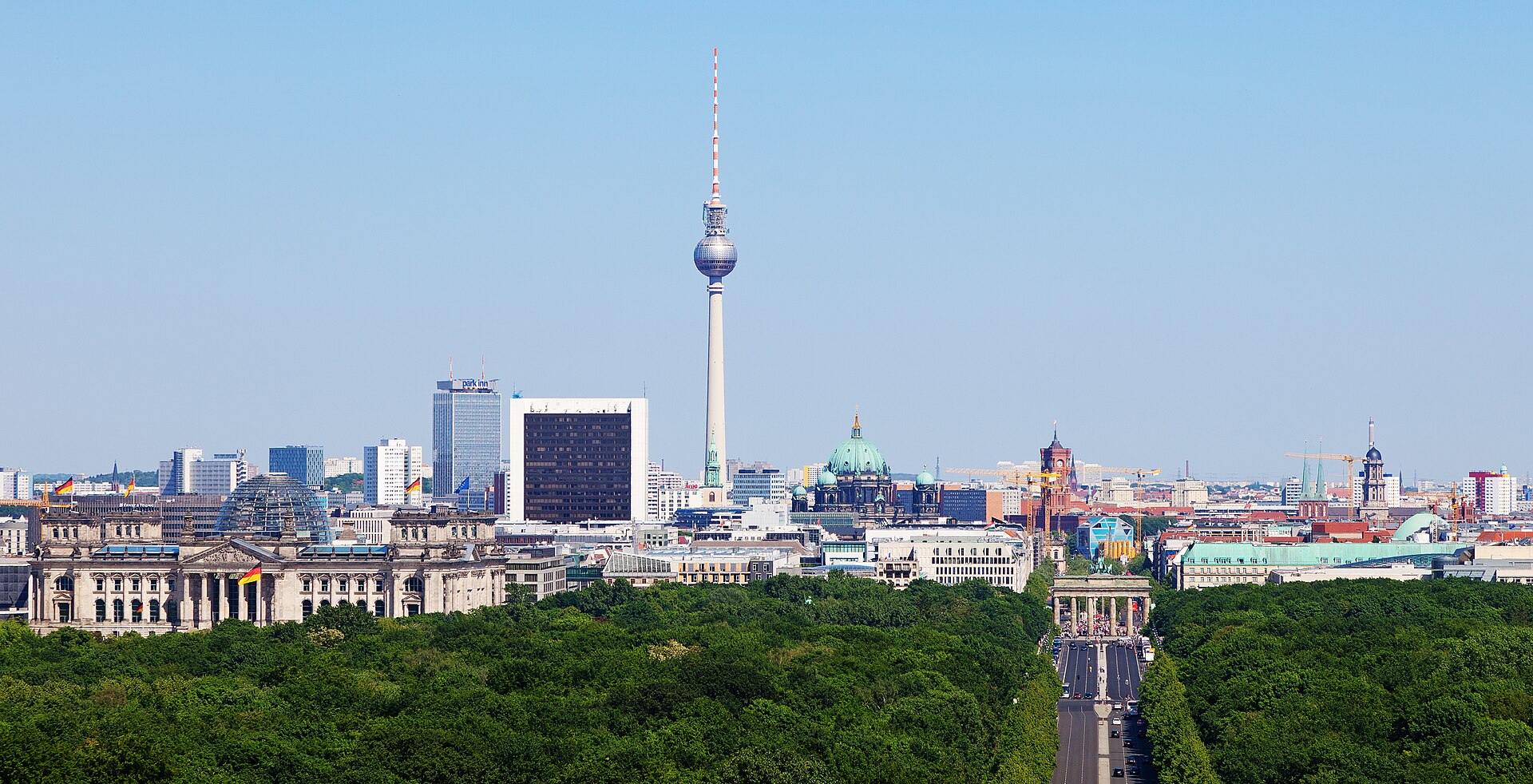
The first is visible security posture. When German authorities are working an active hybrid threat picture, the practical result in Berlin is more armed police at transport hubs, more bag checks, and occasional short notice closures or cordons around government buildings, embassies, defence linked sites and Ukrainian institutions. Berlin's government quarter sits directly between the Brandenburg Gate and the main station, which means these closures land squarely on the tourist route. They are usually brief and usually undramatic, but they can rearrange an afternoon.
The second is infrastructure disruption. This is the more consequential one. The events Germany has attributed to hybrid activity, and the drone sightings that have periodically suspended flights at German airports, hit exactly the systems travelers depend on. A drone sighting can close a runway for an hour or a night. A cable or signalling attack can stop trains. Berlin has already had a demonstration of how much that hurts, though from a different source: an arson attack on the city's power grid in January 2026 cut electricity to parts of southwestern Berlin, including Zehlendorf, Wannsee, Dahlem and Lichterfelde, for around four days, affecting tens of thousands of households, schools, hospitals and care homes in midwinter. Investigators attributed that attack to a domestic far left group that claimed responsibility, and dismissed speculation about Russian involvement, so it is not part of this story. It is simply the clearest recent illustration of how an attack on infrastructure reaches a visitor: not through violence, but through a hotel with no heating and an S-Bahn that is not running.
So the sensible reading is that Berlin's threat environment involves a level of state linked activity that is genuinely unusual for a western European capital, that this activity is not aimed at you, and that its realistic impact on your trip is logistical.
What to do
Do not change your plans. There is no advisory against travel to Berlin from any major foreign ministry in response to this case, and nothing about a recovered cache from last year justifies cancelling anything. Germany remains a low risk destination by any standard measure.
Build slack around flights, not around sightseeing. The realistic disruption is transport. If you are connecting through a German airport, avoid the tightest possible connection, and keep your airline's app installed and notifications on so a suspension reaches you before you reach the terminal. Deutsche Bahn's app serves the same purpose for rail.
Have a fallback for rail. Berlin is well served by long distance buses and by domestic flights, and both are useful when a rail corridor is closed at short notice. Knowing the alternative exists is most of the value.
Carry a power bank and keep some cash. This is generic advice that happens to be well suited to Berlin. Germany is still noticeably more cash reliant than most of western Europe, many smaller bars, bakeries and Imbiss counters are card averse or cash only, and card terminals are the first thing to stop working in an outage. Fifty to a hundred euros in small notes covers a bad day.
Respect police cordons and do not film security operations. If you come across a cordon, a bomb disposal callout or an evacuation, leave the area rather than photographing it. German police take a dim view of bystanders inside a cordon, and evacuations around suspicious packages are common enough in Berlin that you may well encounter one for entirely unrelated reasons.
Register with your foreign ministry if you are staying a while. Most services, including the UK's travel advice notifications, the US STEP programme and equivalents elsewhere, are free and push alerts to you directly. For a weekend trip this is overkill. For a stay of weeks it is worth the five minutes.
Know the number. 112 reaches emergency services anywhere in Germany, free, from any phone, and operators in Berlin generally speak English. 110 reaches police directly.
Berlin's wider safety picture
Berlin scores 82 out of 100 in Kakapo's assessment. That is a solid score for a large European capital, and it reflects a city where serious violence against visitors is rare, emergency and medical services are excellent, and the practical risks are ordinary ones.
The most common problem visitors actually have in Berlin is pickpocketing. It concentrates in exactly the places you would expect: Alexanderplatz, Hauptbahnhof, Kottbusser Tor, the U8 and U2 lines, the area around Warschauer Straße at night, and crowded Christmas markets in winter. It is opportunistic and almost entirely preventable with a zipped bag worn in front and a phone that is not in a back pocket.
Berlin's nightlife is a genuine draw and also where most incidents involving visitors happen, generally involving alcohol, drugs sold on the street in and around Görlitzer Park and Hasenheide, and the small hours. Drug dealing in those parks is persistent and occasionally confrontational, and the straightforward advice is to walk through them in daylight and avoid them after dark. Kottbusser Tor and parts of Neukölln have visible street drug scenes that look worse than they are dangerous, but they are not places to wander through distracted at 4am.
Berlin also sees frequent political demonstrations, which are legal, well policed and normally peaceful, but which can close streets and transit at no notice and occasionally turn confrontational at the margins, particularly around 1 May in Kreuzberg. The advice is the same as anywhere: they are interesting to see and not worth being inside.
Cycling is excellent and the main real injury risk in the city, mostly from car doors and from junctions where drivers turn across bike lanes. Helmets are not mandatory and are a good idea anyway.
We have left Berlin's score unchanged. A recovered weapons cache tied to a targeted plot, with a suspect already arrested, does not shift the risk to a visitor. We will revisit this page if the investigation produces something that does.
Cited sources
Reporting from the outlets below.
-
1
Bloomberg Germany Says Hidden Weapons Cache Points to Hybrid Attack Plans (Bloomberg)
-
2
Insurancejournal Germany Says Weapons Cache Points to Hybrid Attack Plans (Insurance Journal)
-
3
Cp24 Germany: Suspected Russian weapons cache found near Berlin (CP24)
-
4
Wikipedia 2026 arson attack on the Berlin power grid
Frequently asked questions
Is Berlin safe to travel to right now?
German interior minister Alexander Dobrindt confirmed on 21 August that firearms found hidden in woodland outside Berlin are believed to have been staged for targeted attacks, with foreign involvement suspected. The plot described targets specific individuals rather than the public, and there is no advisory against travel to Berlin. See Kakapo's live Berlin safety report for the up-to-date composite score, neighbourhood-by-neighbourhood breakdown, and per-source advisories from US State Dept, UK FCDO, Canadian government, and Australian Smartraveller.
What happened in Berlin?
Berlin weapons cache confirmed as suspected foreign sabotage plot, German interior minister says. German interior minister Alexander Dobrindt confirmed on 21 August that firearms found hidden in woodland outside Berlin are believed to have been staged for targeted attacks, with foreign involvement suspected. The plot described targets specific individuals rather than the public, and there is no advisory against travel to Berlin. This is a incident based on reporting from major travel-news outlets — see the cited sources below for the original coverage.
Should I cancel my trip to Berlin?
Most travel-safety events do not require cancelling a planned trip. Read the "What it means for travelers" section above for the specific guidance, check the live Berlin safety report for the current overall score, and consult your travel insurance for cancellation eligibility. Kakapo updates the Berlin safety profile as new advisories land.
Where can I find more travel safety news?
Kakapo publishes new travel-safety updates as events develop, sourced from BBC, Reuters, the Guardian, Al Jazeera, Deutsche Welle, France 24, US State Dept, and UK FCDO. Visit the live travel-news feed at kakapo.travel/travel-news for the latest.