What happened
On the evening of Saturday 12 July 2026, French police discovered a cache of weapons inside a stolen car parked near a synagogue in Sarcelles, a suburb about 16 kilometres north of central Paris with a large Jewish community. Officers recovered a military-grade assault-style rifle along with a handgun and several magazines. The vehicle had been stolen and parts of its number plate removed, and it was found close to a synagogue and a cinema after police acted on a tip-off about a possible attack (Times of Israel, Asharq Al-Awsat).
Around 300 people were evacuated from the immediate area on Saturday night as a precaution while a bomb-disposal team checked the vehicle. France's National Anti-Terrorism Prosecutor's Office (PNAT) opened an investigation into suspected participation in a terrorist criminal organisation and preparation of a violent attack (Yahoo News).
It is important to be clear about what did and did not occur. No attack took place, no shots were fired, and there were no reported casualties. Interior Minister Laurent Nunez said publicly that the motives were not yet known and that no suspects had been identified at the time. In other words, this was a weapons discovery and a preventive evacuation, followed by an investigation, rather than an unfolding attack in the streets. The event was confined to Sarcelles and did not involve central Paris, its main tourist districts, or its transport hubs.
Why it matters for travelers
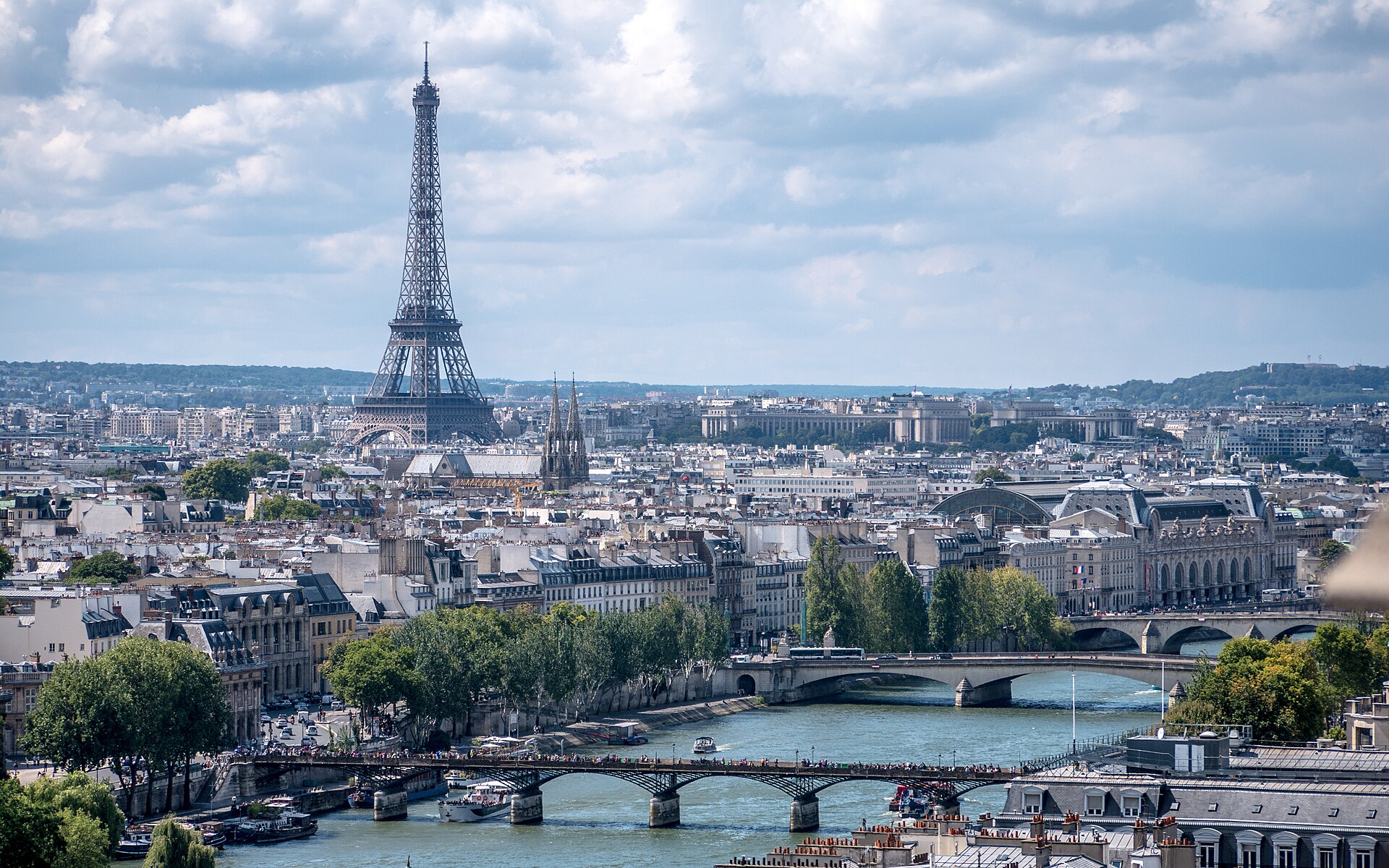
For most visitors to Paris, the practical impact of this incident is limited, and it should be read in proportion. Sarcelles is a residential outer suburb in the Val-d'Oise department, well beyond the areas where the overwhelming majority of travelers spend their time. It is not on the usual visitor map of the Louvre, the Marais, Saint-Germain, Montmartre, the Eiffel Tower quarter, or the grand boulevards. A traveler following a normal Paris itinerary would have had no reason to be in the area and would not have been affected by the evacuation.
What the event does signal is the heightened security posture that has shaped France, and Paris in particular, over the past couple of years. French authorities have said they foiled three attacks in the first half of 2026, including a knife attack on a gendarme near the Arc de Triomphe in February. Since late 2023 the country has recorded a marked rise in antisemitic incidents, and Jewish community sites, including synagogues and schools, are among the locations that receive the most visible police and military protection. The fact that a tip-off led police to intervene before anything happened is, in that sense, the security system working rather than failing.
For travelers this translates into a few concrete realities on the ground. You will see a substantial and routine security presence in Paris: soldiers from the Operation Sentinelle patrols carrying rifles at stations, airports, and major monuments; bag checks at museums, department stores, and large venues; and occasional short-notice closures or perimeter cordons around specific buildings. None of this is a reaction to a single event so much as the standing baseline. Seeing armed patrols in Paris is normal and is not a reason to change plans.
Paris remains a broadly safe destination for visitors, and this incident does not change that overall picture. The city's most common day-to-day risks for tourists are not terrorism but ordinary urban crime: pickpocketing and bag-snatching in crowded tourist zones and on the Metro, distraction scams around major sights, and occasional moped-borne phone thefts. Those are the risks worth planning around on a normal trip, and they have not changed because of what happened in Sarcelles.
What to do
The sensible response to an incident like this is preparation and awareness, not anxiety. The following steps apply to almost any Paris trip and are worth following regardless of the news cycle.
Areas. Stick to central Paris and the well-trodden neighbourhoods if you want to keep things simple: the 1st through 11th arrondissements cover the great majority of what visitors come to see, along with Montmartre in the 18th and the areas around the Eiffel Tower in the 7th and 15th. There is no need to visit outer suburbs like Sarcelles unless you have a specific personal reason, and no travel advisory suggests avoiding Paris as a whole. If you are visiting a synagogue, a Jewish cultural site, or attending a community event anywhere in the region, expect airport-style security checks and allow extra time; carry photo identification and follow the instructions of on-site security staff.
Transport. The Paris Metro and RER are efficient and generally safe to use, including after dark on the busier central lines, but they are also where most pickpocketing happens. Keep phones and wallets in front pockets or zipped bags, be especially alert at the moment doors open and close and on crowded platforms, and be wary of staged distractions such as petitions, spilled items, or someone suddenly blocking your path. If you take the RER B to or from Charles de Gaulle airport, keep bags closed and within sight. If a station is temporarily closed or a train is held for a security check, follow staff directions calmly; these interruptions are usually brief.
Timing. Central Paris is lively well into the evening, and normal tourist areas are comfortable to walk at night when they are busy. Use ordinary city sense: stay on well-lit, populated streets, keep valuables out of sight, and prefer official taxis or a reputable ride-hailing app late at night rather than walking long distances alone through quiet areas. There is no need to alter your itinerary or shorten your trip because of the Sarcelles incident.
Staying informed. If you want to keep an eye on the situation, rely on official channels rather than social media rumours. The French government publishes alerts through the SAIP / FR-Alert system, which can push warnings to phones in an affected area, and your own country's foreign ministry (for example the U.S. State Department, the UK Foreign, Commonwealth and Development Office, or your national equivalent) maintains up-to-date France travel advice. Save the European emergency number 112, which works across France for police, fire, and medical help. In the specific case of Sarcelles, the investigation is ongoing and there is nothing a traveler needs to do beyond the everyday awareness described above.
Paris in context
Paris is one of the most visited cities in the world, and its safety profile for travelers is best described as good, with familiar big-city caveats. Kakapo currently rates Paris around 80 out of 100. Violent crime against tourists is uncommon; the realistic risks are theft and scams in crowded areas, which are avoidable with basic precautions. The country's counter-terrorism apparatus is highly active and visible, and events like the Sarcelles weapons discovery, while unsettling to read about, more often reflect that apparatus intervening early than a breakdown in safety.
The measured takeaway is this: a serious weapons find in an outer suburb prompted a swift, precautionary response, no one was harmed, and central Paris carried on as normal. Travelers can visit Paris with confidence, plan around pickpocketing rather than dramatic threats, expect to see a strong routine security presence, and keep an eye on official advisories if they want the latest picture. Nothing about this incident warrants cancelling or reshaping a trip to the city.
Cited sources
Reporting from the outlets below.
Frequently asked questions
Is Paris safe to travel to right now?
A stolen car holding an assault rifle and a handgun was found near a synagogue in Sarcelles, north of Paris, prompting the evacuation of about 300 people and a national anti-terror investigation. No attack took place and central Paris was not affected. See Kakapo's live Paris safety report for the up-to-date composite score, neighbourhood-by-neighbourhood breakdown, and per-source advisories from US State Dept, UK FCDO, Canadian government, and Australian Smartraveller.
What happened in Paris?
Weapons cache found near synagogue in Paris suburb Sarcelles triggers anti-terror probe. A stolen car holding an assault rifle and a handgun was found near a synagogue in Sarcelles, north of Paris, prompting the evacuation of about 300 people and a national anti-terror investigation. No attack took place and central Paris was not affected. This is a incident based on reporting from major travel-news outlets — see the cited sources below for the original coverage.
Should I cancel my trip to Paris?
Most travel-safety events do not require cancelling a planned trip. Read the "What it means for travelers" section above for the specific guidance, check the live Paris safety report for the current overall score, and consult your travel insurance for cancellation eligibility. Kakapo updates the Paris safety profile as new advisories land.
Where can I find more travel safety news?
Kakapo publishes new travel-safety updates as events develop, sourced from BBC, Reuters, the Guardian, Al Jazeera, Deutsche Welle, France 24, US State Dept, and UK FCDO. Visit the live travel-news feed at kakapo.travel/travel-news for the latest.