


Is Washington, DC Safe? A 2026 Travel Safety Guide
The carjacking news context, summer humidity, the Capitol security environment, protests, and the realistic risks of America's capital.

Washington, DC's tourist core (the National Mall, Smithsonian district, Penn Quarter, Georgetown, Adams Morgan) is among the safer US-downtown experiences. Crime against visitors is uncommon. The realistic risks are the post-2023 carjacking and auto-theft trend (which mostly affects residents, not tourists), the genuine summer heat-and-humidity (32°C + 80% humidity is normal July), the Capitol/White House security environment (which produces occasional area closures and crowd-control), and the protest dynamics that DC sees more than any other US city.
The honest framing for first-time visitors: DC is medium-sized for an American big city (~700,000 in city, 6.4 million metro). Most visitors stay close to the National Mall — the 3.5-km strip from the Capitol to the Lincoln Memorial — with the Smithsonian museums (free entry) lining the sides. Georgetown, Adams Morgan, U Street, and the Kennedy Center are the secondary anchors.
| Night safety | 82/100 |
|---|---|
| Scam / petty-crime risk | Low |
| Violent crime (tourists) | Medium |
| Most common scams | pickpockets at the National Mall; aggressive begging around Union Station and bus terminals at night; carjacking in outer-DC residential neighbourhoods |
| Safer neighbourhoods | Penn Quarter, Georgetown, Dupont Circle |
| Data sources cited | 4 |
| Last verified |
What the score means — 82/100
- Healthcare (88) — Georgetown University Hospital, MedStar, GW Hospital are excellent.
- Transport (86) — Metro is one of the better US subways; clean, useful, English-friendly.
- Air quality (82) — moderate-good. Summer ozone alerts; some Canadian wildfire smoke episodes.
- Personal safety (78) — pulled down by city-wide statistics; tourist neighbourhoods are much safer.
Carjacking news context

- The 2023-2024 trend: DC saw a sharp rise in carjacking, peaking 2023, with sustained but lower numbers since. Most happen in specific outer-DC residential neighbourhoods at night.
- Tourist relevance: minimal. Most tourists don't drive in DC (the Metro covers everywhere useful), and tourist neighbourhoods (Mall, Georgetown, Penn Quarter) have not been affected.
- If you do drive: standard awareness — keep doors locked, don't stop in dark unfamiliar areas, don't engage with anyone approaching at lights. Park in attended lots when possible.
- Rideshare and Metro: are safer-feeling than driving for tourists.
The National Mall — practical advice
- The Mall is huge: 3.5 km from Capitol to Lincoln Memorial. Walking the full thing is 5-6 km round trip.
- Heat in summer: little shade. Hat, water, shade-breaks in the Smithsonian buildings.
- Cherry blossom (late March - early April): peak is 4-5 days; massive crowds. National Park Service Bloom Watch tracks.
- Smithsonian museums: free, world-class. Most don't require tickets except the National Museum of African American History and Culture (free timed-entry tickets booked online).
- Pickpockets at Mall density: low-level. Front pocket only.
- Capitol Building tour: free; book through your member of Congress (US citizens) or visit the Capitol Visitor Center for first-come tours.
- White House tour: US citizens via member of Congress; foreign visitors via embassy. Self-guided exterior is free at any time.
Security environment — Capitol, White House
- Visible security: Capitol Police, Secret Service, Park Police all maintain visible presence. Expect bag checks at major sites.
- Closures: streets around the Capitol and White House close occasionally for events, motorcades, protests, or threats. Heed barriers.
- Don't approach barriers: walk around. The "I just want a closer photo" instinct triggers official response.
- State of the Union, inauguration, foreign-leader visits: produce major closures. Plan around.
- Photography: of public buildings is fine. Of security personnel/operations is generally fine but discouraged.
Protests — DC's defining urban feature
- DC sees more protests than any other US city. Most are peaceful and routine.
- Tourist relevance: protests block the Mall and street access at times. Plan around if a major protest is announced.
- If you encounter a protest: walking through is generally fine. If you see police lining up in tactical gear, leave the area.
- Counter-protests: occasionally produce confrontations. Keep walking past.
- Photography of protests: legal in public spaces.
- The January 6, 2021 context: that day's events are exceptional in DC's protest history. Standard protests are calm.
Areas — where to base, where to be aware
Recommended for visitors: Penn Quarter / Chinatown (centrally located, walkable to Mall), Foggy Bottom (near State Department, GW), Dupont Circle (residential, restaurants), Adams Morgan (nightlife), Georgetown (cobbled, upscale, historic), U Street / Logan Circle (gentrified bar district), Capitol Hill (residential).
Stay aware: parts of Anacostia (south-east DC), parts of Trinidad (north-east), parts of Congress Heights — higher crime rates, not on tourist itineraries. Around Union Station and the bus terminals at night — homelessness, occasional aggressive begging.
Metro, taxis, the airports
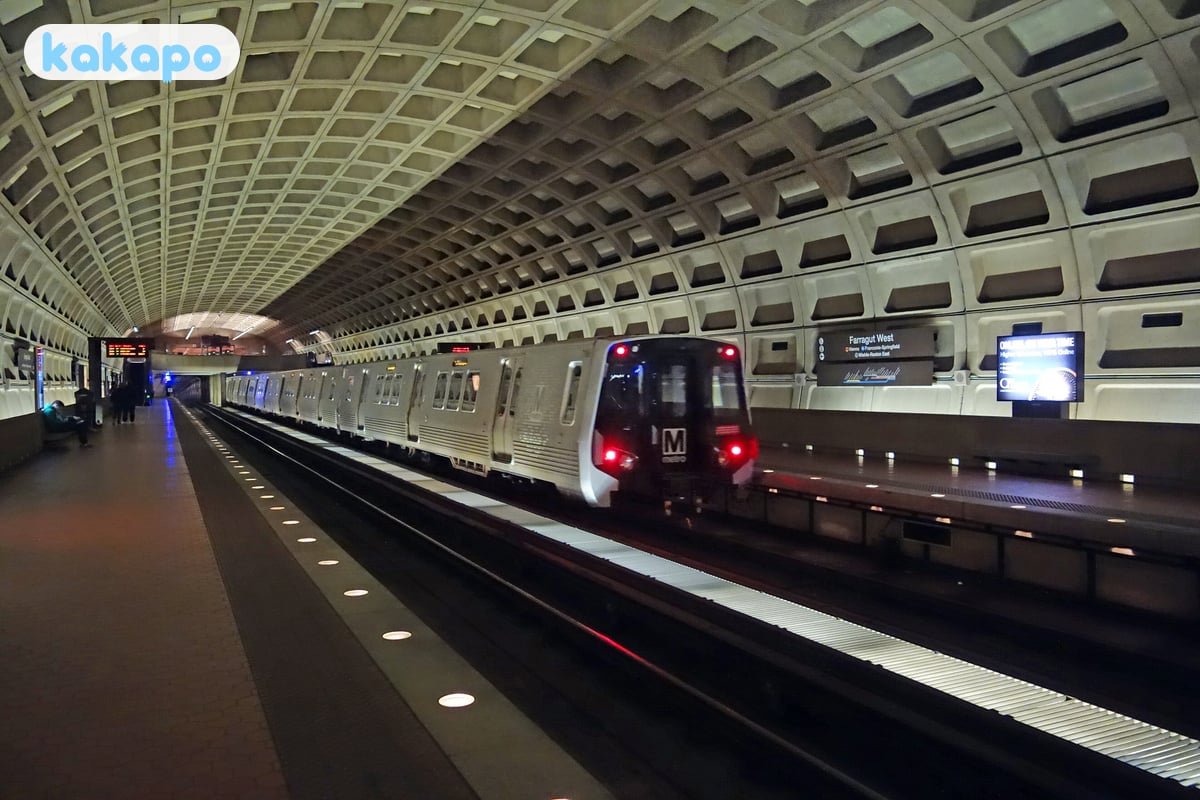
- Washington Metro (WMATA): 6 lines, clean, reliable. $2-6 by distance and time. Use SmarTrip card or contactless.
- Capital Bikeshare: extensive bike-share. Useful in non-summer.
- Uber + Lyft: ubiquitous.
- Reagan National Airport (DCA): 8 km south. Metro Yellow/Blue Line $2-5 to centre, 20 min — direct.
- Dulles (IAD): 42 km west. Silver Line metro to centre $5, 60 min.
- BWI (Baltimore): 50 km north-east. MARC train $7 to Union Station, 40 min.
Money, food, the cost story
- Currency: US dollar.
- Tipping: 18-22%.
- Tax: 6% sales tax; 10% restaurant; 14.95% hotel.
- Cost: hotels $250-500/night standard; conventions and inauguration spike rates.
- Tap water: safe.
Practical info — emergency numbers
- Emergency: 911.
- Metropolitan Police non-emergency: 311.
- GW Hospital ER: 202-715-4000.
- Georgetown University Hospital ER: 202-444-2000.
Bring: comfortable walking shoes, a refillable water bottle, summer-light or winter layers depending on season, a contactless card, an unlocked phone, and US-valid travel insurance with full medical coverage.
Frequently asked questions
Is Washington, DC safe to visit in 2026?
Yes — DC scores 82/100 and the tourist core (the National Mall, Smithsonian district, Penn Quarter, Georgetown, Adams Morgan, Foggy Bottom, Dupont Circle) is among the safer US-downtown experiences. The post-2023 carjacking and auto-theft headlines were real but the geography was specific — most incidents happened in outer-DC residential neighbourhoods at night, not in the NW quadrant where tourists actually stay. Tourists who don't drive (the WMATA Metro covers everywhere useful) have almost zero exposure to the carjacking trend. The realistic concerns are different: summer heat-and-humidity (32°C plus 80% humidity is normal July), protest dynamics that DC sees more than any other US city, and occasional area closures around the Capitol and White House for security.
Is Washington DC safe at night, and which Metro lines should I use?
Yes in the NW quadrant; less so in parts of the SE. The Red Line through Dupont Circle, Woodley Park-Adams Morgan, and Cleveland Park is the most tourist-saturated and feels safe late. The Green and Yellow lines through Chinatown/Gallery Place and L'Enfant Plaza are fine in the centre but quieter and less comfortable at the far ends after midnight. The Orange/Blue/Silver corridor through Foggy Bottom and Smithsonian is well-trafficked all evening. The SE quadrant — Anacostia and parts of the Green Line beyond Navy Yard — has higher crime stats and very little tourist reason to be there at night. WMATA service ends around midnight on weekdays, 02:00 weekends; check the Metro's late-night reduced schedule and use Uber or Lyft for the gap. The Capitol Hill residential streets are calm; the area immediately around Union Station gets uncomfortable late at night with visible homelessness.
What about protests and security closures — will they affect my visit?
Probably yes, at least slightly, and that's the most DC-specific thing about visiting. DC sees more protests than any other US city — most are peaceful and routine, but they routinely block sections of the Mall, Pennsylvania Avenue, and the streets around the Capitol and White House. Walking through is generally fine; if you see police lining up in tactical gear, leave the area. Major events that produce significant closures: the State of the Union (late January / early February), Presidential Inauguration (every 4 years), foreign-leader visits, and major protest days that are typically announced 1-2 weeks ahead on the National Park Service permit calendar. Standard advice: check washington.org and the NPS National Mall page the night before; avoid trying to drive anywhere near the White House complex on protest days; expect bag checks at the Capitol Visitor Center, the Smithsonian museums, and the Washington Monument.
Can you drink tap water in Washington DC?
Yes — DC tap water is safe and meets EPA standards, supplied by DC Water from the Potomac. There were lead-pipe concerns in the early 2000s that have been substantially addressed, though some older buildings still have lead service lines (DC Water is mid-way through replacing them). For visitors at hotels and restaurants there's no practical risk; carry a refillable bottle, especially in summer heat when 3 L+/day is the baseline for outdoor National Mall walking. The Smithsonian museums have free water-bottle refill stations and the Trump-era 'no plastic bottles in federal buildings' policy was reversed but the refill stations remain.
What's the best way to get from the airports into DC?
Reagan National (DCA) is by far the easiest — 8 km south, on the WMATA Metro Yellow or Blue Line, $2-5 to the centre in 20 minutes, direct. This is the airport to book if you have the choice. Dulles (IAD) is 42 km west of central DC; the Silver Line Metro extension now reaches it directly ($5, ~60 minutes), though most travellers find the new connection adequate rather than fast. BWI (Baltimore) is 50 km north-east; the MARC commuter train runs to Union Station in 40 minutes for $7 — cheap and fast but only on weekdays during commuter hours, with limited weekend service. Uber and Lyft from any of the three are routine; expect $25-40 from DCA, $60-90 from Dulles, $90-120 from BWI.
Sources
Run a business in Washington, DC?
Show visitors your Washington, DC business is a safe choice. The free Verified by Kakapo badge puts Washington, DC's live safety score on your website, links back to your verified page, and updates itself. No cost.
Get the free badge →