


Is Washington, DC, United States Safe? A 2026 Travel Safety Guide
The US capital, the National Mall, the museum district, the Capitol, the safe-vs-aware neighbourhoods, the protest context, and the realistic risks.

Washington, DC is the US capital — the seat of federal government, home to the Smithsonian (free museums), the National Mall, the Capitol, the White House, the Lincoln + Jefferson + MLK + WWII memorials, and Arlington National Cemetery. Crime against tourists is moderate; most tourist zones are heavily-policed + safe by day, but DC has higher recorded crime rates than its tourist core implies (concentrated in specific outer wards). The realistic concerns are the standard tourist-zone pickpocketing, awareness in some neighbourhoods after dark, occasional protests + security closures around government buildings, and the summer heat + humidity (90°F+ + 80% humidity July-August).
The US sits at Level 1 on most foreign-government advisories. Most international visitors stay 3-5 nights. The Mall + museums alone fill 2-3 days. Neighbourhood food + nightlife (Georgetown, Adams Morgan, U Street, Shaw, H Street NE, Capitol Hill, Navy Yard) round out a longer stay.
Visiting Washington, DC for the first time, the thing that catches most travellers off-guard isn't crime — it's how almost everything you'd want to see (and most of the museums) is free. The Smithsonian's 21 museums and zoo, all national monuments, the Capitol tours, the National Gallery — all free, no booking required for most (though some now have free timed-entry to manage crowds). DC operates on bureaucratic rhythms with Capitol Hill quiet at weekends and after 6pm; the residential neighbourhoods (Georgetown, Adams Morgan, U Street, Shaw, H Street, Navy Yard) provide the actual restaurant-and-bar life. Greetings standard "Hi" or "Hello"; tipping 20%+ at sit-down restaurants. A half-smoke at Ben's Chili Bowl costs $9, a coffee at Compass Coffee or Vigilante $5-6, a casual dinner main $25-40, a craft pint $8-11, a Metro ride $2-6 depending on distance ($6 to Reagan National DCA from downtown).
In 2026, the specific things that have changed since pre-pandemic include: WMATA tap-to-pay rolled out fully on every Metro and bus reader (SmarTrip card or contactless); the Trump administration's return in January 2025 has produced occasionally heightened security around the White House and Capitol but no practical visitor disruption; the new Smithsonian timed-entry online reservation system (free) applies to the Air & Space Museum, National Museum of African American History, and a few others — book 2-4 weeks ahead; downtown commercial vacancy post-pandemic has produced visible storefront closures around K Street and Farragut but tourist zones around the Mall remain busy; and the Mt. Vernon Square / Convention Center area has revitalized post-pandemic with new restaurants and cocktail bars.
| Night safety | 59/100 |
|---|---|
| Scam / petty-crime risk | Medium |
| Violent crime (tourists) | Medium |
| Most common scams | pickpocketing in tourist zones; security closures around government buildings |
| Safer neighbourhoods | National Mall / Smithsonian District, Georgetown, Capitol Hill |
| Data sources cited | 4 |
| Last verified |
What the score means — 78/100
- Healthcare (92) — Georgetown, GW, MedStar — multiple top-tier hospitals.
- Transport (86) — WMATA Metro + bus + walkable Mall.
- Air quality (80) — generally good; ozone alerts on some summer days.
- Personal safety (72) — pulled down by outer-ward recorded-crime rates. Tourist zones (NW DC, the Mall, Capitol Hill core, Georgetown) considerably safer.
Areas — NW, Capitol Hill, Georgetown, Anacostia

Recommended for visitors: The National Mall + Smithsonian district (heavily policed, safe day + evening), Penn Quarter / Chinatown (Capital One Arena, restaurants), Georgetown (M Street + Wisconsin Ave shopping), Capitol Hill (Eastern Market, residential), Dupont Circle + Adams Morgan (restaurants + nightlife), U Street + Shaw + Logan Circle (gentrified, music), Navy Yard + Wharf (newer waterfront).
Stay aware: parts of NE + SE DC east of the Anacostia River (Wards 7 + 8 — most visitors never go), around some Metro stations after dark (Anacostia, Minnesota Ave), parts of H Street NE far from the streetcar core after dark, around Union Station late at night.
DC-specific rules

- Government buildings + protests: White House, Capitol grounds, Federal buildings — security can close access with no notice. Don't argue with US Secret Service or Capitol Police.
- Don't joke about explosives, weapons, the President: anywhere near security checkpoints. Federal offence in some contexts.
- Don't fly drones: DC is a no-fly zone for drones (FAA-regulated).
- Photography: government buildings exterior fine; some interiors restricted.
- Alcohol: 21+; ID checked everywhere.
- Cannabis: legal for adults to possess + use privately, but sale + public consumption restricted.
Smithsonian + monuments — practical sequencing
The National Mall stretches ~3 km from the Lincoln Memorial to the US Capitol — most first-time visitors massively underestimate the walking distance. Plan in chunks; don't try to do everything in one day.
- Smithsonian museums + the National Gallery — all FREE: no admission, no reservation needed for most. The Air & Space Museum and the National Museum of African American History are the exceptions — both require free timed-entry passes, often booked weeks ahead in peak season.
- National Air & Space Museum: closed for renovation in phases through 2026-2028. Check the website for current open exhibits. Their Steven F. Udvar-Hazy Center near Dulles (Chantilly, VA) is the bigger satellite — Space Shuttle Discovery + Concorde.
- Capitol Tours: free, but require advance booking via your senator/representative (US citizens) or the Capitol Visitor Center (foreign nationals).
- White House Tours: 3+ months ahead via your embassy (foreign visitors) or congressional rep (US). Often cancelled last-minute for events.
- National Mall walking distance: Lincoln Memorial to Capitol is ~3 km of open walk. Use the DC Circulator (free, $1, exact change), or rent a Lime e-bike (DC has dedicated bike paths).
- Best monument time: dusk + night. The Lincoln, Jefferson, and WW2 memorials are lit and far less crowded after 21:00. Safe with reasonable awareness.
- Cherry blossom season: late March-early April (varies by year). Tidal Basin gets shoulder-to-shoulder; book a Tidal Basin paddle boat ahead. Festival kite-flying day on the Mall is the photogenic peak.
Protest context — when DC fills up

- DC is the US protest capital. Major marches happen multiple times per year — Women's March (typically January), March for Life (January), various climate / civil-rights / political marches. Some draw 50,000+; the largest (1995 Million Man March, 2017 Women's March) topped 500,000-1,000,000.
- Inauguration Day: every 4 years on January 20. Hotels triple; Metro packed; many streets closed. Plan around or specifically for.
- July 4th + State of the Union week + presidential election week: increased security, road closures, possible Metro station closures.
- Counter-protests: many marches have counter-protesters. Stay clear of the contact zones. DC Metropolitan Police + US Capitol Police are competent at separating; tourist injuries are rare.
- What to do if a protest passes through: walk away from the route. Don't engage. Don't photograph closeups of individuals at protests (faces visible) — both sides have at times documented and harassed photographers' subjects.
- Hotel during a major march: book 6-12 months ahead if you want to attend; book somewhere else if you don't. Most disruption is within 1-2 km of the Mall.
- Inauguration year travel: hotel rates 5-10× normal for the week of January 20.
Transport — Metro, the airports
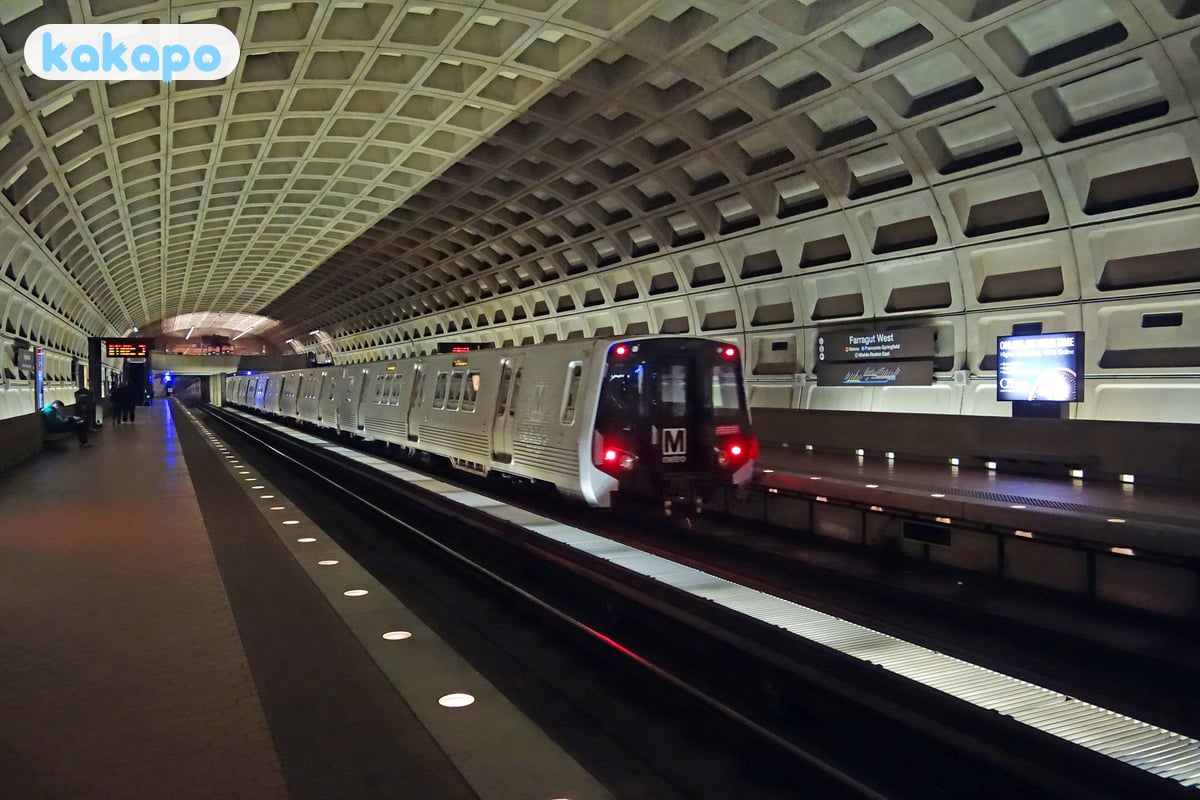
- WMATA Metro: 6 lines + Silver. Cheap (peak $2.25-6.75; off-peak less). SmarTrip card or contactless tap-to-pay.
- Capital Bikeshare: bikeshare; first 30 min cheap.
- Uber + Lyft: both work.
- Reagan National (DCA): 6 km south, on Yellow + Blue Lines, 15-20 min to centre $2.45.
- Dulles (IAD): 40 km west, on Silver Line (extended 2022), $6, 60 min.
- BWI (Baltimore): 50 km north; Amtrak + MARC trains to Union Station.
Money + cost
- Currency: USD.
- Cards: tap-to-pay universal.
- Tipping: 18-22% restaurants.
- Cost: among more expensive US cities. Mid-range hotels $180-400.
- Smithsonian admission: free.
Neighbourhood-by-neighbourhood breakdown
- National Mall / Smithsonian District — the 3 km grass spine from Capitol to Lincoln Memorial, all the free Smithsonian museums, the monuments. Very safe day and evening, heavily policed.
- Capitol Hill — east of the Mall, the Capitol building, the Supreme Court, the Library of Congress, residential rowhouses, Eastern Market. Very safe in the core; the H Street NE corridor 1 km north has gentrified rapidly.
- Downtown / Penn Quarter — north of the Mall, hotels, restaurants, the Spy Museum, Chinatown (the small one, gentrified). Very safe, busy on weekdays.
- Georgetown — north-west, the historic colonial district, M Street and Wisconsin Avenue shopping, the C&O Canal towpath, Georgetown University. Very safe, no Metro stop (use the Circulator bus or Uber).
- Dupont Circle — north-west, leafy residential, embassies, bookstores, restaurants on Connecticut Avenue. Very safe.
- Adams Morgan — north of Dupont, the historic immigrant nightlife district, 18th Street bars. Lively at night, very safe with normal awareness.
- U Street / Shaw — north of Mt. Vernon Square, the historically Black "Black Broadway" district, Ben's Chili Bowl, restaurants and music venues. Very safe with normal awareness.
- Navy Yard / The Wharf — south-east, modern waterfront development, the Nationals stadium, restaurants. Very safe.
- Logan Circle / 14th Street — north of downtown, gentrified, restaurants and bars. Very safe.
- Eastern Market / Barracks Row — east of Capitol Hill, the historic farmers market, 8th Street SE restaurants. Very safe.
- Anacostia / SE DC outer — south-east of the river, historically working-class. Daytime visit fine (the Frederick Douglass National Historic Site, Anacostia Community Museum); not where tourists wander at night.
- Outer NE (Wards 7, 8) — residential, no tourist relevance, recorded-crime concentrated here. Tourists have no reason to visit.
If it's your first time visiting
- Best arrival airport: Reagan National (DCA) for closest, 8 km south — Metro Yellow/Blue line $6 in 20 min to downtown, taxi $20-30. Dulles International (IAD) for international, 40 km west — Metro Silver line opened 2022 ($6-12 to downtown, 1h), or taxi $60-90. BWI (Baltimore) for some flights — MARC train $7 to Union Station in 40 min.
- Public transport: WMATA Metro (6 lines), buses, DC Circulator (free or $1 cheap), Capital Bikeshare. SmarTrip or tap-to-pay on every reader. $2-6 single Metro depending on distance, $13 day pass, $58 weekly. The Mall is fully walkable end-to-end (3 km).
- Best neighbourhood for your first night: Downtown / Penn Quarter for centrality, Dupont Circle for upmarket calm, Capitol Hill for residential character, Adams Morgan or U Street for nightlife. Avoid first-time bookings in outer NE or SE.
- Day 1, jet-lag friendly: drop bags, walk the National Mall (Lincoln Memorial → Washington Monument → US Capitol, ~2 hours), one museum in the afternoon (Air & Space — pre-booked timed entry, or American History), dinner in Penn Quarter or Dupont, sunset at the Lincoln Memorial.
- Day 2 essentials: National Museum of African American History (pre-booked, the city's most powerful experience), late afternoon Capitol tour or White House (both require pre-booking — White House through your country's embassy or Congressional rep with months of lead time), evening at U Street or Adams Morgan.
- Day trips: Mount Vernon (George Washington's home, 40 min south), Annapolis (40 min east, the Naval Academy), Baltimore (45 min north by MARC train, Inner Harbor), Civil War battlefields (Gettysburg 90 min north, Manassas 30 min west).
- Common rookie mistakes: not pre-booking Air & Space, NMAAHC and Holocaust Museum (all are free but timed-entry, sells out 2-4 weeks ahead); driving in DC (traffic chaos, parking impossible); skipping the post-6pm food scene by staying near the Mall (the Mall is dead after the museums close); attempting the White House without months-of-lead-time booking; walking solo through outer SE/NE at night.
- For protests: large protests happen periodically around the White House, Capitol, and Lincoln Memorial. Heavily policed; not dangerous for bystanders; expect street closures and Metro adjustments.
- Tap water is safe. Drinkable everywhere.
Practical info — emergency numbers
- Emergency: 911.
- DC Police non-emergency: 311.
- MedStar Washington Hospital Center: +1 202 877 7000.
- George Washington University Hospital: +1 202 715 4000.
Bring: comfortable walking shoes (Mall + museums = 15-20k steps/day), light layered clothing (humid summer, cold winter), an umbrella, a US SIM/eSIM, contactless card, ID-proof for alcohol, travel insurance with full medical coverage. Smithsonian + most monuments are free + open year-round.
Frequently asked questions
Is Washington DC safe to visit in 2026?
Yes for visitors — the tourist core of DC (the National Mall, Smithsonian district, Penn Quarter, Georgetown, Capitol Hill, Dupont Circle, Adams Morgan, U Street, Navy Yard, the Wharf) is heavily policed and very safe by day and reasonably safe by evening. DC has higher recorded crime rates than that experience implies, but the bulk of that statistic concentrates in Wards 7 and 8 east of the Anacostia River where visitors essentially never go. The realistic visitor concerns are pickpockets in the museum district, awareness in some outer neighbourhoods after dark, occasional protest-driven security closures around government buildings, and the brutal July-August humidity (32°C plus 80% humidity).
Is Washington DC safe at night?
Yes in the tourist anchors. The illuminated monuments along the Mall (Lincoln, Jefferson, MLK, WW2, Vietnam) are spectacular after 21:00 and far less crowded — the Mall is patrolled by US Park Police and reasonably safe with normal awareness. Georgetown's M Street, Dupont Circle, U Street, H Street NE near the streetcar core, Penn Quarter and the Wharf are all calm after dark. Stay aware around Union Station late at night, around some Anacostia and Minnesota Avenue Metro stations, and on parts of H Street NE beyond the streetcar core. Walk briskly through the 14th Street NW corridor at 2am or take an Uber.
Is Washington DC safe for solo female travellers?
Yes — DC is one of the easier US capitals for solo female travel. The Mall, museums and Smithsonian district are dense with families and other tourists, WMATA Metro is reliable into the evening, and Uber and Lyft are ubiquitous. Standard precautions apply on outer-ward Metro stations after dark and walking back from U Street or Adams Morgan bars at 2am. The bigger practical concern is the walking distance — the Mall alone is 3 km end-to-end and visitors regularly clock 15-20k steps a day, so prioritise broken-in shoes and water.
Can you drink tap water in Washington DC?
Yes — DC tap water is treated by DC Water to EPA and federal standards and is safe everywhere in the city, including the Mall area drinking fountains. Lead-service-line replacement is ongoing in older parts of the city but hotels and restaurants run on modern plumbing. Restaurants offer it free with meals; a refillable bottle handles long museum days easily.
What's the biggest scam to avoid in Washington DC?
DC has very little organised scam culture. The recurring traps are unofficial "timed entry" reseller sites for the National Museum of African American History and the National Air and Space Museum (both require free timed passes booked directly at si.edu — never pay a third party), "private White House tour" offers (White House tours are free, booked months ahead via your embassy for foreign visitors or congressional rep for US citizens), and unofficial taxi offers at Union Station and Reagan National. Metro from DCA is $2.45 and 15-20 minutes; from Dulles via the Silver Line is $6 and about an hour.
What happens if there's a protest while I'm visiting?
DC is the US protest capital and major marches happen multiple times a year — the largest historical events have drawn over a million people. If a protest passes through, walk away from the route, don't engage with either side, and don't photograph close-ups of individuals (both sides have at times documented and harassed photographers' subjects). DC Metropolitan Police and US Capitol Police are competent at separating counter-protests and tourist injuries are rare. Inauguration Day (every 4 years on January 20), July 4 on the Mall, and presidential election week all bring heightened security, road closures and possible Metro station closures — book accommodation 6-12 months ahead if you're attending or somewhere outside the Mall radius if you aren't. Don't joke about explosives, weapons or the President anywhere near security checkpoints; in some contexts that is a federal offence.
Sources
Run a business in Washington?
Show visitors your Washington business is a safe choice. The free Verified by Kakapo badge puts Washington's live safety score on your website, links back to your verified page, and updates itself. No cost.
Get the free badge →