


Is Seville, Spain Safe? A 2026 Travel Safety Guide
The 45°C summer, Santa Cruz pickpockets, Semana Santa and Feria crowds, horse-carriage scams, and the realistic risks of one of Spain's most-loved cities.

Seville is one of Spain's safer mid-sized tourist cities. Crime against visitors is low; Andalusian culture rewards a slower pace.
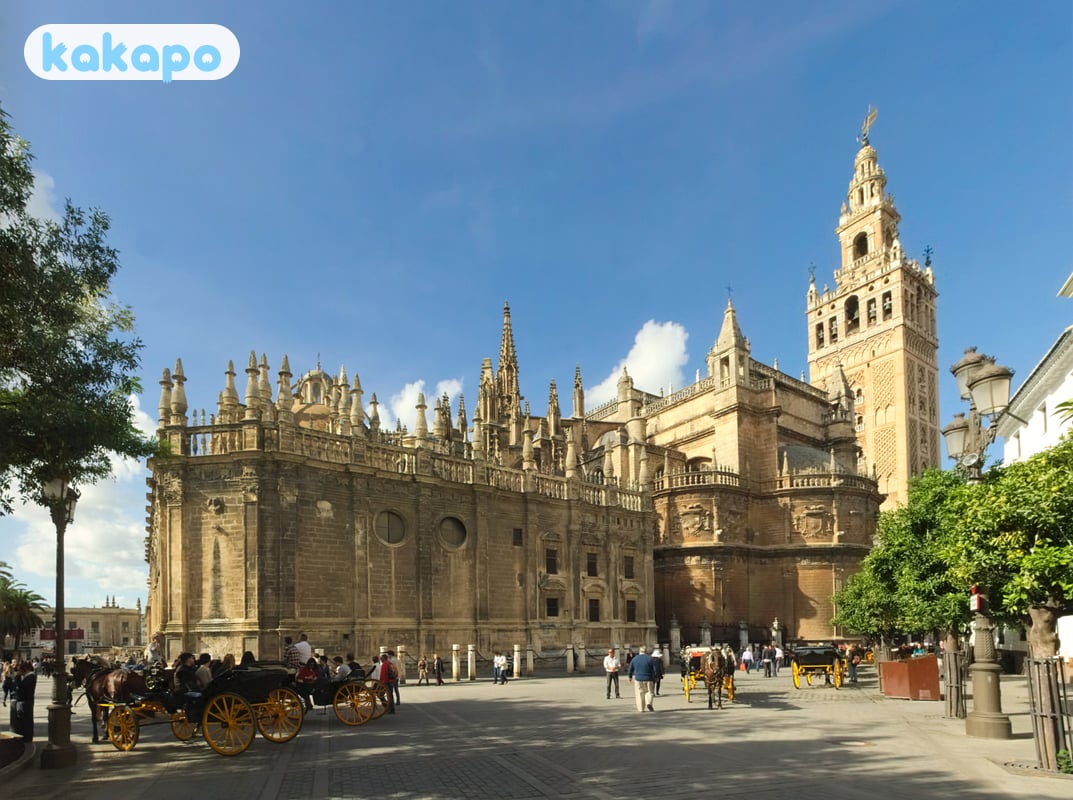
The realistic risks for visitors are pickpocketing in the Santa Cruz tourist quarter and on a few specific bus routes, the genuinely extreme summer heat (Seville regularly hits 45°C+ in July-August — the highest of any major Western European city), the Semana Santa (Holy Week) and Feria de Abril crowd dynamics in spring, and the standard tourist horse-carriage and "rosemary lady" scams around the cathedral.
Spain sits at Level 2 on the US State Department's advisory list for "exercise increased caution due to terrorism" — a regional rather than Seville-specific note. UK FCDO is similar. The honest framing for first-time visitors: Seville is small (~700,000 in city, 1.5 million metro), walkable, and built around the Cathedral, the Real Alcázar, the Plaza de España, and the Triana neighbourhood across the Guadalquivir.
Visiting Seville for the first time, the thing that catches most travellers off-guard isn't crime — it's the heat. Plan around it or it plans you. The Andalusian afternoon collapse from 2-5pm isn't laziness; it's how locals survive 45°C. Sevillanos compensate with tile-cooled patios, intricate evening rhythms (tapas crawl from 8pm, dinner at 10pm, bars to 2am), and the bottomless tinto de verano (cheap red wine with lemon soda, the actual local drink — sangria is for tourists). "Hola" or the Andalusian "¿Qué tal?" opens conversations; "Gracias" closes them. A coffee is €1.50, a caña (small beer) €1.80-2.50, a tapa €2.50-4.50 (and a serious bar-crawl tapa night is €15-25 per person), real flamenco at La Carbonería or Casa de la Memoria €18-25. The Real Alcázar is genuinely the best Mudéjar architecture in Europe and the queue without timed entry can hit 2 hours in summer.
In 2026, the specific things that have changed since pre-pandemic include: TUSSAM tap-to-pay on every bus reader (€1.40 single, €5 tourist day pass); the new Metro line 3 is finally opening in 2026 (incremental but useful for southern districts); the Real Alcázar and the Cathedral now both require timed-entry pre-booking online — same-day tickets in summer are essentially unavailable; the Sevici bike-share has expanded to electric bikes (€33.33/year visitor app pass); and the post-2024 heat-emergency protocol now produces public misting stations in Plaza Nueva and Alameda de Hércules on red-alert days (35°C+ overnight), a real practical upgrade.
| Night safety | 71/100 |
|---|---|
| Scam / petty-crime risk | Medium |
| Violent crime (tourists) | Low |
| Most common scams | pickpocketing in Santa Cruz; the 'rosemary lady' scam around the cathedral; restaurant overcharging around the cathedral |
| Safer neighbourhoods | Santa Cruz, El Arenal, Triana |
| Data sources cited | 4 |
| Last verified |
What the score means — 79/100
- Healthcare (86) — Spanish public + private system; Hospital Virgen del Rocío is one of Spain's largest.
- Transport (86) — small metro + extensive bus + the city-walking option.
- Personal safety (84) — high. Pickpocketing is the dominant tourist crime.
- Air quality (84) — moderate. Summer heat + occasional Sahara dust events.
Summer heat — the genuine risk
Seville is, by some measures, the hottest major city in Western Europe. July-August averages 36°C with regular 42-46°C days. Heat-related deaths during summer heatwaves are documented; tourists are over-represented because most are unprepared.
- Mid-day rule: locals close shops and rest 2-5pm. Do the same. Don't walk to sights at 3pm in August.
- Sightseeing schedule: 9-11am or 6-9pm. Plaza de España at sunset is the postcard moment.
- Hydration: 3-4L water minimum on hot days.
- Hotel air-conditioning: confirm before booking budget rooms. Some old-quarter rentals don't have it.
- Heat exhaustion symptoms: headache, nausea, dizziness, hot dry skin (a serious sign — sweat has stopped). Move to A/C, drink, cool with damp cloth.
- Best season: April-May (Semana Santa, Feria) and October-November.
Semana Santa and Feria — crowd logistics
- Semana Santa (Holy Week, the week before Easter): Seville's most famous festival. Daily and nightly processions of penitents (nazarenos) and floats (pasos) through narrow medieval streets.
- Crowds: dense. Some streets close to all but residents. Hotels +200% prices.
- Crowd safety: generally good — heavily policed. Stay calm in dense pinch points; don't push back into crowds against the flow.
- The KKK-style hoods: are unrelated to the American group. Don't be alarmed; it's pre-existing tradition.
- Feria de Abril: a 6-day fair 2 weeks after Easter, with private tents (casetas), flamenco, horses, and party. Most casetas are private (members-only); a few are public.
- Pickpockets at both festivals: significantly elevated. Front pockets only.
- Booking: hotels for Semana Santa or Feria fill 6+ months out at 2-3× normal prices.
Santa Cruz — pickpockets and getting lost
- Santa Cruz: the medieval Jewish quarter, now the tourist heart. Whitewashed buildings, narrow alleys, plant-laden balconies.
- Pickpockets: this is the highest-pickpocket area of Seville. Around the Cathedral, the Real Alcázar entrance queue, Plaza del Triunfo. Phone in front pocket; daypack in front in crowds.
- The "rosemary lady" scam: women press sprigs of rosemary into your hand, tell your fortune, then demand €5-20. Polite firm "no, gracias" and walk on. Don't accept the rosemary.
- Restaurant overcharging in immediately-around-cathedral restaurants — €5 small beer, no posted prices, "service charge" added. Walk one block away.
- Getting lost: normal in Santa Cruz. The lanes loop. Just keep heading towards the cathedral spire (Giralda).
Scams beyond Santa Cruz
- Horse-carriage rides (coches de caballos): tourist asking-prices €40-60 for 30 min. Real price is €45-65 for 1 hour. Negotiate.
- Fake "flamenco show" hawkers: real flamenco at El Arenal, Casa de la Memoria, Tablao Los Gallos — tickets via official sites, ~€20-30. Skip street touts.
- "Free walking tour" tip pressure: real but the social tip pressure can be intense. €5-10/person is fair.
- Restaurant "couvert": bread/olives that arrive uninvited. Either ask for them removed or expect €2-4/person.
Metro, bus, the airport

- Seville Metro: a single line (planned to expand). Useful for the airport-to-centre direction is limited; mostly serves outer suburbs.
- Buses (TUSSAM): extensive. €1.40 single. Tourist day pass €5.
- Bicycle-share (Sevici): cheap and great for the riverfront.
- Taxis: white, metered, honest. Cabify and FREE NOW operate. Uber is licensed but slower than taxis usually.
- Seville-San Pablo Airport (SVQ): 10 km east. EA bus €4 to centre. Taxi flat-rate €25.
- AVE high-speed train: to Madrid 2.5h, to Córdoba 45 min, to Málaga 2h.
Neighbourhood-by-neighbourhood breakdown

- Santa Cruz — the medieval Jewish quarter, the historic tourist heart, whitewashed lanes and plant-laden balconies. Heavily policed, very safe. Pickpockets at the Cathedral and Real Alcázar entrance queues; "rosemary lady" hustlers at Plaza del Triunfo.
- El Arenal — between Santa Cruz and the river, the bullring, the Torre del Oro, flamenco venues. Very safe, lovely riverfront walks.
- Triana — across the Guadalquivir, the historic gypsy/flamenco district, ceramic workshops, the Mercado de Triana. Lively at night, very safe. Calle Betis along the river is the classic sunset bar strip.
- Alfalfa — north of Santa Cruz, the gentrified tapas-crawl heart, narrow lanes packed with bars. Comfortable at night, very safe.
- Alameda de Hércules — north-central, the gentrified bohemian square, alternative bars and restaurants. Lively at night, very safe with normal awareness; the dust at the edges has some scrappier moments.
- Macarena — north, working-class and gentrifying, the Macarena Basilica and the Sevillian wall remains. Daytime fine, atmospheric.
- Nervión — east, modern commercial district, Sevilla FC stadium. Calm, safe, functional rather than scenic.
- Los Remedios — across the river south of Triana, residential, the Feria de Abril takes place here in April. Calm and very safe.
- Around Plaza de Armas bus station — north-west, functional. Daytime fine; immediate area gets scrappier late at night.
If it's your first time visiting
- Best arrival airport: Seville (SVQ), 10 km east. To centre: EA bus €4 in 30 min to Plaza de Armas, taxi flat-rate €25 day / €28 night. AVE high-speed train from Madrid is 2.5 hours and a frequent alternative.
- Public transport: TUSSAM buses, single metro line, and Sevici bike-share. Tap-to-pay on every bus reader. €1.40 single bus, €5 day tourist pass. The historic centre is fully walkable end-to-end in 25 minutes.
- Best neighbourhood for your first night: Santa Cruz or El Arenal for centrality, Triana for atmosphere and the best evening sunsets, Alfalfa for tapas-crawl access. Avoid first-time bookings around Plaza de Armas.
- Day 1, jet-lag friendly: morning Real Alcázar (pre-booked timed entry, €13.50), wander Santa Cruz, lunch tapas-crawl at Las Teresas + La Goleta + El Rinconcillo (€15-20), afternoon Plaza de España at golden hour, evening flamenco at La Carbonería (free entry, drinks cost) or Casa de la Memoria (€18 with reservation), then a Triana tapas dinner.
- Tapas etiquette: bar-crawl is the format (one or two tapas at each, move on). Stand at the bar, order from the chalkboard. Pay at the end. Caña (small beer) €1.80-2.50; tinto de verano (red wine + lemon soda) €2.50-3.50 — sangria is tourist-only. Tip 5-10% if at a sit-down dinner.
- Common rookie mistakes: sightseeing at 2-5pm in summer (you'll heatstroke — locals don't); not pre-booking the Alcázar and Cathedral (queues run 1-2 hours in summer); accepting a rosemary sprig from a "lady" at Plaza del Triunfo (it's the lift); ordering sangria (you'll be tagged as tourist); paying €5 for a beer immediately around the Cathedral (walk one block — €1.80).
- For Semana Santa or Feria de Abril: book 6+ months ahead, expect 2-3x hotel prices. Semana Santa is processions through narrow streets daily and nightly (the pointed hoods are pre-existing Catholic tradition, unrelated to the American KKK); Feria is 6 days of private flamenco tents (most members-only, a few public).
- Heat survival: 3-4L water minimum on summer days, hat, electrolytes, hotel A/C confirmed before booking, schedule sightseeing 9-11am and 6-9pm. April-May and October-November are the comfortable seasons.
Practical info — emergency numbers
- European emergency: 112.
- Policía Nacional: 091.
- Tourist Police (SAT): +34 954 21 70 03 — English-speaking, specifically for tourist incidents.
- Hospital Virgen del Rocío: +34 955 01 20 00.
Bring: a hat, sunscreen, refillable water bottle, a contactless card, an unlocked phone (Movistar, Vodafone ES, Orange ES), and travel insurance documentation. Avoid August unless you genuinely tolerate 45°C heat.
Frequently asked questions
Is Seville safe to visit in 2026?
Yes. Seville is one of Spain's safer mid-sized tourist cities. US State Department lists Spain at Level 2 (terrorism baseline); UK FCDO is similar. Crime against visitors is low. The realistic concerns are pickpocketing in Santa Cruz and near the Cathedral, the genuinely extreme summer heat (45°C+), and the crowd dynamics during Semana Santa and Feria de Abril — not violent crime.
Is Seville safe at night?
Yes. The central tourist areas (Santa Cruz, Triana, Alfalfa, Alameda) are alive late, well-lit, and policed — Andalusian dinner runs 9-11pm and bars stay busy until 2am+. Solo walks back through Santa Cruz late at night are fine. Standard urban awareness on empty side streets after 3am. Avoid the immediate area around Plaza de Armas bus station late at night.
Is Seville safe for solo female travellers?
Yes. Seville ranks comfortably for solo-female safety among European cities. The tapas culture, dense central neighbourhoods, and well-lit nightlife streets support solo travel. Standard precautions: decline 'rosemary lady' encounters at the Cathedral firmly, use Cabify or FREE NOW for distance at night, watch drinks in larger anonymous bars.
Can you drink tap water in Seville?
Yes. Seville's tap water (Emasesa) is safe and extensively tested — sourced from the Aracena and Zufre reservoirs. Free at every restaurant on request. Refill bottles anywhere. Carry water aggressively in summer — 3-4L minimum on hot days.
What's the biggest scam to avoid in Seville?
The 'rosemary lady' pattern near the Cathedral and Plaza del Triunfo — Roma women press sprigs of rosemary into your hand, claim to read your palm, then demand €5-20, often with a partner picking your pocket during the handoff. Polite firm 'no, gracias' with hands in pockets, walk past. Other recurring scams: horse-carriage overcharging (real rate is €45-65 per hour, not 'per person'), fake flamenco-show touts (real venues run €20-30 tickets via official sites), and tourist-trap restaurants immediately around the Cathedral with no posted prices.
How dangerous is Seville's summer heat really?
Seriously dangerous. Seville is by some measures the hottest major city in Western Europe — July-August averages 36°C with regular 42-46°C days, and Spanish heat-related deaths during heatwaves are documented. Tourists are over-represented because they're unprepared. Mid-day rule: locals close shops and rest 2-5pm; do the same. Sightseeing 9-11am or 6-9pm only. Confirm hotel air-conditioning before booking budget rooms. April-May and October-November are the comfortable seasons; avoid August unless you genuinely tolerate 45°C.
Sources
Run a business in Seville?
Show visitors your Seville business is a safe choice. The free Verified by Kakapo badge puts Seville's live safety score on your website, links back to your verified page, and updates itself. No cost.
Get the free badge →