


Is Siena, Italy Safe? A 2026 Travel Safety Guide
Siena is one of Tuscany's safer cities. The honest concerns: cobbled steep walls, the Palio horse race, summer heat + over-tourism, and the Piazza del Campo crush.

Siena is one of Tuscany's safer cities for tourists. Crime against visitors is mild. The realistic concerns are practical and seasonal: the cobbled steep walled centre (Siena sits on three ridges + nothing is flat); the Palio horse race twice a year (July 2 + August 16) that fills the Piazza del Campo with 30,000-50,000 spectators standing for 4+ hours in summer heat; summer over-tourism in July-August producing piazza-shuffle compression; the Cathedral + Torre del Mangia tickets that catch out arrivals; and the winding country roads through the surrounding Crete Senesi + Chianti hills that demand patience.
Italy sits at Level 2 on the US State Department advisory (terrorism, baseline). UK FCDO is similar. The honest framing for visitors: Siena is small (~53,000 within walls), Florence's medieval rival 70 km south. The historic centre is UNESCO; ZTL barriers + pedestrian streets keep cars out. Most visitors do Siena as a day-trip from Florence — and badly underestimate it. Stay overnight to walk an empty floodlit Piazza del Campo at midnight.
The defining experiences: Piazza del Campo + Torre del Mangia, Cathedral + Piccolomini Library, the Contrade museums (the 17 historic neighbourhoods that race the Palio), Pinacoteca Nazionale art gallery, San Domenico basilica, Crete Senesi day-drive, and Chianti wineries.
| Night safety | 71/100 |
|---|---|
| Scam / petty-crime risk | Low |
| Violent crime (tourists) | Low |
| Most common scams | ATM-skimming at non-bank machines near tourist sights; restaurant 'tourist menus' near Piazza del Campo; fake-petition operators around the Duomo |
| Safer neighbourhoods | Piazza del Campo, Duomo, contrade neighbourhoods |
| Data sources cited | 4 |
| Last verified |
What the score means — 87/100
- Personal safety (88) — high.
- Air quality (88) — hill-top Tuscany; very high.
- Healthcare (84) — Azienda Ospedaliero-Universitaria Senese is the regional reference.
- Transport (80) — Tiemme buses + walkable centre; the train station is 2 km below the walls.
Il Palio — what to expect on race day
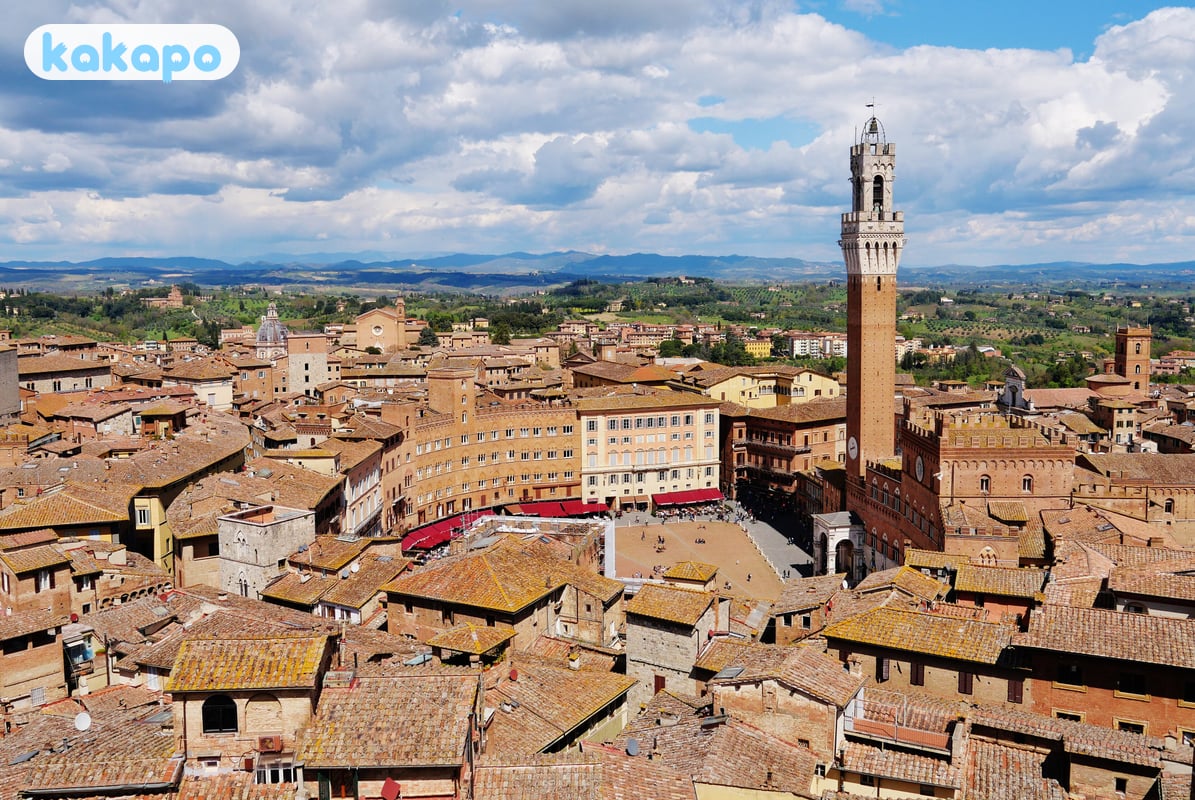
- When: July 2 (Palio di Provenzano) + August 16 (Palio dell'Assunta).
- The race itself: 90 seconds; ~7pm start. 10 horses representing 10 of the 17 contrade race three laps round the Campo.
- Free standing in the Campo centre: arrive 4-6 hours early to claim a spot; you stand 4+ hours in summer heat with no toilet break.
- Reserved balcony + window seats: €300-€800/seat, sold months ahead by hotel + tour operators.
- Hotel prices: triple Palio week. Book 6+ months ahead.
- Crowd safety: police presence heavy; rare crushes. Heat-stroke is the real concern — bring water + hat; consider not standing if you have heart conditions.
- Pickpockets: meaningful Palio-day spike. Front pocket only.
- Trial races (prove): 6 prove run the days before the Palio; smaller crowds + atmospheric.
- The Palio is real: dangerous for the horses + jockeys; falls + injuries occur. Tourist appetite for it is divided; consider whether you want to attend.
Piazza del Campo + cobbled walled centre
- Piazza del Campo: shell-shaped; one of Europe's most beautiful medieval squares.
- Restaurant pricing: Campo-front cafés run 30-50% higher than equivalents on Via di Città.
- Cobbles: brick + stone setts; slick when wet. Sturdy shoes.
- Slope: Siena's centre is genuinely steep. Streets like Via Banchi di Sopra climb ~10% gradient.
- Wheeled luggage: bangs + breaks. Hand-carry in.
- Wheelchair access: difficult; the major sights have step-free access but the walled centre overall is challenging.
- Pickpockets: low base rate; minor spike at peak.
- Late-night Campo: very safe; quiet by 1am outside summer.
Cathedral + Torre del Mangia
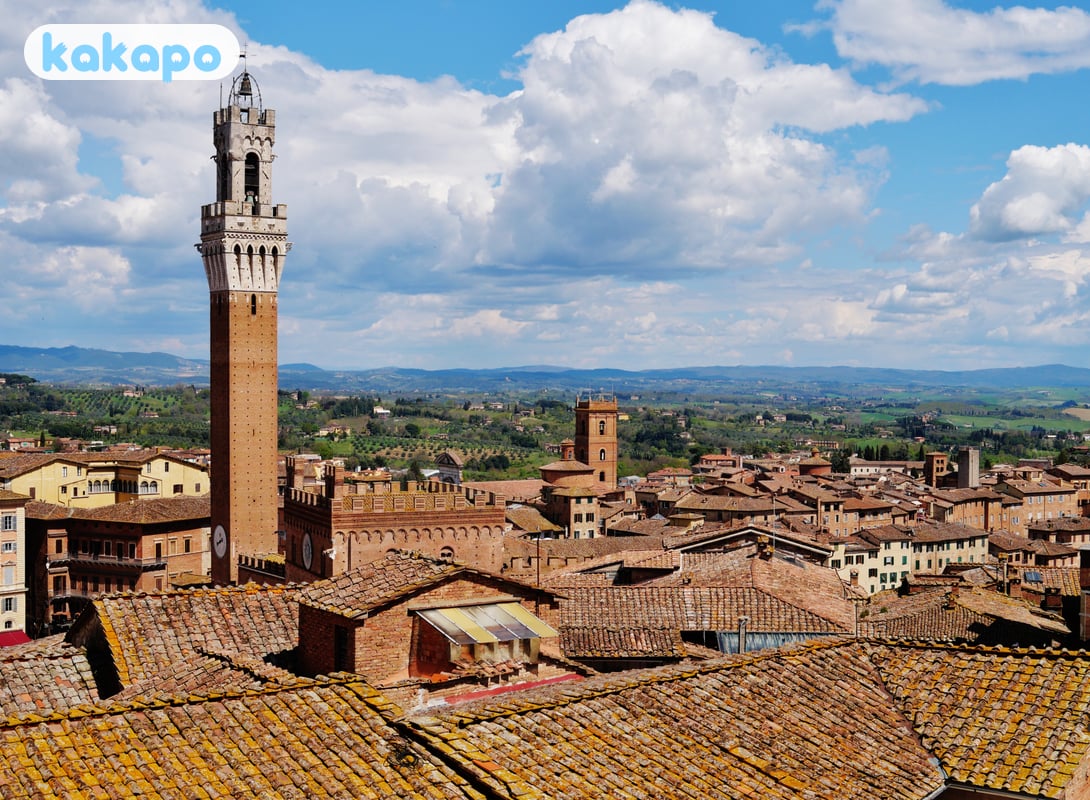
- Duomo di Siena: combined OPA SI Pass €15 (Cathedral + Crypt + Baptistery + Piccolomini Library + Museum). Pre-book online to skip queue.
- Gate of Heaven (Porta del Cielo): roof tour of the cathedral, separate ticket €25; limited daily slots — book ahead.
- Torre del Mangia: 88 m bell tower; 400 stone steps; €10. Vertigo + claustrophobia warning. Spectacular Tuscany view.
- Children: the tower spiral is narrow + irregular; ages 7+.
- Allow 2-3 hours for the cathedral complex.
- Photography: allowed in most areas; the Piccolomini Library frescoes are the Pinturicchio masterpiece.
Summer heat
- July-August: 28-34°C standard, 38°C+ in heatwaves.
- The walls store heat: stone amplifies; nights can stay 25°C+.
- Mid-day rule: 1-5pm get inside or in shade. Most non-tourist shops siesta.
- Hydration: tap water is safe; public fountains in most piazze.
- Best months: April-mid June, late September-October.
- Palio days: peak heat + crowd; standing 4 hours is genuinely demanding.
Day trips — Crete Senesi, Chianti, San Gimignano
- San Gimignano: 40 km northwest; 14 medieval towers. 50 min by car or 1h15m by bus.
- Volterra: 60 km; Etruscan + medieval.
- Chianti wine country (Greve, Castellina, Radda): 30-45 min north. Winding hills.
- Crete Senesi: 30 min south; Tuscany cypress-lined hills postcard.
- Wine tours: book a driver — Italian alcohol limit 0.5‰; police checkpoints common.
- Driving: SS222 Chiantigiana is the famous winding road. Patience + small car.
- Pienza + Montepulciano: 90 min south; Val d'Orcia UNESCO.
Trains, buses, getting in
- Siena station: 2 km below the walls. Bus #3/#10 to Piazza Gramsci €1.40, 10 min; or escalator-and-walk via Antiporto.
- Trains: Trenitalia Siena ↔ Florence Santa Maria Novella ~1h30m, €11. (Bus is faster.)
- Bus: Tiemme + AutoLinee Toscane Florence ↔ Siena ~1h15m, €10.
- Driving: avoid centre — ZTL fines €100+ arrive months later. Park outside walls (Parking Il Campo, Parking Santa Caterina + escalators up).
- Pisa Airport (PSA): 130 km west; 2h drive.
- Florence Airport (FLR): 80 km north; 1h drive.
Practical info — emergency numbers
- European emergency: 112.
- Carabinieri: 112.
- Polizia: 113.
- Azienda Ospedaliero-Universitaria Senese: +39 0577 585 111.
Bring: trainers with grip for cobbles + slopes, sun hat + SPF 50, refillable water bottle, smart-casual evening clothes (some restaurants), a contactless card, an unlocked phone, and travel insurance.
Frequently asked questions
Is Siena safe to visit in 2026?
Yes — Siena scores 86/100 here. Italy sits at the lowest UK FCDO advisory level and US State Department Level 1. Siena (population ~53,000) is a UNESCO-listed walled medieval city in Tuscany with one of Europe's most intact historic centres. Crime against tourists is uncommon; the centro storico is well-policed and the Piazza del Campo, Duomo, and contrade neighbourhoods are calm at all hours. Realistic risks are environmental and operational: cobblestone falls (the centre has zero-grip uneven stones, particularly in rain), summer heat (July-August routinely 35-38°C with no breeze in the basin), and the Palio crowd-management period (2 July and 16 August). Pickpocketing levels are well below Florence or Rome.
Is Siena safe at night?
Yes — exceptionally. The Piazza del Campo stays busy with locals and visitors until 01:00 in summer, and the streets radiating from it (Via di Città, Banchi di Sopra) feel completely safe to walk at any hour. Solo women routine. The walled centre has limited late-night transport but you can walk from one end to the other in 15 minutes. The Stazione di Siena (railway station) area outside the walls is quieter and less elegant after dark but not dangerous. Pre-Palio nights (29 June - 1 July, 13 - 15 August) are festive and crowded, with contrada (city-quarter) singing and pageantry — perfectly safe but loud and packed; book accommodation 6+ months ahead for these dates.
What scams should I watch out for in Siena?
Very few — Siena's tourism is well-regulated and the medieval-walled-city geography limits scam infrastructure. The Italy-wide patterns to remember: ATM-skimming at non-bank machines, especially near tourist sights (use Banca Monte dei Paschi di Siena machines — appropriate to the city since MPS is the world's oldest continuously-operating bank and has its headquarters here); always pay in EUR rather than your home currency on card terminals (DCC is 5-10% worse); restaurant 'tourist menus' near Piazza del Campo charge 30-50% premiums for mediocre food (walk one block into Terzo di Camollia or Terzo di San Martino for local prices); fake-petition operators around the Duomo are rare here compared to Florence.
Can you drink tap water in Siena?
Yes — Italian tap water is regulated by national standards (DM 14/2018) and Siena's supply is excellent. The historic Fontebranda fountain has supplied the city since the 12th century from underground aqueducts (the 'bottini' — guided tours available through the Comune). Modern AcquaBennettoni supply meets stringent EU standards. Restaurants will sometimes default to bringing bottled mineral water; ask for 'acqua del rubinetto' or 'acqua di Siena' and you'll get tap. Carry a refillable bottle — the city has public 'fontanelle' running drinkable water year-round (Piazza del Campo's Fonte Gaia is decorative, not drinkable, but there are working fountains nearby). The summer heat is genuinely dangerous; refill often.
What should I know about the Palio?
If you're visiting on or near 2 July or 16 August, the Palio di Siena dominates everything. It's the world's most-famous bareback horse race — 10 contrade (city quarters) race 90 seconds around the dirt-packed Piazza del Campo for civic honour. Practical realities: free standing-room in the central piazza fills by 14:00 for an evening race; you'll be packed in for 5+ hours in 35°C heat with no toilet access and no exit. Paid seats on the surrounding bleachers and apartment balconies sell out 6-12 months ahead at EUR 200-800 per person. The race itself takes 90 seconds. Horse injuries and crashes happen; animal-welfare campaigns have pushed for reforms. The actual joy of the Palio is the four days before — trial races, contrada dinners on the streets (book through your hotel if you can be invited), the parade. If you're not deliberately planning around the Palio, avoid Siena on those exact days; rooms triple in price and the city is unworkable for casual sightseeing.
Sources
Run a business in Siena?
Show visitors your Siena business is a safe choice. The free Verified by Kakapo badge puts Siena's live safety score on your website, links back to your verified page, and updates itself. No cost.
Get the free badge →