


Is Pondicherry, India Safe? A 2026 Travel Safety Guide
Scooter rentals, the French Quarter vs Tamil Quarter contrast, the road from Chennai, monsoon, dengue, and the realities of South India's most relaxed tourist town.

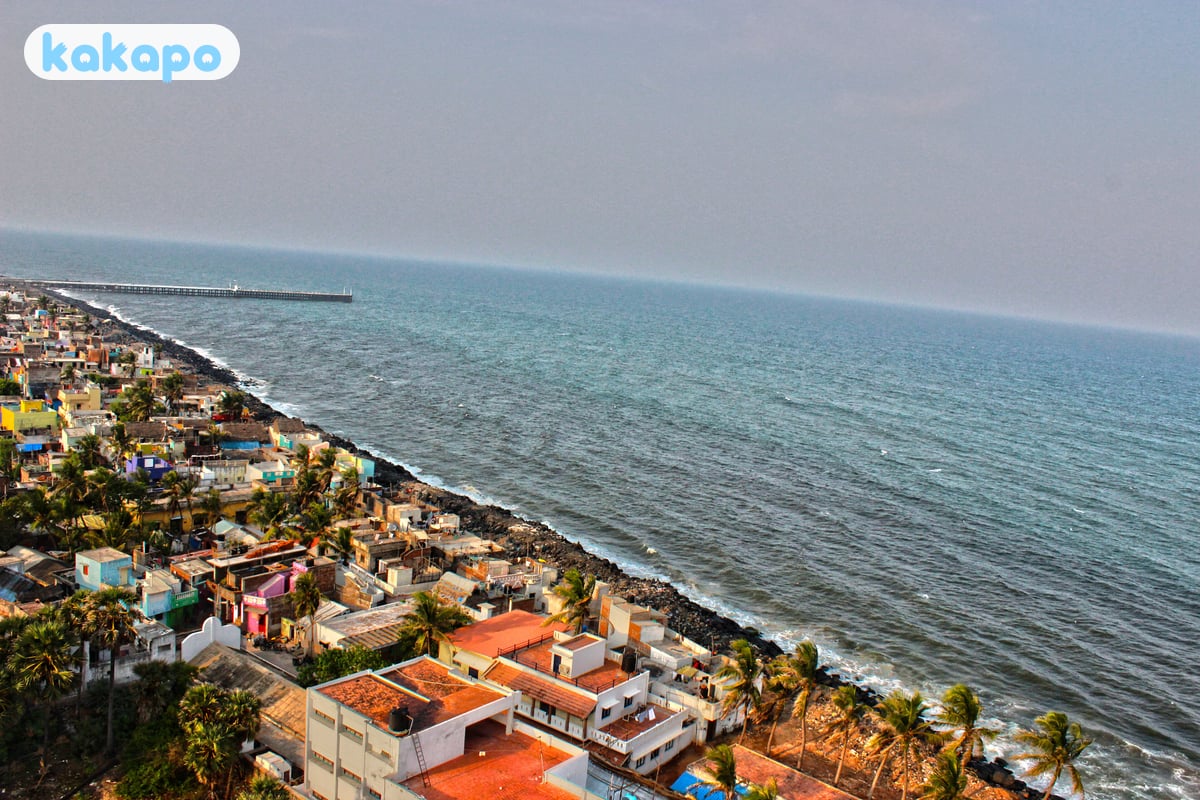
Pondicherry (officially Puducherry) — population ~250,000 in the city, ~1.2 million union territory — is one of South India's calmest, most relaxed tourist towns. The former French colony retains a quirky bilingual character; crime against tourists is rare; the seafront is walkable; women travel solo more comfortably here than almost anywhere in mainland India.
The honest concerns are practical. Scooter rentals are the headline tourist injury cause — Tamil Nadu's wider road network has the standard Indian chaotic mix of trucks, buses, motorbikes, and pedestrians, and Pondicherry's surrounding villages route at speed through narrow lanes. The famous "White Town" / French Quarter is calm, gridded, postcard-pretty; cross Manakula Vinayagar Koil Street into the Tamil Quarter and you're back in dense, working South Indian street life — completely safe but a different visiting style. Monsoon (October-December — the northeast monsoon, opposite to most of India) brings serious flooding (the November 2024 cyclone Fengal severely flooded the city, with knee-deep water on Bharathi Park). Dengue outbreaks happen most years.
The US State Department lists India at Level 2; UK FCDO has no specific Pondicherry advisories. Both note the standard road-safety and tropical-disease context.
| Solo female safety | 86/100 |
|---|---|
| Night safety | 82/100 |
| Scam / petty-crime risk | Medium |
| Violent crime (tourists) | Low |
| Most common scams | broken auto-rickshaw meters for tourists; scooter rentals and Tamil Nadu road realities; pickpocket-watching at peak crowds |
| Safer neighbourhoods | White Town, French Quarter, Tamil Quarter |
| Data sources cited | 4 |
| Last verified |
What the score means — 80/100
- Personal safety (86) — high. Pondicherry is genuinely calm; women's safety is among the best in India.
- Transport (70) — chaotic auto-rickshaws and scooters; buses to Chennai (4 hr); no rail station of significance (nearest Villupuram).
- Healthcare (78) — JIPMER (Jawaharlal Institute of Postgraduate Medical Education) is one of India's leading public hospitals; Aurobindo Hospital adequate private.
- Air quality (82) — generally clean by Indian standards; coastal breeze; small-scale traffic emissions.
Scooter rentals and Tamil Nadu road realities
- Why people rent: Pondicherry, Auroville (12 km north), and the surrounding beach villages (Serenity, Paradise, Chunnambar) are best explored by scooter. Auto-rickshaw all-day hire INR 1,500-2,500 is the alternative.
- Cost: Activa or Honda Dio INR 250-450/day. Petrol tank cheap.
- Legal requirement: International Driving Permit endorsed for motorcycles + your home licence. Tamil Nadu police checkpoints rare in central Pondicherry but happen on highways.
- Crash risk: highest single tourist injury cause locally. Why: oncoming traffic on country roads; trucks claiming centre-line; buffalos and dogs; Western tourists unfamiliar with left-hand-drive (India drives on the LEFT).
- Helmets: legally required; Tamil Nadu enforces; rentals provide.
- Insurance: most travel insurance voids motorcycle claims without licence + IDP. Confirm policy text.
- Don't ride at night (no streetlights on country roads), in monsoon downpours, after any alcohol.
- If you crash: JIPMER ED is excellent; private Aurobindo Hospital faster for non-critical.
French Quarter vs Tamil Quarter
The grand canal (Goubert Avenue / Bharathi Park axis) divides the historic town into two distinct visiting experiences.
- White Town / French Quarter (east of canal): gridded streets named in French; mustard-yellow colonial villas; boutique heritage hotels (Maison Perumal, Le Dupleix, Palais de Mahe); cafés (Café Des Arts, Le Café on the seafront); galleries; Sri Aurobindo Ashram. Safe, walkable, postcard-pretty.
- Tamil Quarter / Black Town (west of canal): dense working South Indian streets; produce markets (Goubert Market); temples; Tamil-language signage; rickshaws. Completely safe but a different visiting style — louder, more chaotic, more authentic.
- Recommended: stay in White Town for atmosphere; explore Tamil Quarter on foot in daylight.
- The seafront promenade (Goubert Avenue): closed to vehicles 18:00-07:30, becomes the city's evening gathering place. Safe; pickpocket-watching at peak crowds.
- Don't swim from the city beaches: rocks, currents, sewage outflow. Genuine swim beaches are at Paradise (boat from Chunnambar), Serenity (8 km north), and Auroville beach.
Auroville — the international township
- Auroville: the experimental international community founded 1968 by Mirra Alfassa (the Mother of Sri Aurobindo Ashram). 12 km north of Pondicherry; ~3,000 residents from 60+ countries.
- Visitor centre: free entry to grounds; mandatory orientation video before approaching the Matrimandir (the famous golden meditation dome).
- Matrimandir entry: book 24-72 hours ahead via auroville.org; restricted slots; pass requires meditation-only conduct (no photos, talking, children under 4).
- Auroville beach (Repos): 5 km from visitor centre; rip currents — swim with caution.
- Don't expect commercial activity: Auroville isn't a tourist resort. Cafés and shops exist but it's a working community — respect that.
- Auroville-Pondicherry transport: scooter, taxi (INR 700-1,200 round trip), or rented bicycle (the flat 12 km road is doable).
- Internal Auroville governance issues: ongoing tension between original residents and Indian government appointees since 2021. Visible in the form of building work disputes; doesn't affect tourists.
Monsoon and cyclones — the November 2024 Fengal context
- Northeast monsoon: October-December affects Tamil Nadu (opposite to most of India's June-September monsoon). Pondicherry catches the heaviest rain.
- Cyclone Fengal (November 2024): hit Pondicherry directly, dropping 50cm of rain in 24 hours. Bharathi Park flooded knee-deep; some heritage hotels damaged; 12+ deaths in the union territory and surrounding districts. Recovery complete but shows the scale.
- Cyclone season: typically October-December. Pondicherry is in the historical strike zone for storms crossing the Bay of Bengal.
- Best windows: January-March (dry, cool, peak tourist) and July-September (warm but dry — good shoulder).
- Avoid: October-December if you have inflexible schedule.
- If a cyclone is forecast: stay at hotel; Pondicherry's electricity grid is fragile in storms; stock 24h food and water.
- Don't wade flood streets: leptospirosis risk; sewage backup is severe in cyclone-flooded areas.
Dengue, food, water
- Dengue: endemic in Tamil Nadu; outbreaks in monsoon. DEET, long sleeves at dusk, AC accommodation.
- Other diseases: typhoid (vaccinate), Hep A/B, occasional chikungunya. Malaria less common in coastal Tamil Nadu than other Indian states.
- Tap water: not drinkable. Bottled is universal.
- Food: South Indian breakfast is excellent (idli, dosa, vada). The French-Tamil fusion (Café Des Arts, Le Pondychery) is the local headline. Seafront seafood (Auroville Bakery cafés). Stomach calibration normal first day.
- Alcohol: Pondicherry is a Union Territory with lower alcohol taxes than Tamil Nadu (cheap beer, abundant wine and spirits). Tamil Nadu visitors stock up at the border — predictable weekend drink-driving issues.
- Heat: 28-35°C with humidity April-June; manageable with mid-day breaks.
- Stray dogs: rabies present; don't feed.
Transport — getting to Pondicherry
- Most visitors arrive via Chennai: Chennai International Airport (MAA) is the major hub.
- Chennai-Pondicherry road: 165 km via ECR (East Coast Road). Bus 4 hours (Tamil Nadu State Transport AC INR 250-400; private operators INR 600-900); taxi INR 4,000-6,000; pre-arranged transfer INR 3,500-5,000.
- Rail: Pondicherry has a small station with limited connections. Most rail travellers alight at Villupuram (35 km west) and bus/taxi to Pondicherry.
- Domestic flight: Pondicherry Airport (PNY) has occasional flights from Bengaluru and Hyderabad — small, weather-affected.
- Within Pondicherry: walk the French Quarter (1 km square); auto-rickshaws elsewhere; rent a scooter for Auroville/beach trips.
- Auto-rickshaws: meter often "broken" for tourists; quote first; Ola/Uber work in Pondicherry.
- Long-distance buses: Pondicherry has good bus connections to Chennai, Bengaluru, Madurai, Kanyakumari.
Money, etiquette, emergency numbers
- Currency: Indian rupee (INR). $1 ≈ INR 84.
- Cards: hotels and chain restaurants yes; small shops cash. UPI dominant locally.
- Tipping: 10% in restaurants if not on bill; INR 50-100 for hotel porters.
- Etiquette: at Sri Aurobindo Ashram and Matrimandir, modest dress (covered shoulders and knees), silent observation, no phones inside.
- Emergency: 112 (universal); 100 (police); 101 (fire); 108 (ambulance); 1091 (women's helpline).
- Hospitals: JIPMER (+91 413 2272380); Aurobindo Speciality Hospital (+91 413 2336000); New Medical Center.
- SIM: Airtel, Jio, Vi at Chennai or any Pondicherry kiosk — passport + visa to register.
- French and English: French is still spoken by some elderly residents and at cultural institutions; English is universal in tourist areas.
- Sri Aurobindo Ashram: free entry; serious meditation centre; respectful behaviour expected.
Frequently asked questions
Is Pondicherry safe to visit in 2026?
Yes — Pondicherry (officially Puducherry) scores 80/100 here, one of the higher Indian-city scores in our database. US State Department lists India at Level 2 and UK FCDO carries no Pondicherry-specific advisories. The former French colony is genuinely one of South India's calmest and most-relaxed tourist towns; women travel solo here more comfortably than almost anywhere else in mainland India. The realistic concerns are scooter-rental crashes on the Tamil Nadu country roads (the headline tourist injury cause), northeast-monsoon flooding (October-December — Cyclone Fengal in November 2024 dumped 50cm in 24 hours and flooded Bharathi Park knee-deep), and dengue outbreaks in the monsoon months.
Is Pondicherry safe at night?
Yes. Goubert Avenue — the seafront promenade — closes to vehicles from 18:00 to 07:30 and becomes the city's evening gathering space, full of families, couples and ice-cream vendors. The French Quarter's gridded streets are calm and walkable into the late evening. The Tamil Quarter west of the canal is louder and more chaotic but completely safe — just a different visiting style. Women's safety is markedly better than in most Indian cities, and solo female travellers consistently report Pondicherry as one of India's easier evenings. Standard urban awareness; don't ride scooters at night on country roads (no streetlights, plus livestock and trucks).
What's the biggest risk in Pondicherry?
Scooter rentals — and specifically Western tourists riding Honda Activas on Tamil Nadu country roads without realising the road environment is genuinely hazardous. India drives on the left; oncoming buses claim the centre line; trucks pass on blind corners; buffalos, dogs and pedestrians cross at will. Most travel insurance policies void motorcycle claims without a valid International Driving Permit endorsed for motorcycles plus your home licence. Helmets are legally required and Tamil Nadu does enforce. Don't ride at night, in monsoon downpours, or after any alcohol. If you crash, JIPMER (one of India's leading public hospitals) is the regional ED; Aurobindo private is faster for non-critical cases.
Can you drink tap water in Pondicherry?
No — Indian tap water is not safe to drink anywhere, including Pondicherry. Use bottled (cheap, ubiquitous) for drinking and ideally for brushing teeth for the first few days while your stomach calibrates. Ice in established French Quarter cafes (Le Café, Café des Arts, Le Pondychery) is usually factory-made and safe; ice at smaller stalls is more variable. South Indian breakfast (idli, dosa, vada) at busy local places with high turnover is the lowest-risk way to eat well. Carry loperamide and rehydration salts as routine kit.
What makes Pondicherry uniquely worth visiting?
The bilingual French-Tamil heritage, the Sri Aurobindo Ashram, and Auroville. Pondicherry was a French colonial enclave until 1954, and the White Town / French Quarter east of the canal retains mustard-yellow colonial villas, gridded French street names, and a small French-speaking community. Sri Aurobindo Ashram on Rue de la Marine is one of India's most influential 20th-century spiritual institutions; 12km north is Auroville, the international experimental township founded by Mirra Alfassa in 1968, now home to around 3,000 residents from 60+ countries, anchored by the golden Matrimandir meditation dome (entry by 24-72 hour advance booking via auroville.org; meditation-only conduct inside). Pondicherry is also a Union Territory with lower alcohol taxes than surrounding Tamil Nadu — predictable weekend cross-border drink-driving, predictable cheap beer and wine prices.
Sources
Run a business in Pondicherry?
Show visitors your Pondicherry business is a safe choice. The free Verified by Kakapo badge puts Pondicherry's live safety score on your website, links back to your verified page, and updates itself. No cost.
Get the free badge →