


Is Palma de Mallorca, Spain Safe? A 2026 Travel Safety Guide
Palma is comfortably safe. The honest concerns: cathedral cruise crush, summer heat, Tramuntana drives, and the wider Mallorca balconing context.

Palma de Mallorca is one of Spain's safer Mediterranean capitals. Crime against tourists is moderate. The realistic concerns are concentrated: the cathedral (La Seu) + Old Town cobbled centre on cruise-ship days; summer heat regularly tops 35°C; the road into the Serra de Tramuntana mountains is winding + popular with cyclists + sport-cars; and the wider Mallorca balconing context — Palma itself rarely sees these incidents, but Magaluf (15 km west) does, and visitors who base in Palma + day-trip to Magaluf nightlife should know.
Spain sits at Level 2 on the US State Department's advisory (terrorism, baseline). UK FCDO carries Balearic-specific reminders on alcohol + balconing + drink-spiking. The honest framing for visitors: Palma is mid-sized (~415,000 in city, 615,000 metro), the calmer + classier face of Mallorca tourism. The historic centre + the Cathedral + the Bellver castle + the surrounding Tramuntana mountains + Cap de Formentor are world-class. The party-tourism reputation belongs further west — Magaluf, Palmanova, S'Arenal.
The defining experiences: Cathedral La Seu, Bellver Castle (round castle), Es Baluard contemporary art museum, Old Town cobbled lanes + Plaza Mayor, Joan Miró Foundation, day trips to Sóller + Valldemossa + Cap de Formentor + Cala d'Or. Palma is the capital of Mallorca and of the wider Balearic Islands; the airport (PMI) is Spain's third-busiest and handles 32+ million passengers a year, most en route to the coast rather than the city itself. The city rewards 2-3 nights as a base; combined with a few nights in the Tramuntana villages (Sóller, Deià, Valldemossa) it is a complete week.
| Night safety | 86/100 |
|---|---|
| Scam / petty-crime risk | Medium |
| Violent crime (tourists) | Medium |
| Most common scams | pickpocketing at La Seu Cathedral; drink-spiking in Magaluf bars; DCC card-reader scam |
| Safer neighbourhoods | Old Town, Sa Llotja, Santa Catalina |
| Data sources cited | 4 |
| Last verified |
What the score means — 84/100
- Healthcare (86) — Hospital Universitari Son Espases is the regional reference; private (Quirónsalud, Juaneda) handles international.
- Transport (86) — TIB buses + 1-line metro + Sóller scenic train.
- Air quality (86) — Mediterranean; cruise + traffic adds NO₂ on busy days.
- Personal safety (84) — high. Pickpocketing in Old Town + cathedral peaks is the main concern.
Cathedral + cruise compression

- La Seu Cathedral: €10; pre-book online to skip the queue.
- Cruise port: 1.5 km from cathedral; ~600 ship calls/year produces 5,000-12,000 day-trippers concentrated near the cathedral.
- Pickpockets: meaningful spike on cruise days at the cathedral entrance + Plaça de la Reina + the carriage taxis.
- Strategy: visit cathedral 9:30am opening or after 4:30pm; eat in Old Town on no-cruise days.
- Cathedral roof tour: extra €4; pre-book ahead, sells out summer afternoons.
- Cobbles: Old Town granite; slick when wet.
- Solo women: comfortable in centre at most hours.
Summer heat
- July-August: 28-34°C standard, 38°C+ in heatwaves.
- Mid-day rule: 1-5pm get inside or in shade.
- Hydration: 3+ litres/day. Tap water is technically safe; many locals prefer bottled.
- UV: 9-11; reapply hourly.
- Best months: April-mid June, September-October.
- City beach (Can Pere Antoni): 10 min walk from cathedral. Lifeguarded summer.
Tramuntana mountains + winding roads
- The roads: Ma-10 coast road + Ma-2210 inland routes through Sóller, Valldemossa, Deià, Banyalbufar — winding, scenic, narrow.
- Cyclists: Mallorca is a major European cycling-training destination; in winter + spring you'll see pelotons of road bikes. Pass with care.
- Sa Calobra road: famous 12 km hairpin descent; 360° loop. Drive slowly; bus alternative.
- Sóller scenic train: 1912 narrow-gauge from Palma to Sóller; €30 round trip. Worth it.
- Cap de Formentor: closed to cars July-August (transfer-bus only); access via Pollença.
- Driving: standard Spanish rules; left-side. Petrol stations rural.
- Mountain rescue: 112.
Magaluf balconing — what to know
- The reality: Magaluf (15 km west of Palma) is the British-package + young-clubber zone — not Palma. Balconing fatalities + alcohol-related incidents recur every Mallorca summer.
- Balconing: climbing/jumping between hotel balconies; UK FCDO actively warns. 5-10 deaths per Balearic summer.
- If staying in Palma + day-tripping to Magaluf: standard club-night precautions; watch your drink; stay with your group.
- Travel insurance: routinely excludes balcony-climbing accidents. Never climb.
- Drink-spiking: real in Magaluf bigger anonymous bars.
- Magaluf vs Palma: the two have completely different crime profiles. Palma is mostly British-press-quote-free.
Palma Old Town nightlife
- Sa Llonja + Born: gentrified bar streets; safe + lively.
- La Lonja Marítima: late-night bars + clubs along the harbour.
- Drink-spiking: rare in Palma centre; ordinary precautions.
- Solo women: comfortable at any hour in central + harbour.
- Pickpockets: low in centre.
- Cobbles: slick when wet.
Buses, metro, the airport
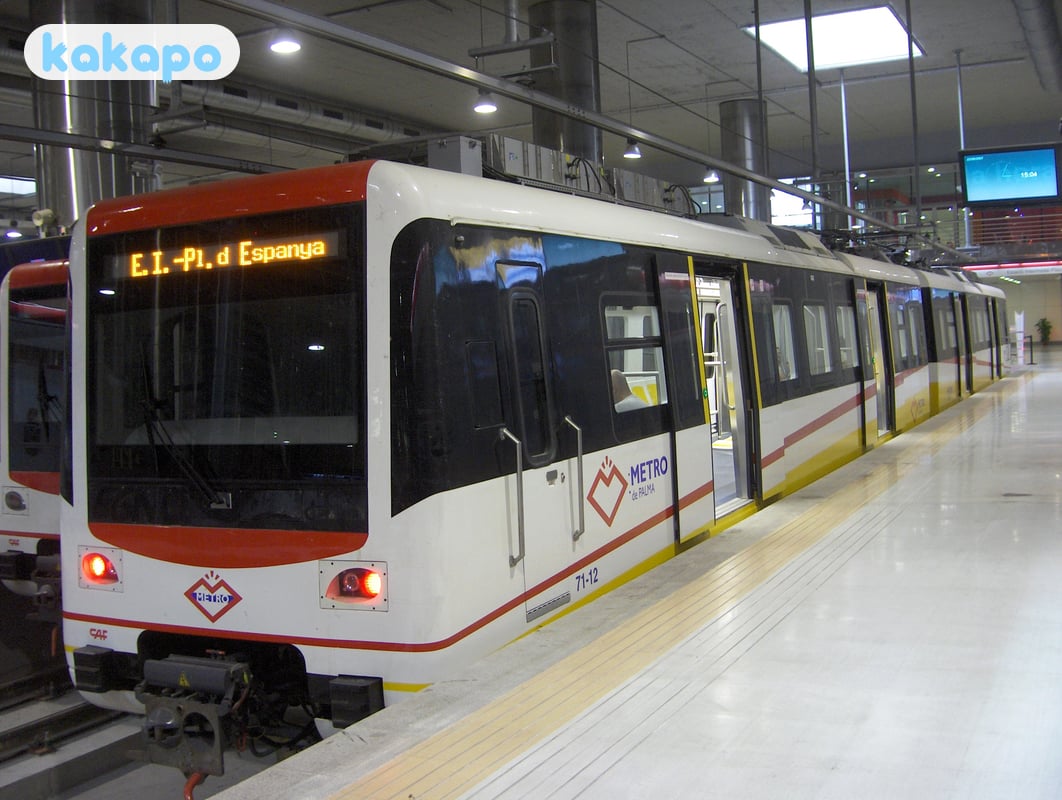
- Palma Airport (PMI): 8 km east; Spain's third-busiest. Bus 1 (TIB A1) to Plaza España €5, ~25 min.
- TIB inter-village buses: cover whole island; cheap.
- Metro line: M1 + M2; useful for university + airport-area.
- Rental car: needed for full-island; book ahead in summer.
- Currency: euro. Cards everywhere.
- Ferries from Barcelona: Trasmediterránea + Baleària; 7-8h overnight, ~€60-€120.
- "Don't pay in EUR" (DCC): card-reader scam; always pay in euros.
Neighbourhood-by-neighbourhood breakdown
- Old Town (Centre Històric / Casc Antic) — the medieval lanes between La Seu Cathedral and Plaça Major. Narrow cobbled streets, the Almudaina Royal Palace, Arab Baths, El Born boulevard. Heavy cruise-day pickpocket pressure 10:00-16:00 around the cathedral entrance, Plaça de la Reina and the carriage taxi rank; otherwise comfortable any hour including solo women late. The single most-walked square kilometre on Mallorca.
- Sa Llotja + Es Born — immediately west of the cathedral. Sa Llotja is the 15th-century maritime exchange; the surrounding lanes house the city's best dinner-and-drinks scene. Es Born is the tree-lined boulevard with the luxury shops. Safe, lively, gentrified.
- Santa Catalina — the gentrified former-fishermen's grid just north-west of the centre. Mercat de Santa Catalina (the locals' market) at its heart, restaurants on Carrer de Sant Magí and Annibal. Walkable from the cathedral in 15 min; the best food-and-drink density per square metre on the island.
- Portixol + Es Molinar — the seafront promenade running east from the cathedral past the marina, past Portixol's gentrified harbour, out to Es Molinar's lower-key local restaurants. Flat, lit, family-popular for evening walks. 30 min on foot or 10 min by bike from the cathedral. The Ciutat Jardí continuation runs out to Cala Gamba.
- El Terreno + Bellver Castle — the hillside immediately west of the centre, the round 14th-century Bellver Castle (the only round castle in Spain, €4 entry, the climb is worth it for the view back over the cathedral and bay). El Terreno itself has revived after a rough patch in the 2000s; calm residential.
- Magaluf + Palmanova + S'Arenal — the British-package + young-clubber zone 15-20 km west and 12 km east of Palma proper. Not Palma — completely different visitor demographics, balconing-fatality reputation, drink-spiking risk in the bigger anonymous bars. If you're based in Palma and day-tripping for a club night: stay with your group, watch your drink, never climb anything, pre-book the taxi home.
- PMI Palma Airport + Metro M1 — PMI sits 8 km east; TIB A1 bus to Plaça d'Espanya €5 (~25 min, every 15 min); Metro M1 from Plaça d'Espanya runs north to the university. Taxi to centre €20-25.
- Sóller scenic train + Tramuntana day trip — the 1912 narrow-gauge train (€30 round trip, ~1 hour each way) climbs from Plaça d'Espanya through orange groves and a 13-tunnel mountain section to Sóller. Pair with the vintage tram down to Port de Sóller for lunch. The single most-recommended day trip from Palma.
- Cruise overflow context — Palma takes around 600 cruise calls/year, ~2 million annual day-trippers. On a 3-ship day 8,000-12,000 people land into the same few blocks; the cathedral, Plaça de la Reina, Es Born and El Corte Inglés become wall-to-wall 10:00-15:00. Sa Llotja and Santa Catalina absorb less of the crush and are the local-pricing escape valves.
If it's your first time visiting
- Best arrival: PMI is Spain's 3rd-busiest airport with direct flights from most European capitals. TIB A1 bus to Plaça d'Espanya €5 every 15 min (25 min); Cabify or FreeNow €20-25; metered taxi same. Ferry from Barcelona (Trasmediterránea, Baleària) 7-8h overnight €60-120 — useful if you want to bring a car.
- Best neighbourhood for your first night: Old Town near La Seu (Sant Francesc Hotel Singular, Hotel Cort, Palau Sa Font) for the medieval walk; Santa Catalina (Hostal Cuba, OD Port Portals) for food density; Portixol for the seafront and the boutique-hotel feel; Sa Llotja for dinner-on-the-doorstep. Avoid first-time bookings in Magaluf or S'Arenal — different city, different vibe.
- Day 1, jet-lag friendly: 9:30 La Seu Cathedral at opening (€10, pre-book on catedraldemallorca.org; the roof tour is a separate €4 worth booking); 11:30 Almudaina Palace next door (€12); 13:30 tapas lunch at Casa Eduardo on the Lonja waterfront or Patrón Lunares in Santa Catalina (€20-30); siesta; 18:00 Bellver Castle for the sunset view back over the bay; 21:00 dinner in Sa Llotja.
- Real prices in 2026: TIB bus single €2-5 depending on zone, day pass €10; cathedral €10, roof tour €14 combined; Bellver Castle €4; Sóller train round-trip €30, with tram €37; tapas €4-8 each, glass of cava €3-5; mid-range dinner Sa Llotja €40-60/person; flat white €3.50-4.50; supermarket sandwich €4-6; PMI airport bus €5; metered taxi base €4.20 + ~€1.10/km.
- Cruise-day strategy: visit the cathedral at 9:30 opening or after 16:30; eat in Santa Catalina or Sa Llotja rather than the cathedral square; check the cruise schedule on palmaport.com before booking a specific day for La Seu.
- Common rookie mistakes: visiting the cathedral at 12:30 on a 3-ship cruise day (45-minute queue, pickpocket-dense crush — go at opening); confusing Palma with Magaluf (15 km west, completely different visitor experience); paying Sa Llotja waterfront restaurant prices when Santa Catalina is 10 min walk and 40% cheaper; renting a car you don't need (Palma is walkable, PMI airport is a 25-min bus from Plaça d'Espanya, you can rent a car later when you head into the Tramuntana); ignoring the balconing warning even at Magaluf — UK FCDO actively flags it because 5-10 fatalities happen each summer; using cash when card-and-Apple Pay is universal.
- Currency: euro; cards everywhere including Bancontact and Apple Pay on TIB readers; always pay in EUR on terminals — decline DCC (3-7% surcharge). €40-60 cash for market stalls, occasional tip jars, and beach-bar bills under €10.
- Bring: trainers with grip for the cobbled centre (slick when wet), SPF 50 sunscreen, refillable water bottle (Palma tap is technically safe but heavily mineralised — many locals filter or buy bottled), swimwear, smart-casual for Sa Llotja dinners, and travel insurance.
Practical info — emergency numbers
- European emergency: 112 (English-speaking).
- Policía Local Palma: 092.
- Hospital Son Espases: +34 871 205 000.
- British Consulate Palma: +34 902 109 356.
- AEMET (heat alerts): aemet.es
Bring: trainers with grip for cobbles, sun hat + SPF 50, refillable water bottle, swimwear, a contactless card, an unlocked phone, and travel insurance.
Frequently asked questions
Is Palma de Mallorca safe to visit in 2026?
Palma scores 84/100 here — one of the safer Mediterranean island capitals. US State Department lists Spain at Level 2 (baseline European vigilance, terrorism context); UK FCDO carries Balearic-specific advice on alcohol, balconing and drink-spiking, but those concerns belong to Magaluf and S'Arenal, not Palma itself. Crime against visitors is moderate — cathedral-area pickpocketing peaks sharply on cruise-ship days when 5,000-12,000 day-trippers compress into the Old Town. The other realistic concerns are summer heat (regularly 35°C+), winding Tramuntana mountain roads, and the wider Magaluf balconing risk if you're day-tripping to that nightlife.
Is Palma safe at night?
Yes — the Old Town, Sa Llonja, the Born and La Lonja Marítima harbourfront are lively, well-policed and comfortable for solo travellers, including women, at typical evening hours. Drink-spiking in central Palma is rare (very different from Magaluf, 15km west). The realistic after-dark risks are practical: slick granite cobbles in the Old Town when it rains, and standard urban pickpocket awareness around clubs in La Lonja. Avoid wandering the industrial zones around the port at night without reason. Pre-arrange a taxi back if you're staying outside the centre — Cabify and FreeNow both work in Palma.
What's the biggest scam or risk in Palma?
Cruise-day pickpocketing at the Cathedral La Seu, Plaça de la Reina and the carriage taxi rank. Mallorca takes around 600 cruise calls a year, and on a busy day three or four ships discharge 8,000-12,000 day-trippers into the same few blocks. Pickpocket teams follow this pattern reliably — bag in front, phone in front pocket, decline 'do you speak English?' approaches. Visit the cathedral at 9:30am opening or after 4:30pm to dodge the crush. Secondary risk: the wider Magaluf balconing pattern (climbing or jumping between hotel balconies, 5-10 Balearic-summer deaths per year) — most travel insurance excludes balcony-climbing accidents, and Palma-based visitors who day-trip to Magaluf nightlife should never climb.
Can you drink tap water in Palma de Mallorca?
Technically yes — Palma's municipal tap water is treated to EU standards and is safe to drink. In practice the taste varies; the water is hard and locals often filter or buy bottled out of preference rather than necessity. Most restaurants will bring tap water on request, but bottled mineral water is the cultural default. In smaller Tramuntana villages the supply is generally fine but check local advisories during summer droughts.
How does Palma differ from Magaluf for safety?
They share an island but have entirely different visitor profiles. Palma city is the gentrified historic capital — restaurants, the Cathedral, the Bellver castle, Es Baluard contemporary art, the Born boulevard — and is comfortable for couples, families and culture-focused travellers. Magaluf and Palmanova, 15-20km west, are the British-package and young-clubber zone where the well-known balconing, drink-spiking and alcohol-injury incidents recur every summer. UK tabloid 'Mallorca' coverage almost always means Magaluf, not Palma. If you're basing in Palma and day-tripping to Magaluf for a club night: stay with your group, watch your drink, don't climb anything, and pre-book the taxi home.
Sources
Run a business in Palma de Mallorca?
Show visitors your Palma de Mallorca business is a safe choice. The free Verified by Kakapo badge puts Palma de Mallorca's live safety score on your website, links back to your verified page, and updates itself. No cost.
Get the free badge →