


Is New Orleans, United States Safe? A 2026 Travel Safety Guide
Bourbon Street pickpockets, the 'two blocks off' rule, hurricane season, summer humidity, and the realistic risks of America's most distinctive city.

New Orleans is the trickiest US tourist city to write a safety guide for. It has genuinely high crime rates by US-city standards (the city ranks high on murder per capita), and at the same time the French Quarter and Garden District tourist core experience is manageable with awareness.
The realistic risks for tourists are pickpocketing on Bourbon Street, the well-known "two-blocks-off-Bourbon-after-dark" rule (the further you stray from the busy core late at night, the higher the incident risk), summer heat-and-humidity (32°C + 80% humidity is normal), hurricane season (June-November), and the residual flood-vulnerability context that the city has lived with since Hurricane Katrina.
The honest framing for first-time visitors: New Orleans is medium-sized (~370,000), built on a sub-sea-level swamp at the mouth of the Mississippi. The French Quarter (the small original colonial grid), Garden District, Marigny, and the Tremé are the visitor neighbourhoods. Music, food, and culture are genuinely world-class.
Visiting New Orleans for the first time, the thing that catches most travellers off-guard isn't crime — it's how dramatically the city's tourist core (the French Quarter, Garden District, Frenchmen Street) feels like an island of safety and abundance surrounded by genuinely struggling neighbourhoods. Within the tourist core, everything works; outside it, the city's deep-rooted poverty and post-Katrina recovery are visible. The local culture is genuinely unique in America: Creole, Cajun, jazz, voodoo, second-line parades. Greetings range from "How y'all doin'?" to "Where y'at?" (the local "hello"); the post-meal "Where y'at, baby?" from servers is normal. A po'boy at Parkway Bakery or Domilise's costs $12-18, a beignets-and-café-au-lait at Café du Monde $5-8, a Sazerac or Hurricane at a French Quarter bar $10-16, a jazz dinner at Commander's Palace $80-150, an Uber from MSY airport to the French Quarter $35-45.
In 2026, the specific things that have changed since pre-pandemic include: the post-2024 city budget crisis has reduced visible NOPD policing in some non-tourist areas (the French Quarter remains heavily policed); the long-promised airport-to-downtown rail link remains unbuilt — Uber/Lyft is the practical option ($35-45); the post-pandemic restaurant scene has consolidated with several institutions closing but new ones opening; the Mississippi River Gulf Coast hurricane risk pattern shifted east of New Orleans in 2024 (Helene impacted the Florida Panhandle and Georgia coast hardest) — but the city's flood vulnerability remains the long-term existential question; and Mardi Gras parade routes have been refined post-2024 with new crowd-control protocols.
| Night safety | 47/100 |
|---|---|
| Scam / petty-crime risk | Medium |
| Violent crime (tourists) | High |
| Most common scams | pickpocketing on Bourbon Street; hidden charges at some bars/clubs; aggressive panhandling |
| Safer neighbourhoods | French Quarter, Garden District, Marigny |
| Data sources cited | 4 |
| Last verified |
What the score means — 57/100
- Air quality (82) — moderate-good.
- Healthcare (80) — Ochsner and University Medical Center are major facilities.
- Transport (78) — streetcars + buses + rideshare; not always reliable.
- Personal safety (68) — pulled down by city-wide crime statistics. The tourist core is meaningfully safer with awareness.
The 'two blocks off Bourbon' rule
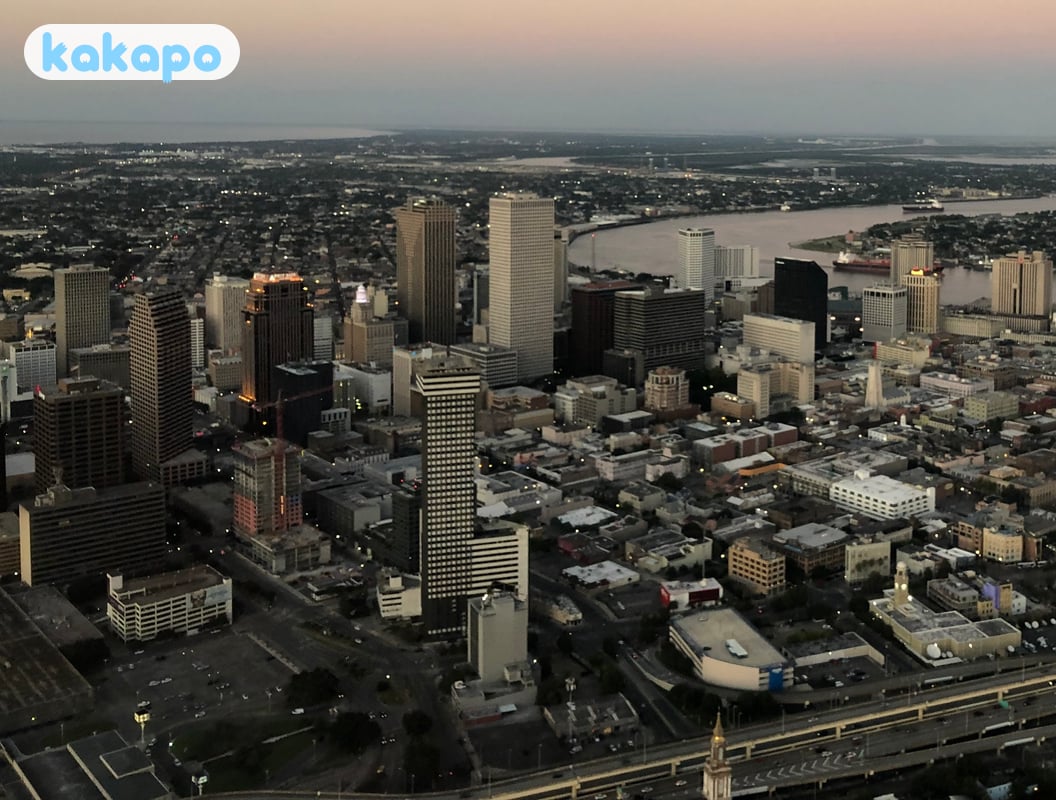
- Bourbon Street and the French Quarter core: heavily-policed, busy, well-lit even at 3am. Pickpockets present, violent incidents rare.
- Two blocks away in any direction at night: the streets get quieter quickly. Lone-walker incidents (mostly muggings, occasional more serious) are the recurring pattern.
- The Quarter's "edges": especially north of Rampart Street, east of Esplanade Avenue, west of Canal Street's outer end. Streets that look fine in daytime are different at 1am.
- Practical advice: walking back to your hotel at 1am? Stick to busy streets or take an Uber/Lyft.
- The Marigny and Bywater: gentrified and friendly day, more variable at night — best to rideshare to Frenchmen Street rather than walk from a Quarter hotel.
Bourbon Street — the experience
- Bourbon Street: 13 blocks of bars, daquiri shops, strip clubs. Drink-in-public is legal in NOLA — the "to-go cup" tradition.
- Pickpockets: present in densest crowds. Front pocket only.
- Drink-spiking: rare but reported. Watch your drink; don't accept opened drinks from strangers.
- "Hidden charges" at some bars/clubs — read menus carefully; if a $20 minimum is mentioned, it applies.
- Aggressive panhandling: present. Polite firm decline.
- "Where you got those shoes" hustle: tells you "I bet I can tell you where you got your shoes"; the answer is "on your feet, on Bourbon Street". Pays off if you respond. Harmless but annoying.
- Frenchmen Street: better music, smaller crowds, less aggressive than Bourbon. Walking distance.
Areas — French Quarter, Garden District, Marigny
Recommended for visitors: French Quarter (the colonial grid — the tourist heart), Garden District (cobbled streets, mansions, Lafayette Cemetery), Marigny / Frenchmen (live music, cafés), CBD / Warehouse District (modern hotels, museums), Magazine Street (shops + restaurants).
Stay aware: Tremé (historically Black neighbourhood, gentrifying — daytime fine for visiting Louis Armstrong Park, evening less casual). Treme/St. Roch borders, Central City, parts of the 7th and 9th wards — these higher-crime neighbourhoods aren't on tourist itineraries. The cemeteries (St. Louis #1) — only with a licensed guide; the cemeteries had a reputation for lone-tourist robbery.
Hurricane season
- Atlantic hurricane season: June-November.
- NOLA's flood-vulnerability: post-Katrina (2005), levees were rebuilt to higher specs. Major hurricane impact remains a real possibility.
- If a hurricane is approaching: heed evacuation orders. Most major hotels have established protocols.
- Travel insurance: confirm hurricane cancellation cover.
- Best season: October-May.
Summer heat and humidity
- July-August: 30-35°C with 80%+ humidity. Heat index hits 40°C+.
- Hydration: 3-4L water minimum on hot days.
- Mid-day rule: 1-4pm rest in A/C. Sightseeing morning and evening.
- Mosquitoes: present year-round; worst summer-fall. West Nile virus occasional. Bug spray.
Mardi Gras, Jazz Fest — festival logistics
- Mardi Gras: late February or early March (varies). Crowd-density extreme. Hotels +300% prices, book 12 months out.
- Jazz Fest: late April - early May. World-class music + crowds.
- Crime during festivals: pickpocketing significantly elevated; police presence very high.
- Standing in parade routes: don't fight for thrown beads — fingers and faces have been injured.
- Children at parades: there's a long-standing "ladder seat" tradition where families set up child seats on ladders. Standard.
Transport, taxis, the airport
- Streetcars: iconic green St Charles line + the Canal St lines. $1.25 single, $3 day pass. Slow but charming.
- Buses (RTA): extensive.
- Uber + Lyft: ubiquitous. Reliable.
- Walking: French Quarter is walkable end-to-end. Sidewalks uneven; sturdy shoes.
- Louis Armstrong Airport (MSY): 18 km west. Airport bus E2 $1.50, slow. Taxi flat-rate $36 to French Quarter. Uber/Lyft $35-50.
Money, food, the world-class meal city
- Currency: US dollar.
- Tipping: 18-22%; tip street musicians a few dollars.
- Tax: 9.45% sales tax in Orleans Parish.
- Cost: hotels $200-450 standard outside festival peaks.
- Tap water: safe.
- Local food: gumbo, jambalaya, étouffée, beignets (Café du Monde), po' boy, muffaletta. World-class — eat broadly.
Neighbourhood-by-neighbourhood breakdown
- French Quarter (Vieux Carré) — the small original colonial grid, Jackson Square, St Louis Cathedral, Royal Street antiques, Bourbon Street bars. Heavily patrolled, very safe by day; lively-and-safe in the Bourbon-and-Royal-Street tourist core at night; the side streets two-plus blocks off the busy core get scrappier after midnight.
- Garden District — west of the French Quarter via the famous St Charles streetcar, antebellum mansions, Magazine Street boutiques and restaurants, Lafayette Cemetery No. 1. Very safe, lovely walks.
- Marigny / Faubourg Marigny — east of the French Quarter, Frenchmen Street is the local-favourite jazz strip (better than Bourbon for actual music), gentrified residential. Very safe in the Frenchmen Street zone; rougher streets further east.
- Bywater — east of Marigny, gentrified former working-class district, restaurants and bars, the Crescent Park riverside walk. Daytime safe, evening normal awareness.
- Tremé — north of the French Quarter, historic free-Black neighbourhood with deep musical heritage, Louis Armstrong Park, the Backstreet Cultural Museum. Daytime safe and culturally significant; evening solo less ideal in the deeper streets.
- Uptown / Audubon — west, Tulane and Loyola universities, leafy residential, Audubon Park, the upper-class quiet base. Very safe.
- Warehouse District / Arts District — south of the French Quarter, the WWII Museum, art galleries, modern hotels. Very safe.
- Central Business District (CBD) — between the French Quarter and Warehouse District, hotels, the Superdome. Very safe by day, calmer at night.
- Magazine Street (Lower Garden / Uptown) — the 6-mile long shopping-and-restaurant strip cutting through Garden District and Uptown. Very safe.
- Ninth Ward / Lower Ninth — east, the working-class districts heavily damaged by Katrina. Daytime visitable for cultural context (Make It Right houses, Musicians' Village) but not for casual wandering.
If it's your first time visiting
- Best arrival airport: Louis Armstrong New Orleans International (MSY), 18 km west. To French Quarter: Uber/Lyft $35-45 in 25 min, taxi flat-rate $36 for 1-2 passengers or $15 per person 3+, airport shuttle bus $24 round-trip. No rail link.
- Public transport: RTA streetcars (St Charles, Riverfront, Canal, Loyola) and buses. Tap-to-pay or Jazzy Pass. $1.25 single, $3 day pass. The St Charles streetcar is itself a tourist experience.
- Best neighbourhood for your first night: French Quarter for atmosphere (any street off Royal), Marigny for the calmer Frenchmen-Street music scene, Warehouse District for modern hotels, Garden District for upmarket calm. Avoid first-time bookings deep in Tremé or in the Lower Ninth.
- Day 1, jet-lag friendly: drop bags, beignets-and-café-au-lait at Café du Monde ($5-8), French Quarter walk to Jackson Square and the Mississippi River, lunch po'boy at Killer PoBoys or Parkway Bakery, evening jazz on Frenchmen Street (Spotted Cat, Snug Harbor, d.b.a. — typically $5-15 cover or buy a drink).
- Day 2 essentials: St Charles streetcar to Garden District for mansion walk and Magazine Street shopping, lunch at Commander's Palace ($45 prix-fixe weekday lunch), afternoon WWII Museum ($35), evening dinner at a Creole-Cajun institution (Galatoire's, Brennan's, Antoine's) — book ahead, jackets often required.
- Day trips: swamp boat tour ($60-90), plantation tour (Whitney Plantation for the unflinching slavery context — $25, vs the romanticised antebellum tours), Lafayette and Cajun Country (2.5h west).
- Common rookie mistakes: drinking on Bourbon Street and walking solo back to a hotel 8 blocks away through dark side streets (Uber); skipping the Frenchmen Street jazz for Bourbon Street tourist bars (Bourbon is where the bachelor parties are; Frenchmen is where the music is); not pre-booking Mardi Gras (hotels triple-quadruple in price for the 2 weeks before Fat Tuesday — book a year ahead); visiting in August without realising it's the most humid, hottest, deadest month (locals leave); driving rather than walking the French Quarter (no parking and one-way mazes).
- For Mardi Gras: it's not all Bourbon Street — most of the city's Mardi Gras is family-friendly parades. The Bourbon Street balcony-bead culture is the tourist-aimed parody. The actual parades (Endymion, Bacchus, Zulu, Rex) run through different neighbourhoods.
- Tap water is safe but most visitors prefer bottled. Mississippi River water is heavily treated.
Practical info — emergency numbers
- Emergency: 911.
- NOPD non-emergency: 504-821-2222.
- University Medical Center ER: 504-702-3000.
- Ochsner Medical Center ER: 504-842-3000.
Bring: reef-safe sunscreen for any swamp-tour boats, bug spray, comfortable walking shoes, layered clothing for evenings, a contactless card, and US-valid travel insurance.
Frequently asked questions
Is New Orleans safe to visit in 2026?
Manageable with awareness. New Orleans has genuinely high crime rates by US-city standards — the city ranks high on murder per capita — but the French Quarter and Garden District tourist core experience is reasonable with the standard precautions. The realistic risks for visitors are pickpocketing on Bourbon Street, the well-known "two blocks off Bourbon at night" rule (incident risk rises sharply as you stray from the busy core late), summer heat-and-humidity (32°C plus 80% humidity is normal), hurricane season June-November, and the residual flood-vulnerability context the city has lived with since Hurricane Katrina.
Is New Orleans safe at night?
Yes within the busy French Quarter core; the answer changes block by block once you leave it. Bourbon Street, the Quarter's main grid and Frenchmen Street are heavily-policed, busy and well-lit even at 3am, with pickpocketing the main risk and violent incidents rare. The classic "two blocks off Bourbon" rule is the right one — north of Rampart, east of Esplanade, west of Canal's outer end, the streets get quiet quickly and lone-walker incidents follow. Take an Uber rather than walking the gap from a Quarter hotel to Frenchmen Street, and never wander into Tremé, Central City or the 7th and 9th wards after dark.
Is New Orleans safe for solo female travellers?
Manageable with extra awareness. The Quarter, Frenchmen and the Garden District during the day are easy and lively; the music and food culture genuinely welcomes solo travellers. The standard advice intensifies after dark — supervise drinks (drink-spiking is reported, though not endemic), don't accept opened drinks from strangers, and use Uber or Lyft for the walk back rather than crossing dark blocks. Avoid the cemeteries except with a licensed guide; St Louis #1 had a long-standing lone-tourist robbery problem and now requires guided entry anyway.
Can you drink tap water in New Orleans?
Yes — New Orleans tap water is treated by the Sewerage and Water Board to EPA and Louisiana standards and is safe. The water source is the Mississippi River; the taste is mineral-heavy and many visitors prefer bottled but tap is genuinely safe. Localised boil-water notices follow significant pressure drops or main breaks — check city alerts if you see one in the news while visiting.
What's the biggest scam to avoid in New Orleans?
Bourbon Street has more low-grade hustles than most US cities. The classic "I bet I can tell you where you got your shoes" routine pays the hustler if you answer (the answer is always "on your feet, on Bourbon Street") — harmless but annoying. More substantively, some bars and strip clubs run hidden $20+ minimum spends or stack mysterious service fees on top of the suggested tip — read every menu carefully, decline drinks pushed by aggressive promoters at the door, and never hand over a credit card without confirming what's in play. Counterfeit "VIP queue passes" outside major clubs are entirely fake. From MSY airport use the licensed taxi flat-rate ($36 to the Quarter) or Uber/Lyft from the rideshare zone.
Should I worry about hurricanes when visiting New Orleans?
During peak season, yes. Atlantic hurricane season runs June through November with peak risk from mid-August through mid-October. New Orleans's flood-vulnerability is the city's defining hazard — most of the urban area sits below sea level, and the levees rebuilt after Hurricane Katrina (2005) to higher specs still leave the city exposed in a major direct strike. The National Hurricane Center tracks systems days ahead and Louisiana's emergency-management system works with real lead time on evacuation orders. Confirm your travel insurance covers hurricane cancellation, and check the small print: most policies only cover storms named after you booked. The best season for a visit is October-May; March-May has the best weather and overlaps with festival season.
Sources
Run a business in New Orleans?
Show visitors your New Orleans business is a safe choice. The free Verified by Kakapo badge puts New Orleans's live safety score on your website, links back to your verified page, and updates itself. No cost.
Get the free badge →