


Most Dangerous Areas in New Orleans for Tourists
French Quarter perimeter, Treme reality, the Seventh Ward, post-Katrina recovery zones — and the post-2025 crime trend that's actually moving.

New Orleans is a small, dense city (population ~365,000) with a tourist core (the French Quarter, Marigny, Warehouse District / Arts District, Uptown / Garden District) that contains essentially everything tourists come for — but with a violent-crime baseline that ranks the metro consistently in the top 10 US cities for homicide rate. The single most useful fact: NOPD homicide statistics for 2025 closed at ~155 city-wide, down 39% from 2022's post-pandemic peak (~265), and continuing a three-year trend of meaningful improvement. New Orleans entered 2026 with the lowest homicide count in a decade, even as overall NOPD staffing remains ~33% below 2010 levels.
The tourist Quarter is well-policed by NOPD's 8th District + the French Quarter Task Force (a public-private patrol funded by the French Quarter Management District since 2015). Tourist incident rates inside the Quarter are low; the issue is the perimeter — Rampart Street as the northern boundary, the area immediately north into Treme, the area east into the Seventh Ward, and the lake-side neighborhoods that tourists occasionally wander into looking for a "real" New Orleans experience.
The 2026 tourist calculus is: stay in the Quarter, Marigny, Warehouse District, Garden District, Uptown / Magazine Street. Use the streetcars + Uber + walking inside that zone freely. Treat Treme as Quarter-adjacent but with extra care after dark (the residential parts are not unsafe — the perimeter blocks have been). Don't drive into the Seventh + Ninth Wards, Central City, Pigeon Town or NOLA East without a vetted reason. Bourbon Street is the busiest tourist street in the South and has its own specific pattern of late-night incidents — alcohol-related, mostly between visitors, not "dangerous neighbourhood" pattern.
| Night safety | 47/100 |
|---|---|
| Scam / petty-crime risk | Medium |
| Violent crime (tourists) | High |
| Most common scams | opportunistic pickpocketing on Bourbon Street; alcohol-related fights between visitors on Bourbon Street |
| Safer neighbourhoods | French Quarter, Marigny, Warehouse District |
| Data sources cited | 4 |
| Last verified |
The areas with the highest violent-crime baselines
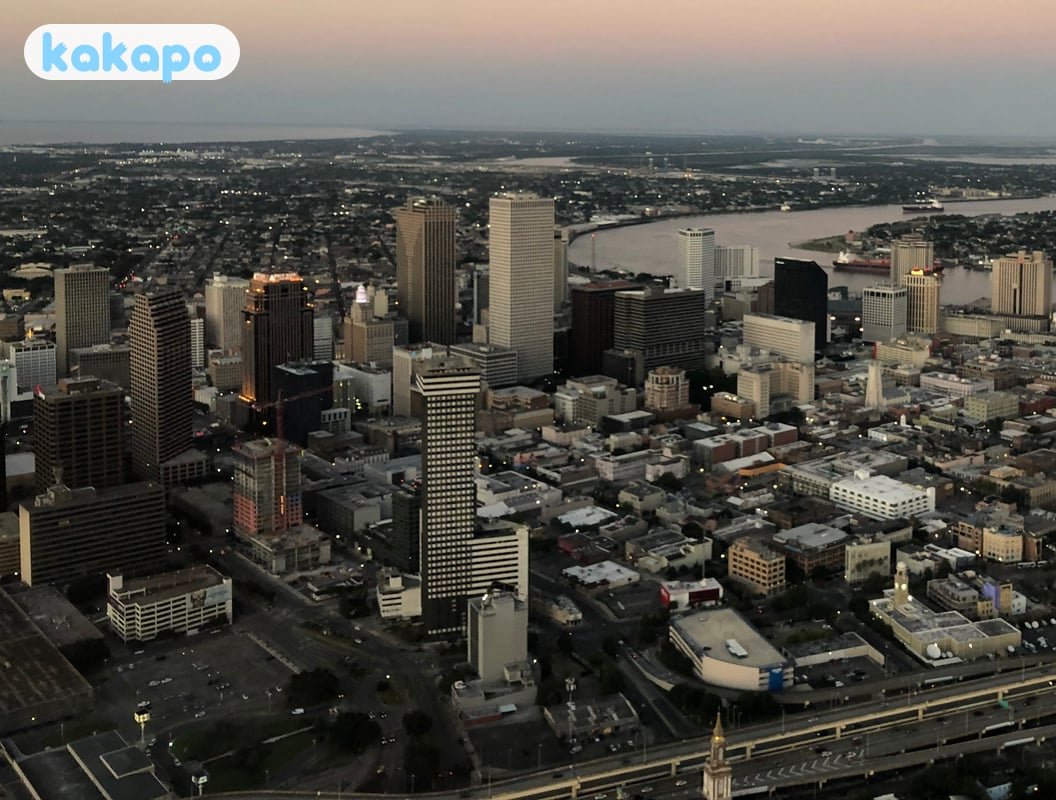
- Central City (south of Loyola Avenue, between the Quarter and Uptown). Some of the highest violent-crime rates in NOPD's 6th District. Tourists rarely have a reason to be there.
- Seventh Ward (north-east of the Quarter, between St Bernard Ave and the river). Mixed residential; long-running gang activity in pockets; tourists do not wander.
- Ninth Ward (Lower Ninth) — east of the Industrial Canal; the area worst-hit by Hurricane Katrina; still partially recovered. Daytime block-tours visit (Lower Ninth Ward Living Museum, Make It Right houses); not a tourist destination on its own.
- Hollygrove + Pigeon Town (Uptown, far end of Earhart) — high-poverty, high-violent-crime baseline. Lil Wayne's childhood neighbourhood; tourists rarely visit.
- New Orleans East — sprawling residential area east of the Industrial Canal; mostly post-Katrina recovery zones. NOPD 7th District. Tourists almost never come here.
- Algiers (parts) — across the river from the Quarter; the ferry-accessible Algiers Point is a calm river-front pocket safe to visit, but the larger Algiers and Lower Algiers area beyond is not.
- St Roch + Bywater perimeter — Bywater has gentrified materially, but the eastern + northern perimeter still has occasional incidents. The St Claude Avenue corridor is a transition zone.
- Rampart Street late night: the formal northern boundary of the French Quarter. Heavy NOPD + FQTF presence on Rampart proper; crossing into Treme blocks after midnight is where the perimeter risk lives.
The French Quarter — the actual tourist risk picture
- NOPD 8th District + French Quarter Task Force: heavy patrol presence; the Quarter is among the most-policed tourist zones in the US.
- Bourbon Street late-night: the busiest tourist strip in the South. The risk is alcohol-related — fights between visitors, drink theft, opportunistic pickpocketing — not random violent crime. Hand-grenade plastic cups are the visible warning sign.
- Royal Street, Decatur, Chartres — the calmer Quarter streets. Galleries, antique shops, hotels. Daytime + evening fine; late-night quieter but still safe with standard awareness.
- Jackson Square + St Louis Cathedral — Quarter heart; safe day + evening.
- Frenchmen Street (Marigny) — locals' Bourbon Street; live music + restaurants. Safe walking from the Quarter via Esplanade or via Decatur extension; the perimeter side streets at 02:00 less so.
- Bourbon-to-Frenchmen walk: the safe route is along Esplanade or via Royal/Decatur; the "shortcut" across Rampart at the back of the Quarter is the perimeter risk.
- French Quarter incidents 2024-2025: mostly bar-related; the rare random shootings (the 2017 Bourbon Street mass shooting, the 2022 Bourbon shooting) made national news because they're statistical outliers.
Treme — adjacent, complex, often misread
- What it is: the oldest African-American neighbourhood in the US, immediately north of the Quarter across Rampart. Birthplace of jazz; St Louis Cemetery #1, Backstreet Cultural Museum, the Treme Community Centre.
- Daytime tourist visits: St Louis Cemetery #1 (paid tour only since 2015 — Save Our Cemeteries tours, $25), Louis Armstrong Park, the Mahalia Jackson Theater. Safe with vetted-tour discipline.
- The block-by-block reality: Treme has gentrified materially in the 15 years since the HBO show; entire blocks are mixed-income residential and entirely safe. Other blocks (closer to Claiborne Avenue and the I-10 underpass) remain affected by violent crime.
- Tourists getting it wrong: walking Treme alone at night looking for "authentic" New Orleans music. The neighbourhood music venues (Sweet Lorraine's, Candlelight Lounge) are reachable by Uber + safe inside; the walk to/from them is the perimeter risk.
- Second-line parades: the Sunday afternoon brass-band parades through Treme, Central City and the Seventh Ward are spectacular and the safest possible tourist visit to those neighbourhoods (heavy NOPD escort + entire-block crowd density).
Post-Katrina — Ninth Ward and NOLA East today
- Lower Ninth Ward: 20 years after Katrina, the area is still partially recovered. The Lower Ninth Ward Living Museum, Make It Right houses (Brad Pitt's project, with documented problems), and the Industrial Canal levee. Daytime cultural-tourism visits (vetted tour like New Orleans Free Tours or Tours by Isabelle) are safe.
- Upper Ninth Ward / Holy Cross: more recovered; some restaurants + B&Bs.
- New Orleans East: sprawling, suburban, mostly off any tourist itinerary. The Joe W Brown Memorial Park area + Vietnamese community in Versailles are quiet pockets; otherwise tourists rarely visit.
- St Bernard Parish (just east of the city) — Chalmette, Arabi, Meraux. Suburban; tourist-relevant for the Chalmette Battlefield (War of 1812 National Park Service site).
Streetcar, Uber, walking — getting around safely
- Streetcars (RTA): the St Charles line (Garden District → Uptown), the Canal Street line (Quarter → Mid-City Cemeteries + City Park), the Riverfront line (Quarter waterfront), the Loyola-UPT line. Safe, slow, charming. The Cemeteries line and Loyola line have been the subject of occasional 2024-2025 incidents but rates remain low.
- Buses: RTA buses are slow + locals-dominated; tourists rarely need them.
- Uber + Lyft: dominant; cheap inside the Quarter-Marigny-Garden District triangle. Default for any nighttime return from outside the Quarter.
- Walking: within the Quarter, Marigny, Warehouse District, Garden District, Magazine Street — fine day + evening.
- Pedicabs: licensed bike taxis in the Quarter; fun but agree price up front ($8-15 typical).
- Driving: parking is hard; the city is walkable; rent only if you're doing day-trips (plantation tours, Atchafalaya Basin).
- Airport (MSY): 15 miles west. Uber/Lyft $35-50; Jefferson Transit E-2 bus $2 (slow); E-2's replacement Airport Express is $2.50 with Quarter drop-off. The taxi flat fare is $36 to the Quarter.
The tourist rules for New Orleans
- Stay in the bubble: Quarter, Marigny, Warehouse District / Arts District, Garden District, Uptown / Magazine Street.
- Don't cross Rampart on foot after midnight — the Quarter-Treme perimeter is the most-reported tourist risk geography.
- Bourbon Street awareness: alcohol-related, between-visitors incidents are the main risk; standard nightlife discipline (water, pacing, don't sleep on the sidewalk).
- Treme visits: vetted tours (cemetery tours, second-line parade Sundays); Uber for venue visits at night.
- Ninth Ward + NOLA East visits: vetted tours only; daytime; Uber in/out.
- Magazine Street + Garden District walks: safe day + evening; the St Charles streetcar is the easy connection.
- Hurricane season: June 1 – November 30. The city's drainage and levees have improved post-Katrina but still flood under extreme storms. Tracking + flexibility for any storm in your travel window.
- Emergency: 911; NOPD non-emergency 504-821-2222; French Quarter Task Force can be requested via NOPD dispatch.
- Hospital: University Medical Center (Mid-City), Touro Infirmary (Uptown), Tulane Medical Center (Downtown) — all 24/7 trauma.
Frequently asked questions
What are the most dangerous areas in New Orleans for tourists?
Central City, parts of Treme (mostly the Claiborne/I-10 underpass blocks), the Seventh Ward, the Lower Ninth Ward, Hollygrove, Pigeon Town, much of New Orleans East. Tourists rarely have a reason to be in any of these on foot. The French Quarter itself is well-policed by NOPD 8th District + the French Quarter Task Force — tourist incident rates inside the Quarter are low.
Is the French Quarter safe in 2026?
Yes — among the most-policed tourist zones in the US. The risk on Bourbon Street is alcohol-related between visitors (fights, drink theft, opportunistic pickpocketing), not random violent crime. Royal, Decatur, Chartres are the calmer Quarter streets — safe day + evening. The perimeter (Rampart Street north into Treme blocks) is the geography to be careful about after midnight.
Has New Orleans crime improved?
Yes, dramatically. NOPD 2025 closed at ~155 homicides city-wide — down 39% from the 2022 post-pandemic peak (~265) and the lowest homicide count in a decade. Improvements have continued despite NOPD staffing remaining ~33% below 2010 levels. Property crime and violent-crime rates are both declining year-on-year.
Is Treme safe to visit?
Yes for vetted tours (St Louis Cemetery #1 via Save Our Cemeteries, $25; Louis Armstrong Park; the Backstreet Cultural Museum). Sunday-afternoon second-line parades are spectacular and the safest possible tourist visit (heavy NOPD escort + entire-block crowd density). At night, Uber to/from specific music venues (Candlelight Lounge, Sweet Lorraine's); don't walk the perimeter blocks late.
Should I cross Rampart Street?
Cross during daytime for cultural-tourism (Armstrong Park, Backstreet Cultural Museum, vetted cemetery tours) — fine. After midnight on foot — no. The Quarter-Treme perimeter is the most-reported tourist incident geography. Uber-shuttling between venues is the right protocol.
Can I visit the Lower Ninth Ward?
Yes, on a vetted daytime tour (New Orleans Free Tours, Tours by Isabelle, Roots of Music) for the Lower Ninth Ward Living Museum, the Make It Right houses, and the Industrial Canal levee. Solo driving in is not advised; Uber in + Uber out for specific visits is fine. The neighbourhood is still partially recovering 20 years after Katrina.
Is the streetcar safe?
Yes — the St Charles line (Garden District), Canal Street line, Riverfront line, and Loyola-UPT line are all heavily tourist-tracked and well-staffed. Slow but charming. Late-night incidents on the Cemeteries line and Loyola line have occurred but rates remain low. Default to streetcar daytime, Uber after midnight.
Sources
Run a business in New Orleans?
Show visitors your New Orleans business is a safe choice. The free Verified by Kakapo badge puts New Orleans's live safety score on your website, links back to your verified page, and updates itself. No cost.
Get the free badge →