


Is Nantes, France Safe? A 2026 Travel Safety Guide
Nantes is comfortably safe by crime measure. The honest concerns: the Machines de l'Île mechanical elephant, Atlantic weather, Vendée day trips, and the cobbled Bouffay.

Nantes is one of France's safer regional cities. Crime against tourists is mild. The realistic concerns are practical: the Machines de l'Île mechanical-elephant ride + Carrousel des Mondes Marins (the city's signature attraction) involves heights + steam + mechanical movement; Atlantic-Loire weather is genuinely wet (140 rain days/year); the Vendée beach day trips at Pornic + Les Sables-d'Olonne involve real Atlantic surf; the cobbled Bouffay nightlife quarter gets late-night-busy on weekends; and a few northern + eastern fringe neighbourhoods (Bellevue, Dervallières, Malakoff) have rougher edges that don't appear in any tourist itinerary.
France sits at Level 2 on the US State Department advisory (terrorism, baseline). UK FCDO is similar. The honest framing for visitors: Nantes is mid-sized (~320,000 in city, 670,000 metro), the largest city in western France, historically Brittany's capital (it's now in the Pays de la Loire region but the Breton identity is real). Bouygues + the Loire estuary + the post-industrial Île de Nantes regeneration define the modern city.
The defining experiences: Château des Ducs de Bretagne, Cathédrale Saint-Pierre, the Machines de l'Île + the giant mechanical elephant, the Botanical Garden + the giant tools sculptures, Passage Pommeraye (1843 covered shopping arcade), Le Voyage à Nantes art trail (summer), and Vendée coast day trips.
The 2026 detail worth knowing: TAN finished the Chronobus extension to Île de Nantes in late 2024, so the Machines and the future Arbre aux Hérons site are now reachable from the gare in under 15 minutes for €1.80. The post-industrial Île de Nantes regeneration — built on the bones of the old Dubigeon shipyards — has shifted the city's centre of gravity south of the Loire over the past decade; the Quai des Antilles and the Hangar à Bananes have been the cultural beneficiaries, while the medieval Bouffay remains the dinner-and-drinks core. Nantes still trails Bordeaux and Rennes for accommodation density per visitor, so July-August festival weeks (Le Voyage à Nantes runs early July to early September) sell hotels out fast.
Jules Verne was born here in 1828 and the museum (rue de l'Hermitage) is small but charming for fans; the Île Feydeau in the centre is the old slave-trading-merchant quarter whose memorial along the Loire embankment is one of France's better-handled reckonings with that history.
| Night safety | 66/100 |
|---|---|
| Scam / petty-crime risk | Low |
| Violent crime (tourists) | Low |
| Most common scams | drink-spiking in larger anonymous bars; pickpockets in queue at Machines de l'Île; budget hotels far from centre |
| Safer neighbourhoods | Centre, Île de Nantes, Hauts-Pavés |
| Data sources cited | 4 |
| Last verified |
What the score means — 86/100
- Healthcare (88) — CHU Nantes is among France's larger university hospitals.
- Transport (88) — TAN trams + buses; Nantes Atlantique airport (NTE) 12 km south.
- Air quality (86) — Atlantic-Loire; generally good.
- Personal safety (84) — high. Tourist-targeted crime is mild.
Machines de l'Île — the elephant and the carousel
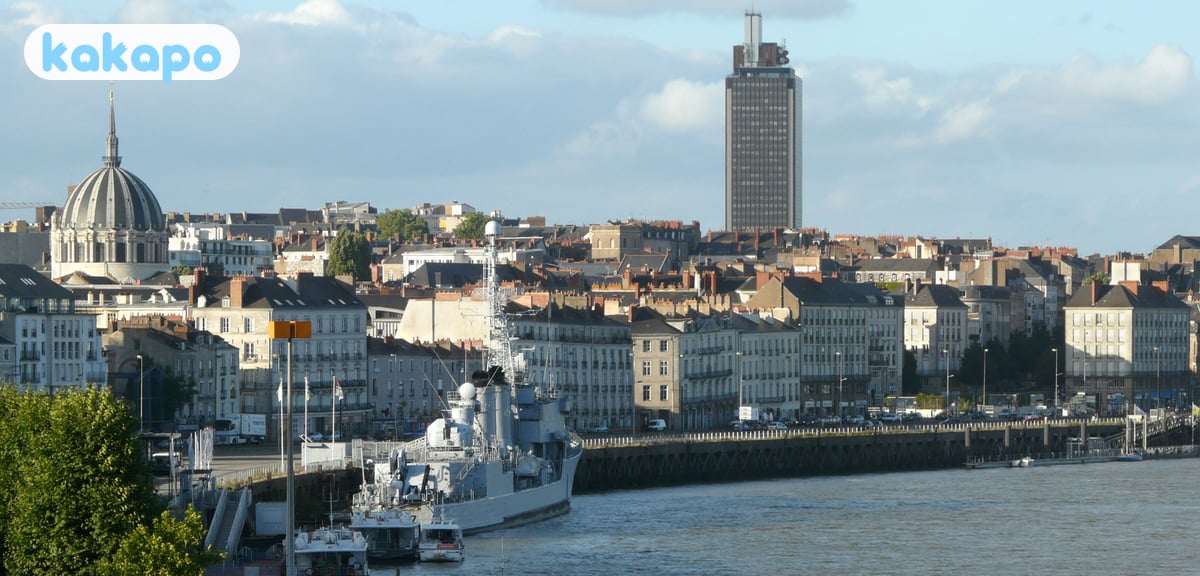
- What it is: post-industrial-shipyard turned art-machine park. The 12 m mechanical elephant carries ~50 passengers on a 30-min walk.
- The elephant ride: €11.50; pre-book online (machines-nantes.fr); slots sell out summer afternoons.
- The Carrousel des Mondes Marins: 3-storey mechanical carousel; €11.50.
- The reality: rides are mechanical + slow + safe; standard amusement-park parameters. Steam puffs surprise small children.
- Heron's Tree (Heron Tree project): under construction through ~2027; not yet rideable.
- Pickpockets in queue: low.
- Children: under-3 fine; lap-rides on the elephant.
Atlantic-Loire weather
- Rain: ~140 days/year, ~820 mm. Soft + persistent.
- Temperature: 4-9°C winter, 17-23°C summer. Mild Atlantic climate.
- Wind: Atlantic gales hit hardest October-March.
- Best months: May-September; July-August has Le Voyage à Nantes art trail.
- Bring: hooded waterproof shell, layered clothing year-round.
- Storm warnings: Météo-France issues yellow/orange/red. Take orange seriously.
Bouffay quarter + nightlife
- Bouffay: medieval quarter; cobbled lanes; restaurants + bars + late-night clubs.
- Place du Bouffay + Place du Pilori: the central squares; lively + safe.
- Cobbles: granite setts; slick when wet. Sturdy shoes.
- Late-night Friday-Saturday: students + young-pro crowd. Mostly noisy, not violent.
- Drink-spiking: a UK + France-wide concern. Watch your drink in larger anonymous bars.
- Solo women: comfortable in central Nantes at most hours.
- Pickpockets: low base rate; ordinary precautions in summer.
Fringe neighbourhoods — what to know
- Centre + Île de Nantes + Hauts-Pavés: where tourists go; safe at all hours.
- Bellevue, Dervallières, Malakoff: outer-Nantes social-housing neighbourhoods. Tourist-irrelevant; not "dangerous" for daytime visits but not visitor-experiences either. Drug-related issues + minor street-friction occur.
- Solo at night in fringes: take a TAN tram or Bolt rather than walk solo.
- Avoid for hotel-booking: read map before booking budget hotels far from centre.
- Gare SNCF Nantes: well-policed inside; ordinary precautions outside.
- Pickpockets at the station: low base rate.
Vendée coast + day trips
- Pornic: 60 km west; lovely fishing port + family beach. 1h drive.
- Les Sables-d'Olonne: 100 km southwest; Vendée Globe race start. Atlantic surf.
- Île de Noirmoutier: connected by tidal causeway (Passage du Gois — only crossable at low tide; check times!) and a permanent bridge.
- Atlantic rip currents: strong; lifeguarded summer beaches only. Standard flag system.
- Driving: A87 + A83 + N137 motorways excellent.
- Vineyard country: Muscadet wineries 30 min east of Nantes.
- Don't try Passage du Gois without checking tide: the road floods regularly + cars get stuck.
Trams, trains, the airport
- Nantes Atlantique (NTE): 12 km south. Tan'Air shuttle €9, 30 min.
- Trains: TGV Nantes ↔ Paris 2h, ~€40-€90 advance. Bordeaux 4h.
- TAN: trams + buses. Single €1.80, day €5.40.
- Driving: ring road + central LEZ (low-emission zone, expanding 2026); Crit'Air sticker required.
- Cycling: Bicloo bike share; flat city + dense lanes.
Neighbourhood-by-neighbourhood breakdown
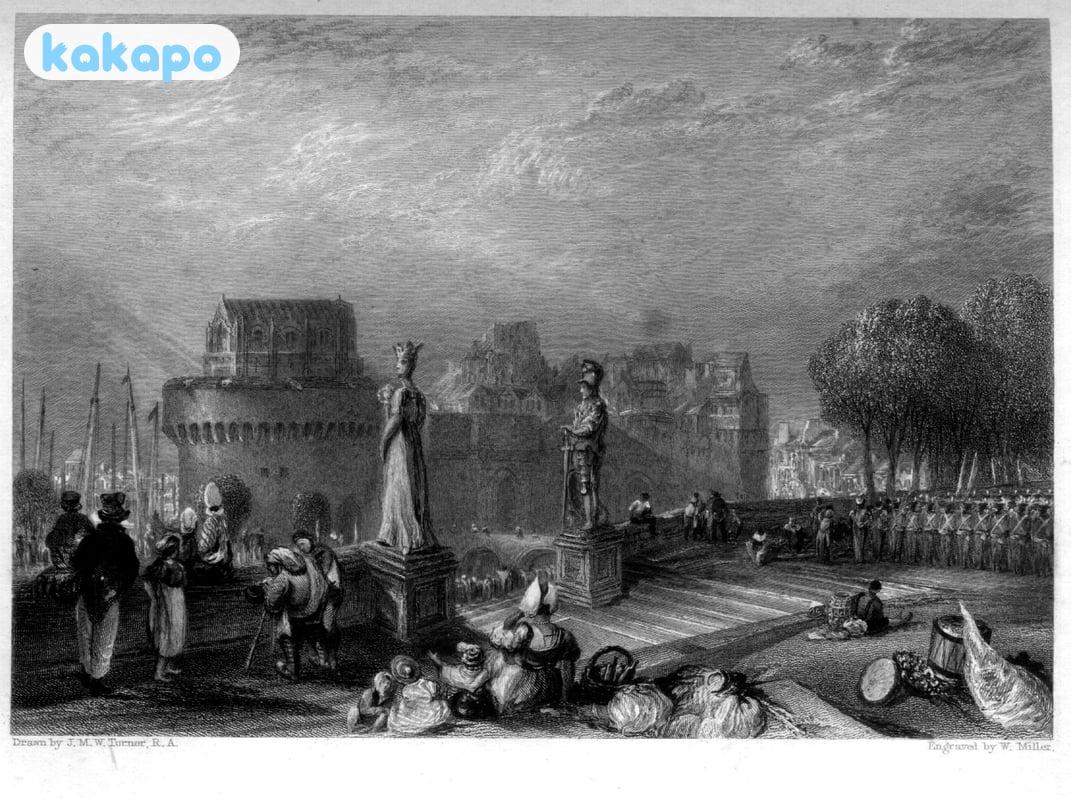
- Bouffay (medieval centre) — granite-cobbled lanes around Place du Bouffay and Place du Pilori, dense with bistros, crêperies and late-night bars. Lively until 2am Friday-Saturday with a student-and-young-pro crowd. Slippery in rain, busy but safe. Hôtel Voltaire-Opéra and Sozo Hotel sit at the edge for quiet sleeping.
- Île de Nantes — the post-industrial island reborn as the cultural quarter. Les Machines de l'Île (the 12 m mechanical elephant, €11.50), the Hangar à Bananes (clubs along the Quai des Antilles), the Palais de Justice, and the Carrousel des Mondes Marins. Walkable bridges connect to the centre; trams 1 and 5 cross too.
- Quartier Graslin + Passage Pommeraye — the 19th-century bourgeois centre. Place Royale, the Théâtre Graslin, La Cigale brasserie (1895, listed historic monument), and the three-tier Passage Pommeraye arcade. Café prices climb here; one street back drops them 30%.
- Île Feydeau + Cours des 50-Otages — the old merchant island absorbed into the centre, with the moving memorial to the abolition of slavery along the Loire embankment. The Cours is the main tram axis (Commerce stop).
- Quartier de la Cathédrale + Château — Saint-Pierre cathedral and the moated Château des Ducs de Bretagne (free outside, €9 to enter the duchess's residence and the city history museum). Quiet at night.
- Hauts-Pavés + Saint-Félix — north of the centre, the Jardin des Plantes (Claude Ponti's giant kid-sized sculptures), the Erdre riverbank, and residential streets. Calm, family-friendly, good for longer stays.
- Jules Verne Museum + Sainte-Anne — west, on the hill overlooking the Loire. The Verne museum is small but charming (€3); the Sainte-Anne viewpoint is the panorama photo.
- Tramway and Chronobus — TAN runs 3 tram lines (1, 2, 3) and Chronobus rapid-transit C1-C9. Single €1.80, 10-trip carnet €17, day pass €5.40. Tap-on contactless from 2024. Tram 1 is the workhorse from gare SNCF through Commerce to the Machines.
- Bellevue, Dervallières, Malakoff (fringe) — outer-Nantes social-housing neighbourhoods. Not tourist-relevant; drug-related friction and minor street crime occur. Daytime visits unremarkable; not where confused jet-lagged visitors want to be at 2am.
- Gare SNCF Nantes — recently rebuilt (2020), TGV to Paris-Montparnasse 2h, Bordeaux 4h. Well-policed inside; ordinary precautions outside at night.
If it's your first time visiting
- Best arrival: TGV to Gare SNCF Nantes is the right answer — direct from Paris-Montparnasse in 2h, €40-90 advance via SNCF Connect (book 4+ weeks ahead for the lowest fares). From Nantes Atlantique airport (NTE, 12 km south) the Tan'Air shuttle is €9 to Place du Commerce in 30 min; taxi is €30-45 metered. Don't believe quoted "fixed-fare" approaches inside the terminal — Atlantique uses a regulated meter.
- Public transport: TAN trams + Chronobus + buses. Single €1.80, 10-trip carnet €17, day pass €5.40 — all tap-on contactless since 2024. Validate paper tickets in the orange box on board; the €70 fare-dodging fine is real and inspectors do check.
- Pre-book the Machines: the Grand Éléphant ride sells out summer afternoons. Book online at machines-nantes.fr at €11.50; the Carrousel des Mondes Marins is the same price.
- Best neighbourhood for your first night: Quartier Graslin or the edge of Bouffay for proximity to dinner and the centre; Hauts-Pavés if you want quieter residential calm; the Quai de la Fosse hotels if you arrive late from Saint-Nazaire / the Atlantic coast.
- Footwear: trainers with rubber grip for the granite cobbles around Bouffay and Sainte-Croix — they're properly slippery in Atlantic rain (and Nantes gets 140 rain days a year).
- Food beyond crêpes: La Cigale brasserie at Place Graslin (€20-35 for plat du jour, the 1895 listed-monument dining room is the experience), Sain (Michelin-starred, €70+ tasting), Pickles (small-plates bistronomy in Bouffay, €30-45), and the Talensac covered market (Mon-Sat mornings) for cheese, oysters and the iconic Petit Beurre LU biscuits made nearby.
- Day-trip planning: Vendée coast (Pornic 1h, Les Sables-d'Olonne 1h45, Île de Noirmoutier 1h via the Passage du Gois at low tide — check tide times or use the permanent bridge), Muscadet vineyards 30 min east (Vallet, Le Pallet — tastings €8-15), Brittany via Rennes 1h45 by TER. The A87 + A83 motorways are fast and well-maintained; rental cars are easy at the gare or airport.
- Driving inside Nantes: the central LEZ (zone à faibles émissions) requires a Crit'Air sticker (€3.72, order online before arrival via certificat-air.gouv.fr — minimum 2 weeks delivery). Older diesels (Crit'Air 4-5) are restricted from the centre. Park-and-Ride at the ring road is the practical move (€2.50 day all-in including return tram).
- Common rookie mistakes: forgetting to validate the paper TAN ticket; attempting the Passage du Gois to Noirmoutier without checking tide times (the road floods regularly and cars get stuck on the rocks — fatal in storms); booking accommodation in Bellevue or Dervallières because it shows cheap on map filters; over-tipping when "service compris" is already on the bill (round-up only); driving into the LEZ without a Crit'Air sticker (€68 fine, real and enforced by camera).
Practical info — emergency numbers
- European emergency: 112.
- Police: 17.
- SAMU (medical): 15.
- Maritime rescue (Vendée coast): 196.
- CHU Nantes: +33 2 40 08 33 33.
Bring: hooded waterproof shell, sturdy shoes, layered clothing, a contactless card, an unlocked phone (Bouygues, Orange FR, SFR prepaid), and travel insurance.
Frequently asked questions
Is Nantes safe to visit in 2026?
Yes. Nantes is one of France's safer regional cities. France sits at US State Department Level 2 (terrorism baseline) and UK FCDO carries similar caution. Crime against tourists is mild in the centre, Île de Nantes, and Hauts-Pavés. Realistic concerns are practical: Atlantic-Loire weather (140 rain days/year), the Machines de l'Île queues in summer, cobbled Bouffay slick when wet, and a few outer social-housing fringes (Bellevue, Dervallières, Malakoff) that aren't in any tourist itinerary. Daytime central Nantes is calm; CHU Nantes is a large university hospital handling complex care.
Is Nantes safe at night?
Yes. The Bouffay quarter is alive late on Fridays and Saturdays — student and young-pro crowd, mostly noisy rather than violent, with visible police on weekends. Place du Bouffay and Place du Pilori stay safe; tram stops at Commerce and Bouffay are well-lit and frequent until ~1am. Walking back to a centre hotel from dinner is routine. Cobbles in the medieval quarter are slick when wet — sturdy shoes are the real risk, not crime. Outer fringe neighbourhoods aren't worth walking solo at night; take a TAN tram or Bolt.
Is Nantes safe for solo female travellers?
Yes. Solo women report Nantes as comfortable at most hours in central districts. Street harassment is rare compared with Paris or southern France. The Machines de l'Île + Île de Nantes regeneration area, the Bouffay quarter, the Quai de la Fosse waterfront, and the tram network all support solo movement. Standard awareness applies in Bouffay's bigger anonymous bars (watch your drink — drink-spiking is a France-wide concern). For Vendée coast day trips, Atlantic rip currents and lifeguard flags matter more than personal safety.
Can you drink tap water in Nantes?
Yes. Nantes tap water is safe, EU-standard, and treated to high quality by Nantes Métropole. Restaurants serve it on request as une carafe d'eau (free, expected). Some visitors find it slightly chlorinated; bottled is widely available. Carry a refillable bottle — the city has public fountains, and the Atlantic-Loire climate means hydration matters less than in the south but Le Voyage à Nantes summer art trail involves a lot of walking.
What's the biggest scam to avoid in Nantes?
Honestly, very little — Nantes has minimal scam culture compared with Paris or Marseille. The handful of patterns: DCC card-readers at tourist-heavy restaurants asking you to pay in your home currency rather than EUR (always choose EUR); over-priced Machines de l'Île 'discount' tickets from unofficial resellers near the entrance (buy from the official booth or machines-nantes.fr); Bouffay bar tabs that pad on closing (pay each round, ask for an itemised bill); and tourist-priced cafés on Place du Bouffay where a coffee runs €4-€5 versus €2-€3 a street back. The Crit'Air sticker for the central LEZ is required for drivers and fines are real.
How safe is the Machines de l'Île mechanical elephant ride?
Very safe. The Grand Éléphant carries ~50 passengers on a slow 30-minute walk along the former shipyard quays; mechanical, regulated, and operating since 2007 without serious incident. Children find the steam puffs and trumpeting startling — under-3s sometimes cry. Book online (machines-nantes.fr) for €11.50 because summer afternoon slots sell out. The Carrousel des Mondes Marins (€11.50) is similarly safe. The Heron Tree project is under construction through ~2027 and not yet rideable. Pickpockets in the queue are low risk; standard summer-festival precautions apply.
Sources
Run a business in Nantes?
Show visitors your Nantes business is a safe choice. The free Verified by Kakapo badge puts Nantes's live safety score on your website, links back to your verified page, and updates itself. No cost.
Get the free badge →