


Is Nice, France Safe? A 2026 Travel Safety Guide
Promenade pickpockets, Vieille Ville at night, the 2016 attack memorial context, and the realistic visitor risks of the Côte d'Azur's main city.

Nice is one of the safer mid-sized French cities for tourists, with the realistic visitor concerns being pickpocketing on the Promenade des Anglais and in the Vieille Ville (Old Town), beach theft from the pebble beaches, the residual elevated-security baseline since the 2016 Bastille Day truck attack, and the Riviera scooter culture that catches first-time riders out.
France sits at low advisory levels. Crime against tourists in Nice is moderate; pickpocketing on the Promenade and on Tram line 2; violent crime against tourists rare. The 2016 truck attack on the Promenade killed 86 people and shaped the city's permanent bollards and security posture; visitors today encounter only the visible police presence as a residual.
The honest framing for first-time visitors: Nice is summer-Mediterranean — warm, busy, multilingual. The Vieille Ville (Old Town) is the photogenic core. The Promenade is the famous waterfront. Most "incidents" on a typical visit are sunburn or pickpocketing, not violence.
Visiting Nice for the first time, the thing that catches most travellers off-guard isn't crime — it's how the beach is pebbles, not sand. Smooth, ankle-twisting, sun-baked pebbles, and you need actual beach shoes (€8 at any tabac on the Promenade) unless you want your feet ruined by day two. The city itself is genuinely Niçoise — a 1860-Italian-then-French heritage shows in the dialect (Nissart), the cuisine (socca, pissaladière, pan bagnat, salade niçoise that has nothing to do with the lettuce-and-canned-tuna travesty served abroad), and the un-French willingness to use cards over cash. Greetings are "Bonjour" or local "Bouònjou" before evening, "Bonsoir" after, switching to English without friction; the staff at any restaurant will be glad you tried. A socca slice at Chez Pipo is €3.50, a glass of rosé at a Cours Saleya terrace €5-7, a casual seafood lunch €25-35.
In 2026, the specific things that have changed since pre-pandemic include: Tram Line 2 (the new airport line) now connects NCE airport directly to the centre in 25 minutes for €1.50 — by far the biggest practical upgrade, replacing the €32 taxi as the default; Lignes d'Azur tap-to-pay rolled out on every tram and bus reader (€1.50 single, €5 day pass); the post-2016 security infrastructure (anti-vehicle bollards along the Promenade, visible armed Sentinelle patrols, heavy CCTV) is now permanent and visually integrated; the new Promenade du Paillon park extension has fully opened, connecting the Old Town to the modern centre with a 1.2 km green spine; and the cruise-ship traffic into Villefranche has held steady, meaning peak summer days still see Old Town shoulder-to-shoulder between 11am-4pm.
| Night safety | 67/100 |
|---|---|
| Scam / petty-crime risk | Medium |
| Violent crime (tourists) | Low |
| Most common scams | pickpocketing on the Promenade des Anglais; beach theft from the pebble beaches; free ice cream promoter in Vieux Nice |
| Safer neighbourhoods | Vieille Ville, Promenade des Anglais, Cimiez |
| Data sources cited | 4 |
| Last verified |
What the score means — 79/100
- Healthcare (88) — Centre Hospitalier Universitaire de Nice (CHU) is the major hospital. EU citizens with EHIC pay nothing.
- Transport (82) — Lignes d'Azur tram and bus network. Modern.
- Personal safety (78) — moderate. Pickpocketing on the Promenade and Tram 2; beach theft on the pebble beaches.
- Night (80) — Vieille Ville and Cours Saleya alive late and policed.
Promenade des Anglais — pickpockets and the 2016 context
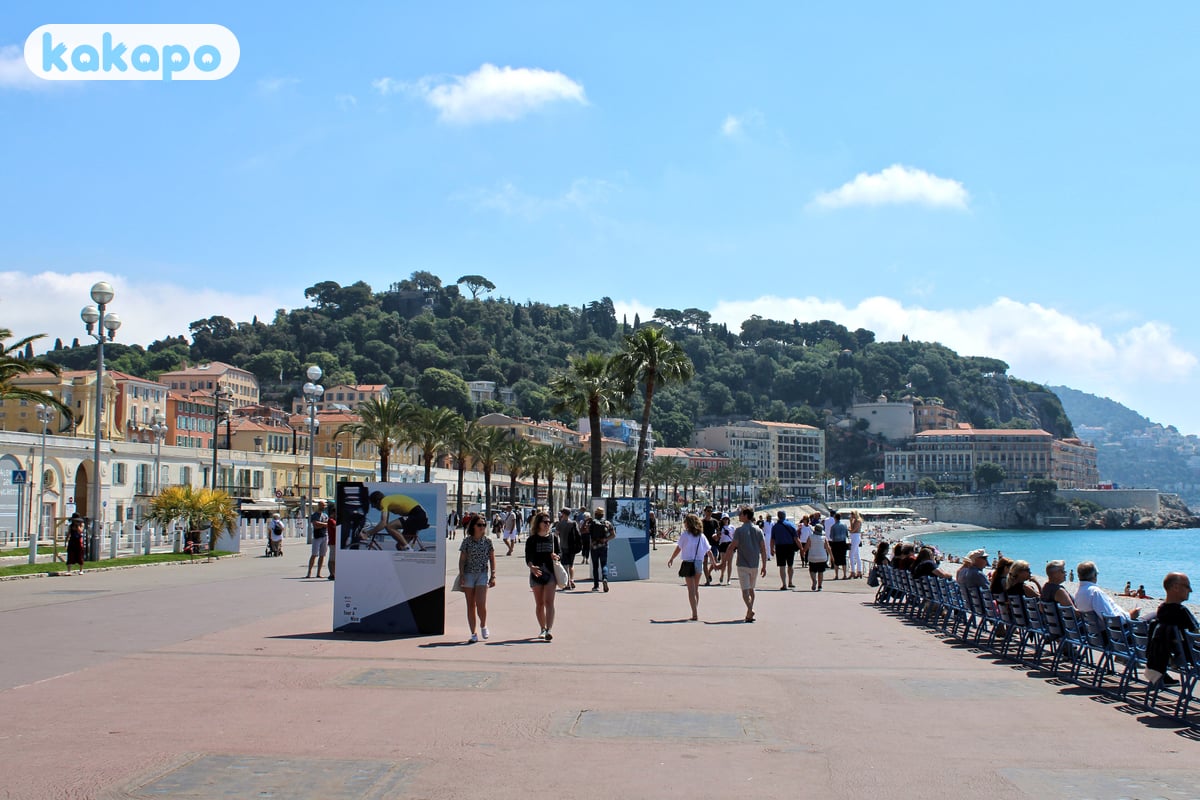
The Promenade des Anglais is Nice's famous 7 km waterfront walk. It's also the most-pickpocketed strip in the city.
- Pickpocket teams work the busy stretches at peak times (sunset, after-dinner walks). Phone in front pocket; daypack in front.
- The 2016 attack memorial at Place Masséna: a small, dignified memorial. Visitors are welcome; respect signage.
- Bollards along the Promenade: installed post-2016 to prevent vehicle attacks. They look industrial; they're working as intended.
- Bastille Day (July 14) in Nice: large security perimeter; the historic fireworks display is at the same waterfront. Police presence is heavy; events go ahead.
Areas — Vieille Ville, Promenade, Cimiez

Recommended for visitors: Vieille Ville (Old Town) (the photogenic core — Cours Saleya, Cathédrale Sainte-Réparate), Promenade des Anglais / Cap de Nice (the waterfront strip), Cimiez (residential, Matisse Museum, Roman ruins), Place Masséna and Avenue Jean Médecin (shopping, busy by day).
Lively, late-night fine: Cours Saleya and the surrounding bars; the streets behind the Opera.
Stay aware: parts of Quartier de l'Ariane and Saint-Augustin outer streets (residential, no tourist relevance), around Nice-Ville train station at night (rough sleepers).
Beach safety — pebbles and theft

- Pebble beaches: Nice's beaches are smooth pebbles, not sand. Hard on bare feet; bring beach shoes.
- Beach theft: persistent. Don't leave valuables on a towel while you swim. Most hotels rent lockers at their beach clubs.
- Lifeguarded sections: Nice maintains lifeguarded zones in season; obey flag system.
- Currents: generally moderate; sudden swell after Mistral wind events.
- Sun: the Mediterranean July-August UV is intense; SPF 50+, hat, hydrate.
Scams + the Vieux Nice late-night routine
- Petition / clipboard at Place Masséna: same operators that work Paris and Lyon rotate through Nice in summer. Decline, walk past.
- Friendship bracelet on the Promenade: same pattern. Hands in pockets.
- "Free ice cream" or "free drink" promoter: standard hook to get you into a fixed-tab bar in Vieux Nice. Decline.
- Restaurant "tourist menu" near Cours Saleya: a few tourist-strip places charge €40-60 for socca-and-salad lunches that should be €15-25. The locals' favourites — Chez Pipo (socca, Port area), La Merenda (no phone, no cards), Acchiardo — are off the main strip and post fair prices.
- Card-terminal DCC: always pay in EUR, never "your home currency".
- ATM skimming: rare in central Nice. Prefer ATMs inside bank lobbies (BNP, Crédit Agricole, Société Générale).
- Beach-club lounger overcharge: legitimate private beaches (Le Galet, Castel Plage) charge €25-40/day. A few less-reputable sections of Promenade beach charge tourists 2× the resident rate. Confirm pricing in writing before sitting down.
- Late-night Cours Saleya safety: lively but generally safe. Drink-spiking incidents are documented but rare; hold your own drink in unfamiliar bars.
Tram, taxis, the airport, day trips

- Tram 1 and 2: connect the centre, the airport, and the Old Port. €1.50 single, day pass €5.
- Tram 2 (the new airport line): 25 min from Nice-Ville to NCE airport. Direct.
- Taxis: regulated, metered. Airport flat-rate to centre €32 day / €38 night.
- Bolt and FREE NOW: both work.
- Day trips: Monaco (15 min by train), Cannes (30 min), Antibes (15 min), Eze (20 min by bus). All very safe.
- Driving the Corniche: famously scenic, narrow, can be dangerous in heavy weekend traffic.
Neighbourhood-by-neighbourhood breakdown
- Vieille Ville (Vieux Nice / Old Town) — the photogenic core east of the Place Masséna, narrow ochre lanes, Cours Saleya flower-and-produce market, the Cathédrale Sainte-Réparate, Chez Pipo socca. Heavily tourist-anchored; pickpockets work the densest summer afternoons; restaurants on Cours Saleya are tourist-priced.
- Promenade des Anglais / Cap de Nice — the famous 7 km waterfront, the Negresco hotel, the pebble beach clubs. Heavily policed since 2016; bollards along the kerb. Pickpocket-active at sunset.
- Place Masséna / Avenue Jean Médecin — the modern central spine, shopping street, the Promenade du Paillon park. Busy and safe; the post-2016 memorial is at the park's east end.
- Carré d'Or — south-west of Place Masséna, the luxury shopping quarter (Hermès, Louis Vuitton, Cartier). Polished, very safe.
- Cimiez — north hillside, residential, the Matisse Museum, Roman ruins, the Monastère de Cimiez. Calm, very safe, lovely Sunday-morning visit.
- Port (Lympia) — east, the original Nice harbour, fishing boats and yachts. Atmospheric restaurants (the local socca-and-pissaladière at La Voglia, Chez Pipo nearby), very safe.
- Mont Boron — east hillside, residential, the panoramic walk above the Port. Quiet and safe.
- Around Nice-Ville train station — north of the centre, modern, functional. Rough sleepers in the underpasses at night; daytime fully fine.
- Saint-Augustin / l'Ariane (outer) — modern western suburbs. No tourist relevance; fine but not where to base a visit.
If it's your first time visiting
- Best arrival airport: Nice-Côte d'Azur (NCE), 7 km west — France's third-busiest. To centre: Tram Line 2 €1.50 in 25 min direct to Place Masséna (the standout option since opening); bus 12 or 23 €1.50 in 30 min; taxi flat-rate €32 day / €38 night.
- Public transport: Lignes d'Azur trams and buses. Tap-to-pay on every reader. €1.50 single (1h with transfers), €5 day pass, €15 weekly. Tram 1 runs east-west through the centre; Tram 2 connects the airport. The historic centre is fully walkable.
- Best neighbourhood for your first night: Vieille Ville for atmosphere (any street off Cours Saleya), the Carré d'Or or the Promenade for upmarket polish, Port Lympia for calmer with great food. Avoid first-time bookings around Nice-Ville station or in Saint-Augustin.
- Day 1, jet-lag friendly: morning walk along the Promenade, swim at the pebbles (bring beach shoes), socca lunch at Chez Pipo or Réné Socca, late-afternoon stroll through the Vieille Ville and Cours Saleya market, sunset rosé at a Cours Saleya terrace, dinner of local Niçoise dishes at La Merenda (no phone, no cards, queue at 6:30pm) or Acchiardo.
- Day trips: Monaco 15 min by train, Cannes 30 min, Antibes 15 min, Èze and Villefranche by bus 82, Menton 30 min. Italy via Ventimiglia is 45 min east — the Wednesday market is famous. The Corniches (low/middle/high) are spectacular by car if you've driven mountain roads before.
- Common rookie mistakes: not bringing beach shoes (the pebbles wreck your feet); leaving valuables on a towel while you swim (real theft pattern); paying €50 for a "tourist menu" in a Cours Saleya restaurant when La Merenda or Acchiardo charge €22-28 for better food; renting a car for a city visit (parking is impossible — use trains for the Riviera); confusing "salade niçoise" with the abomination served at home (the real one has tuna, anchovies, hard-boiled egg, raw vegetables — no lettuce, no cooked beans).
- For Carnaval (mid-Feb to early March): book hotels by November. The Battle of Flowers parade tickets €30; corso lumineux night parades the highlight.
- Tap water from the Vésubie and Var valleys is excellent. Ask for "une carafe d'eau" — free at any restaurant. The Old Town public fountains are drinkable.
Practical info — emergency numbers
- European emergency: 112.
- Police: 17.
- Ambulance: 15 (SAMU).
- CHU Nice (Pasteur): +33 4 92 03 77 77.
Bring: beach shoes for the pebbles, reef-safe sunscreen, a card without foreign-transaction fees, an unlocked phone (Free, Orange, Bouygues prepaid SIMs), and travel insurance. Tap water is safe.
Frequently asked questions
Is Nice safe to visit in 2026?
Yes. Nice is one of the safer mid-sized French cities for tourists. France sits at low advisory levels with both US State Department and UK FCDO. Realistic concerns are pickpocketing on the Promenade des Anglais and on Tram line 2, beach theft from pebble beaches, and a residual elevated-security baseline since the 2016 Bastille Day truck attack — not violent crime against tourists.
Is Nice safe at night?
Yes. The Vieille Ville (especially Cours Saleya) stays alive late and policed. The Promenade des Anglais is well-lit and busy late into summer evenings. Drink-spiking incidents in Cours Saleya bars are documented but rare; hold your own drink in unfamiliar bars. The area immediately around Nice-Ville train station has rough sleepers at night but isn't dangerous.
Is Nice safe for solo female travellers?
Yes. Nice is comfortably safe for solo women in the centre — the Vieille Ville, Promenade, and Cimiez are well-lit and busy. Standard precautions: phone in front pocket on the Promenade (pickpocket teams work at sunset and after-dinner walks), Bolt or FREE NOW for late-night distances, decline 'friendship bracelet' approaches on the Promenade with hands in pockets.
Can you drink tap water in Nice?
Yes. Nice's tap water comes from the Vésubie and Var valleys and is safe and extensively tested. Free at every restaurant on request. Refill bottles anywhere — public fountains across the Vieille Ville.
Is the Riviera moped-snatch issue real?
Yes, but more in Marseille and Paris than Nice. The pattern: a moped or scooter rider grabs your phone from your hand as you walk near the kerb, then accelerates away. Most Nice incidents happen on the Promenade des Anglais and along the Cours Saleya periphery. Defence: don't walk near the kerb with phone in hand; phone away when you're not actively using it; chasing leads to injuries. The Riviera scooter culture also catches first-time riders out — local traffic is faster and more aggressive than visitors expect.
Should I avoid Nice because of the 2016 attack?
No. The Bastille Day 2016 truck attack on the Promenade killed 86 people and shaped the city's permanent security posture — bollards along the Promenade, visible police presence, and a heavy security perimeter for Bastille Day events. Visitors today encounter only the visible police presence as a residual. The Place Masséna memorial is dignified and welcoming. Major events (Bastille Day fireworks, Carnaval, Nice Jazz Festival) go ahead with heavy but routine security.
Sources
Run a business in Nice?
Show visitors your Nice business is a safe choice. The free Verified by Kakapo badge puts Nice's live safety score on your website, links back to your verified page, and updates itself. No cost.
Get the free badge →