


Is Montréal, Canada Safe? A 2026 Travel Safety Guide
The brutal winter cold (-25°C), the Saint-Catherine pickpockets, the Underground City, the language context, and the realistic risks of Canada's most European city.

Montréal is one of the safer large cities in North America for tourists. Crime against visitors is uncommon. The realistic risks are environmental: the genuine winter cold (Montréal hits -25°C with windchill in January and is one of the coldest large cities in the world), the standard pickpocket caution at Christmas markets and on Saint-Catherine on busy weekend nights, and the language context — Montréal is North America's largest francophone city, and while almost everyone in tourist areas speaks English, attempting "bonjour" is appreciated.
Canada sits at Level 1 on the US State Department's advisory list. UK FCDO is the same. The honest framing for first-time visitors: Montréal is large (~1.7 million in city, 4.3 million metro), built on an island in the St Lawrence River. Old Montréal, the Plateau Mont-Royal, downtown, the Underground City (RÉSO), Mount Royal Park, and the Olympic district are the visitor anchors.
Visiting Montréal for the first time, the thing that catches most travellers off-guard isn't crime — it's how genuinely French and yet North American the city is, often within the same block. Quebec French is the working language; English is universal in tourist zones but locals appreciate any attempt. Open with "Bonjour" before evening, "Bonsoir" after — and the famous "Bonjour-Hi!" hybrid greeting that retailers use to signal "either language works"; "Merci" closes transactions. Smoked-meat at Schwartz's costs CAD 16-22 for a sandwich (~$11-15), poutine at La Banquise CAD 12-18, bagels at St-Viateur Bagel or Fairmount Bagel CAD 1.20 each (sesame is the iconic order), a craft beer at a Plateau bar CAD 8-10, a metro ride CAD 3.75 (OPUS card or contactless), the Underground City RÉSO is free and a winter lifesaver.
In 2026, the specific things that have changed since pre-pandemic include: STM tap-to-pay rolled out on every metro and bus reader (CAD 3.75 single, CAD 11 day pass, CAD 31.50 three-day); the REM light-rail network is partially operational connecting downtown to South Shore and the airport (full opening 2027); the Quebec language law (Bill 96, in force since 2022) means more public-facing signage is French-only but tourist interactions remain bilingual; the winter Igloofest and Bal en Blanc festivals continue as the city's signature -20°C nightlife experiences; and the post-2024 short-term rental restrictions have stabilised the Plateau and Mile End neighbourhoods.
| Night safety | 75/100 |
|---|---|
| Scam / petty-crime risk | Medium |
| Violent crime (tourists) | Low |
| Most common scams | pickpockets at Christmas markets and on Saint-Catherine; homelessness and addiction concentration around Berri-UQAM metro station and Saint-Hubert |
| Safer neighbourhoods | Old Montréal, Downtown, Mile End |
| Data sources cited | 4 |
| Last verified |
What the score means — 86/100
- Transport (88) — STM metro is fast, clean, frequent.
- Healthcare (88) — Canadian universal; CHUM and McGill University Health Centre are excellent.
- Air quality (86) — moderate-good. Wildfire smoke episodes 2023-onwards.
- Personal safety (86) — high. Petty crime is rare; violent crime even rarer.
Winter cold — the genuine risk
- December-March: -10 to -25°C standard, with windchill -30 to -35°C in cold snaps.
- Frostbite: possible at -20°C with wind on exposed skin in 10-15 minutes. Cover ears, cheeks, fingers.
- The Underground City (RÉSO): 33 km of underground walkways connecting metro stations, hotels, malls, restaurants, museums. Heated, dry, you can spend a full winter day downtown without going outside. Use it.
- Layered clothing: thermal base + warm middle + windproof shell. Wool socks. Hat covering ears. Mittens (warmer than gloves). Boots with grip.
- Sidewalk ice: salted but icy patches inevitable. Chain-grip overshoes (CAD $20 at outdoor shops) help.
- Frigid windchill on Mount Royal: bundle up.
- Best winter activity: cross-country skiing on Mount Royal, ice-skating at Atrium Le 1000 or Bonsecours basin, the festival "Igloofest" outdoors at the Old Port (yes, it happens; yes, it's cold).
- Best summer weather: June-September. 22-30°C. Humid.
Areas — Old Montréal, Plateau, Mile End, downtown
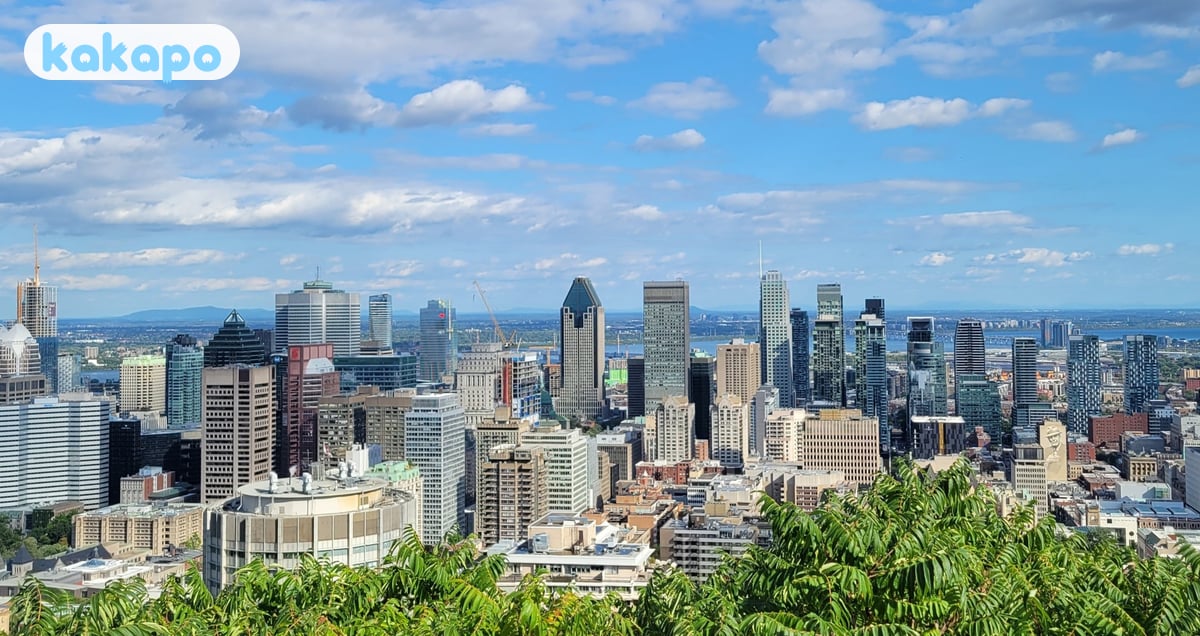
Recommended for visitors: Vieux-Montréal (Old Montréal) — cobbled lanes, Notre-Dame Basilica, the Old Port. Plateau Mont-Royal — the bohemian arts district with painted staircases and bagels. Mile End — gentrified café-and-music neighbourhood. Downtown — modern centre, the Underground City. Petite Italie / Mile-Ex — restaurants. Le Village (the Gay Village) — Sainte-Catherine Est.
Stay aware: around Berri-UQAM metro station and Saint-Hubert at night — homelessness and addiction concentration; not violent towards passers-by, just confronting. Outer industrial Montréal-Nord — residential, no tourist relevance.
Montréal has no specific "no-go" zones in the visitor core.
The language context
- Montréal is North America's largest francophone city. Quebec law (Bill 101) makes French the official language; Bill 96 (2023) extended the rules.
- For tourists: almost everyone in central Montréal hospitality speaks excellent English. Greeting in French ("Bonjour") and switching to English ("Bonjour, parlez-vous anglais?") is the polite move.
- Government interactions: technically French-only by law. In practice, English service is provided.
- Outside Montréal in Quebec: French dominates. Quebec City's tourism is bilingual; rural Quebec is mostly French-only.
- Signs: French is mandatory; English may be added in smaller text. Stop signs say "ARRÊT".
Transport and the airport
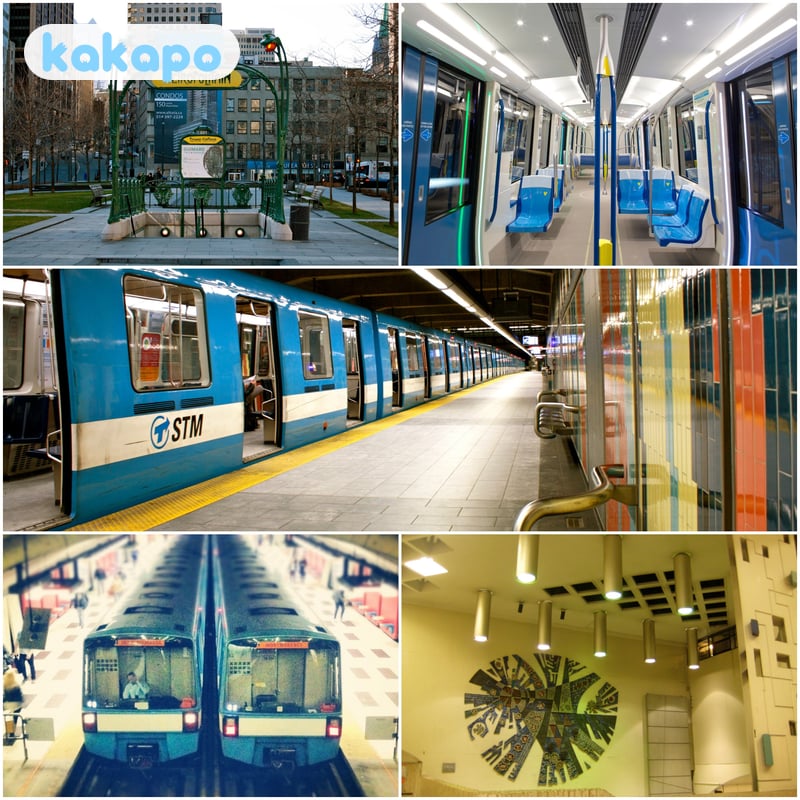
- STM metro: 4 lines (Orange, Green, Yellow, Blue). Modern stations, Métro art is famous. Single ride CAD $3.75; day pass $11.50.
- Buses: extensive. Use the same OPUS card or contactless.
- BIXI: bike-share. Excellent in summer.
- Taxis: metered, honest. Uber and Lyft both operate.
- Trudeau International Airport (YUL): 20 km west. The new REM light-rail (since 2023) connects to downtown, ~25 min, CAD $11. Bus 747 CAD $11. Taxi flat-rate $48 from airport to downtown.
- To Quebec City: 2.5h by bus or train.
- To Toronto: 5.5h train, 1.5h flight.
Money, food, the cost story
- Currency: Canadian dollar (CAD).
- Cards: universal.
- Tipping: 18-20% in restaurants. 15% in taxis.
- Tax: GST 5% + QST 9.975% = ~15% added at register.
- Cost: lower than Toronto. Mid-range dinner CAD $40-70/person.
- Tap water: excellent.
- Local food: poutine, smoked-meat sandwich (Schwartz's), Montréal-style bagels (St-Viateur or Fairmount), tourtière.
Festivals — the year-round calendar
- Just for Laughs (July): world's largest comedy festival.
- Montréal Jazz Festival (late June - early July): world's largest jazz festival; many shows free.
- Osheaga (early August): music festival on Île Sainte-Hélène.
- Igloofest (Jan-Feb): outdoor electronic music in -20°C. The famous one-piece snowsuits.
- Crowds + pickpockets: festival density elevates the standard pickpocket risk slightly. Front pocket only.
Neighbourhood-by-neighbourhood breakdown
- Old Montréal (Vieux-Montréal) — the historic cobbled centre, Notre-Dame Basilica, Place Jacques-Cartier, the Old Port. Very safe, the most touristy. Restaurants along Saint-Paul are tourist-priced; one block over has honest pricing.
- Downtown (Ville-Marie / Centre-ville) — Sainte-Catherine shopping street, McGill University, the Underground City RÉSO. Very safe, busy by day, calmer at night.
- Plateau Mont-Royal (The Plateau) — north-east, the bohemian residential heart, Saint-Laurent Boulevard ("the Main") nightlife, Rue Saint-Denis, colourful exterior staircases. Very safe, the best evening neighbourhood.
- Mile End — north of the Plateau, gentrified bohemian, the famous bagel shops, Fairmount Avenue and Saint-Viateur. Very safe.
- Little Italy — north of Mile End, Italian-heritage, Jean-Talon Market (one of North America's best). Very safe.
- Mile-Ex — west of Mile End, gentrifying, craft brewery zone. Very safe.
- Griffintown — south-west of downtown, modern condo district, restaurants. Very safe.
- Hochelaga-Maisonneuve (HoMa) — east, the Olympic Stadium, gentrifying working-class district, increasingly hip. Daytime fine, normal awareness at night.
- Le Village (The Gay Village) — east downtown, Sainte-Catherine East between Saint-Hubert and Papineau. Very safe, summer pedestrian street with rainbow installations.
- Verdun — south, the Wellington Street strip is "Canada's best street" per a 2023 magazine ranking. Gentrified, very safe.
- Around Berri-UQAM and Sainte-Catherine East downtown — generally safe; some homelessness visible. Awareness rather than avoidance.
If it's your first time visiting
- Best arrival airport: Montréal-Trudeau (YUL), 20 km west. To downtown: 747 Express bus CAD 11 in 45-70 min to Berri-UQAM or downtown (24-hour service, the standard option), Uber/Lyft CAD 35-55, taxi CAD 47-55 flat-rate. The REM light-rail extension to YUL is opening incrementally through 2025-2027.
- Public transport: STM metro (4 lines), buses, REM light-rail. Tap-to-pay on every reader. CAD 3.75 single, CAD 11 day pass, CAD 31.50 three-day. The metro is fast, well-signed, very useful — Montréal isn't all walkable.
- Best neighbourhood for your first night: Plateau Mont-Royal for atmosphere and walkability, Old Montréal for the historic centre, Mile End for the bohemian cool. Avoid first-time bookings in outer Hochelaga or Verdun (long commute).
- Day 1, jet-lag friendly: drop bags, smoked-meat at Schwartz's (the iconic CAD 16-22 sandwich), afternoon walk in Mount Royal Park to the Kondiaronk Belvedere viewpoint, evening dinner on Saint-Laurent in the Plateau (CAD 35-65 per person), late drink at a Saint-Denis bar.
- Day 2 essentials: Old Montréal walking tour (Notre-Dame Basilica CAD 14, Place Jacques-Cartier, the Old Port), bagels at St-Viateur or Fairmount Bagel (CAD 1.20 each, sesame is iconic), Jean-Talon Market in Little Italy, evening poutine at La Banquise (open 24h).
- Day trips: Quebec City (2.5h by train, the walled colonial capital), Mont-Tremblant (1.5h north, skiing or hiking), the Eastern Townships (Magog, Knowlton — 1h east), Ottawa (2h south by train).
- Common rookie mistakes: visiting in January-February without serious cold-weather gear (-25°C with windchill); driving downtown rather than parking and using metro (Montréal driving is famously chaotic); only speaking English in mid-level restaurants outside tourist zones (locals warm immediately to "Bonjour, parlez-vous anglais?"); skipping the Underground City RÉSO in winter (33 km of indoor walkways, lifesaver in cold); pronouncing "Montréal" with a hard "T" rather than the French "Mon-ray-AHL".
- For winter: the festivals are the year's highlight — Igloofest (electronic music at -20°C in January), Montréal en Lumière (February light festival). Embrace the cold, dress for it.
- Tap water is excellent. Drinkable everywhere.
Practical info — emergency numbers
- Emergency: 911.
- SPVM (Montréal Police) non-emergency: 514-280-2222.
- CHUM (downtown ER): 514-890-8000.
- Royal Victoria Hospital ER: 514-934-1934.
Bring: serious cold-weather layers if Dec-March, boots with grip, an unlocked phone (Bell, Rogers, Telus prepaid SIMs or eSIM), a contactless card, and travel insurance with full medical coverage.
Frequently asked questions
Is Montréal safe to visit in 2026?
Yes — Montréal is one of the safer large cities in North America. Both the US State Department and the UK FCDO list Canada at Level 1. Crime against tourists is uncommon, the STM metro is fast and clean, and the central anchors (Vieux-Montréal, the Plateau, Mile End, downtown) are calm. The realistic concerns are environmental and cultural: genuine winter cold (-25°C with windchill is normal in January), language navigation (Quebec is officially francophone under Bill 101 and Bill 96), and standard pickpocket caution at the summer festivals and on Sainte-Catherine on busy weekend nights.
Is Montréal safe at night?
Yes — Old Montréal, the Plateau, Mile End and downtown are calm after dark, and the STM metro is among the cleanest and most reliable urban rail systems on the continent. The Underground City (RÉSO) lets you cover much of the centre indoors in winter, which removes most walking-at-night exposure entirely. The exceptions are around Berri-UQAM and Saint-Hubert at night where homelessness and addiction concentrate (confronting rather than violent) and the Sainte-Catherine bar strip at 2am on weekends, where the usual late-night cluster occurs. Walk in company, take a taxi or Uber home.
Is Montréal safe for solo female travellers?
Yes — Montréal is one of the safer big cities globally for solo female travel. Street harassment is uncommon, the metro runs reliably into late evening, and the dense café-and-restaurant culture means you'll rarely walk more than a few minutes between busy spots. Standard precautions apply at the summer festivals (Just for Laughs, Jazz Fest) where crowd density elevates pickpocketing risk slightly. Around Berri-UQAM and on Saint-Hubert at night, prefer Uber or a known taxi rather than walking solo.
Can you drink tap water in Montréal?
Yes — Montréal tap water is treated by the city's Atwater and Charles-J.-Des Baillets plants and is safe everywhere in the city. Quality is genuinely excellent and restaurants offer it free with meals. After major water-main breaks, the city issues localised boil-water advisories that are widely publicised — check the city website if you see one in the news while visiting.
What's the biggest scam to avoid in Montréal?
Montréal has very little organised scam culture. The recurring practical traps are airport-area taxi overcharging (use the new REM light-rail from YUL to downtown for CAD $11 since 2023, or the 747 bus for the same price, instead of curb negotiations) and the visible add-on of GST plus QST (about 15%) plus the expected 18-20% tip not shown in menu prices — a CAD $30 dish runs about CAD $40 on the bill. Cards work everywhere; you very rarely need cash.
How do I cope with -25°C winter cold in Montréal?
Take it seriously and use the Underground City. Frostbite is possible at -20°C with wind on exposed skin within 10-15 minutes — cover ears, cheeks, fingers, and prefer mittens over gloves because they're warmer. The RÉSO is 33 km of heated, dry underground walkways connecting metro stations, malls, hotels, museums and restaurants downtown, and you can spend a full day there without going outside. For activities outside, dress in three layers (thermal base, warm middle, windproof shell), wool socks, boots with grip and chain-grip overshoes (about CAD $20 at outdoor shops). Don't try to warm up with caribou or other alcohol in the cold — it accelerates hypothermia rather than warming you, and a 15-minute walk back to the hotel becomes risky if you've miscalculated.
Sources
Run a business in Montréal?
Show visitors your Montréal business is a safe choice. The free Verified by Kakapo badge puts Montréal's live safety score on your website, links back to your verified page, and updates itself. No cost.
Get the free badge →