


Is Mont Saint-Michel, France Safe? A 2026 Travel Safety Guide
Crime is essentially zero. The realistic concerns are tide-cycle parking, summer over-tourism, the cobbled abbey climb, and quicksand on the bay.

Mont Saint-Michel is one of France's safest destinations by ordinary-crime measures. Pickpocketing is mild and the visitor experience is heavily managed by the parks authority. The realistic concerns are environmental: the tide cycle (Mont Saint-Michel sits in a bay with Europe's largest tidal range — at high tide the mount becomes a true island and the access shuttle operates around the schedule), summer over-tourism that compresses the single 1-km lane to slow-shuffle pace, the cobbled climb to the Abbey, and the bay's famous quicksand for anyone who walks out at low tide without a guide.
France sits at Level 2 on the US State Department advisory (terrorism, baseline). UK FCDO is similar. The honest framing for visitors: Mont Saint-Michel is a UNESCO site of ~30 permanent residents that absorbs 2.8 million visitors a year. The modern shuttle-bus + footpath access (since the 2014 causeway removal and bridge installation) has improved the experience but doesn't reduce the human density on the mount itself. Stay overnight to walk the empty lanes after 6:30pm.
The defining experiences: the Abbey, the village lane, the ramparts, the bay walk at low tide (with a guide), and the spectacle of the highest tides which can encircle the mount.
| Night safety | 92/100 |
|---|---|
| Scam / petty-crime risk | Low |
| Violent crime (tourists) | Low |
| Safer neighbourhoods | La Caserne, the village lane, the ramparts |
| Data sources cited | 4 |
| Last verified |
What the score means — 88/100
- Air quality (92) — Atlantic-bay; very high.
- Personal safety (92) — among France's safest spots.
- Healthcare (78) — first-aid in village; nearest hospital Avranches (25 km) or Saint-Lô (60 km).
- Transport (76) — shuttle bus + footbridge from mainland car park; no private vehicles on the mount.
The tide cycle — what tourists actually need to know
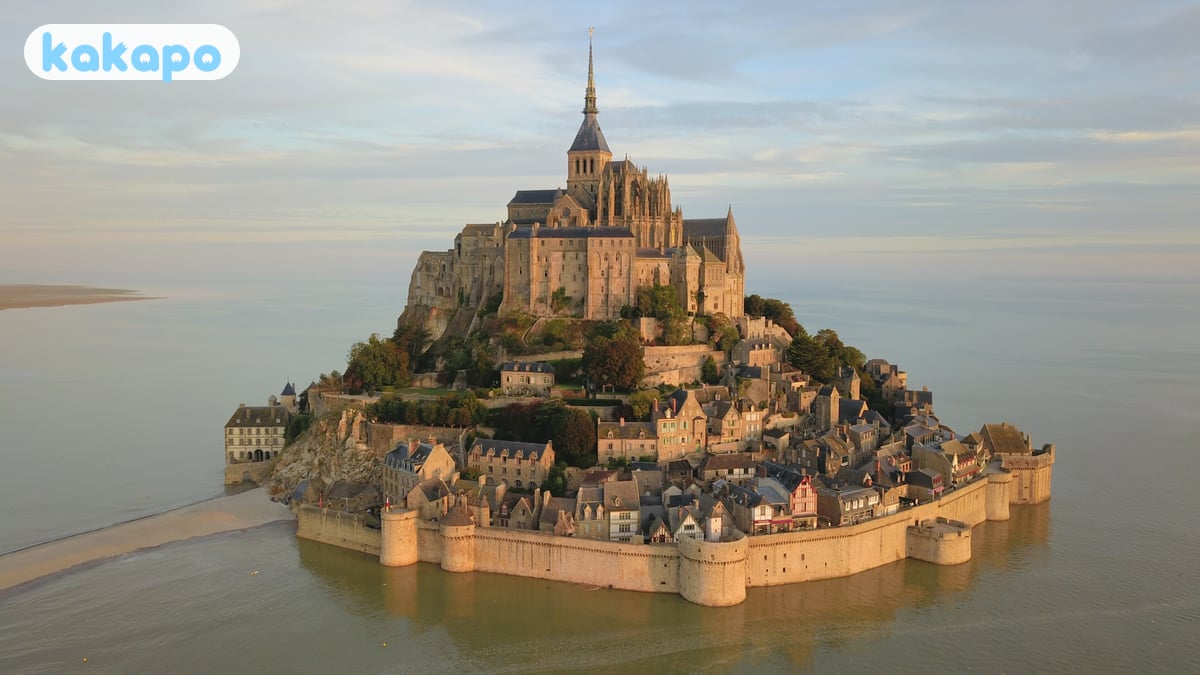
- Tidal range: up to 14 m — among Europe's largest. The bay drains for kilometres at low tide; high tides return at the famous "as fast as a galloping horse" speed.
- "Grandes marées" (great tides): when the mount becomes a full island. Spring + autumn equinoxes typically. Schedule on the official Abbaye site.
- Daily reality: 95% of days the tide doesn't reach the access bridge. The bridge replaced the old causeway in 2014.
- Footbridge: 1.1 km from the visitor parking to the mount. Open 24/7 except in extreme weather. Walks at low tide are safe.
- Free shuttle bus (Le Passeur): parking → mount, every 5-10 min, free with parking ticket. Takes 8 min.
- Shuttle stops shorter at high tide: at the highest tides the shuttle stops 400 m short and you walk the last stretch.
- Driving onto the mount: not possible. Park at the visitor lot 2.5 km away.
Parking + arrival logistics
- Visitor car park: a single managed lot 2.5 km mainland-side. €15.30/day for a car (24h ticket). €0 if leaving within 30 min — useful for drop-off.
- The walk to the mount: 35-50 min along the bridge + tidal flats causeway. Pleasant in good weather.
- Or shuttle: free with parking ticket; 8 min.
- Or horse-drawn shuttle: La Maringote, €10 round trip, slower + nicer.
- Hotel guests with reservations: a separate access — your hotel issues a special parking pass at La Caserne or one of the hotel-row hotels.
- Day-trippers parking later than 11am: the lot fills on summer Saturdays. Arrive 9am or stay overnight.
- Camper vans: separate area; pre-book in summer.
Summer over-tourism — and the way to dodge it
- The numbers: 2.8 million visitors a year. The single-lane Grande Rue is 350 m long.
- Peak compression: 11am-4pm Sat-Sun in July-August + cruise-tour-bus days. Slow shuffle through the village.
- Strategy: stay overnight inside the walls (3 hotels) or at La Caserne (mainland side). After 6pm the day-trippers leave; the village empties; the abbey opens for special evening "Nuits Mont Saint-Michel" lighting on summer Saturdays.
- Best months: May, June, September. Winter is quiet but reduced shuttle frequency.
- Restaurant queue at La Mère Poulard: 60-90 min for the famous omelette + €40+/person. The omelette is fine; locals say not worth the wait.
- Better food: La Sirène, La Confiance, or eat in nearby Pontorson.
- Ramparts walk: free; less crowded than the Grande Rue. The way to escape.
The Abbey climb — cobbles, steps, terrain
- The Grande Rue: cobbled main lane up the village. Steep + slippery + crowded.
- Then steps: the climb to the abbey continues with hundreds of stone steps. Allow 30 min from main gate to abbey entrance, including stops.
- Abbey entry: €13 (free EU under-26). Pre-book; same-day tickets sell out summer afternoons.
- Inside the abbey: more steps. Many irregular medieval steps without handrails.
- Wheelchair / mobility: limited beyond the village. The Abbey has step-free routes only to the lower terrace; the main church requires steps.
- Footwear: trainers with rubber grip; not sandals.
- Children: the cobbles + steps + crowd are demanding for under-5s. Bring a carrier rather than a stroller.
Bay walks and quicksand
- The bay at low tide: drains for ~20 km, exposing famous tidal flats. Spectacular bare-foot walking.
- Quicksand: real. The bay has patches that swallow ankles to knees in seconds; the tide returns at speed.
- Don't walk out alone: the official rule. Licensed guides (Découverte de la Baie, Chemins de la Baie) lead 3-4 hour bay walks for €10-€15. Best done with bare feet (the silt is gentle).
- Tide returns: the bay refloods in 1-2 hours from the lowest tide. Get caught and you can't outrun it.
- Don't take children on bay walks unless the guide says it's safe for the age.
- Mont Tombelaine: the smaller satellite islet. Closed to visitors May-July (bird sanctuary).
Trains, buses, driving from Paris
- From Paris: TGV Paris Montparnasse → Rennes 1h30m, then Keolis Armor bus to Mont Saint-Michel ~1h15m, ~€18.
- From Caen: SNCF + bus combination via Pontorson; ~2h.
- By car from Paris: 4h via A11 + A84. Tolls ~€40.
- Pontorson: nearest train station, 9 km. Bus connection or taxi.
- From Saint-Malo: 1h10m drive; 1h45m by bus.
- Driving in winter: roads fine; Atlantic gales hit the bay area.
- Day-trip from Paris: viable but exhausting; one-night stay strongly recommended.
Practical info — emergency numbers
- European emergency: 112.
- Police: 17.
- SAMU (medical): 15.
- Maritime rescue: 196.
- Centre Hospitalier Avranches-Granville: +33 2 33 89 40 00.
Bring: trainers with grip (cobbles + steps), a hooded waterproof shell, layered clothing year-round, a contactless card, an unlocked phone (Bouygues, Orange FR, SFR prepaid), and travel insurance.
Frequently asked questions
Is Mont Saint-Michel safe to visit in 2026?
Yes — it scores 88/100 and is one of France's safest destinations by ordinary-crime measures. Pickpocketing is mild and the visitor experience is heavily managed by the parks authority. France sits at US State Department Level 2 (baseline terrorism) and UK FCDO is similar. The realistic concerns are environmental, not criminal: the dramatic tide cycle, summer over-tourism compressing a single 1-km lane, the cobbled climb to the Abbey, and quicksand on the bay flats. The mount holds ~30 permanent residents and absorbs 2.8 million annual visitors — stay overnight to walk the lanes after 6:30pm.
When does Mont Saint-Michel become a full island?
Only during 'grandes marées' (great tides) — typically around the spring and autumn equinoxes. 95% of days the tide doesn't reach the access bridge. The 2014-built footbridge (which replaced the old causeway) is 1.1 km from the visitor parking to the mount, open 24/7 except in extreme weather. The free shuttle bus (Le Passeur) runs every 5-10 minutes from the parking, 8 minutes each way. At the very highest tides the shuttle stops 400 m short and you walk the last stretch. Tide schedules are published on the official Abbaye site — check before booking if seeing the island fully encircled matters to you.
How does parking work at Mont Saint-Michel?
There's a single managed visitor lot 2.5 km mainland-side at La Caserne. €15.30/day for a car (24h ticket); €0 if you leave within 30 minutes, useful for drop-offs. From the parking you either walk the 35-50 minute bridge-and-causeway approach (pleasant in good weather), take the free shuttle (8 min, included with parking), or pay €10 round trip for the slower La Maringote horse-drawn shuttle. Hotel guests with reservations get separate access via a special pass from their hotel. Day-trippers arriving after 11am on summer Saturdays risk a full lot — arrive 9am or stay overnight.
Is the bay walk and quicksand really dangerous?
Yes, genuinely. The bay drains for roughly 20 km at low tide, exposing famous tidal flats, but there are real patches of quicksand that swallow ankles to knees in seconds, and the returning tide moves at the famous 'as fast as a galloping horse' speed — refloods in 1-2 hours from the lowest point. Never walk out alone; this is the official rule. Licensed guides (Découverte de la Baie, Chemins de la Baie) lead 3-4 hour bay walks for €10-15, best done barefoot. Don't bring children unless the guide approves for their age. If caught by the tide, you cannot outrun it.
Can you drink tap water at Mont Saint-Michel?
Yes — French tap water is safe across Normandy. Carry a refillable bottle for the cobbled village climb. The Abbey itself has limited refill points; the visitor centre at La Caserne does. Restaurant carafe water (carafe d'eau) is free on request. The famous La Mère Poulard omelette restaurant draws 60-90 minute queues at €40+/person — the omelette is fine, but locals say it's not worth the wait. Better food at La Sirène or La Confiance on the mount, or in nearby Pontorson. Service is usually included on French bills.
Is Mont Saint-Michel accessible for visitors with mobility issues?
Limited. The cobbled Grande Rue is steep, slippery and crowded; the climb to the Abbey continues with hundreds of irregular medieval stone steps, many without handrails. Allow 30 minutes from the main gate to abbey entrance for an able-bodied visitor. Wheelchair access exists only to the lower Abbey terrace; the main church requires steps. Inside the Abbey there are more uneven steps throughout. For children, the cobble-and-step environment is demanding for under-5s — bring a carrier rather than a stroller. Wear trainers with rubber grip, never sandals. The free shuttle and lower village are accessible; the upper monument is not.
Sources
Run a business in Mont Saint-Michel?
Show visitors your Mont Saint-Michel business is a safe choice. The free Verified by Kakapo badge puts Mont Saint-Michel's live safety score on your website, links back to your verified page, and updates itself. No cost.
Get the free badge →