


Is Langa Township Safe to Visit? Cape Town 2026
Cape Town's oldest township, the official Langa Quarter cultural strip, the operator-only rule, and what "safe" means in the context of South Africa's still-segregated geography.

Langa is Cape Town's oldest formally established township, dating to 1927, and the most-visited of the city's townships for cultural tourism — Gugulethu and Khayelitsha being the other two. The community-tourism scene in Langa has developed substantially since the late 2000s: the Langa Quarter Visitor Centre on Washington Street, the Gugu S'Thebe arts complex, Mzansi Restaurant, Eziko cooking school, the Langa Pass Museum. Visiting Langa with a vetted guide is one of the most rewarding three hours in Cape Town tourism.
Visiting Langa without a vetted guide is a different matter. South Africa has very high overall crime rates — Cape Town ranks among the world's top-10 cities by murder rate — and that crime concentrates heavily in the townships and the Cape Flats area, with rates an order of magnitude higher than in the central tourist bubble of the City Bowl, V&A Waterfront and Atlantic Seaboard. The "safe to visit" answer for Langa is yes on a tour, no on your own.
This guide covers the operator-vetting question (who to book with), the Langa Quarter cultural strip (what you'll see), the timing rules, and the honest reality of South African township tourism in 2026.
| Night safety | 50/100 |
|---|---|
| Scam / petty-crime risk | High |
| Violent crime (tourists) | Medium |
| Most common scams | cheap 'township tour' offers on Klook/Viator/GetYourGuide; walking around Langa without a guide; opportunistic mugging |
| Safer neighbourhoods | City Bowl, V&A Waterfront, Atlantic Seaboard |
| Data sources cited | 4 |
| Last verified |
What Langa is — the context
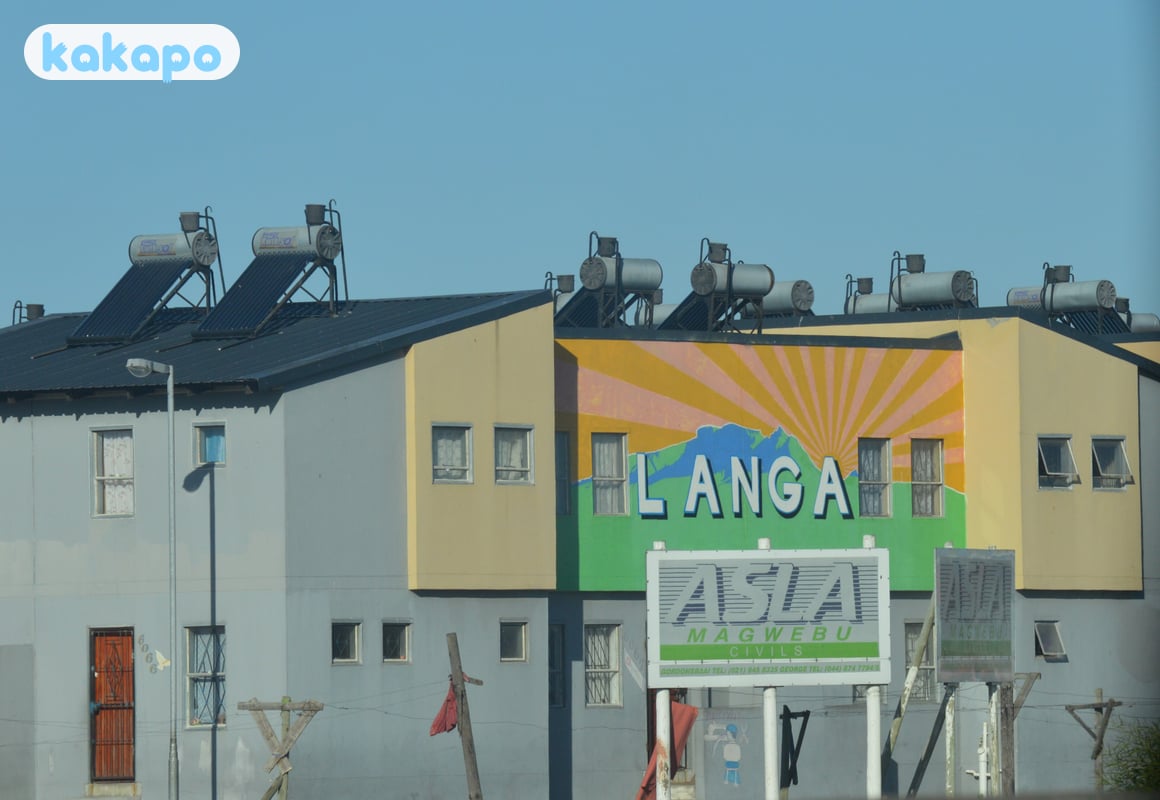
- Population and history: ~50,000-80,000 residents, established in 1927 under the Urban Areas Act that forced Black South Africans into segregated townships on the Cape Town periphery. Apartheid-era residential designation; today a mixed-income community with formal housing, hostels, and informal-settlement RDP housing.
- Geography: ~12km east of central Cape Town, off the N2 highway opposite the airport. Visible from the highway; the bright-painted formal houses on the south side and the densely-packed informal settlement on the north side.
- The Langa Quarter: the formal cultural-tourism zone, centred on Washington Street, the Langa Cultural Precinct, Gugu S'Thebe arts complex (a converted hostel that's now a community arts centre), and the surrounding 2-3 blocks of community businesses.
- Why visit: the township-tourism counter-narrative: Langa residents and operators view tourism as a way to reframe the township from a Western-media-narrative crime statistic to what it actually is — a working community with a culture and an economic life.
- The ethical debate: same debate as Rio favela tourism and Mumbai's Dharavi. The community-vetted operators have substantially answered the "poverty porn" critique; tour pricing returns 70-80% to community businesses; photography is restricted to public spaces.
Which tour operator — the vetted list
- Langa Quarter (langaquarter.co.za): the official community-led tour, run by Langa residents. The "Langa Heritage Walking Tour" runs 2.5 hours, R450-550 in 2026, meets at the Visitor Centre on Washington Street. The most community-rooted option.
- Coffeebeans Routes (coffeebeansroutes.com): Cape Town's most-established cultural-tourism operator, founded 2007, runs the "Cape Town Jazz Safari" and "Langa Music Tour" — pickup from your hotel, evening tours including dinner with a Langa family. R900-1,400.
- Camissa Travel and Marketing (camissa.co.za): B-BBEE Level 1 operator, runs combination Langa + District Six Museum + Bo-Kaap half-day tours. R650-850.
- Uthando South Africa (uthandosa.org): NGO-affiliated, runs "philanthropic tours" focused on Langa community projects — childcare centres, urban gardens, women's collectives. R750-1,000; proceeds fund the projects visited.
- What to skip: the cheap (R200-300) "township tour" offers on Klook/Viator/GetYourGuide — typically middlemen sub-contracting to drive-by photo tours that the community actively dislikes. The R450+ community-led tour fee is the integrity threshold.
- The hotel concierge route: most City Bowl and Atlantic Seaboard hotels (Mount Nelson, One&Only, Cape Grace, Cape Heritage) have preferred operators. Concierge bookings are vetted and a safe default if you don't want to research.
Going to Langa without a guide — the honest answer
- The legal answer: there's no law against entering Langa. The N2 highway and the local road network run through and around it.
- The practical answer: walking around Langa without a guide is not a sensible move. The crime statistics are an order of magnitude higher than in the City Bowl; community-tour operators are explicit that walking alone is not safe; the Western Cape Provincial Government's tourism safety advisory specifically warns against unaccompanied township visits.
- What "not safe" means concretely: opportunistic mugging is the primary risk — phone, wallet, jewellery. Violent armed crime against tourists in Langa is uncommon but documented; the SAPS reports incidents annually.
- What "won't happen" is also worth saying: kidnapping, organised armed assault, or any of the worst-case scenarios isn't what Langa is about. The risk is opportunistic and concentrated in particular streets — exactly the streets you can't tell apart without local knowledge.
- If you absolutely must drive through: take the N2, keep windows up, doors locked, no phone visible. The highway itself is fine; do not turn off into the township roads.
- Uber and Bolt to Langa: both work but neither is the move. Driver availability in Langa for the return trip is much lower than in the City Bowl. Take a guided tour with vehicle return.
On the tour — what you'll actually see
- The Langa Pass Museum (Washington Street): the building was the original "pass office" where Langa residents had to obtain permits under apartheid's Pass Laws. Restored as a museum of the township's history; deeply moving.
- Gugu S'Thebe Arts and Cultural Centre: a converted hostel, now a community arts space — ceramic workshops, dance studios, the famous murals visible from the freeway.
- The Langa Hostels: the original migrant-worker dormitories ("zones") established 1927 to house male labour for Cape Town's docks. Still residential; visit only on guided tour, no photography of homes.
- Mzansi Restaurant (45 Washington Street): the most-visited Langa restaurant. Traditional Xhosa cooking, marimba musicians, R250-350 for a sit-down meal in 2026. Many tours include lunch here.
- Eziko Cooking and Catering School: combines vocational training and a restaurant. Cooking classes (R650 for a 3-hour traditional cooking class) available to visitors.
- The shebeen (informal pub) visit: most tours include a brief shebeen stop — a township pub, often a converted family room. Try umqombothi (traditional sorghum beer) and Castle lager. Locals will engage; the experience is unfiltered and the highlight of many visits.
- Sangoma (traditional healer) consultation: optional add-on with most operators. The honest cultural experience; not the "Western tourist authenticity" kind. Costs ~R300 extra; the sangoma keeps the fee.
Timing and the rules
- Best time to visit: mornings 10am-1pm or afternoons 2pm-5pm. Evening tours (Coffeebeans Jazz Safari) run with vehicle pickup/dropoff and are safe.
- Do not visit after dark independently: even more strongly than during daylight. Township crime concentrates heavily at night.
- Photo etiquette: photos of public spaces (Gugu S'Thebe, the murals, the Langa Pass Museum exterior) are fine. Photos of homes, of residents going about their day, of children — only with explicit permission, only on a guided tour where the guide asks first.
- Dress: casual, no flashy jewellery, no expensive cameras visible. A daypack rather than a designer bag. This is for politeness as much as for safety.
- Cash: ATMs do not exist inside Langa. Bring R500-1,000 cash for purchases at the shebeen, lunch tips, restaurant gratuities.
- What to bring: water, sun protection (Langa is hot and open), comfortable walking shoes (~3-4km of walking).
The broader Cape Town township context
- Langa, Gugulethu, Khayelitsha are the three most-visited; Gugulethu has the Mzoli's Place braai (visited daily by Cape Town locals as well as tourists) and the Amy Biehl Foundation tour. Khayelitsha is the largest Cape township (~400,000 residents) and the most challenging from a security perspective; visit only on a major operator's tour.
- The Cape Flats more broadly: areas like Mitchell's Plain, Manenberg, Hanover Park are gang-affected and not safe to visit even on a tour. Operators do not run tours there. Don't drive through.
- The contrast: from the V&A Waterfront to Langa is a 20-minute drive that crosses one of the world's sharpest income gradients. The geography of Cape Town's tourism is the geography of South Africa's still-incomplete reconciliation.
- Why visit at all: the township-tourism counter-argument is that visitors who see only the City Bowl and the Atlantic Seaboard leave with an unrepresentative view of Cape Town. The community-led operators have built tourism into community-economic infrastructure. Both arguments are valid; visitors should choose for themselves.
- The numbers in 2026: roughly 100,000 visitors take a Langa tour annually; SAPS reports zero serious tourist incidents on guided tours over the past five years. The crime statistic that "Cape Town townships are unsafe" is a township-resident reality, not a tour-tourist reality.
Frequently asked questions
Is Langa township safe to visit in 2026?
Yes on a vetted guided tour (R450-1,400 depending on operator and inclusions); not safe to enter unaccompanied. SAPS reports zero serious tourist incidents on guided tours over the past five years; the crime statistics that make Cape Town one of the world's higher-risk tourism cities apply to township residents, not tour-tourists. Book with Langa Quarter, Coffeebeans Routes, Camissa, or Uthando.
Can I visit Langa on my own?
Legally yes; practically no. The crime rate in Langa is an order of magnitude higher than in the City Bowl, the Western Cape provincial tourism advisory specifically warns against unaccompanied township visits, and the community tour operators are explicit that walking alone is not advisable. Take a guided tour — the cost is the integrity threshold.
Which Langa tour operator should I book?
Langa Quarter (community-led, R450-550, Washington Street meet) is the most community-rooted. Coffeebeans Routes (R900-1,400, evening jazz tours including dinner with a Langa family) is the most-established Cape Town cultural-tour operator. Uthando South Africa (R750-1,000, NGO-affiliated) routes proceeds into the community projects visited. Avoid the under-R300 "township tour" listings on travel-aggregator sites — those tend to be middlemen sub-contracting to drive-by photo tours.
What will I see on a Langa tour?
The Langa Pass Museum (apartheid history); the Gugu S'Thebe Arts and Cultural Centre (the famous murals visible from the freeway); the original Langa Hostels; a shebeen visit (informal township pub) with umqombothi or Castle beer; a meal at Mzansi Restaurant (Xhosa cooking with marimba musicians, R250-350 in 2026). Optional sangoma (traditional healer) consultation as an add-on.
Is it ethical to do a Langa township tour?
Reasonable people disagree, but the community-led operators have substantially answered the "poverty porn" critique. Tour pricing returns 70-80% to community businesses; photography is restricted to public spaces and to subjects who've consented; the township-tourism counter-narrative is that visitors who see only the City Bowl leave with an unrepresentative view of Cape Town. The cheap aggregator-site tours are the ones to skip, not the community-rooted operators.
What should I wear and bring to Langa?
Casual clothes, no flashy jewellery, no expensive cameras visible, a daypack rather than a designer bag. Comfortable walking shoes for ~3-4km of walking. Sun protection. R500-1,000 cash for shebeen drinks, lunch tips, and informal-economy purchases (ATMs do not exist inside Langa). Photography only of public spaces; ask before photographing residents or homes.
Is Khayelitsha or Gugulethu safer than Langa to visit?
Langa is the most-visited and most tourism-infrastructure-developed; Gugulethu has the famous Mzoli's braai (Sunday lunch with Cape Town locals); Khayelitsha is the largest and the most challenging from a security perspective — visit only on a major operator's tour. The broader Cape Flats areas (Mitchell's Plain, Manenberg, Hanover Park) are gang-affected and not safe to visit even on a tour. Operators don't run tours there.
Sources
Run a business in Langa, Cape Town?
Show visitors your Langa, Cape Town business is a safe choice. The free Verified by Kakapo badge puts Langa, Cape Town's live safety score on your website, links back to your verified page, and updates itself. No cost.
Get the free badge →