


Is Ho Chi Minh City, Vietnam Safe? A 2026 Travel Safety Guide
Drive-by phone snatching, the motorbike traffic, taxi scams, dengue fever, the air quality, and how to do Saigon without losing your phone in the first 48 hours.

Ho Chi Minh City — still locally called Saigon for the central districts — is generally safe for tourists in the sense that violent crime against visitors is rare. But petty crime, specifically drive-by phone and bag snatching from motorbike riders, is one of the most documented tourist risks in Southeast Asia.
The honest risk picture: motorbike-borne snatch theft (your phone or bag is grabbed by a rider passing within centimetres at speed), the genuinely overwhelming traffic — Vietnam has 70+ million registered motorbikes — taxi-meter and currency scams from non-Vinasun/Mai Linh operators at the airport, dengue fever (HCMC has had outbreaks in 2022 and 2023), persistent bad air quality especially in dry-season months, and the standard tropical-food hygiene calibration any Southeast Asia visitor needs.
The US State Department lists Vietnam at Level 1 ("exercise normal precautions"); UK FCDO has no advisories against travel but specifically warns about bag and phone snatching in HCMC. Both note the standard tropical-disease and traffic context.
Visiting Saigon for the first time, the thing that catches most travellers off-guard isn't crime — it's how Vietnam is unapologetically a motorbike civilisation. Seven million motorbikes operate in HCMC daily, weaving through every street, parked on every sidewalk, lined up at every intersection. Crossing the road becomes a meditation practice within 48 hours. Locals compensate with one of the world's best food scenes — banh mi at Banh Mi Huynh Hoa VND 65,000 (~$2.60), pho at Pho Le or Pho Quynh VND 70,000-100,000, ca phe sua da (Vietnamese iced coffee) at any café VND 25,000-40,000, com tam (broken rice) plates VND 50,000-80,000 — and a profound coffee culture (HCMC has more cafés per capita than Tokyo). The greeting is "Xin chào" (hello), "Cảm ơn" (thank you); English is widespread in District 1 and Thao Dien expat zone.
In 2026, the specific things that have changed since pre-pandemic include: Metro Line 1 (Ben Thanh-Suoi Tien) finally opened December 2024 after 12 years of delays — VND 12,000 to ride from Ben Thanh to Thao Dien, a genuine game-changer for tourists; Grab dominates the rideshare market with Be and the electric XanhSM as alternatives; dengue outbreaks have stressed HCMC hospitals in 2022, 2023 and 2024 — DEET 30%+ is not optional; the post-pandemic snatch-theft problem has held steady at 2019 levels (not improved, not worsened); and the airport bus 152 (VND 20,000 to Ben Thanh in 60 min) remains a budget option versus Grab's VND 150,000-200,000.
| Night safety | 64/100 |
|---|---|
| Scam / petty-crime risk | High |
| Violent crime (tourists) | Low |
| Most common scams | drive-by phone and bag snatching; taxi-meter and currency scams from non-Vinasun/Mai Linh operators; lookalike 'Vinasum', 'Mai Linn' cabs at the airport |
| Safer neighbourhoods | District 1, District 3, Thao Dien |
| Data sources cited | 4 |
| Last verified |
What the score means — 75/100
- Personal safety (65) — the score is held back by snatch theft, which is a real, well-documented and recurring tourist risk. Violent crime is rare.
- Transport (62) — the new metro line 1 is a step up; otherwise you're in the motorbike river. Pedestrian crashes are common.
- Healthcare (70) — FV Hospital and Vinmec Central Park are international-standard private hospitals; public hospitals are mixed.
- Air quality (50) — chronically poor in dry season (Nov-Apr); PM2.5 readings often hit "unhealthy" or worse. Bring an N95 if you're sensitive.
Drive-by phone and bag snatching — the headline risk
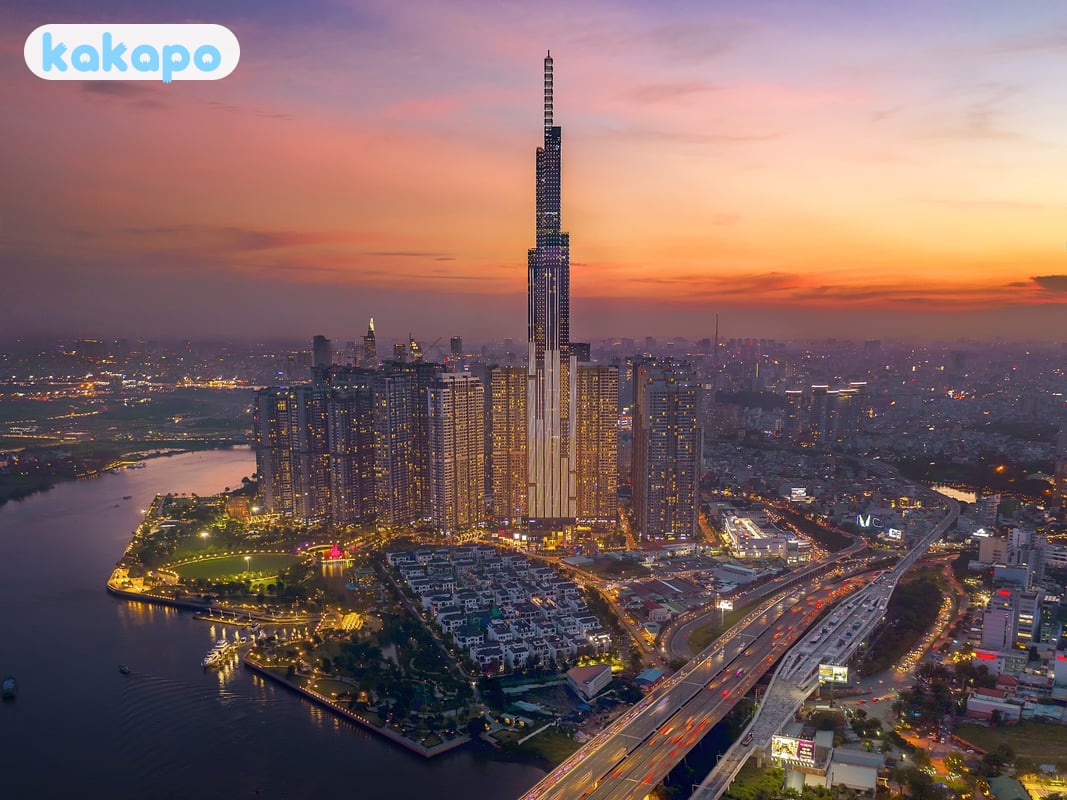
This is the most common, most-reported and most-preventable tourist crime in HCMC. UK FCDO, US Embassy, and Australian Smartraveller all explicitly call it out.
- The pattern: you're walking on the pavement using your phone, or sitting at a streetside café, or in a tuk-tuk with a bag on your lap. A motorbike with two riders passes; the pillion passenger reaches out and snatches. They are gone before you can react. Phones, handbags, gold chains, sunglasses — all targets.
- Hot zones: District 1 streets — Bui Vien (backpacker street), Dong Khoi, Le Loi, the area around Ben Thanh Market, Pham Ngu Lao. The pavement outside any rooftop bar.
- Defences: never hold your phone near the road. Step into a doorway to use it. Wear bags cross-body and on the building side. If a snatcher grabs a strap that's wrapped around your neck or arm, you can be dragged into traffic — let it go.
- Don't chase: snatchers operate in pairs and sometimes carry knives.
- Reporting: District 1 police station handles foreign reports. You'll need an official report for travel insurance. The Tourist Police hotline (+84 28 3829 8350) helps.
Motorbike traffic — crossing the road and renting
- The flow: HCMC's traffic doesn't stop at marked crossings the way you expect. Pedestrians "swim" through the motorbike stream at a steady, predictable pace; bikes flow around you.
- Crossing rules: walk slowly, predictably, don't stop, don't run, don't change direction. Cars and buses won't yield — wait for those. Motorbikes will.
- Pedestrian deaths: tourists are over-represented in crash statistics. Most happen on roads with mixed bus/motorbike traffic in District 1 and around Ben Thanh.
- Renting a motorbike: Vietnam requires an International Driving Permit recognised under the 1968 Vienna Convention (the 1949 IDP that most countries issue is not legally valid here, though enforcement varies). Crashes by uninsured tourists are a constant Embassy issue. Most insurers void claims if you ride without a valid licence.
- Helmets: legally required, including for pillion passengers. Police do enforce.
- Drink-driving: Vietnam has zero-tolerance enforcement and hefty fines.
Taxi and rideshare scams
- Use Grab (or local Be / XanhSM): app-based ride-hail. Price is set; no meter games. Default for tourists.
- If hailing on the street: only use Vinasun (white) or Mai Linh (green) — the two reputable metered operators. Phone numbers and logos are unmistakable.
- Avoid: lookalike "Vinasum", "Mai Linn" cabs at the airport with rigged meters, fake meters that run at 5x speed, "broken meter — fixed price 800,000 dong" scripts.
- Tan Son Nhat Airport (SGN): walk past the touts at arrivals. Vinasun and Mai Linh have official ranks outside; Grab pickup is in a designated lot a 5-minute walk away.
- Currency confusion: 500,000 VND and 20,000 VND notes are similar colours. Count change in good light.
- Cyclo (xich lo): agree the price in writing before boarding; ¥5-10 USD for a typical 30-min loop. Disputes have turned aggressive.
Health — dengue, food, water, heat
- Dengue fever: HCMC is one of the world's worst dengue cities. Outbreaks in 2022, 2023, and 2024 have stressed local hospitals. Aedes mosquitoes bite during the day. Use DEET 30%+ repellent, wear long sleeves at dusk, sleep with AC or screened windows.
- No vaccine for tourists: Qdenga (Takeda's vaccine) is not yet recommended for short-stay visitors.
- Other tropical diseases: Japanese encephalitis (rural risk, vaccinate if rural travel), rabies (avoid stray dogs and macaques), typhoid (street food).
- Tap water: not drinkable. Use bottled. Ice in restaurants is generally safe (industrial ice with the cylindrical hole); ice in street drinks is variable.
- Food: street food is safe at busy stalls with high turnover. Avoid raw vegetables that may have been washed in tap water if you have a sensitive stomach.
- Heat and humidity: 30-35°C year-round with 80%+ humidity. Heat exhaustion is the most common tourist medical complaint after stomach upsets.
Areas — Districts 1, 2 (Thu Duc), 3, 5
Recommended bases: District 1 — Notre Dame, Saigon Opera, Ben Thanh, most hotels and restaurants. Walking-friendly by HCMC standards. District 3 — adjacent to D1, calmer, cafe-heavy, well-priced boutique hotels. Thao Dien (Thu Duc City / former District 2) — expat district 30 min from D1; international restaurants, quieter; metro line 1 finally connects it.
Stay aware at night: Bui Vien Walking Street — backpacker bar street, loud, snatch-thief hotspot. Fine to visit, leave the watch and the iPhone Pro at the hotel. Pham Ngu Lao — same caveats.
Don't worry about: District 5 (Cholon, Chinatown), District 4 (formerly rough, now gentrified), District 7 (Phu My Hung — Korean expat area, very safe).
Metro line 1, buses, and the airport
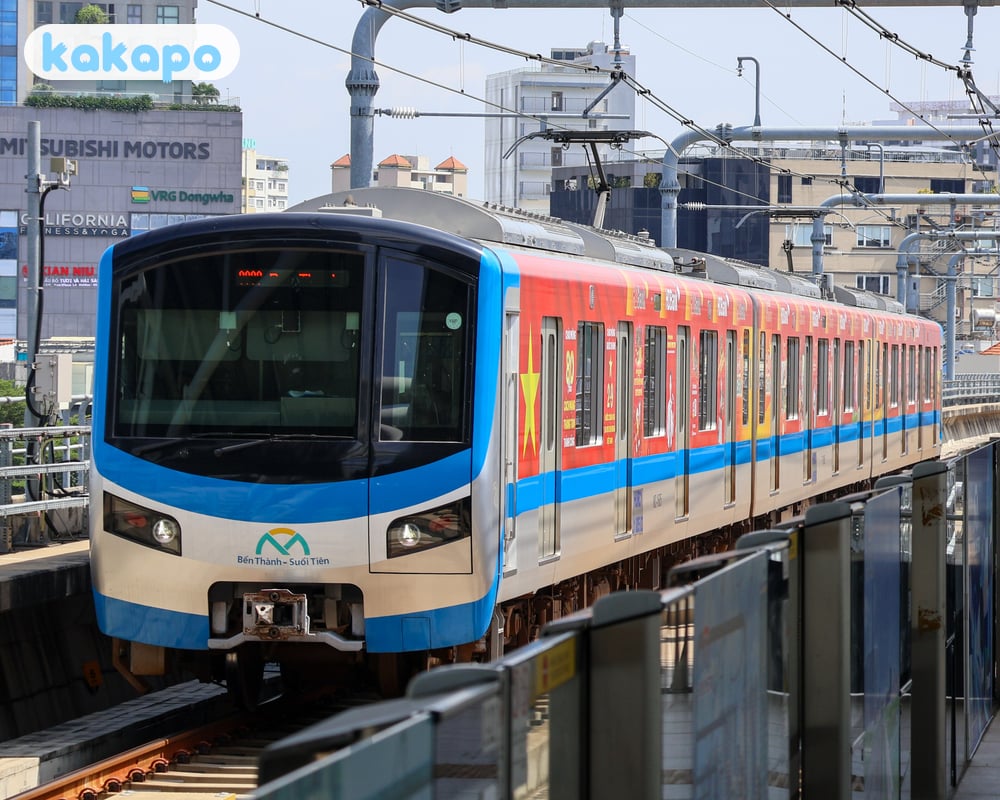
- Metro line 1 (Ben Thanh — Suoi Tien): finally opened December 2024 after 12 years of delays. Ride from Ben Thanh to Thao Dien for 12,000 VND. A genuine game-changer for tourists.
- City buses: cheap (5,000 VND), routes confusing, mostly for locals. Bus 152 runs Ben Thanh to airport (20,000 VND).
- Tan Son Nhat (SGN): 8 km from D1. Grab to D1 ~150,000-200,000 VND (25-50 min depending on traffic). Vinasun ~180,000 VND. Bus 152 a 60-min slog. Avoid the international-arrivals taxi mafia.
- Sleeper buses to Mui Ne / Da Lat / Nha Trang: Phuong Trang (Futa Bus) and The Sinh Tourist are the reputable operators.
- Trains: Saigon Station (D3) — Reunification Express to Hanoi takes 30+ hours; better for the journey than for getting anywhere fast.
Neighbourhood-by-neighbourhood breakdown
- District 1 (Quan Mot — central Saigon) — the tourist heart, Notre Dame Cathedral, the Opera House, Ben Thanh Market, Dong Khoi shopping street, most hotels. Heavily walked, heavily policed in tourist zones. Snatch-thief hotspot — phone in zipped pocket near the road, bag on building side.
- Bui Vien Walking Street (D1) — the backpacker bar strip, loud, neon, snatch-thief epicentre. Fun to visit, leave the iPhone Pro and watch at the hotel.
- District 3 (Quan Ba — adjacent to D1) — quieter, café-heavy, gentrified residential, the boutique hotel zone. Very safe, the best base for calmer first-time visitors.
- Thao Dien (Thu Duc City / former District 2) — the expat district 30 min from D1 (15 min via Metro Line 1 since Dec 2024). International restaurants, brunch culture, calmer streets. Very safe.
- District 5 (Cholon / Chinatown) — west of D1, the historic Chinatown, Binh Tay Market, traditional medicine shops, the Thien Hau Temple. Atmospheric, very safe by day, lived-in.
- District 4 (Quan Bon) — formerly rough, now gentrifying. Vinh Khanh Street is the famous seafood-and-snail street. Safe, food-rich.
- District 7 (Phu My Hung) — Korean and Taiwanese expat suburb, modern, very safe, soulless.
- Around Tan Son Nhat Airport (SGN) — the airport is only 8 km from D1 but traffic adds significant time at peak hours.
- Outer districts (8, 10, 11, 12) — residential, no tourist relevance, safe but irrelevant.
If it's your first time visiting
- Best arrival airport: Tan Son Nhat (SGN), 8 km from D1. To centre: Grab car ~VND 150,000-200,000 (~$6-8) in 25-50 min depending on traffic, Vinasun/Mai Linh ~VND 180,000, bus 152 VND 20,000 in 60 min (the budget option). Walk past the touts at international arrivals — they're scams.
- Public transport: Metro Line 1 (Ben Thanh-Suoi Tien) opened December 2024 — VND 12,000-20,000 per ride, useful for Thao Dien access. City buses are cheap but routes confusing — Grab is the practical default.
- Best neighbourhood for your first night: District 1 around Dong Khoi or Notre Dame for centrality and walking access, District 3 for quieter boutique hotels, Thao Dien for the calmer expat-friendly base (15 min via Metro). Avoid first-time bookings directly on Bui Vien unless you want the noise.
- Day 1, jet-lag friendly: drop bags, banh mi lunch at Banh Mi Huynh Hoa or Banh Mi 37 Nguyen Trai, walk Notre Dame and the Saigon Central Post Office, ca phe sua da at the rooftop of Cafe Apartment (the famous old-building café cluster on Nguyen Hue Street), early dinner pho at Pho Le or Pho Quynh, evening drink at a Saigon Skydeck or Pasteur Street Brewing.
- Day trips: Cu Chi Tunnels (2h north-west, the Vietnam War tunnels — emotionally heavy, book a small-group tour, $30-45), Mekong Delta (My Tho or Ben Tre, 2h south, day cruises $30-60), Vung Tau beach (2h east).
- Common rookie mistakes: holding your phone in the road-side hand while walking (snatch-theft headline pattern); accepting unmarked airport taxis ("Vinasum", "Mai Linn" lookalikes); wearing valuable jewellery in D1 (gold chains are snatched); chasing snatchers (they work in pairs, may have knives); drinking street-stall ice in non-busy spots (filtered industrial ice is safe, informal street ice variable); not pre-booking War Remnants Museum tickets at busy times (queue 30+ min).
- The War Remnants Museum and Cu Chi Tunnels are essential but emotionally heavy — visit when you're alert, plan a calm evening after. Children under 10 should probably skip the museum's torture-exhibits floor.
- Dengue prevention: DEET 30%+ repellent on exposed skin during the day (the Aedes mosquito is a day biter), long sleeves at dusk, AC or screens at night. HCMC has had three serious outbreaks since 2022.
- Tap water is not safe. Bottled is universal and cheap (VND 5,000-10,000 per 500ml).
Money, etiquette, emergency numbers
- Currency: Vietnamese dong (VND). $1 ≈ 25,400 VND. Notes are denominated in tens and hundreds of thousands — easy to misread.
- Cards: hotels, restaurants, malls yes. Street food, market stalls, taxis (except Grab) cash. ATMs at major banks (Vietcombank, BIDV, Techcombank).
- Tipping: not traditional but increasingly expected at tourist restaurants; 10% generous.
- Etiquette: don't take photos of military personnel or police. Cu Chi tunnels and War Remnants Museum are emotionally heavy — visit early when crowds are lighter.
- Emergency: 113 (police), 114 (fire), 115 (ambulance). Tourist Police (D1) +84 28 3829 8350.
- Hospitals: FV Hospital (+84 28 5411 3333, D7); Vinmec Central Park (+84 28 3622 1166); Family Medical Practice (+84 28 3822 7848, D1, English-speaking GPs).
- SIM: Viettel or Mobifone at the airport — 200,000 VND for 30 days unlimited 4G.
Frequently asked questions
Is Ho Chi Minh City safe to visit in 2026?
Generally yes for violent crime — Vietnam sits at US State Department Level 1 — but Ho Chi Minh City has one of the most documented petty-crime risks in Southeast Asia: drive-by motorbike phone and bag snatching. The UK FCDO, US Embassy and Australian Smartraveller all specifically warn about it. Combined with overwhelming motorbike traffic, dengue outbreaks (2022-2024), poor dry-season air quality and persistent taxi scams, the realistic risk profile is higher than Hanoi's. Our overall score is 70/100.
How do I avoid the drive-by phone snatching scam in HCMC?
Never use your phone while walking near the road and never hold it in the hand closest to traffic — step into a doorway or shop entrance to check directions or take a call. Wear bags cross-body on the building side, not the road side. Don't loop straps tightly around your neck or wrist; if a snatcher grabs you can be dragged into traffic — let it go. Avoid wearing gold chains. Hotspots are District 1 — Bui Vien, Dong Khoi, Le Loi, Ben Thanh Market, Pham Ngu Lao. Snatchers operate in pairs and may carry knives; never chase.
Which taxi apps and operators are safe in HCMC?
Use Grab as your default — app-based, fixed price, no meter games. Local alternatives Be and XanhSM (electric) also work well. If hailing on the street, only use Vinasun (white) or Mai Linh (green) — the two reputable metered operators. Avoid lookalike 'Vinasum' or 'Mai Linn' cabs especially at Tan Son Nhat Airport, which run rigged meters at 5x speed or claim 'broken meter, fixed 800,000 dong'. From SGN airport, walk past the arrivals touts to the official Vinasun/Mai Linh rank, or walk 5 minutes to the Grab pickup lot.
Is dengue fever a real risk for short-term tourists in HCMC?
Yes — HCMC is one of the world's worst dengue cities and outbreaks in 2022, 2023 and 2024 stressed local hospitals. Aedes mosquitoes bite during the day, not just at dusk, so daytime repellent matters. Use DEET 30%+ on exposed skin, wear long sleeves and trousers at dawn and dusk, and sleep with AC or screened windows. Takeda's Qdenga vaccine isn't yet recommended for short-stay tourists. Fever, severe headache and bone pain after a HCMC trip needs immediate testing — Tylenol/paracetamol only, never ibuprofen or aspirin.
Is Bui Vien Walking Street safe at night?
Yes to visit, with calibrated caveats. Bui Vien is HCMC's loud backpacker bar strip — fun, cheap, busy and the city's snatch-thief hotspot. Leave the iPhone Pro, the watch and the gold chain at the hotel; bring a cheap unlocked phone and enough cash for the night. Pickpocketing in crowds and inflated drinks bills at touts-on-stools 'massage bars' are the consistent issues. Violence against tourists is rare. Grab back to the hotel after midnight rather than walking through quiet side streets.
Can I rent a motorbike legally as a tourist in Vietnam?
Technically only with an International Driving Permit recognised under the 1968 Vienna Convention — the 1949-Convention IDP most countries issue is not legally valid in Vietnam, though enforcement is patchy. Most travel insurers void crash claims if you ride without a valid licence, and HCMC pedestrian/rider deaths are over-represented among tourists. Helmets are legally required and police do enforce. Vietnam has zero-tolerance drink-driving enforcement. For most short-stay HCMC visitors, Grab and the new Metro Line 1 (Ben Thanh — Suoi Tien, opened Dec 2024) are the realistic option.
Sources
Run a business in Ho Chi Minh City?
Show visitors your Ho Chi Minh City business is a safe choice. The free Verified by Kakapo badge puts Ho Chi Minh City's live safety score on your website, links back to your verified page, and updates itself. No cost.
Get the free badge →