


Is Intramuros, Manila Safe at Night? 2026
The walled city is Manila's most-photographed daytime sight — and one of the city's emptiest neighbourhoods after dark. What's actually risky on a 9pm walk back from Fort Santiago.

Intramuros is Manila's tourist anchor by day and one of the city's quietest large neighbourhoods after dark. The historic Spanish-era walled city — Fort Santiago, San Agustin Church, Manila Cathedral, the cobbled streets between them — fills with daytrippers, school groups and kalesa horse-cart tours from 9am to 5pm. After about 6pm the daytrippers leave; by 8pm Intramuros itself is mostly empty; by 11pm the only people moving through are residents (Intramuros has a small live-in population), the security guards who staff the museums and shrines, and the occasional confused tourist trying to find their hotel.
The honest 2026 picture: inside the walls Intramuros at night is statistically safer than most tourist would assume — the resident community is small but the area is patrolled by Intramuros Administration security and by the Manila Police District's tourist police unit. The real risk doesn't sit inside the walls; it sits at the edges, where Intramuros meets Quiapo (north-east, across the Pasig River bridges), the Manila North Cemetery area (further north), and the harbour-side roads west towards Roxas Boulevard. Those edges have meaningful street-crime patterns. The walls themselves do not.
This page is for the tourist deciding whether to walk back from a Fort Santiago sunset to a hotel in Ermita or Malate, or whether to skip the evening light show, or whether to stay at one of the small Intramuros hotels (the Bayleaf, White Knight Hotel) and how to navigate after dark.
| Night safety | 50/100 |
|---|---|
| Scam / petty-crime risk | Medium |
| Violent crime (tourists) | Low |
| Most common scams | kalesa overcharge at Fort Santiago; free guide touts; photo touts in Spanish-era costume |
| Safer neighbourhoods | Intramuros, Ermita, Malate |
| Data sources cited | 4 |
| Last verified |
Inside Intramuros at night — what it's like
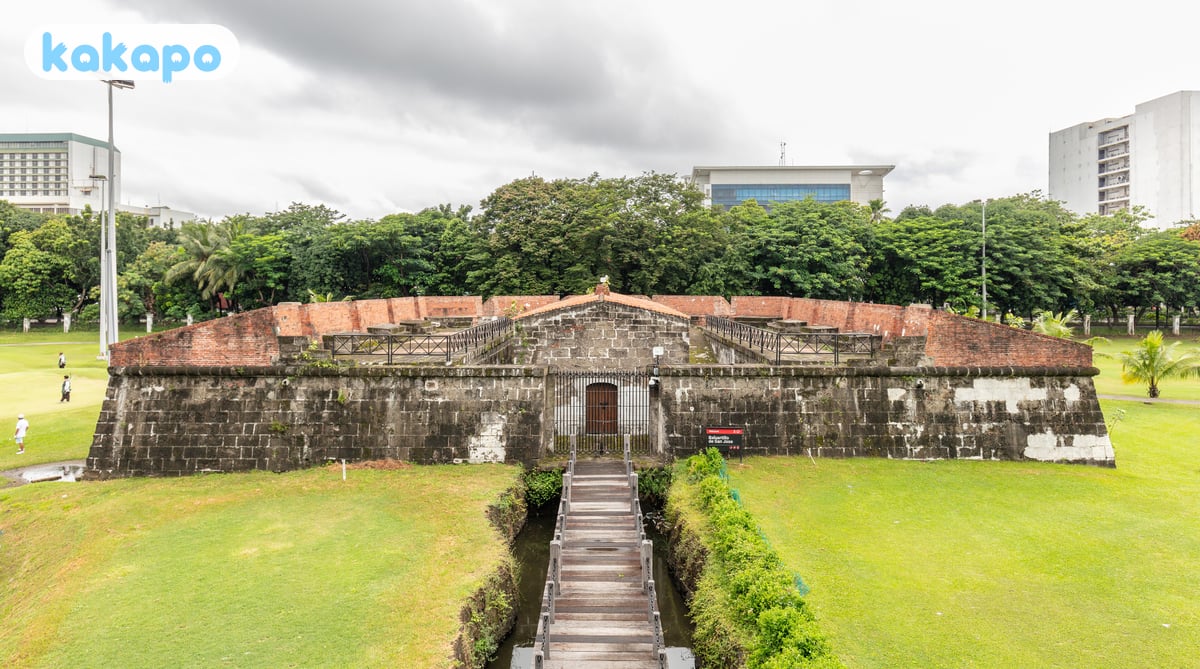
- Empties out fast — by 6:30pm the daytripper crowd is mostly gone; by 8pm the cobbled streets between Fort Santiago, Manila Cathedral and San Agustin Church are largely deserted.
- Lit but quiet — Anda Street, General Luna Street, and the main perimeter roads have streetlights and are patrolled. The smaller back-streets (Real Street, Cabildo Street) feel emptier.
- Security presence — Intramuros Administration security guards staff the museums, Fort Santiago entry gate, and the major churches; Manila Police District tourist police maintain a station at Plaza Roma. Visible patrols on the main streets between 7pm and midnight.
- Live-in residents — Intramuros has a small resident population (university students at the multiple universities inside the walls, religious orders, some long-term residents). Streets are not zero-population after dark, just sparse.
- What's open after dark — Barbara's Heritage Restaurant, Sky Deck Bar at the Bayleaf Hotel, Café Adriático (just outside), the bars and restaurants at the Bayleaf rooftop. Most close by 22:00-23:00.
- Crime inside the walls — statistically uncommon. The risk profile is "got lost trying to walk home through an unfamiliar empty street" more than "got mugged".
The edges — Quiapo, Binondo, Manila North
- Quiapo (north-east, across the Quezon Bridge or Jones Bridge) — dense market district built around the Quiapo Church. By day, frenetic and tourist-relevant; by night, the surrounding streets (Hidalgo, Carriedo, Plaza Miranda) become significantly less safe for foreign visitors. Pickpocketing, gold-chain snatch, and occasional armed muggings are the documented pattern.
- Binondo / Chinatown (north, across the Jones Bridge) — Manila's Chinatown. Restaurants stay open later than Intramuros; the central streets (Ongpin, Salazar) are safe with the dining crowd until 22:00. The fringe streets get sketchier fast.
- Manila North Cemetery / Tondo (further north) — not tourist-relevant; not safe to walk to. Documented gang activity, especially at night.
- Roxas Boulevard / Manila Bay frontage (west of Intramuros) — daytime safe with promenade walkers; at night, gets emptier and the dark stretches near Rizal Park can attract opportunistic crime. The hotel-strip end (Sofitel, Diamond, Hyatt) stays busier and safer.
- Ermita / Malate (south, past Rizal Park) — the standard Manila hotel district. Walking from Intramuros at night to a hotel here is doable but a 25-40 minute walk through partially empty parkland; most travellers take Grab.
- The Pasig River bridges — Jones Bridge (renovated, well-lit, scenic) and MacArthur Bridge are safe to cross. Quezon Bridge into Quiapo at night is safer to cross than to be on the Quiapo side of.
Scams and touts at the gates
- Kalesa overcharge — horse-cart tours of Intramuros are a legitimate experience but kerbside touts at the Fort Santiago gate routinely quote 1,500-3,000 PHP for what should be a 500-800 PHP ride. Pre-arrange via your hotel or via the Intramuros Administration kiosk.
- "Free guide" tout — strangers offering to "show you the way" then demanding 500-1,000 PHP at the end. Polite "no thank you" works.
- Fake police — extremely rare in Intramuros but the pattern in Manila generally is for someone in plainclothes to claim to be a tourist-police officer and demand to inspect your bag. Real Manila Police District tourist police are in uniform; demand to see ID and walk to the nearest staffed booth.
- Photo touts — children in Spanish-era costume offering photos for "any tip you like" then demanding 500 PHP per photo. Cute if you want the photo; agree the price first.
- Grab driver issues — drivers occasionally claim "no GPS signal" or "wrong destination" to drop you somewhere convenient for them. The Grab app handles disputes well; use the in-app SOS if the driver is non-compliant.
Grab, taxis and getting home
- Grab is the standard ride-hail app in Manila — vetted drivers, quoted fares, in-app SOS. Typical 2026 fares: Intramuros to Makati 250-400 PHP (US$4.50-7); to Bonifacio Global City (BGC) 350-500 PHP; to NAIA airport 400-600 PHP. Surge during evening peak (5-8pm) can be 1.5-2x.
- Joy / Indrive — secondary ride-hail apps; useful when Grab surge is high; similar driver-vetting maturity.
- Yellow metered taxis — the official Manila taxi fleet. Honest metered fares (flag 40 PHP, ~14 PHP/km). Most use the meter on request; some don't. Worth keeping the meter rate as a sanity check.
- White metered taxis — older fleet, more variable on honesty. Use Grab instead.
- LRT-1 Central Terminal is a short walk south of Intramuros (across Plaza Lawton). Operates ~04:30-22:30; cheap, crowded, safe in the central segment. Pickpocket-watch standard.
- Jeepneys — colourful local mini-buses. Not the tourist-recommended evening option from Intramuros; daytime experience for travellers comfortable with the system.
Solo women in Intramuros at night
- Inside the walls, Intramuros at night is calm for solo women — the area is small, walkable, and the streets between major sights are patrolled. Going to the Bayleaf rooftop bar or Barbara's Heritage Restaurant for dinner alone is normal.
- What's not advisable: walking alone after dark beyond Intramuros into Quiapo, the Manila North Cemetery area, or the dark stretches of Roxas Boulevard north of Diamond Hotel. The risk pattern at the edges is real.
- Grab home is the default for any walk longer than 5-10 minutes. The cost (US$3-7 to most hotels) is trivial vs. the safety upside.
- The Bayleaf Hotel inside Intramuros (Muralla Street) and the White Knight Hotel (General Luna) are well-rated by solo female travellers; both have 24-hour reception and arrange airport and city transport.
- Catcalling and harassment on Intramuros's quiet streets is uncommon — there are too few people for it to be a meaningful pattern. The harassment risk in Manila is more concentrated in busier districts (Pasay/Ermita strip).
Frequently asked questions
Is Intramuros safe at night in 2026?
Inside the walls, mostly yes. Intramuros empties out fast after 6:30pm but is patrolled by Intramuros Administration security and Manila Police District tourist police; the resident community (university students, religious orders, long-term residents) is small but present. Street crime inside the walls is statistically uncommon. The real risk sits at the edges — Quiapo to the north-east, Manila North to the north, the dark stretches of Roxas Boulevard west — where street-crime patterns are documented and meaningful.
Can I walk back from Fort Santiago to my hotel in Ermita at night?
It's doable but most travellers Grab instead. The walk is 25-40 minutes through partially empty parkland (Rizal Park) and along Roxas Boulevard or T.M. Kalaw Avenue. In the daytime it's a pleasant city walk; at night the empty stretches near Rizal Park can attract opportunistic crime, and Roxas Boulevard north of Diamond Hotel is sparse. Grab from Intramuros to Ermita is 150-300 PHP and 10-15 minutes — the convenience and safety upside is large.
Is it safe to walk into Quiapo from Intramuros at night?
No. Quiapo at night — including the surrounding streets (Hidalgo, Carriedo, Plaza Miranda) and the residential blocks north of Quiapo Church — has documented pickpocketing, gold-chain snatch, and occasional armed muggings against foreign visitors. The daytime market experience is worth doing; the nighttime walk is not. If you want to see Quiapo Church illuminated, Grab there, stay near the well-lit plaza, and Grab back.
What hotels can I stay at inside Intramuros?
Two main options. The Bayleaf Hotel (Muralla Street) is the higher-end choice — 57 rooms, the well-regarded Sky Deck rooftop bar, 24-hour reception. The White Knight Hotel (General Luna Street, near Manila Cathedral) is the budget option — heritage building, basic rooms, friendly staff. Both have decades of operating inside the walls and arrange airport and city transport. Staying inside Intramuros is a useful experience for the heritage-walk aspect but means longer Grabs to Makati/BGC nightlife.
What are the kalesa tour scams in Intramuros?
Kerbside touts at the Fort Santiago gate quote 1,500-3,000 PHP for kalesa (horse-cart) tours of Intramuros that should cost 500-800 PHP for a standard 30-45 minute loop. Pre-arrange via your hotel or via the Intramuros Administration kiosk inside Fort Santiago — both have set prices. The kalesa itself is a legitimate and worthwhile experience; just don't agree the price with a tout at the gate.
Is Grab safe in Manila?
Yes — Grab is the standard ride-hail app in Manila with vetted drivers, quoted fares and in-app SOS. Typical 2026 fares from Intramuros: to Makati 250-400 PHP; to BGC 350-500 PHP; to NAIA airport 400-600 PHP. Surge during evening peak (5-8pm Monday-Friday) can be 1.5-2x; off-peak is honest. The driver-rating system is mature; mediocre drivers get filtered out. Joy and Indrive are secondary alternatives for when Grab surge is high.
Is Intramuros safe for solo female travellers at night?
Inside the walls, yes — the area is small, walkable, patrolled, and harassment-rate is low (too few people to be a pattern). Going to the Bayleaf rooftop or Barbara's Heritage Restaurant for solo dinner is normal. Not advisable: walking alone after dark beyond Intramuros into Quiapo, Manila North, or dark stretches of Roxas Boulevard north of Diamond Hotel. Grab home is the default; the US$3-7 fare is trivial vs. the safety upside.
Sources
Run a business in Intramuros, Manila?
Show visitors your Intramuros, Manila business is a safe choice. The free Verified by Kakapo badge puts Intramuros, Manila's live safety score on your website, links back to your verified page, and updates itself. No cost.
Get the free badge →