


Is Hallstatt, Austria Safe? A 2026 Travel Safety Guide
Crime is essentially zero. The real risks are the day-tripper crush, lake drownings, the single-lane road in, and how far away the nearest hospital is.

Hallstatt is staggeringly safe by crime measures and staggeringly busy by every other one. The real concerns are not safety in the typical sense — they are over-tourism, the lake itself (cold-shock drowning is the most serious risk), the narrow road in and out, and the simple geography of being a long ambulance drive from the nearest hospital.
Austria sits at Level 1 on the US State Department's advisory list. UK FCDO carries no specific warning. The honest framing for visitors: Hallstatt is a village of ~750 residents that absorbs ~10,000 day-trippers in summer, mostly funneled through 800 m of lakeside path between the bus parking and the Marktplatz. Booking accommodation overnight changes the experience completely — most of the crowd is gone by 5pm.
The defining experiences: the Marktplatz photo, the Skywalk viewpoint above the salt mine, the world's oldest salt mine (Salzwelten), and the Beinhaus (bone-house) at the parish church.
The geography is the story: Hallstatt is a sliver of village wedged between the Hallstättersee (the lake) and the near-vertical Dachstein massif behind. The village stretches roughly 800 metres along the lake from the Salzbergwerk funicular base at the southern end through the Marktplatz photographs at the centre to the parish church and the Beinhaus (the small ossuary holding 1,200 painted skulls, the oldest from 1720, a result of the village's tiny consecrated cemetery requiring exhumation after a decade) at the northern end. The Hallstatt Bahnhof train station is across the lake on the eastern shore — a 5-minute ferry crossing (€4 each way, runs with trains) is the most photogenic train transfer in Austria. Obertraun (the quieter village at the lake's southern end with the Dachstein Ice Caves) and Gosau (the next valley over, with the famous Gosausee mirror-lake reflecting the Dachstein peaks) are the day-trip alternatives that absorb none of the Hallstatt crowd.
The over-tourism story is unavoidable: Hallstatt absorbs ~10,000 day-trippers on summer days against 750 permanent residents, mostly funnelled through the same 800 m of lakeside path. Korean and mainland-Chinese tour-bus groups dominate June-September, partly because of the persistent (and false) legend that a replica village was built in Guangdong, China in 2012. In 2024-2025 the village finally implemented partial visitor management: a drone ban in the village core (€700 fines), restricted bus parking, and a brief 2023 view-barrier fence at the worst Marktplatz photo corner that was later removed under tourism-board pressure. The honest fix remains the same: stay overnight. By 17:00 the buses leave and the village empties; sunrise photographs from 07:00-09:00 are essentially solo. The opposite shore at Obertraun gives you the village-from-across view that's actually the more photogenic angle and bypasses the crush entirely. The wider Salzkammergut region (Bad Ischl was European Capital of Culture 2024) has tried to redistribute tourism toward Bad Ischl, Gosau, Mondsee and St. Wolfgang — with mixed success.
| Night safety | 92/100 |
|---|---|
| Scam / petty-crime risk | Low |
| Violent crime (tourists) | Low |
| Most common scams | over-tourism crowding at the Marktplatz; false legend of a replica village in Guangdong, China; drone ban fines in the village core |
| Safer neighbourhoods | Obertraun, Gosau |
| Data sources cited | 4 |
| Last verified |
What the score means — 90/100
- Personal safety (94) — among the safest places in Europe. Crime is rare.
- Air quality (90) — high. Mountain lake air.
- Transport (82) — single road in/out; ferry; train station across the lake.
- Healthcare (80) — local clinic only. Major care is at Bad Ischl (20 km) or Salzburg (75 km).
The crush — and how to dodge it
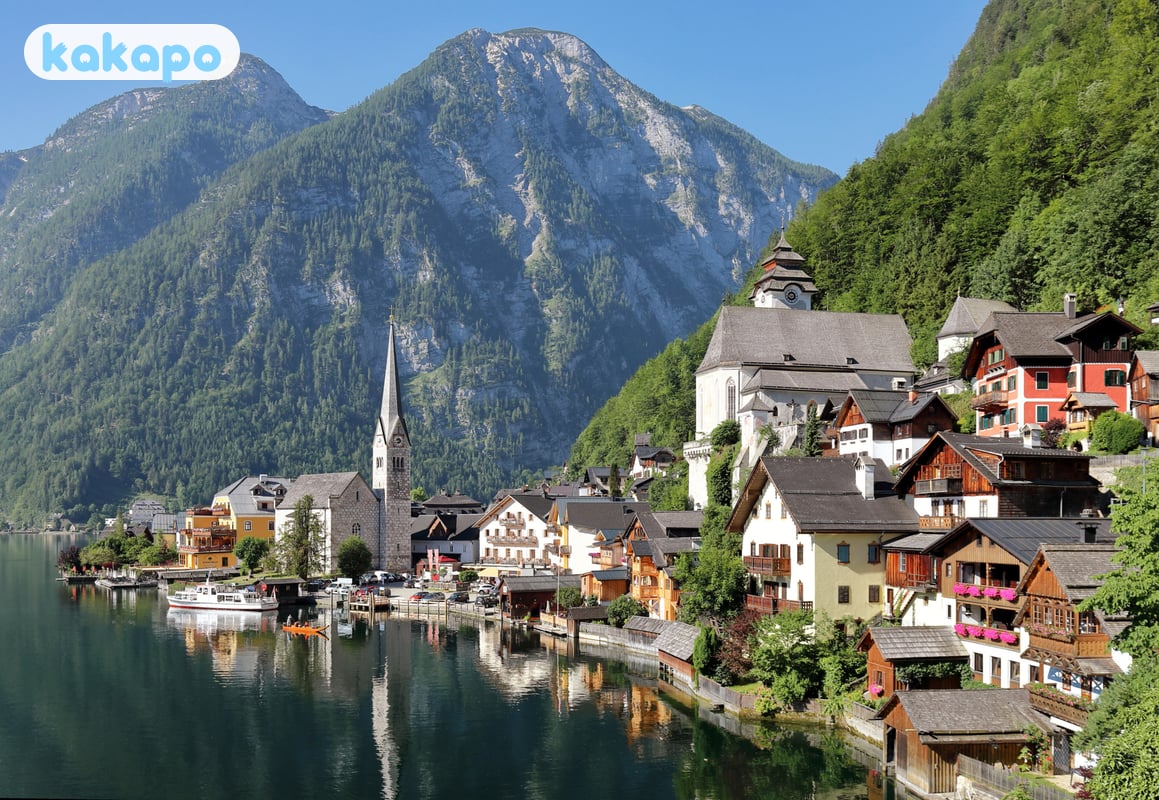
- The numbers: 10,000+ day-trippers on summer days, mostly via Korean and mainland-Chinese tour buses. The whole village is 800 m long.
- The squeeze: 11am-3pm the lakeside path is shoulder-to-shoulder. The classic photo spot at the Marktplatz is sometimes physically gridlocked.
- The fix: stay overnight. By 5pm the buses have left and the village empties. Sunrise (the iconic photo) and 7-9am you'll mostly have it to yourself.
- Drone ban: the local government has banned tourist drones in the village core; €700 fines.
- "View barrier": in 2023 the village briefly installed a fence at the most photographed corner because of the crush; it was removed but informal queue management still happens. Be patient.
- Day-trip alternative: Obertraun (across the lake) and Gosau are quieter and as scenic.
Lake Hallstättersee — the cold-shock risk
- Water temperature: surface 10-12°C in spring, peaks at 18-20°C in late August, drops fast below the surface.
- Cold-shock: the actual cause of most alpine-lake drownings. Sudden immersion triggers an involuntary gasp; if your head is underwater you inhale water. Then a rapid drop in core temperature impairs swimming.
- Don't dive in: enter slowly. Don't swim alone. Don't swim drunk.
- Boat rentals: electric boats from Hallstatt and Obertraun ~€20/hour. Life jackets are provided — wear them.
- Ferry (Hallstatt Bahnhof → village): runs with trains, €4 each way. Skip if storms forecast — the lake gets choppy.
Salzwelten salt mine + the Skywalk
- The funicular from the village goes up 350 m to the salt-mine and Skywalk viewpoint. €36 combo ticket.
- Inside the mine: 9°C year-round. Bring a layer.
- Slides: two wooden mine-slides. Mostly fine but loose clothing snags.
- Skywalk: cantilevered platform 350 m above the village. Free with the funicular. Wind picks up in afternoon — hold your phone with both hands.
- Closure dates: typically closed mid-Nov to mid-Apr for snow.
The road from Salzburg/Vienna
- From Salzburg: 75 km, ~1h15m. Through Bad Ischl. The last 8 km along the lake is a narrow lakeside road carved into the cliff with one tunnel.
- From Vienna: 4h drive or train + ferry combo (recommended) ~3h45m total.
- Cyclists on the road: the lakeside cycle path doubles with the road in places. Patience.
- Deer: dawn and dusk are real risks Sep-Nov.
- Parking: P1/P2 outside the village. The village core is closed to non-resident vehicles 9am-5pm in summer.
- Winter driving: winter tyres mandatory Nov-Apr; chains for the high passes (Gosau).
Weather and best time to visit
- Summer: 22-28°C, busy. Afternoon thunderstorms above the lake.
- Autumn (Sep-Oct): best season. Cooler, the larches turn gold, fewer crowds.
- Winter (Dec-Mar): snow, often closed funicular and Skywalk; village is quiet but slippery cobbles.
- Spring: rainiest months. Lake is melt-cold.
- Mosquitoes: present but not bad.
The village and the surrounding Salzkammergut
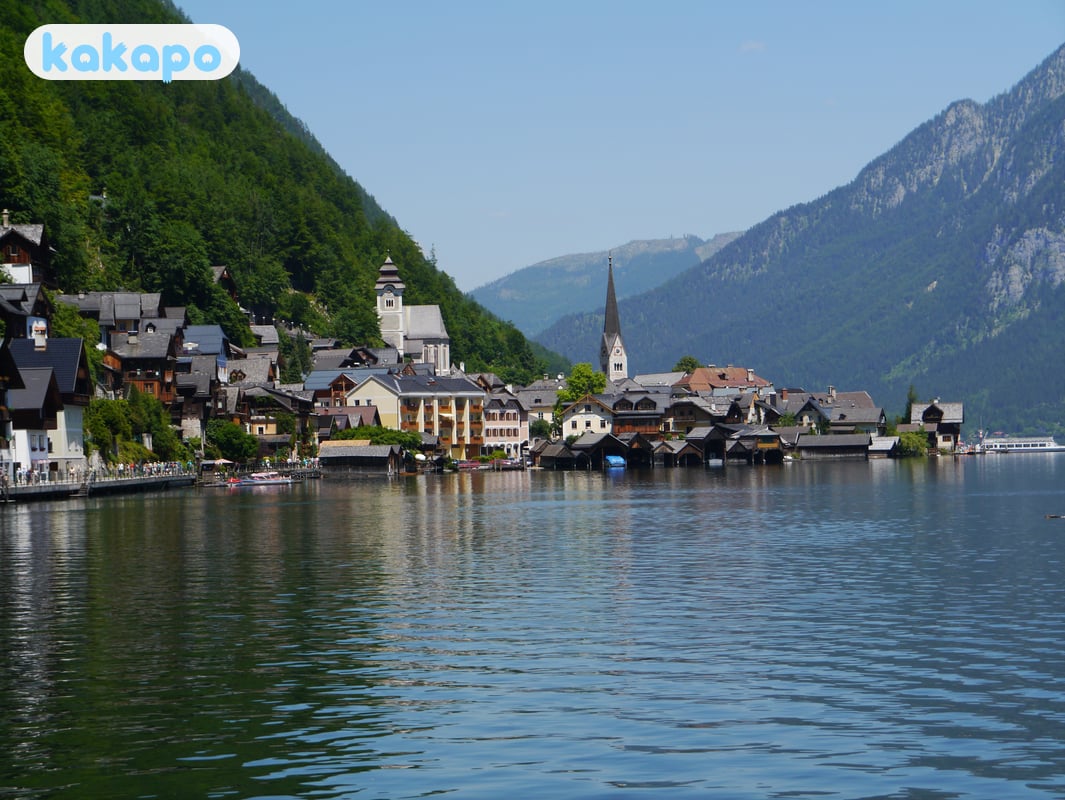
- Hallstatt village core (the 800 m strip) — wedged between the Hallstättersee and the Dachstein cliffs, the village runs roughly 800 m along the lake. South end: the Salzbergwerk funicular base. Centre: the Marktplatz (the photographed corner) with the Lutheran and Catholic parish churches close together. North end: the Catholic Pfarrkirche with the Beinhaus (the small ossuary holding ~1,200 painted skulls, the village's solution to a tiny consecrated cemetery requiring decade-cycle exhumation). Walkable end to end in 12 minutes empty, 35-45 minutes through summer-day crowds.
- Hallstättersee (the lake) — alpine glacial lake 8.5 km long, 125 m deep, surface 10-12°C in spring and 18-20°C peak August. Drops fast below the surface — cold-shock drowning is the actual lake risk. Electric-boat rentals from the village or Obertraun (~€20/hour, life jackets provided — wear them).
- Salzbergwerk (the salt mine) + Skywalk — the Hallstatt funicular goes up 350 m to the salt mine and Skywalk viewpoint. €36 combo ticket. Inside the mine: 9°C year-round, bring a layer, two wooden miner-slides (loose clothing snags). Skywalk: cantilevered platform 350 m above the village, free with funicular ticket, the best photograph of the village from above. Closed mid-November to mid-April for snow.
- The Beinhaus (bone-house) — the small ossuary at the Catholic parish church holding ~1,200 painted skulls, the oldest from 1720. The village's solution to a tiny consecrated cemetery on rock: bodies were buried for ~10 years then exhumed, the skulls bleached in the sun and painted with the deceased's name and crosses, then placed in the bone-house. Genuinely moving small museum. €2 entry. Last new skull was added in 1995.
- Marktplatz photograph — the iconic corner showing the Lutheran church tower with the lake and Dachstein behind. Queues for the photograph form by 10:00 in summer; go at 07:30 (sunrise) or after 19:00 for an empty frame. The 2023 view-barrier fence at this corner was the village's response to the daily Korean-Chinese tour-bus crush; it was removed but informal queue management still happens.
- Tour-bus overcrowding 2024-25 reality — 10,000+ day-trippers on summer days, mostly Korean and mainland-Chinese groups. Drone ban with €700 fines. Restricted bus parking introduced 2024. Visit September-October or stay overnight to dodge the worst. The Hallstatt-Dachstein-Salzkammergut UNESCO designation was granted in 1997.
- Opposite-shore views (Obertraun + the lake-east) — Hallstatt photographed from across the lake is actually the more iconic angle. Obertraun (south-east corner of the lake) is reachable by the ferry from Hallstatt Bahnhof or a 5-minute drive around the southern lake. The Dachstein Ice Caves (Eishöhle) and the 5fingers viewing platform up the Dachstein Krippenstein cable car are based at Obertraun.
- Salzkammergut wider region — Bad Ischl (20 km north, European Capital of Culture 2024, the Kaiservilla where Emperor Franz Joseph summered, the patisserie tradition); Gosau (next valley over, the Gosausee mirror-lake reflecting Dachstein peaks); St. Wolfgang (a steamship-and-pilgrimage lake town on the Wolfgangsee); Mondsee (the Sound of Music wedding church). All quieter than Hallstatt and worth at least an afternoon.
- The road in/out — single-lane along the lake's western shore, carved into the cliff with one tunnel. From Salzburg 75 km / 1h15, from Vienna 4h drive or 3h45 by train + ferry. The village core is closed to non-resident vehicles 09:00-17:00 in summer; park at P1 or P2 outside and walk in. Cyclists share the road in places. Deer crossings dawn and dusk September-November are real driving hazards.
If it's your first time visiting
- Best arrival: the Salzburg-Hallstatt train + ferry combo. Train from Salzburg Hauptbahnhof to Hallstatt Bahnhof via Attnang-Puchheim (€20-30 single, 2.5 hours), then the 5-minute ferry crossing from the Bahnhof to the village (€4 each way, runs with trains). From Vienna it's roughly 3h45 the same way. Driving from Salzburg is 1h15 / 75 km; non-resident parking at P1/P2 outside the village from €15/day. The village core is closed to non-resident vehicles 09:00-17:00 in summer.
- Best hotel for your first night: inside the village for the once-in-a-lifetime overnight experience — Heritage Hotel Hallstatt (three historic buildings at the heart of the village, €180-380), Seehotel Grüner Baum (the lakeside grand-dame, €200-450), Gasthof Simony (the smaller traditional option, €120-200), or the Pension Sarstein. Outside-the-walls accommodation at Obertraun saves money but you lose the post-17:00 magic.
- Day 1 itinerary (overnight base): arrive afternoon, drop bags. Walk the village south to north to the Beinhaus (€2 entry), dinner at Bräugasthof or Gasthof Zauner. Sunset from the small pier behind the Catholic church. Walk the empty lakeside path at 22:00.
- Day 2 itinerary: Marktplatz photograph at 07:30 (essentially empty), breakfast, Salzbergwerk funicular up at 09:30 opening (€36 combo, 3 hours including the Skywalk and salt-mine tour), back down for lunch on the lake, ferry to Obertraun for the Dachstein Ice Caves (€36 ice cave + Krippenstein 5fingers viewing platform), back by 17:00.
- Common rookie mistakes: day-tripping from Salzburg or Vienna (you see the crowd-version, miss the magic — the village transforms after 17:00); flying a drone in the village core (€700 fines, actively enforced); diving into the lake from a boat or pier (cold-shock drowning is the actual lake risk — enter slowly, swim with someone, wear the life jacket on rental boats); skipping the Beinhaus because "it's a graveyard" (it's the most moving small museum in Austria); driving into the village 09:00-17:00 in summer (closed to non-resident vehicles); booking accommodation without confirming (Hallstatt sells out — book by April for September visits, by November for August); leaving on the last train without checking the ferry schedule (the ferry stops with the last train).
- The overcrowding fix: stay overnight. By 17:00 the tour buses leave and the village empties dramatically. Sunrise 07:00-09:00 is essentially solo. Day-trip alternatives Obertraun and Gosau are quieter and as scenic. September-October is the best season — autumn larches turn gold, the crowds thin, the weather is still walkable.
- Currency: euro. Cards at hotels and larger restaurants; many small places still prefer cash. Carry €100-150 in small notes. One ATM in the village; Bad Ischl has more options.
- Lake safety: water temperature 10-12°C spring, 18-20°C peak August, drops fast below the surface. Cold-shock drowning is the actual lake risk — sudden immersion triggers an involuntary gasp; if your head is underwater you inhale water. Don't dive in. Don't swim alone. Don't swim drunk. Electric boat rentals provide life jackets — wear them.
- Medical context: 20 km to Salzkammergut Klinikum Bad Ischl (the nearest hospital, +43 50 554 71-0), 75 km to Salzburg. Local clinic only in the village. Alpine rescue: 140. EHIC/GHIC works.
- Day-trip alternatives from the region: Salzburg (75 km, the Mozart-and-Sound-of-Music city); Bad Ischl (20 km, European Capital of Culture 2024, the imperial Kaiservilla); Gosau and the Gosausee mirror-lake (next valley, 30 min drive); the Dachstein Ice Caves and 5fingers platform at Obertraun; St. Wolfgang on the Wolfgangsee (45 min); Mondsee for the Sound of Music wedding church (1h).
Practical info — emergency numbers
- European emergency: 112.
- Alpine rescue: 140.
- Police: 133.
- Salzkammergut Klinikum Bad Ischl: +43 50 554 71-0 (nearest hospital, 20 km).
- ATM: one in the village; Bad Ischl has more options.
- Cash: many small places still prefer cash. Bring some.
Bring: sturdy non-slip shoes (cobbles get slick when wet), a light layer for the salt-mine + lake breeze, EHIC/GHIC for healthcare, and reservations confirmed before arrival — Hallstatt sells out.
Frequently asked questions
Is Hallstatt safe to visit in 2026?
Yes — Hallstatt scores 88/100 here, staggeringly safe by crime measures with a personal-safety sub-score of 94. Austria sits at US State Department Level 1 and UK FCDO carries no specific warning. Crime is essentially zero in a village of 750 residents. The real concerns aren't safety in the typical sense: over-tourism (10,000 day-trippers funnel through 800m of lakeside path in summer), lake cold-shock drownings (Hallstättersee surface 10-12°C in spring, dropping fast below the surface), the narrow single-lane road in from Bad Ischl, and the geography of being 20km from the nearest hospital (Bad Ischl) and 75km from Salzburg's.
Is Hallstatt safe at night?
Yes, completely. By 5pm the tour buses leave and the village empties — overnight visitors essentially have it to themselves. Walking the cobbled lakeside path solo at 10pm is calm and well-lit. Restaurants close early; this is not a nightlife destination. The only night hazards are slick cobbles when wet (sturdy soles) and the unguarded lakefront edges in places. Cold-shock drowning if you decide to swim at night is a real risk — don't. Deer crossings on the road in/out at dawn and dusk are a driving hazard, especially September-November. Crime against tourists is unreported.
Is Hallstatt safe for solo female travellers?
Yes, exceptionally. Hallstatt is one of the safest places in Europe for solo women. Crime is rare to nonexistent. Solo dining at Gasthaus Zauner or the lakeside restaurants works fine. Solo walking, photography and salt-mine visits are routine. The Skywalk and Salzwelten funicular are easy alone. Booking accommodation overnight is the single change that makes Hallstatt feel calm rather than crushing — by 5pm you'll mostly have the village to yourself. Sunrise photography at the iconic Marktplatz corner from 7-9am is essentially solo. The harassment density is essentially nil.
Can you drink tap water in Hallstatt?
Yes — Hallstatt tap water is excellent, drawn from Salzkammergut alpine springs and exceeding EU standards. The village has been drinking from these springs for millennia (the salt-mine is the world's oldest, ~7,000 years old). Restaurants serve tap (Leitungswasser) on request, though bottled is the cultural default in Austria. Carry a refillable bottle. Lake Hallstättersee water is bathing-quality at marked spots but not drinkable raw and dangerously cold below the surface — don't dip a cup straight from the lake. Inside the salt mine you'll see brine pools; those are decidedly not for drinking.
What's the biggest scam to avoid in Hallstatt?
There isn't really a scam scene — Hallstatt is a tightly regulated UNESCO village. The closest things to traps: third-party 'Hallstatt day tour' packages from Salzburg or Vienna at 3-4x the cost of a self-organised train-plus-ferry trip (€3.45 train Salzburg-Bad Ischl plus connections plus €4 ferry across the lake); tourist drones launched in the village core that draw €700 fines; and tour-bus day-trippers leaving rubbish that locals find genuinely offensive. The biggest 'getting taken' isn't crime — it's not knowing that staying overnight transforms the experience entirely. Day-trip-Hallstatt is the crowd; overnight-Hallstatt is the village.
Is Hallstatt actually unbearably overcrowded, and what's the best fix?
Yes mid-day in summer, no early morning or after 5pm. The numbers: 10,000+ day-trippers on summer days, mostly Korean and mainland-Chinese tour buses, funneling through 800m of lakeside path. From 11am to 3pm the path is shoulder-to-shoulder and the Marktplatz photo corner is sometimes physically gridlocked — in 2023 the village briefly installed a view-barrier fence at the worst corner because of the crush. The fix is simple: stay overnight. By 5pm the buses leave; sunrise (7-9am) you'll mostly have the iconic photo to yourself. Day-trip alternatives Obertraun and Gosau are quieter and as scenic. Drones are banned with €700 fines.
Sources
Run a business in Hallstatt?
Show visitors your Hallstatt business is a safe choice. The free Verified by Kakapo badge puts Hallstatt's live safety score on your website, links back to your verified page, and updates itself. No cost.
Get the free badge →