


Is Haarlem, Netherlands Safe? A 2026 Travel Safety Guide
Haarlem is one of Europe's safer small cities. The honest concerns: cobbles, cycling-pedestrian conflict, canal edges, and the Amsterdam day-trip flow.

Haarlem is one of Europe's safer small cities. Crime against tourists is mild. The realistic concerns are practical: the cobbled medieval centre that gets slick in rain; the dense Dutch cycling culture that catches out walking visitors who step into bike lanes; canal edges with low or no railings; the Frans Hals Museum + Grote Markt summer crowd compression on Amsterdam-day-trip days; and the standard Dutch-tourism etiquette around the surrounding bulb fields in spring.
The Netherlands sits at Level 2 on the US State Department's advisory list (terrorism, baseline). UK FCDO is similar. The honest framing for visitors: Haarlem is small (~165,000), 20 min by Intercity train from Amsterdam Centraal, and one of the most concentrated 17th-century cores in the country (the Grote Markt is where Frans Hals + Vermeer's Delft compete for "best Dutch square"). It serves as a quieter base for visitors who don't want to sleep central Amsterdam.
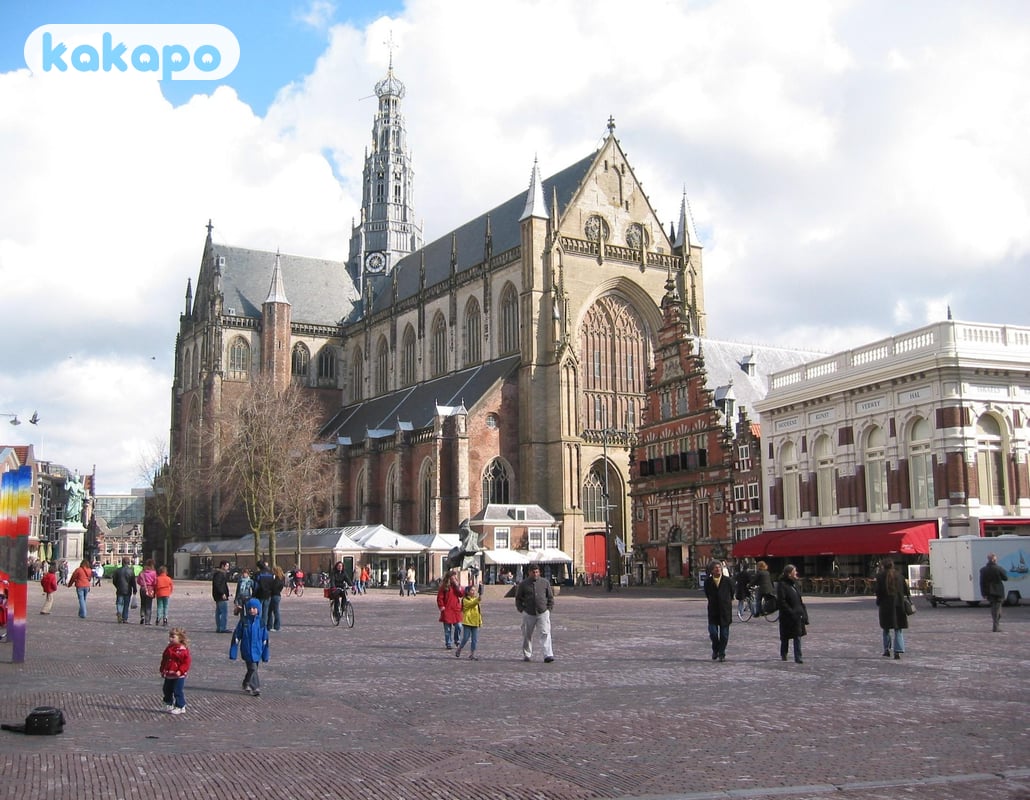
The defining experiences: the Grote Markt + St-Bavokerk (where Mozart played the Müller organ at age 10), the Frans Hals Museum, the Teylers Museum (oldest museum in the Netherlands), the surrounding bulb fields in April, Zandvoort beach 8 km west, and Amsterdam day trips.
What 2026 looks like in practice: NS Sprinter to Amsterdam Centraal is €5.50 single, runs every 10-15 minutes, and the Schiphol direct Sprinter is €5 in 30 minutes via Sloterdijk — the airport-base case for Haarlem is genuinely strong. The OV-chipkaart has been retired in favour of OVpay (contactless EMV with your debit or credit card direct-tap on the yellow gate readers since 2023). The Frans Hals Museum's Hof and Hal locations both run €17.50 (combination €25), and the bulb-field Keukenhof season runs 20 March - 11 May 2026 with €23 entry pre-booked. Bike-rental from Donkey Republic via the app or OV-fiets at the station (€4.45/day, requires Dutch bank account or NS account) is the local-mode-of-transport. The new pedestrianised stretch of Smedestraat extends the car-free shopping core east toward the Spaarne, making the centre even quieter than pre-pandemic.
| Night safety | 89/100 |
|---|---|
| Scam / petty-crime risk | Low |
| Violent crime (tourists) | Low |
| Most common scams | pickpockets at Amsterdam Centraal; bike theft; walking into bike lanes |
| Safer neighbourhoods | Grote Markt, Spaarne river, Schoten |
| Data sources cited | 4 |
| Last verified |
What the score means — 88/100
- Personal safety (92) — very high.
- Transport (90) — NS Intercity to Amsterdam 20 min; dense bike + bus network.
- Healthcare (90) — Spaarne Gasthuis is the regional reference.
- Air quality (86) — Atlantic + flat-land; high.
Cobbles + canal edges
- Cobbles: medieval centre paved in irregular setts; slick in rain (Netherlands has ~140 rain days/year).
- Footwear: trainers with rubber grip.
- Canal edges: many of the older grachten have no railings. People do fall in (often after Dutch lager).
- Children: hold hands at canal edges; never lean over.
- If someone falls in: lifebuoys are mounted at intervals. The water is cold + the sides are vertical; getting out is the actual risk. Call 112.
- Pickpockets: low base rate in Haarlem; ordinary precautions.
Cycling culture — the unwritten rules
- The reality: Haarlem has dense cycling infrastructure. Bike lanes are usually red-asphalt strips between footpath and road.
- Don't walk in the bike lane: the #1 way tourists get hit. Stay on the grey footpath; cross bike lanes briskly + at right angles.
- Don't stop in the bike lane: photos, maps, Amsterdam-vlogging.
- Ringing: Dutch cyclists ring bells liberally. Move out of the bike lane.
- Renting a bike: easy + pleasant. Donkey Republic, OV-fiets at the train station €4.45/day.
- Drinking + cycling: same blood-alcohol limit as driving (0.5‰). Police enforce.
- Bike theft: high. Two locks always — including for OV-fiets returns.
Grote Markt, Frans Hals, Teylers
- Grote Markt: Saturday + Monday morning markets. Atmospheric.
- St-Bavokerk: free; the Christian Müller organ is iconic. Free Tuesday-evening summer concerts.
- Frans Hals Museum: €17.50; allow 2 hours. The famous group portraits (Civic Guard) are extraordinary.
- Teylers Museum: Netherlands' oldest museum (1784). €18; quirky + lovely.
- Pickpockets: low; ordinary precautions in summer market crush.
- Solo at night: completely safe; quiet by midnight.
Amsterdam day-trip flow
- Train: NS Intercity Haarlem ↔ Amsterdam Centraal 20 min, ~€5 single. Every 10-15 min.
- Sprinter (slower): ~25 min.
- Pickpockets at Amsterdam Centraal: real; bag in front in crowds.
- The reverse flow: Amsterdam staying-tourists day-trip to Haarlem on weekends; Saturday afternoons busiest.
- Last train: ~midnight; weekend night-train extends.
- OV-chipkaart: tap-on-tap-off card; €7.50 deposit. Or contactless EMV (debit/credit card direct tap) since 2023.
Bulb fields + Keukenhof — spring day trips
- Keukenhof: 30 km south, 30 min by car/bus. Open mid-March to mid-May. €23 entry; pre-book.
- Bulb fields surrounding: free to drive past or cycle through. Don't walk into fields — flowers belong to farmers; fines.
- Peak weekends: April-May. Hotel prices jump.
- Photography: from roadside or marked viewpoints only.
- Cycling tour: Haarlem-bulb-fields 30 km loop; flat + scenic.
Zandvoort beach + the coast
- Zandvoort: 8 km west of Haarlem. NS train 10 min, ~€3.
- Beach: wide, sandy, lifeguarded summer.
- North Sea conditions: cold (16-19°C summer), strong currents on windy days. Flag system standard.
- Formula 1: Zandvoort circuit hosts the Dutch Grand Prix; hotel prices triple race weekend.
- Cycling alternative: Haarlem-Zandvoort 12 km flat path via dunes.
Neighbourhood-by-neighbourhood breakdown
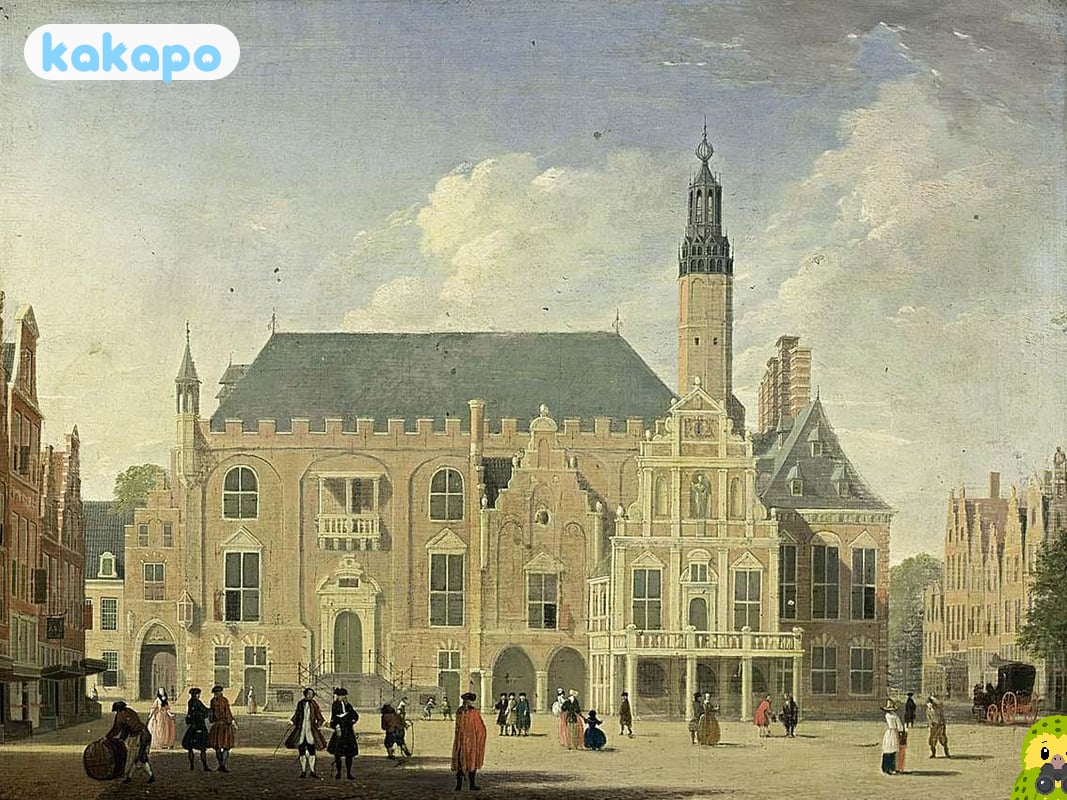
- Grote Markt — the medieval main square, anchored by Sint-Bavokerk (St-Bavo's Church, the Christian Müller organ from 1738 that Mozart played in 1766 at age 10) and the Stadhuis (town hall) opposite. Saturday and Monday markets, café terraces (Café Studio, Grand Café Brinkmann), and the city's photographic centre. Heavily walked but safe any hour.
- Spaarne river — the curving river through the city's east, with the Teylers Museum (Netherlands' oldest, 1784) on the Spaarne quay, the De Adriaan windmill at the northern bend, and the Waag (weigh house) at the centre. Riverside walks any hour; canal edges have low or no railings — don't lean.
- Frans Hals Museum (Hof + Hal) — split between the Old Men's Almshouse on Groot Heiligland (Hof, the famous Civic Guard portraits) and a contemporary annex (Hal) near the Grote Markt. €17.50 each, €25 combination. Allow 2 hours for Hof alone.
- Schoten — the residential neighbourhood north of the Spaarne, where most Haarlem locals actually live. Quieter, leafy, and home to the Frans Hals Park and the Schoterbos public park. Not a tourist destination but useful to know if you book an Airbnb here — 15-minute walk or 5-minute cycle to Grote Markt.
- Botermarkt + Smedestraat — the bar street running south from Grote Markt. Brown cafés (Café Vincent, In den Uiver — the latter the city's famous WWII-era pub), Belgian-beer specialists, and the city's nightlife backbone. Safe and lively until pubs close 02:00 on weekends.
- NS Haarlem station + Sprinter to Amsterdam Centraal — Sprinter every 10-15 minutes, €5.50 single (OVpay contactless tap), 15-20 minutes to Centraal. Intercity is 20 minutes. Schiphol direct Sprinter via Sloterdijk is €5 in 30 minutes. The station's Art Nouveau building (1908) is itself a sight; the racks are pickpocket-low but bike-theft-high (use both locks).
- Zandvoort coast — 8 km west, 10 minutes by Sprinter or 35 minutes by bike along the dune path. Wide North Sea beach, lifeguarded summer, Dutch Grand Prix hotel-price spike in late August. The water is 16-19°C summer with strong currents on windy days — check the flag.
- Keukenhof + bulb fields — 30 km south near Lisse, open 20 March-11 May 2026, €23 pre-booked. Direct Connexxion bus 858 from Schiphol or 854 from Leiden Centraal. Don't walk into the surrounding farmer's fields — fines are real and the flowers are commercial crops.
If it's your first time visiting
- Best arrival: Schiphol (AMS) by NS Sprinter to Haarlem (€5, 30 min, via Sloterdijk) — by far the easiest airport transfer in Europe. Tap your debit/credit card on the yellow OVpay gate (no ticket needed since 2023). Taxis are €50-65 flat.
- Best neighbourhood for your first night: inside the canal ring (Grote Markt area, Bakenes, Vijfhoek) for the medieval atmosphere; Spaarne quay for river views; near the station for early Schiphol departures. Schoten is fine but you'll be cycling in.
- Day 1 jet-lag friendly: Sint-Bavokerk at 10:00 opening (€5, climb the tower), coffee on Grote Markt, Frans Hals Museum (Hof) at 11:30, lunch on Botermarkt, slow walk along the Spaarne to the Molen De Adriaan windmill, Teylers Museum at 15:00 for the quirky 18th-century cabinet of curiosities. No bikes, no decisions.
- Public transport / OVpay: the OV-chipkaart is retired — just tap your contactless debit or credit card on the yellow OVpay gate at the station and again when you exit. €5.50 Haarlem-Amsterdam Centraal, €5 Haarlem-Schiphol. Buses in town are €2-3 but you'll walk everything inside the canal ring.
- Renting a bike: Donkey Republic via the app (€15/day, find a bike, scan QR), or OV-fiets at the station (€4.45/day but requires a Dutch bank account or NS account — most visitors use Donkey). Always two locks: frame lock + chain to a fixed object. Bike theft is the city's only real property crime.
- Cycling rules that catch tourists out: the red asphalt strip is the bike lane — don't walk on it, don't stop on it, don't photograph from it. Look left-right-left before crossing because e-bikes are silent. Drinking and cycling has the same 0.5‰ blood-alcohol limit as driving and Dutch police enforce it. Hand signals before turning.
- Common rookie mistakes: stepping into the bike lane to photograph Sint-Bavokerk (#1 cause of tourist injuries); booking a hotel right at the station rather than inside the canal ring (10-minute walk loses you the medieval atmosphere); skipping Teylers because it's "small" (it's the oldest museum in the country and unmissable); buying day-trip tickets to Keukenhof at the gate (sells out in peak weeks — pre-book); leaving the OV-fiets unlocked even for two minutes (you'll be charged for a lost bike).
- Currency: euro. Cards everywhere — many Haarlem cafés are card-only (no cash accepted) which catches Americans out. Carry a contactless debit card; American Express works at hotels but few cafés.
- Day trips by Sprinter: Amsterdam Centraal (15-20 min, €5.50), Schiphol (30 min, €5), Zandvoort beach (10 min, €3), Leiden (25 min, €7), Den Haag (40 min, €11), Keukenhof April-May (1h via Schiphol shuttle).
Practical info — emergency numbers
- European emergency: 112 (English-speaking).
- Police non-emergency: 0900 8844.
- Spaarne Gasthuis: +31 23 224 0000.
- Schiphol Airport (AMS): 25 km east; train Schiphol ↔ Haarlem 30 min via Amsterdam Sloterdijk.
Bring: hooded waterproof shell, trainers with rubber grip, layered clothing, a contactless card, an unlocked phone (KPN, Vodafone NL, Lebara prepaid), and an EHIC/GHIC card.
Frequently asked questions
Is Haarlem safe to visit in 2026?
Yes — Haarlem scores 90/100 here, putting it among the safest small cities in Europe. UK FCDO and US State Department both treat the Netherlands as low-advisory with no Haarlem-specific note; the city is a 15-minute Sprinter train from Amsterdam Centraal and operates as a quieter alternative base. Violent crime is rare, the centre is small enough to walk end-to-end in 20 minutes, and the Grote Markt around Sint-Bavokerk is family-saturated. The real risks are bike-vs-pedestrian collisions on the cobbles (the cycle lane is the red asphalt — don't walk in it), bike theft from accommodation racks, and canal-edge falls late at night around the Spaarne river.
Is Haarlem safe at night?
Yes. The Grote Markt, Botermarkt, Smedestraat (the main bar street) and the Spaarne riverside are well-lit and busy until pubs close around 02:00 on weekends. The area around Haarlem station after the last Sprinter (~01:00) sees some rough-sleepers but nothing menacing. Uber and Bolt both operate but supply is thinner than Amsterdam — pre-book or use the official taxi rank outside the station. NS trains to Amsterdam run hourly through the night Friday and Saturday. The neighbourhoods south of the rail line (Schalkwijk) are residential and quieter rather than risky.
What's the biggest risk to be aware of in Haarlem?
Bike-vs-pedestrian collisions. Haarlem has Dutch-density cycling on narrow medieval streets — pedestrians stepping out of the Frans Hals Museum or off a tram-like tour onto the red asphalt cycle lane is the number one injury. Look LEFT-RIGHT-LEFT for bikes before crossing, never stand or photograph in a red lane, and listen for the silent e-bikes that now outnumber pedal bikes. Second-place is bike theft if you rent — always use both locks (frame + wheel to a fixed object) and never leave it at the Haarlem station racks overnight. Day-trippers don't see the post-pandemic uptick in luggage theft on the train between Schiphol and Haarlem — keep cases in sight.
Can you drink tap water in Haarlem?
Yes — Dutch tap water is among the best in Europe, supplied locally by PWN (the North Holland water utility) and meeting Dutch/EU standards with very low chlorination. You can ask for 'kraanwater' in a restaurant and most will bring it free or for a token charge. Carry a refillable bottle; refill stations exist in the centre. Brushing teeth, ice, salad-washing, all completely fine.
Is Haarlem a better base than Amsterdam?
Often yes for budget and quiet, with one trade-off. Hotels run 25-40% cheaper than central Amsterdam, the train to Amsterdam Centraal is 15 minutes and 4-6 per hour, the Sprinter to Schiphol is 30 minutes direct, and Zandvoort beach is 10 minutes the other way. Haarlem itself has the Frans Hals Museum, the Teylers Museum (oldest in the Netherlands), the Sint-Bavokerk Müller organ Mozart played and a denser café scene per square metre than Amsterdam centre. The trade-off: last Sprinter back from Amsterdam is roughly 00:30 on weekdays, so very-late Amsterdam nights mean a Bolt back at €40+ or a hostel there. For most travellers the maths still works.
Sources
Run a business in Haarlem?
Show visitors your Haarlem business is a safe choice. The free Verified by Kakapo badge puts Haarlem's live safety score on your website, links back to your verified page, and updates itself. No cost.
Get the free badge →