Kakapo Editorial29 May 20269 min readTravel safety
Remote work travel has matured enormously since 2020. The original digital-nomad hotspots (Bali, Chiang Mai, Medellin) still work, but the global cohort has now stress-tested dozens of cities and the rankings have evolved. The cities that win in 2026 are those that combine the obvious basics (fast Wi-Fi, decent coffee culture, affordable one-month rentals) with the underrated factors that matter over a four-week stay: real personal safety, working healthcare, time-zone overlap with the colleagues you actually have meetings with.
We crossed Wi-Fi speed data, co-working space density, one-month Airbnb rates, time-zone friendliness, and our safety data. We weighted for the experience of an actual remote worker on a 3-4 week stay, not a one-weekend tourist or a six-month digital nomad.
Scores combine safety with remote-work suitability. Cities are listed with their primary time-zone offering (EU-friendly, US-friendly, Asia-friendly) so you can match to your work calendar. Scores are out of 100.
What remote workers actually need
Beyond fast Wi-Fi and good coffee, the long-stay remote-worker city requires:
One-month rental availability under £1,500. The Airbnb monthly discount tier with reliable internet.
Co-working space density. At least 5-10 proper spaces with day-pass options.
Time-zone overlap with colleagues. 4+ hours of overlap with your main meeting hours.
Visa-free 30+ day stays. Or a proper digital-nomad visa for longer.
01
Lisbon
Safety score84/100
Portugal
Personal
80
Transport
84
Healthcare
84
Night Safety
84
Lisbon is Europe's remote-work capital. The Digital Nomad Visa launched in 2022 has formalised what was already happening organically — Cowork Central, Second Home, Outsite and a dozen smaller spaces in Cais do Sodre and Principe Real serve the international cohort.
Personal safety is good (mind the pickpockets), the time zone overlaps EU and east-coast US work hours, and one-month rentals in central districts run €1,200-1,800.
Stay in Principe Real or Graca for the best cafe-density working districts — central enough for evenings, residential enough for daytime focus.
Mexico City is the leading US-time-zone remote-work base. Roma Norte and Condesa have become global nomad standards — Selina, WeWork, La Roma and dozens of independent cafes all support laptop work. The time-zone match with US east coast is perfect.
Personal safety in Roma, Condesa and Polanco is good; use Uber for late returns. One-month rentals run £900-1,500.
The Centro Roma cafe scene around Plaza Rio de Janeiro is the densest working district — Tierra Garat and Cardinal both have reliable Wi-Fi.
Medellin's El Poblado district has become a year-round digital-nomad hub. Selina, Atomhouse and a dozen independent coworking spaces serve the cohort. The eternal-spring climate (1,500m altitude) is unique among nomad cities.
Personal safety in El Poblado and Laureles is decent but theft of phones from outdoor cafe tables is the persistent watch-out. Use Uber after dark.
Stay in Laureles rather than El Poblado for a quieter, more residential remote-work month — the cafe density is similar, the party noise is lower.
Tbilisi offers 365-day visa-free stays for most nationalities — the longest in the region. The Vake and Vera neighbourhoods have built up a real cafe-and-coworking infrastructure, Fabrika and Impact Hub anchor the scene.
Personal safety is good; the cost of living is among the lowest of any European-time-zone nomad city. One-month rentals run €600-1,000 for a central apartment.
Fabrika in Marjanishvili is more than a coworking space — the courtyard, hostel and bar make it a full nomad-community hub.
Canggu on Bali's south coast has been a nomad capital for a decade and the infrastructure is now mature. Dojo Bali, Tropical Nomad and Outpost all run proper coworking; the Berawa and Echo Beach areas concentrate the cafe scene.
Personal safety in Canggu is good; scooter accidents are the main risk — always rent helmets that fit. One-month villa rentals run £800-1,400.
Get a B211A visa rather than the 30-day visa-on-arrival — it's £100 and allows 60 days extendable to 180.
Chiang Mai is the original nomad capital and the cost-to-quality benchmark. Nimman and the old town both have dense cafe scenes, Punspace and CAMP are the leading coworking spaces, and one-month rentals run £400-700 for a one-bedroom.
Personal safety is high. The burning season (March-April) is the only meaningful watch-out — many nomads leave for that month.
The Wualai Saturday Walking Street is the local social Hub for nomad-meets-local interactions — go early for food, late for crafts.
Porto is Lisbon's quieter, cheaper alternative and increasingly favoured by the post-Lisbon cohort. The Cedofeita arts district and the Ribeira riverside both have strong cafe scenes; Porto i/o and CRU are leading coworking spaces.
Personal safety is high. One-month rentals run €800-1,200 for central apartments.
The Ribeira riverside is romantic but loud — stay in Cedofeita or Bonfim for working days, walk down to the river in the evenings.
Buenos Aires has become a leading South American remote-work base. Palermo Soho and Hollywood have the densest cafe-and-coworking scene; the time-zone match with US east coast is excellent.
Personal safety has been volatile in 2025 — use Uber after dark and avoid distracted-phone walking. One-month rentals run £600-1,200 via Airbnb.
Bring USD cash for the parallel exchange rate (the dolar blue) — it can effectively halve your cost of living.
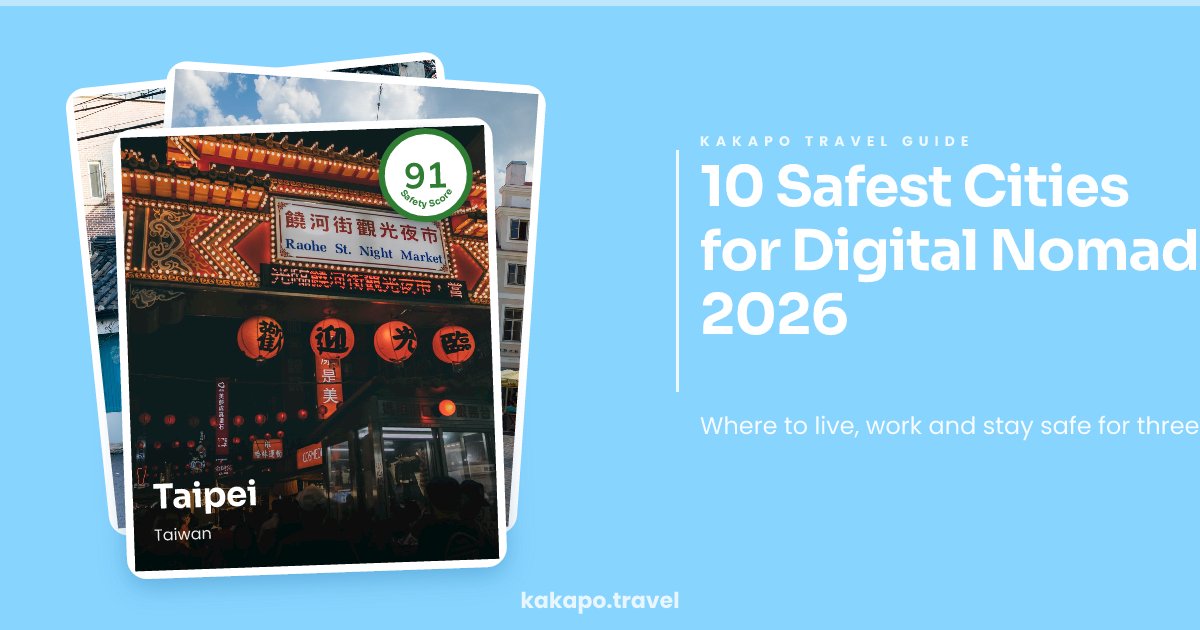
Taipei is Asia's underrated nomad base. Da'an, Xinyi and Zhongshan all have strong cafe-and-coworking infrastructure; CLBC and Future Ward are the leading paid spaces. Personal safety is exceptional.
The Gold Card visa lets qualified professionals stay 1-3 years. One-month rentals in central districts run £900-1,500.
Most cafes have explicit laptop-friendly or laptop-unfriendly policies — check Google Maps reviews for 'laptop OK' filtering.
Cape Town's Sea Point, City Bowl and Camps Bay districts have become a southern-hemisphere remote-work hub. The Workshop17 and Cube Workspaces anchor the coworking scene. Time-zone overlap with Europe is excellent (1-hour offset).
Personal safety is the main watch-out — restrict yourself to the recognised tourist districts (Sea Point, V&A Waterfront, City Bowl, Camps Bay) and never walk after dark.
The Mowbray Maternity Hospital district and any non-tourist areas should be Uber-only — Cape Town's safety geography is sharp.
A few habits common to every long-stay remote-work trip:
Test the Wi-Fi on day one. Speedtest the apartment, the cafes, the coworking. Move if anything fails.
Set up the daily routine fast. Pick the gym, the lunch cafe, the dinner spot in week one — the routine is what makes the month productive.
Buy proper travel insurance covering equipment. Laptop theft is the most expensive thing that can happen to a remote-work trip.
Picking your remote-work month
Match the city to your meeting times. US east-coast colleagues: Mexico City, Medellin or Buenos Aires. European colleagues: Lisbon, Porto, Tbilisi or Cape Town. Asian colleagues: Taipei, Chiang Mai or Canggu.
Any city on this list will deliver a productive month. The trick is committing to a single base for 3-4 weeks rather than the constant-movement burnout most first-time nomads inflict on themselves.
Frequently asked questions
What are the top picks in this 10 Safest Cities for Remote Workers 2026 guide?
Kakapo's editorial team ranks 10 destinations in this guide using a composite safety index that weighs personal-safety, transport, healthcare, and night-safety signals from 50+ trusted sources. Lisbon leads at 84/100; see the per-entry score and sub-score breakdown below.
How are the safety scores calculated?
Each city's composite score is a weighted blend of national travel advisories from seven Western foreign ministries (US State Dept, UK FCDO, Canada, Australia, France, Germany, NZ), local crime indices (Numbeo + police-released stats), WHO Global Burden of Disease for healthcare, and air-quality APIs (IQAir, WAQI). Full methodology at https://kakapo.travel/about/methodology.
When was this article last updated?
Last reviewed on 2026-05-29T00:00:00.000Z. The underlying live safety scores recalculate automatically as advisories and incident data change — typically within 24 hours of a new national advisory or refreshed crime-index batch.
Where can I see the live safety report for each city?
Every destination in this guide links to its live safety report on Kakapo. The live report shows real-time sub-scores, current national advisories, emergency contacts, local phrases, and a profile-adjustment view that recalibrates the overall score for solo female, family, LGBTQ+, and elderly traveller profiles.
Is this guide updated for 2026?
Yes — the guide reflects 2026 conditions and is reviewed by the Kakapo editorial team when the safety picture meaningfully changes. Lowest score in this list: Cape Town. Per-source weighting and recalculation cadence at https://kakapo.travel/about/methodology.