


Victoria Island, Lagos: The 2026 Safety Guide
VI's hotels, restaurants and beach clubs, the Lekki-Epe Expressway commute, the Eko Atlantic build, and why VI is the practical tourist anchor in Nigeria's largest city.

Victoria Island (VI) is the practical tourist anchor for Lagos — the financial-and-luxury-hotel district where essentially every international business traveller and most leisure tourists stay, and the only Lagos neighbourhood with a coherent safety envelope of armed private security, hotel-managed transport, and concentrated diplomatic presence. The UK FCDO, US State Department and Australian Smartraveller all rate Nigeria's overall risk profile as elevated (kidnapping risk in northern states; piracy in the Gulf of Guinea; civil-unrest risk in several southern states), but the Lagos-specific picture is more nuanced and VI is the part of Lagos most visitors will see.
Victoria Island sits on a peninsula in the Lagos Lagoon, connected to mainland Lagos via the Falomo Bridge to Ikoyi and via the Lekki-Epe Expressway eastward to Lekki and Eko Atlantic. The peninsula concentrates the Eko Hotel, Federal Palace, Radisson Blu, Lagos Continental (formerly InterContinental), Wheatbaker (Ikoyi side) — the main international-grade hotels. Most foreign embassies in Lagos sit on Victoria Island or adjacent Ikoyi. The Tafawa Balewa Square is across the lagoon on Lagos Island; the Lekki Conservation Centre and the new Eko Atlantic city are east.
This guide is the 2026 picture — what's actually safe on VI, what to do about the Lekki commute, the practical hotel-and-transport advice, and the broader Nigeria risk context for short-stay tourists.
| Night safety | 50/100 |
|---|---|
| Scam / petty-crime risk | Medium |
| Violent crime (tourists) | Medium |
| Most common scams | smash-and-grab at traffic lights; area boy extortion; police checkpoint extortion |
| Safer neighbourhoods | Victoria Island, Ikoyi |
| Data sources cited | 4 |
| Last verified |
Victoria Island geography
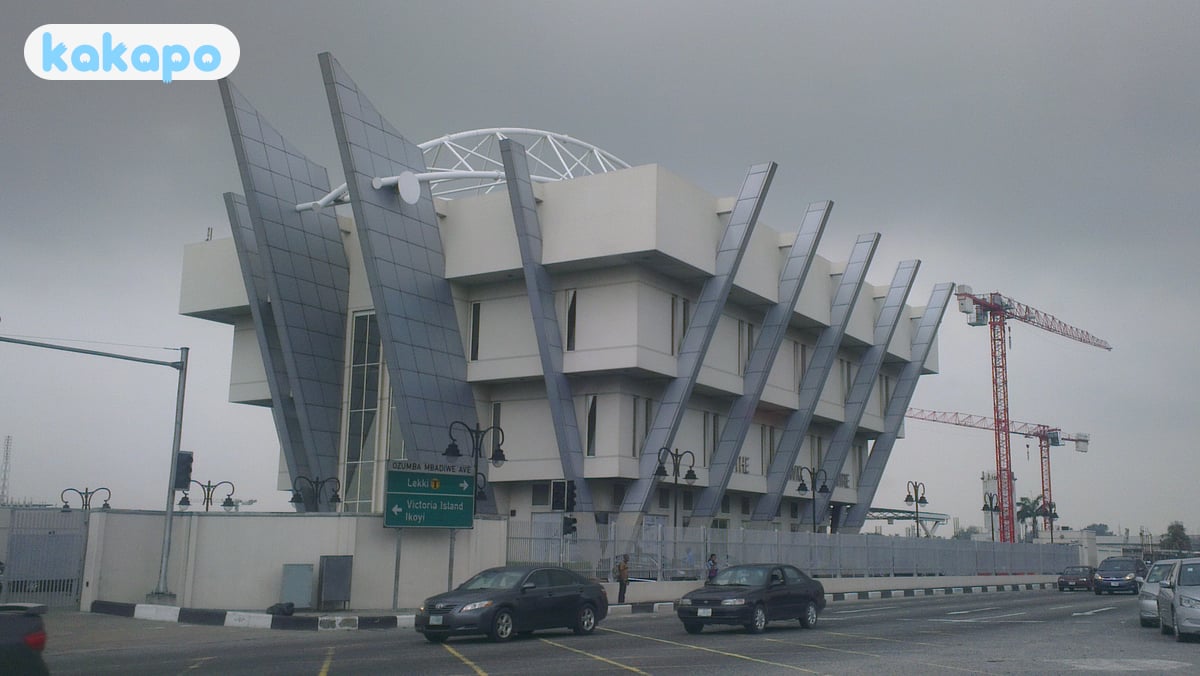
- VI proper: the peninsula bounded by the lagoon (north), the Atlantic (south), Falomo Bridge to Ikoyi (west), and the Lekki-Epe Expressway approach (east).
- Main streets: Ahmadu Bello Way (the central artery), Adeola Odeku Street (restaurant strip), Akin Adesola Street (bar strip with hotels), Adetokunbo Ademola Street (office towers), Bishop Aboyade Cole Street, Sanusi Fafunwa Street.
- The Eko Atlantic build: 10 sq km reclaimed-land city being built on the Atlantic side; financial-district and luxury-residential planned; partially operational 2024-2026. Has its own perimeter security.
- The hotels: Eko Hotel & Suites (the longstanding flagship, Adetokunbo Ademola Street); Federal Palace (the older flagship, Ahmadu Bello Way); Radisson Blu Anchorage; Lagos Continental; Sheraton Lagos; Four Points by Sheraton.
- The diplomatic concentration: UK High Commission (Walter Carrington Crescent, VI), US Consulate (also VI), several other embassies on adjacent Ikoyi.
- Adjacent Ikoyi: residential and embassy-heavy; safer than VI; the gentrification continues.
What's actually safe on Victoria Island
- The hotel envelopes: international-grade hotels have armed entry security (vehicle and pedestrian search), private guards, secure car parks. Inside the perimeter is effectively safe.
- Restaurants: VI's restaurant scene (Talindo, Sky Lounge at Eko Hotel, Nok by Alara, Bungalow on Adeola Odeku, Cactus on Ahmadu Bello, RSVP) generally has armed security and valet parking. Safe to dine.
- The beach clubs: Tarkwa Bay (private boat from VI marina), Atlantic Beach (off Eko Atlantic) — both safe with daytime visits.
- Walking between adjacent hotel and restaurant: short walks (200-500m) on the main VI streets daytime are fine. Late evening, use the hotel-arranged taxi instead.
- Office buildings: same security envelope as hotels.
- Adjacent Ikoyi: safer than VI overall; expat-residential.
Actual risks on and around VI
- Smash-and-grab at traffic lights: Lagos traffic is famously dense; traffic-light stops are smash-and-grab opportunities. Keep windows up; phones out of sight; bags off the dashboard. The Lekki-Epe Expressway approach to VI and the Falomo Bridge approaches are the main exposure routes.
- "Area boy" extortion: street-level extortion at certain corners and approaches; rare for visitors travelling in hotel cars; possible if you're walking unaccompanied.
- Police checkpoint extortion: occasional roadside stops by uniformed officers demanding bribes ("dash"). Stay calm; request to go to a station rather than pay roadside; document badge numbers.
- Express-kidnapping (ATM-drain): rare for short-stay tourists; possible for visibly-wealthy expats. Use hotel-arranged transport.
- The Lekki-Epe Expressway commute: VI-to-Lekki / Ajah at evening rush 17:00-20:00 can take 2-3 hours; the surface road is the risk-exposure corridor.
- Late-night solo walking: don't.
- The October 2020 EndSARS protests memory: the Lekki Toll Gate shooting (October 20, 2020) remains a politically sensitive memory; avoid the toll-gate anniversary as a foreigner.
Transport — hotel cars, Uber, Bolt, and the no-walk rule
- Hotel-arranged cars: the standard for business travellers. Eko Hotel, Federal Palace, Radisson Blu all run their own car service (~NGN 25,000-50,000 / US$15-30 per hour with driver). Most secure option.
- Uber + Bolt: both operate; reliable but variable. Insist on the car matching the app; don't share rides with strangers; trip-share with a friend.
- Lagos taxis: yellow with black stripe; metered taxis don't really exist; negotiate fare. Generally safe but Uber/Bolt is the default for tourists.
- Murtala Muhammed Airport (LOS): arrival via hotel-arranged pickup is strongly advised; the airport-to-VI commute is 30-90 minutes depending on traffic; the route passes through Apapa traffic which is the exposure window.
- Lagos Ferries: lagoon ferries from Marina (Lagos Island) to VI and Lekki; legitimate operators but less convenient for non-locals.
- The danfo buses (yellow minibuses): the local mass transit; tourists should not use them.
Broader Nigeria context — what to know
- UK FCDO advice: advises against all travel to several northern and middle-belt Nigerian states (Borno, Yobe, Adamawa, parts of Kaduna, Plateau, Kogi, Niger); advises against all but essential travel to several others. Lagos is not on the advise-against list but the overall country risk profile is elevated.
- The kidnap-for-ransom risk: concentrates in the north and middle-belt; rare for foreigners in Lagos but the cyber-kidnap (digital extortion via fake calls) is a pattern affecting expats.
- The cybercrime layer: Lagos is a global hub for "419" advance-fee fraud and romance scams; tourists are not specifically targeted but the technical sophistication of digital scams is high.
- Civil unrest: occasional protests; the EndSARS demonstrations of 2020 are the recent benchmark; visitors should avoid any protest area.
- Health: Lagos malaria is high; pre-trip prophylaxis required; yellow fever vaccination required for entry.
- Air quality: Lagos PM2.5 is among the worst in Africa; particulate-sensitive groups should use KN95.
Practical info — emergency
- Emergency: 112 (multi-emergency, Lagos State; intermittent).
- Police: Lagos State Police 767, 112.
- Tourist Police: limited dedicated unit; general Nigeria Police Force applies.
- Hospital: Reddington Hospital, Lagoon Hospitals, St Nicholas Hospital — international-grade private; Lagos University Teaching Hospital (LUTH) for major public.
- Medical evacuation: AMREF Flying Doctors, International SOS — recommended membership for any Lagos travel.
- UK High Commission: +234 1 277 0780 (Walter Carrington Crescent, VI).
- US Consulate Lagos: +234 1 460 3400 (VI).
- Yellow Fever certificate: required for entry to Nigeria; check before flying.
Frequently asked questions
Is Victoria Island, Lagos safe in 2026?
Safer than other Lagos neighbourhoods but not 'European safe'. VI is the financial-and-luxury-hotel district with concentrated armed private security, embassy proximity, and international-grade hotels (Eko Hotel, Federal Palace, Radisson Blu, Lagos Continental). UK FCDO doesn't advise against travel to Lagos but the overall Nigeria risk profile is elevated. Hotel-arranged transport, no late-night solo walking, and standard urban precautions are essential.
Should I walk between VI hotels and restaurants?
Short walks (200-500m) on the main VI streets — Ahmadu Bello Way, Adeola Odeku Street, Akin Adesola Street — are fine in daylight. After dark, use the hotel-arranged car even for short walks; the cost is trivial (NGN 5,000-10,000 / US$3-6) and removes the smash-and-grab exposure and area-boy extortion risk.
What's the airport-to-VI commute like?
Murtala Muhammed Airport (LOS) to Victoria Island is 30-90 minutes depending on traffic. Use hotel-arranged airport pickup (the standard for business travellers); the route passes through Apapa traffic which is the smash-and-grab exposure window. Hotel pickup ~NGN 25,000-50,000 (US$15-30); Uber works but variable; do NOT use unmarked airport-touts.
Are Uber and Bolt safe in Lagos?
Both operate, prices upfront, drivers verified. The standard alternative to hotel cars for tourists. Insist the licence plate matches the app; trip-share with a friend; don't share rides with strangers. Hotel-arranged cars remain the preferred option for first-time visitors and any nighttime trip; Uber is fine for daytime VI-internal trips.
What is the EndSARS context?
The October 2020 protests against Nigeria's Special Anti-Robbery Squad (SARS) culminated in the Lekki Toll Gate incident (20 October 2020) where security forces opened fire on peaceful protesters. The anniversary remains politically sensitive; foreigners should avoid the Lekki Toll Gate area on October 20 and avoid any protest gathering at any time. Day-to-day VI life is otherwise unaffected.
Do I need yellow fever vaccination for Nigeria?
Yes — Nigeria requires a Yellow Fever International Certificate of Vaccination for entry. The vaccination must be at least 10 days before arrival. Also recommended: malaria prophylaxis (Lagos is high-malaria — Malarone or doxycycline most common), Hepatitis A and Typhoid, ideally Hepatitis B for longer stays.
Should I travel outside Lagos as a tourist?
UK FCDO and US State Department advise against all travel to several northern and middle-belt states (Borno, Yobe, Adamawa, parts of Kaduna, Plateau, Kogi, Niger) due to terrorism and kidnap risk. Lagos itself, plus tourist-grade destinations in Ogun and the southeast (Calabar, Cross River), are not on the advise-against list. Travel insurance with kidnap-and-evacuation coverage is essential for any Nigeria visit.
Sources
Run a business in Victoria Island, Lagos?
Show visitors your Victoria Island, Lagos business is a safe choice. The free Verified by Kakapo badge puts Victoria Island, Lagos's live safety score on your website, links back to your verified page, and updates itself. No cost.
Get the free badge →