


Is Thessaloniki, Greece Safe? A 2026 Travel Safety Guide
Thessaloniki is comfortably safe for tourists. The honest concerns: Aristotelous pickpockets, summer heat, the Anarchist Exarchia-style fringe near the university, and earthquake context.

Thessaloniki is one of Greece's safer major cities. Crime against tourists is moderate — petty theft + minor scams; violent crime is rare. The realistic concerns are practical: pickpockets in the centre + Aristotelous Square + at Stathmós Larisis (the train station); summer heat regularly tops 35°C in the dense centre; the layered heritage (Roman ruins + Byzantine churches + Ottoman buildings + Jewish memorial sites) requires planning to navigate well; occasional anarchist demonstrations + clashes near Aristotle University ("Exarchia of the North") that affect specific blocks; and the earthquake context (the city sits on a major fault — the 1978 quake killed 50).
Greece sits at Level 1 on the US State Department's advisory list. UK FCDO carries no specific Thessaloniki warning. The honest framing for visitors: Thessaloniki is mid-sized (~325,000 in city, 1 million metro), Greece's second city + Macedonia's capital. Heavy student presence (Aristotle University 80,000 students) keeps the centre lively; the Jewish-history weight + Byzantine-heritage layer set it apart from Athens.
The defining experiences: White Tower (Lefkos Pyrgos), Aristotelous Square + the seafront promenade, Rotunda + Galerius Arch, Hagia Sophia + Hagios Demetrios churches, the Upper Town (Ano Poli) + the city walls, the Jewish Museum, Roman Forum + agora, and day trips to Mount Olympus + Halkidiki + Vergina (Aigai royal tombs).
| Solo female safety | 82/100 |
|---|---|
| Night safety | 69/100 |
| Scam / petty-crime risk | Medium |
| Violent crime (tourists) | Low |
| Most common scams | pickpockets in Aristotelous Square; pickpockets at Larisis station; DCC card-reader scam |
| Safer neighbourhoods | Aristotelous Square, Ladadika, Ano Poli |
| Data sources cited | 4 |
| Last verified |
What the score means — 80/100
- Personal safety (82) — high. Pickpockets + university-area incidents pull score down.
- Transport (82) — OASTH buses + the long-delayed metro that opened 2024.
- Healthcare (82) — AHEPA University Hospital is the regional reference.
- Air quality (82) — generally good; winter heating + traffic produce occasional inversions.
Aristotelous + the centre — pickpockets

- Aristotelous Square: the heart of the city; pedestrian; lively + safe.
- Pickpocket spots: Aristotelous + the seafront + the bus 78 + 78N to airport; Larisis station.
- Common techniques: distraction (petition signers), café-table phone snatch.
- Practical defence: front pocket only; cross-body bag in front; phone off café tables.
- Late-night centre: very safe; police visible.
- Solo women: comfortable in centre at most hours.
- Drink-spiking: standard precautions in larger anonymous bars in Ladadika district.
Summer heat — Macedonian numbers
- July-August: 28-35°C standard, regularly 38-40°C in heatwaves.
- Coastal humidity: 60-70% adds to perceived heat.
- Mid-day rule: 1-5pm get inside or in shade. Most non-tourist shops siesta-close.
- Hydration: 3+ litres/day. Tap water is safe.
- UV: 9-10 in summer.
- Best months: April-June, September-October.
- Wildfires: 2023 north-Greece fires were severe. Check Civil Protection alerts before inland day trips.
Heritage — Roman + Byzantine + Ottoman + Jewish
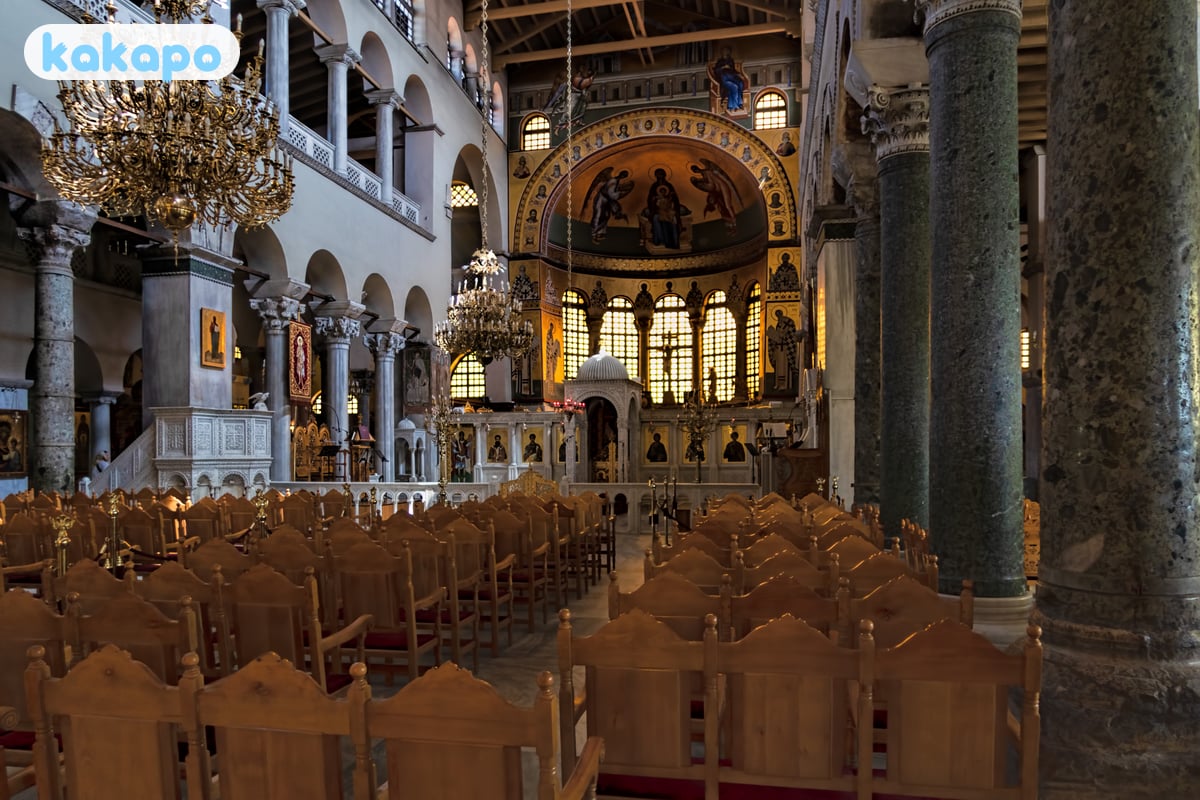
- Roman: Galerius' Arch + Rotunda + Roman Forum + Galerius palace ruins.
- Byzantine: Hagia Sophia + Hagios Demetrios + Hagios Pavlos + Vlatadon Monastery (Ano Poli). 15 UNESCO Byzantine churches across the city.
- Ottoman: Bey Hamam (oldest Ottoman bath in Greece), Bezesteni covered market, the White Tower itself (Ottoman).
- Jewish: pre-WW2 ~50,000 Jews (the "Mother of Israel"); 96% murdered in the Holocaust. Jewish Museum on Agiou Mina; Holocaust Monument at Eleftherias Square; Holocaust-era train station memorial.
- Pacing: don't combine the Jewish Museum + Holocaust sites with light sightseeing in one day.
- Most sites are €4-€8; Roman Forum + Rotunda combined €8.
Aristotle University area + protests
- The reality: AUTH's main campus is a long-running anarchist + leftist activist hub. Polytechnic anniversary (Nov 17) + student-cause demonstrations recur.
- Tourist relevance: limited. Most demonstrations are peaceful; clashes with police occasionally produce tear gas + window-breaking on specific blocks (Egnatia Street, Kamara, Tsimiski during marches).
- Don't walk through a demonstration: walk around. News will warn for major dates.
- Photography of police: not advised during demonstrations.
- Hotels in the centre: rarely affected; demonstrations are usually 1-2 specific streets.
- Solo women: comfortable in university area daytime + evening. Walk around demonstrations.
Earthquake context
- The reality: Thessaloniki sits on the Anthemounta-Volvi fault. 1978 M6.5 quake killed 50, damaged buildings.
- Modern code: post-1985 buildings seismically engineered.
- Hotels: international 4/5-star are modern + compliant. Older budget hotels in pre-1985 blocks are weaker.
- If a tremor occurs: drop, cover, hold under sturdy furniture. Don't run outside.
- Tsunami risk on the seafront: low — Thermaic Gulf is shallow + protected — but follow evacuation if instructed.
Ano Poli (Upper Town) + Ladadika nightlife
- Ano Poli: above the centre, on the hill. Walls + Ottoman houses survived the 1917 fire. Steep cobbled lanes.
- Walking up: 30-45 min from centre; bus 23 alternative.
- Cobbles + slope: sturdy shoes; slick when wet.
- Ladadika: gentrified former merchant district near the port; the centre's main bar/restaurant cluster.
- Solo women: comfortable in Ladadika at any hour; police visible.
- Pickpockets: low in Ladadika; standard precautions.
Metro, buses, the airport, money
- Thessaloniki Airport (SKG): 13 km southeast. Bus 78 + 78N to centre €2, ~45 min. Taxi €25-€35.
- Metro: opened November 2024 after a 17-year-construction story; 13 stations, single line; €0.90 single.
- OASTH buses: €1 single.
- Trains: Hellenic Train Athens ↔ Thessaloniki 4h via Hellenic Train.
- Currency: euro. Cards widely accepted; cash for some markets.
- "Don't pay in EUR" (DCC): card-reader scam; always pay in euros.
- Tipping: 10% if happy.
Frequently asked questions
Is Thessaloniki safe to visit in 2026?
Yes — Thessaloniki scores 82/100 here and is one of Greece's safer major cities. Greece sits at US State Department Level 1 and UK FCDO carries no specific Thessaloniki warning. Crime against tourists is moderate — petty theft and minor scams; violent crime is rare. Realistic concerns are pickpockets in Aristotelous Square, the seafront promenade, and around Larisis train station; summer heat that regularly tops 35°C in the dense centre with occasional 38-40°C heatwaves; the layered Roman, Byzantine, Ottoman and Jewish heritage that takes planning to navigate; occasional anarchist demonstrations near Aristotle University; and the underlying earthquake context (the city sits on the Anthemounta-Volvi fault — the 1978 M6.5 quake killed 50).
Is Thessaloniki safe at night?
Yes — very. Aristotelous Square is the heart of the centre and stays alive and well-policed late. Ladadika (the gentrified former merchant district near the port) is the main bar and restaurant cluster and feels comfortable at any hour. Walking back from a Ladadika dinner at 1am is routine. Standard precautions in larger anonymous bars (watch your drink). Pickpocketing risk continues at night around the seafront and the Larisis station forecourt — front pocket only, cross-body bag worn in front. The Aristotle University area sees occasional late-night demonstrations on specific dates (Polytechnic anniversary Nov 17) — walk around, not through.
Is Thessaloniki safe for solo female travellers?
Yes — comfortable at most hours in the centre. Greek hospitality in the second city skews protective and the student population (Aristotle University 80,000) keeps things lively without being threatening. Solo dining in Ladadika or on the seafront is unremarkable. Catcalling is mild. The university-area protest blocks are the only meaningful no-go and only on specific dates — daytime and evening university area is fine. Watch your drink in larger anonymous Ladadika clubs and walk around any street demonstration rather than through it.
Can you drink tap water in Thessaloniki?
Yes — Thessaloniki tap water is safe and tested to EU standards. Restaurants serve it free on request. Some areas have higher mineral content that puts visitors off taste-wise; bottled is cheap and ubiquitous (€0.50-1 for 1.5L). Carry a refillable bottle — summer 28-35°C with 60-70% coastal humidity makes hydration genuinely essential (3+ litres/day), especially walking the Ano Poli cobbles or the long seafront promenade. UV is 9-10 in summer; hat and sunscreen non-negotiable.
What's the biggest scam to avoid in Thessaloniki?
Honestly, Thessaloniki has very little organised scam culture compared to Athens. The recurring patterns: distraction pickpocketing on Aristotelous (petition signers, fake spillage), café-table phone snatches on the seafront (don't leave phones on outdoor tables), DCC at card terminals (always pay in EUR, not 'your home currency'), and the Greek climate tax (€1.50-10/night high season, introduced after the 2023 wildfires) which is real and disclosed at check-in. Aristotle University and the centre have occasional fake-monk donation hustlers near the White Tower — genuine Greek Orthodox monks don't solicit on the street.
How does the Jewish heritage layer compare with the Roman and Byzantine?
It's the city's most weighted history and it shapes how you should pace a visit. Pre-WW2 Thessaloniki had roughly 50,000 Jews and was known as 'Mother of Israel' — 96% were murdered in the Holocaust. The Jewish Museum on Agiou Mina, the Holocaust Monument at Eleftherias Square, and the Holocaust-era train station memorial together take a full half-day of serious attention and shouldn't be combined with light sightseeing the same day. The Roman layer (Galerius' Arch, Rotunda, Roman Forum, Galerius palace), the Byzantine layer (15 UNESCO churches including Hagia Sophia and Hagios Demetrios), and the Ottoman layer (Bey Hamam, Bezesteni, the White Tower itself) sit alongside it. Most sites are €4-€8; the Roman Forum + Rotunda combined ticket is €8. Sturdy shoes for the steep cobbled Ano Poli (Upper Town) — Ottoman houses that survived the 1917 fire, slick when wet.
Sources
Run a business in Thessaloniki?
Show visitors your Thessaloniki business is a safe choice. The free Verified by Kakapo badge puts Thessaloniki's live safety score on your website, links back to your verified page, and updates itself. No cost.
Get the free badge →