


Is Tabatinga, Brazil Safe? A 2026 Travel Safety Guide
The Brazil-Colombia-Peru tri-border, the Amazon-cruise gateway, the smuggling-zone context, malaria, and the realistic risks.

Tabatinga is a small Brazilian town on the Amazon River, at the tri-border with Leticia (Colombia) and Santa Rosa (Peru). It's the gateway for adventurous Amazon River cruises (Tabatinga to Manaus is 4-5 days by slow boat). Tourism is limited; most foreigners are research, ecotourism, or river-cruise embarkation.
The realistic concerns are the tri-border smuggling context (drug + wildlife trafficking is documented), malaria + dengue + yellow fever, the river-boat safety (over-loaded vessels + occasional accidents), and the limited medical infrastructure.
Brazil sits at Level 2; the Amazon border zones at Level 3 carve-outs. UK FCDO is similar. The honest framing: Tabatinga is small (~65,000), opposite Leticia (Colombia) — the two towns merge across an open border. Most "tourists" base in Leticia (better infrastructure) and visit the Amazon Lodge from there.
| Night safety | 47/100 |
|---|---|
| Scam / petty-crime risk | Medium |
| Violent crime (tourists) | Low |
| Most common scams | overloaded river boats; fake 'uncontacted tribe' experiences |
| Safer neighbourhoods | central town grid, main streets |
| Data sources cited | 4 |
| Last verified |
What the score means — 69/100
- Personal safety (56) — pulled down by tri-border context.
- Transport (56) — limited; river boats variable safety.
- Healthcare (56) — basic; serious cases require evacuation to Manaus.
- Air quality (80) — Amazon air clean except dry-season burning.
Tri-border context
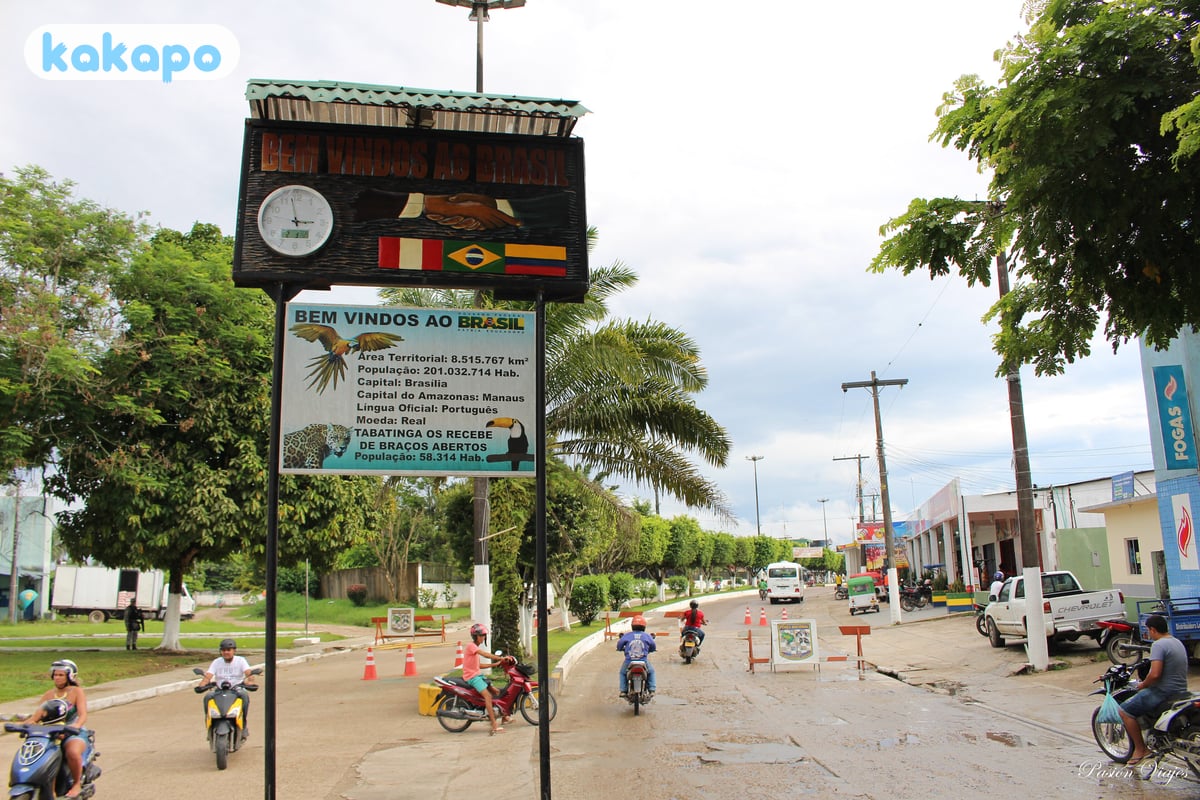
- Leticia (Colombia): across the open border. Often the better base for tourists.
- Santa Rosa (Peru): across the river — small island town.
- Border crossings: technically open + visa-free between the three. Get Brazilian/Colombian/Peruvian entry stamps if you intend to fly out via different country.
- Smuggling context: drug + wildlife. Tourists not typical targets.
- Don't venture into outer barrios after dark.
Amazon River boats
- Tabatinga to Manaus: 4-5 day slow-boat journey downstream. Hammock-class is the standard ($60-100); cabin class extra.
- Reputable operators: AjatoTour, Caboclo do Madeira.
- River boats overloaded: occasional accidents. Pick the bigger boat.
- Bring: hammock + rope (sold cheaply at Tabatinga market), bug spray, small backpack, toilet paper.
- Don't drink river water; bring sealed bottled water.
Amazon Lodge tourism
- Reserva Natural Palmari + Heliconia Lodge: reputable Brazilian-side eco-lodges accessible from Tabatinga.
- From Leticia: many more lodge options (Decameron, Calanoa).
- Pre-book: included transport from Tabatinga/Leticia airport.
- Don't go independently into the rainforest: guides essential.
Health — malaria + yellow fever
- Malaria: present. Antimalarial prophylaxis essential.
- Yellow fever vaccination: required for entry. Bring yellow card.
- Dengue + chikungunya: present.
- DEET 30%+: essential.
- Tap water: not safe.
Transport — flights + river
- Tabatinga Airport (TBT): from Manaus (2.5h flight) on Azul/LATAM.
- Most fly into Leticia (LET) instead — better connections from Bogotá.
- Walking + boat: between Tabatinga + Leticia open border.
- No road from Tabatinga to anywhere else: river or plane only.
Money + cost
- Currency: Brazilian real (BRL). Colombian peso accepted at the border too.
- USD cash: useful for tour bookings.
- Cards: rare; mostly cash.
- ATMs: at Banco do Brasil; limited foreign-card support.
- Tap water: not safe.
The tri-border (Brazil/Colombia/Peru) — what crossing actually looks like
Tabatinga's defining feature is its position at the Amazon tri-border — you can stand in one place and have Brazil (Tabatinga), Colombia (Leticia), and Peru (Santa Rosa) all within walking or short-boat distance. The borders are unfenced + freely crossable for most pedestrians, which is rare anywhere.
- Leticia, Colombia: directly across the unmarked border on the same continuous urban grid. Most international visitors actually arrive at Leticia (LET — Colombia's main Amazon entry point), then walk or taxi across the border. Bigger range of hotels + restaurants than Tabatinga.
- Santa Rosa, Peru: small island village across the river. 5-min boat from Tabatinga waterfront, ~R$ 10. Border post for Peru visas if continuing west.
- Crossing protocol: walking back and forth between Tabatinga and Leticia is normal + un-stamped for short visits. If you're continuing deeper into one country (e.g. flying out from Leticia or boating up to Manaus), you must get exit stamp from one + entry stamp from the next. The Brazilian Polícia Federal office in Tabatinga + the Colombian Migración Colombia office in Leticia handle this.
- Easy to forget the stamp: many backpackers leave Leticia for Manaus boat without realising they're missing the Brazilian entry stamp, get caught at the next stop. Don't skip it.
- Onward to Manaus: ferry down the Amazon River, 3-4 days slow boat, 36 hours fast boat. Departure from the Tabatinga port.
- Onward to Iquitos (Peru): faster boats upriver to Iquitos via Santa Rosa, 8-12 hours.
- Currency mix: BRL in Tabatinga, COP in Leticia, USD widely accepted in both. Money-changers at the border give blue-market rates.
Amazon-jungle tours + the realistic risks
- What jungle tours look like from here: 2-7 day excursions via boat or floatplane to jungle lodges along smaller Amazon tributaries. Operators based in Leticia (Colombia) tend to be more international-facing; Brazilian operators run from Tabatinga waterfront.
- Reputable operators: Amazon Jungle Trips, Selva Aventura, Mantaya Lodge, Calanoa Amazonas. Confirm yellow-fever certificate + IATA / FUNAI permits if going deep.
- Yellow fever vaccination: required for entry; certificate must be 10+ days old. Some lodges check.
- Malaria + dengue: real risk. Prophylaxis recommended; DEET 25-50%, long sleeves at dusk, mosquito net at the lodge.
- Don't swim in fresh water: piranhas overrated but real; caimans + electric eels are. Lodges have designated swim areas.
- Indigenous-community visits: well-known operators arrange ethical visits to Ticuna + Yagua communities. Avoid operators who offer "uncontacted tribe" experiences — almost certainly exploitative or fake.
- Drugs + safety context: the tri-border has documented narco-traffic activity but tourists are essentially never targeted. Don't engage with anyone offering anything; don't go off-itinerary into rural border areas alone.
- Cell signal: spotty in Tabatinga + Leticia; non-existent in the jungle. Plan for disconnection.
- Currency for jungle tours: USD preferred; bring crisp $50 + $100 bills for the larger payments.
Practical info — emergency numbers
- Police: 190.
- Ambulance: 192.
- Hospital de Guarnição de Tabatinga: basic.
- For serious cases: medical-evacuation to Manaus required.
Bring: yellow fever certificate, antimalarial prophylaxis, DEET 30%+ bug spray, sturdy quick-dry clothing, hammock if doing river boat, USD cash, and travel insurance with medical-evacuation cover (essential in Amazon).
Frequently asked questions
Is Tabatinga, Brazil safe to visit in 2026?
With significant caveats — Tabatinga scores 60/100 here. Brazil sits at Level 2 on the US State Department's advisory with Amazon border-zone Level 3 carve-outs; Tabatinga itself is a small town (~65,000) at the Brazil-Colombia-Peru tri-border on the Amazon River with limited tourism, basic infrastructure, and a documented tri-border smuggling context (drugs and wildlife trafficking is the regional economy of concern; tourists are essentially never targeted). Most international visitors actually base in Leticia (Colombia, directly across the unmarked border) which has better tourist infrastructure, and use Tabatinga as the embarkation point for slow-boat journeys down the Amazon to Manaus or up to Iquitos.
Is Tabatinga safe at night?
Stay inside the central town grid and on lit main streets — yes for the core. Don't venture into outer barrios after dark; don't walk to the Tabatinga-Leticia border at night even though it's technically open and unfenced; and don't accept rides or 'tours' offered by strangers at the waterfront. The riverboat departures happen at dawn, which is your safest window for getting to the port. Solo female travellers should base in Leticia rather than Tabatinga itself — Leticia has more visible hotels, restaurants and other foreigners. Real police presence is thin in both towns; the realistic concern is opportunistic robbery rather than organised crime against tourists.
What scam should I watch for in Tabatinga?
The big one is the border-stamp trap — walking back and forth between Tabatinga and Leticia is normal and un-stamped for short visits, so many backpackers leave Leticia for the Manaus boat without realising they're missing their Brazilian entry stamp, then get caught at the next checkpoint with a fine. Always get exit and entry stamps when you change country (Brazilian Polícia Federal office in Tabatinga; Migración Colombia in Leticia). Secondary: overloaded slow-boats with 'priority hammock spots' sold at the port for extra cash (those spots don't exist — pick the bigger licensed boat, board early, sling your own hammock); blue-market money-changers giving worse rates than ATMs (use Banco do Brasil ATMs for BRL and an ATM in Leticia for COP); 'jungle tour' operators selling 'uncontacted tribe' experiences that are either exploitative or fake (book through reputable operators — Amazon Jungle Trips, Calanoa Amazonas, Mantaya Lodge).
Can you drink the tap water in Tabatinga?
No — Tabatinga tap water is not safe to drink. Use sealed bottled water; brush teeth with bottled if you're stomach-sensitive. The Amazon itself looks tea-coloured and feels clean but never drink river water without proper filtration plus chemical treatment. Yellow fever vaccination is required for entry (bring your yellow card — some lodges check), antimalarial prophylaxis is essential for the broader rainforest (less critical in town but the moment you leave for a lodge it matters), and DEET 30%+ repellent is non-negotiable: dengue, chikungunya and malaria are all present. Cell signal is spotty in town and non-existent in the jungle — plan for disconnection.
How does the Brazil-Colombia-Peru tri-border actually work — and what does an Amazon trip from here look like?
Tabatinga's defining feature is its position at the unfenced Amazon tri-border, where you can stand in one place and have Brazil (Tabatinga), Colombia (Leticia) and Peru (Santa Rosa) all within walking or short-boat distance — which is rare anywhere in the world. Leticia (Colombia) is directly across an unmarked border on the same continuous urban grid; most international visitors actually arrive at Leticia (LET — Colombia's main Amazon entry, better connections from Bogotá) then walk or taxi the few hundred metres across. Santa Rosa (Peru) is a small island village 5 minutes by boat from the Tabatinga waterfront (~R$10), the border post for Peru visas if continuing west to Iquitos. Onward from Tabatinga: slow boat down the Amazon to Manaus (3-4 days hammock-class at $60-100, 36-hour fast boat option; bring your own hammock and rope sold cheaply at Tabatinga market, plus bug spray, toilet paper, and small backpack); slow boat upriver to Iquitos via Santa Rosa (8-12 hours). Jungle-lodge tourism is the genuine visitor draw — 2-7 day excursions via boat or floatplane to lodges along smaller Amazon tributaries, run mainly by Leticia-based operators (Amazon Jungle Trips, Selva Aventura, Calanoa Amazonas, Mantaya Lodge); confirm yellow-fever certificate is 10+ days old. Currency mix: BRL in Tabatinga, COP in Leticia, USD widely accepted in both (bring crisp $50 and $100 bills for jungle-tour payments — old or marked bills get rejected). Travel insurance with medical-evacuation cover is essential — serious medical cases require evacuation to Manaus.
Sources
Run a business in Tabatinga?
Show visitors your Tabatinga business is a safe choice. The free Verified by Kakapo badge puts Tabatinga's live safety score on your website, links back to your verified page, and updates itself. No cost.
Get the free badge →