


Is Rothenburg ob der Tauber, Germany Safe? A 2026 Travel Safety Guide
Rothenburg has near-zero crime concerns + extreme over-tourism. The honest concerns: day-tripper crush, cobbled walls, the Christmas market, and winter ice.

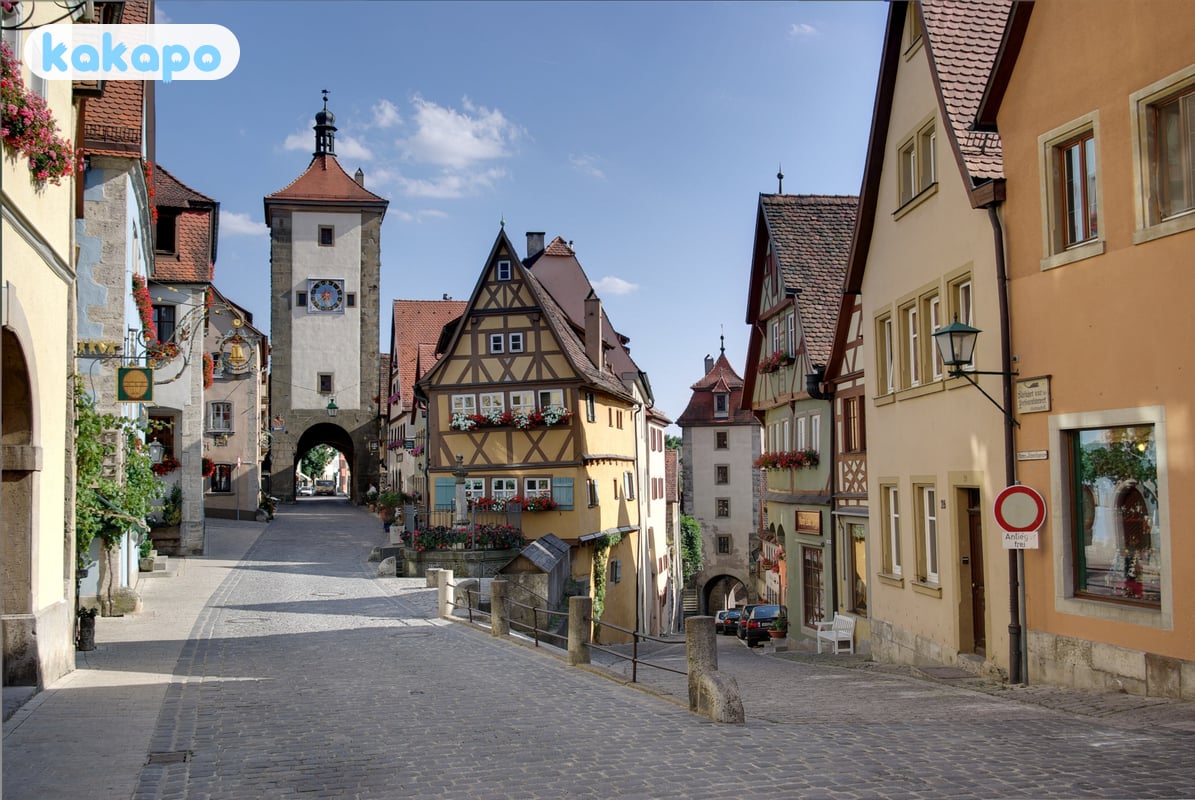
Rothenburg ob der Tauber is one of Europe's safest places by ordinary-crime measure — a walled medieval town of ~11,000 residents with police presence + a strong tourist-economy interest. The realistic concerns are practical: extreme day-tripper compression (the famous Plönlein corner shuffles by mid-morning Sat-Sun), cobbled walled centre that gets glassy in winter ice, the Christmas market crush in December, the year-round Käthe Wohlfahrt Christmas village + the Christmas Museum tourist density, and the Romantic Road bus tour stops that pulse the town all summer.
Germany sits at Level 2 on the US State Department advisory (terrorism, baseline). UK FCDO is similar. The honest framing for visitors: Rothenburg is the most-photographed Bavarian medieval town, the postcard-perfect Romantic Road stop, and one of the few WW2-survivors with intact ramparts. ~2 million annual day-trippers; staying overnight inside the walls (the way to dodge the crush) is genuine premium.
The defining experiences: walking the city walls (free, 2 km), Plönlein corner photo, Marktplatz + the master-builder's house, Medieval Crime Museum, St Jakob's Church (the Riemenschneider altarpiece), the Christmas Museum, the Night Watchman tour, and the Tauber valley below.
Whether to day-trip or stay overnight is the single biggest planning decision and the right answer is overnight — because Rothenburg has two distinct identities. Day Rothenburg (10:00-17:00) is a tour-coach theme park where the Plönlein corner has a queue for photographs and the Schneeballen bakeries on Hafengasse sell €4 sugar-pastry footballs faster than they can make them. Night Rothenburg (after 19:00, when the last buses pull out) is a near-empty walled village where you walk down Herrngasse with the wall lanterns flickering and no other footsteps. €120-200 for a night at the Hotel Eisenhut or Burg-Hotel buys you the second Rothenburg, which is what people travelled to Germany hoping to see. In 2026, Romantische Straße tour-coach traffic is back at 2019 levels with notable growth in Asian inbound (Korean and Chinese groups dominate June-August) and American Christmas-market season (late November-23 December), and the town's wall ticket revenue from the symbolic €1 contribution boxes — kept entirely toward upkeep — is up 12% YoY.
| Solo female safety | 90/100 |
|---|---|
| Night safety | 90/100 |
| Scam / petty-crime risk | Low |
| Violent crime (tourists) | Low |
| Most common scams | pickpockets in cathedral square crush; pickpockets in market crush; extreme day-tripper compression at Plönlein corner |
| Safer neighbourhoods | inside the walls, Herrngasse, Marktplatz |
| Data sources cited | 4 |
| Last verified |
What the score means — 89/100
- Air quality (92) — small Bavarian town; very high.
- Personal safety (94) — exceptionally high.
- Healthcare (80) — local clinic; complex care via Würzburg (1h) or Ansbach (40 min).
- Transport (78) — DB regional trains via Steinach connection; bus 807 from Ansbach; small + walkable.
Day-tripper crush — the volume + how to dodge
- The numbers: ~2 million annual visitors in a walled town fitting ~3,000 comfortably.
- Peak window: 11am-4pm Sat-Sun + summer + Christmas market. The Plönlein corner + Marktplatz shuffle.
- Tour-bus parking: outside the walls; visitors flood in 10am-3pm.
- Strategy: stay overnight. After 6pm + before 10am you'll have empty cobbled streets to yourself.
- Hotels inside walls: Eisenhut, BurgGartenpalais, Hotel Reichsküchenmeister.
- Best months: late April-May, late September-October. Quiet + photogenic.
- Pickpockets: low base rate; minor uptick in cathedral square crush.
The wall walk + cobbles
- The walls: 2 km circumference; about 1.5 km walkable.
- Free entry: just climb up at any of the towers.
- Wooden roof + stone surface: fine in dry weather; slick when wet/icy.
- Children: parapets are ~1 m; hold hands; don't sit on edges.
- Cobbles in town centre: irregular medieval stone; sturdy shoes.
- Wheelchair access: walls inaccessible. Town centre partially accessible (some flat areas around Marktplatz).
- Wheeled luggage: bangs + breaks. Hand-carry between hotel + parking.
Christmas market + the year-round Christmas Museum
- Reiterlesmarkt (Christmas market): late Nov to Dec 23; on Marktplatz + Grüner Markt.
- Atmosphere: smaller + arguably more medieval than Nuremberg's; ~250,000 visitors over the month.
- Hotel prices: triple December weekends.
- Käthe Wohlfahrt Christmas Village: year-round Christmas store on Herrngasse. Tour-bus default; €5 to enter the Christmas Museum upstairs.
- Pickpockets: minor uptick in market crush.
- Footwear: cobbles + ice + spilled Glühwein = grippy boots only.
- Operating hours: ~11am-7pm market; cafés open later.
Winter cold + ice
- December-February: -3 to 5°C; -10°C cold snaps; snow several days/month.
- Cobbles + ice: medieval centre gets glassy.
- Footwear: rubber-soled boots with grip; microspikes useful.
- Best months: May-September; December for Christmas market.
- Daylight: 8 hours December.
Night Watchman tour + atmosphere after dark
- The tour: Hans-Georg Baumgartner (the original) leads the famous English-language Night Watchman tour at 8pm year-round. €10 cash. ~1h.
- Why it's iconic: he's done it for 30+ years; entertaining + informative; standing-only.
- After 8pm in winter: dark, atmospheric, very safe. Phone torch helps on dim cobbles.
- Solo women: comfortable at any hour.
- Late-night options: Rothenburg quiet by 11pm; a few wine bars stay open later.
Trains, buses, getting there
- Train: DB regional from Steinach (change from Würzburg + Munich routes); ~15 min final leg.
- From Munich: ~3h via Steinach.
- From Frankfurt: ~2.5h.
- Romantic Road bus: seasonal; from Frankfurt or Munich.
- Driving: A7 motorway exit Rothenburg; park outside walls (P1-P5 lots; €5-€8/day).
- Don't drive into walls: pedestrianised + permit-only.
The walled town and its corners
- The walled medieval town — about 30 minutes' walk end to end, contained by a roughly oval circuit of walls 2 km around with 42 surviving towers and gates (Klingentor, Galgentor, Rödertor, Spitaltor). The defensive walls survived the Thirty Years War siege of 1631 (the "Meistertrunk" legend), Napoleon's wars, and miraculously most of WWII — the night of 31 March 1945 saw bombing but Allied assistant secretary McCloy ordered no further attacks after seeing Rothenburg in person, so the medieval fabric is genuinely intact rather than restored.
- Plönlein — the postcard-perfect Y-shaped corner where two streets diverge at the fountain, with the Kobolzeller Tor on the left and the Siebersturm on the right. Probably the most-photographed corner in Bavaria. Queues for the photograph form by 10:00 in summer; go at 07:30 or after 19:00 for an empty frame.
- Marktplatz + Rathaus — the main square with the Renaissance Rathaus (1572), the Ratstrinkstube (master-builder's house, with the famous clock that re-enacts the Meistertrunk legend 11:00-15:00 and 20:00-22:00), and the Christmas market in late November-23 December.
- Käthe Wohlfahrt Christmas Village + Christmas Museum — the year-round Christmas store on Herrngasse, founded 1981 and now the world's largest. Free to wander the shop floor; €5 to enter the Christmas Museum upstairs (tracking the history of Christmas-tree decoration). Tour-bus default; quieter after 16:00.
- Reiterlesmarkt (Christmas market) — late November to 23 December on Marktplatz and Grüner Markt. Smaller and arguably more medieval than Nuremberg's; ~250,000 visitors over the month. Glühwein €4-5 with €5 mug deposit (return for refund or keep). Hotels triple price on December weekends.
- St-Jakobs-Kirche — the Gothic Lutheran church with Tilman Riemenschneider's Holy Blood Altarpiece (1500-1505), one of the great late-Gothic woodcarvings in Europe. €3.50 entry. Allow 30 minutes for the altarpiece alone.
- The walls walk — climb up at any of the surviving towers, walk on the covered wooden gallery (free, 1.5 km of the 2 km circuit walkable). Symbolic €1 donation toward upkeep — there are wooden boxes along the gallery and a wall of donor name-plaques near Klingentor. Roeder Tower has the best panoramic photo.
- Romantische Straße — the Romantic Road tourist route runs from Würzburg to Füssen via Rothenburg, Dinkelsbühl, Nördlingen, Augsburg. Romantic Road bus services run May-October; in summer Rothenburg sits at the busiest junction.
- Day-trip vs overnight — the biggest single decision. Day-trippers see a theme park (Plönlein queue, Schneeballen tourist trap, Käthe Wohlfahrt coach defaults). Overnight visitors see the magic — empty cobbled streets after 19:00, the Night Watchman tour at 20:00 (€10 cash, Hans-Georg Baumgartner has been doing it 30+ years), wall lanterns flickering down Herrngasse, sunrise on the Plönlein at 06:30. €120-200 for a hotel inside the walls (Eisenhut, Burg-Hotel, Reichsküchenmeister) is the right spend.
If it's your first time visiting
- Best arrival: DB regional from Steinach (the change-over station on the Würzburg-Ansbach main line), final leg ~15 minutes. From Munich it's roughly 3 hours via Steinach; from Frankfurt 2.5 hours; from Würzburg 1.5 hours. The Romantic Road bus runs May-October from Frankfurt and Munich, slower but more scenic. Driving — A7 motorway exit Rothenburg, park outside the walls at P1-P5 (€5-€8/day); don't try to drive inside the walls (pedestrianised, permit-only, the gates are tight).
- Best hotel for your first night: inside the walls, full stop. Hotel Eisenhut (€140-220), BurgGartenpalais (€160-280), Hotel Reichsküchenmeister (€110-180), Hotel Goldener Hirsch (€100-160), or the Youth Hostel (€35-50 a bed) all inside the gates. Outside-the-walls hotels save €30-50 but you lose the after-19:00 magic that's the entire reason to visit.
- Day 1 itinerary (overnight base): arrive afternoon by train, drop bags. The wall walk before sunset (free, 90 minutes, Roeder Tower for the panorama). Dinner at the Hotel Eisenhut or Mittermeier Restaurant. Night Watchman tour at 20:00 from Marktplatz (€10 cash, 1 hour standing-only, English). Quiet walk down Herrngasse to Plönlein with the lanterns on. Sleep.
- Day 2 itinerary: Plönlein photograph at 07:30 (empty), coffee on Marktplatz, St-Jakobs-Kirche for the Riemenschneider altarpiece (€3.50), the Medieval Crime Museum (€8), Schneeballen at Diller (the original bakery), watch the Meistertrunk clock at 11:00 on the Ratstrinkstube, then leave by 13:00 before the coaches arrive — or stay if it's your second night.
- Common rookie mistakes: visiting only as a day-tripper from Munich (you see the theme-park version, miss the magic); wheeled luggage on the cobbles (bangs and breaks — hand-carry the last 200 m from the parking lot); thin-soled shoes (cobbles are irregular medieval stone, brutal on the feet); driving through the gates (you'll wedge — they're sized for horse carts); buying Schneeballen at the tourist stalls on Hafengasse (€4 each, machine-made) instead of Bäckerei Diller (€2.50 each, traditional); not bringing cash (Germany still has cash-only outliers, Night Watchman is cash-only €10).
- Currency: euro. Cards accepted at hotels and larger restaurants; many Bavarian Gasthäuser and bakeries are cash-only. Carry €100-150 in small notes. ATMs at Sparkasse and Volksbank on Marktplatz are skim-safe.
- Winter strategy: rubber-soled boots with deep lugs (cobbles + ice + spilled Glühwein is brutal); microspikes are useful in cold snaps; daylight is 8 hours in December; hotels triple price for the Christmas-market weekends so book by September.
- Summer strategy: visit late April-May or late September-October to dodge peak coach volumes. Mid-July to mid-August is the worst crush; weekends are worse than weekdays.
- Day-trip onward: Würzburg (1h, the Residenz UNESCO palace), Nuremberg (1h45, Imperial Castle and Christmas market), Bamberg (2h, Franconian beer and UNESCO town), Munich (3h via Steinach).
Practical info — emergency numbers
- European emergency: 112.
- Police: 110.
- Krankenhaus Rothenburg ob der Tauber: +49 9861 707 0.
Bring: rubber-soled shoes for cobbles + winter ice, layered clothing, a contactless card + cash backup (Germany still has cash-only outliers), an unlocked phone, and travel insurance.
Frequently asked questions
Is Rothenburg ob der Tauber safe to visit in 2026?
Yes — Rothenburg scores 90/100 here, among the safest stops on the Romantic Road. Germany sits at the lowest UK FCDO advisory level and US State Department Level 1. The walled medieval old town is a 30-minute walk end to end and has the security profile of a small Bavarian village, because that's what it is — about 11,000 residents under the half-timbered postcard. The realistic risks are not crime: it's tour-coach crowd density on the Plönlein at midday between April and October, slippery cobbles in rain, the wall-walk has no handrails on the parapet side, and seasonal alcohol on the Christmas-market evenings.
Is Rothenburg safe at night?
Yes — exceptionally so. Once the day-tripper coaches leave around 18:00 the town empties dramatically and most of the magic begins: the Night Watchman tour at 20:00 (English) and 21:30 (German) is the famous one. The wall-walk is lit but uneven; wear shoes with grip. The Markt and the streets around the Rathaus stay quietly busy with overnight guests until the restaurants close around 22:00, then it's near silent. The youth hostel and the budget pensions sit inside the wall — no late-night transport question because nowhere is more than 10 minutes' walk.
What scams should I watch out for in Rothenburg?
Almost none. Rothenburg's tourism is heavily regulated and the businesses you'll encounter — the Käthe Wohlfahrt Christmas shops, the Schneeballen bakeries, the Kriminalmuseum — are all long-established and price-transparent. The closest thing to a scam is the year-round Christmas-market shops charging gift-shop premiums on small ornaments; that's just retail, not deception. ATM-skimming is rare; use Sparkasse or Volksbank machines on the Markt. Watch for overcharging at the most-photographed restaurants on the Plönlein — walk one street back to find local prices on Schwäbisch food.
Can you drink tap water in Rothenburg?
Yes — German tap water is regulated more strictly than bottled and is excellent in Rothenburg. The town draws from the Tauber valley aquifer and meets the German Trinkwasserverordnung standards, which are tighter than EU minimums. Restaurants will sometimes look surprised if you ask for 'Leitungswasser' rather than buying mineral water (it's a German cultural quirk, not a quality issue), but they'll bring it. Carry a refillable bottle; there are public fountains near St. Jakob's Church. The Tauber river itself is not for drinking — swim only at marked spots downstream.
Is the wall-walk safe and what's the best way to see it?
Yes, but the parapet side has no handrail in many sections and the stones are uneven — sturdy shoes are essential and the walk is not great for very small children or anyone with mobility issues. The full circuit is about 2.5 km / 90 minutes with stops, and the best hours are 07:00-09:00 (empty, soft light, mist off the Tauber) or 19:00-21:00 (after the coaches, golden hour through the towers). The Roeder Tower has the best panoramic photo. Avoid the wall in rain — the stones get slippery and there's no shelter between towers.
Sources
Run a business in Rothenburg ob der Tauber?
Show visitors your Rothenburg ob der Tauber business is a safe choice. The free Verified by Kakapo badge puts Rothenburg ob der Tauber's live safety score on your website, links back to your verified page, and updates itself. No cost.
Get the free badge →