


Is Limassol, Cyprus Safe? A 2026 Travel Safety Guide
Limassol is comfortably safe by crime measure. The honest concerns: summer heat, the cruise port, the post-2022 demographic shift, and beach safety.

Limassol is one of Europe's safer Mediterranean resort cities. Crime against tourists is mild. The realistic concerns are environmental and contextual: summer heat regularly tops 35°C and reaches 40°C in heatwaves; the cruise + cargo port handles ~1 million annual cruise passengers + significant container traffic; the Russian-tourist demographic that defined parts of Limassol pre-2022 has shifted (some businesses closed, others rebalanced toward UK, German, and Eastern European visitors); occasional rip currents on windy days at the city beaches; and the wider Cyprus-Turkey political context (the UN Buffer Zone, the unresolved division) is essentially zero day-to-day relevance for visitors but worth understanding.
Cyprus sits at Level 1 on the US State Department's advisory list. UK FCDO carries no specific Limassol warning beyond general Buffer Zone caution if travelling north. The honest framing for visitors: Limassol is mid-sized (~110,000 in city, 240,000 metro), the Republic of Cyprus's commercial capital + main cruise port. Modern marina + 17 km beachfront + the historic Old Town centre + the wineries + Troodos mountains 1h inland make it a varied destination.
The defining experiences: Limassol Marina + Old Town castle, Molos seafront promenade, the carob-mill restaurant district, Kourion archaeological site (15 km west), Troodos mountains day trips, the wine villages (Omodos, Lofou), and Aphrodite's Rock at Petra tou Romiou. Limassol sits on the south coast of Cyprus and is the EU-side commercial capital — banking, shipping registry, tech, and (visibly) yachting all concentrate here. The city is bookended by two British Sovereign Base Areas (Akrotiri to the west, Dhekelia to the east); their existence is mostly invisible to tourists but explains the surprising amount of English on signs, the right-hand-drive cars and the UK-style three-pin plugs.
| Night safety | 84/100 |
|---|---|
| Scam / petty-crime risk | Low |
| Violent crime (tourists) | Low |
| Safer neighbourhoods | Old Town, Marina, Molos seafront |
| Data sources cited | 4 |
| Last verified |
What the score means — 80/100
- Personal safety (86) — high.
- Air quality (86) — Mediterranean; cruise + cargo port adds NO₂ on busy days.
- Healthcare (84) — Limassol General Hospital + private (Mediterranean Hospital, Apollonion) handle international patients.
- Transport (80) — buses + taxis + Bolt; no metro; rental car for full island.
Summer heat — Cyprus extremes

- July-August: 30-37°C standard, regularly 40°C+ in heatwaves.
- Coastal humidity: 60-70% adds to perceived heat.
- Mid-day rule: 1-5pm get inside or shade. Most non-tourist shops siesta-close.
- Hydration: 3+ litres/day. Tap water is safe in Limassol.
- UV: 10-11 in summer. Sunscreen + hat.
- Best months: April-June, September-October.
- Wildfire risk: 2021 Limassol-area fires were severe. Inland summer driving — check Cyprus Forestry Department alerts.
Beaches + rip currents
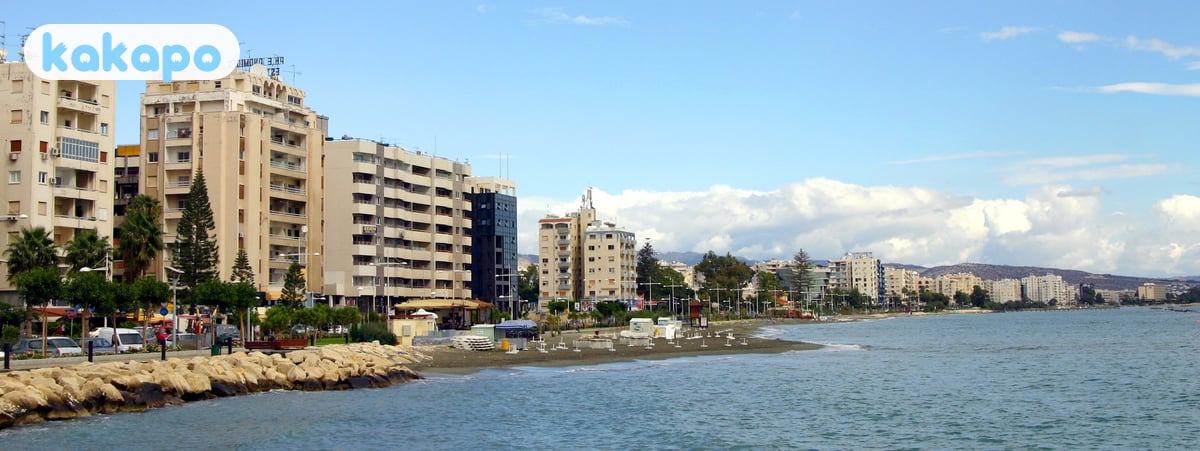
- City beaches: Dasoudi, Akti Olympion, Lady's Mile (Akrotiri side). Mostly Blue Flag. Pebbly + sandy mix.
- Lifeguards: summer at major beaches.
- Rip currents: occasional on windy days; flag system standard. Take red flags seriously.
- Sea urchins: rocky areas; aqua shoes useful.
- Jellyfish: occasional summer waves.
- Petra tou Romiou (Aphrodite's Rock): 30 km west; pebbly + open. Currents stronger.
- Lady's Mile: longer, less developed; cars on sand permitted in places.
Post-2022 demographic shift
- Pre-2022 reality: Limassol had a famous Russian + ex-Soviet community (~50,000 estimated); Russian-language signs, Russian-owned hotels, banks, schools.
- Post-2022 EU sanctions: Russian banking restrictions + visa-related pressures reduced visitor + resident flow. Some Russian-owned businesses closed; others continued under different ownership.
- What this means for visitors: the visitor mix has rebalanced. Russian signage less prominent than 5 years ago; mix of UK, German, Israeli, Eastern European tourists.
- Atmosphere: normal; political tensions are not visible day-to-day.
- Currency: euro (Cyprus is in Eurozone). Cards universal.
- Russian-language services: still widely available in tourism + healthcare.
The Cyprus division — what tourists actually face
- The reality: Cyprus has been divided since 1974 — Republic of Cyprus (south, EU member) + Turkish Republic of Northern Cyprus (north, recognised only by Turkey). UN Buffer Zone runs across the island.
- Limassol: solidly in the south; you won't see division daily.
- Crossing to north: legal for tourists at the Ledra Street + other Nicosia crossings. Some travel insurance restrictions; check.
- Don't enter UN Buffer Zone: not a tourist area; restricted.
- Driving across: rental cars from south are not insured in north; rental from north not insured in south. Cross on foot or use cross-border-permitted rental companies.
- Photography: don't photograph military installations, UN posts, or Buffer-Zone fence.
Old Town, Marina, the Carob Mill district
- Limassol Castle (Medieval Museum): €4.50; small but interesting. Reportedly where Richard the Lionheart married Berengaria of Navarre in 1191.
- Carob Mill: gentrified mill complex; Cyprus' best food scene. Restaurants + bars + the Carob Museum.
- Limassol Marina: modern; restaurants + yacht-watching. Very safe.
- Molos seafront: 1 km landscaped promenade. Free + lit + safe at all hours.
- Pickpockets: low base rate.
- Solo women: comfortable at any hour in central + Marina + Carob Mill.
Buses, the airports, day trips
- Larnaca Airport (LCA): 70 km east; main international. Limassol Airport Express bus €9, ~1h.
- Paphos Airport (PFO): 70 km west; smaller. Express bus €9, ~1h.
- City buses (EMEL): €1.50 single, €5 day. Cards accepted on most.
- Driving: left-side driving (UK convention). Roads good.
- Day trips: Kourion (15 km), Omodos wine village (40 km), Troodos mountains (60 km), Nicosia (70 km).
- Bolt: works; cheap.
Areas — Old Town, Marina, the wider Limassol coast

- Old Town — the medieval core around Limassol Castle and the Carob Mill complex. Castle Square cafés, the small Medieval Museum (€4.50 — said to be where Richard the Lionheart married Berengaria of Navarre in 1191). Walkable, gentrified, safe at any hour.
- Limassol Marina — the modern luxury marina immediately east of the Old Town, opened 2014. Restaurants, yacht-watching, the Marina Walk promenade. Family-friendly and very safe. The Limassol Boat Show in May is the biggest annual event here.
- Molos seafront promenade — the 1 km landscaped seafront walk from the Old Port east past the Sculpture Park to the Public Hospital. Free, lit, family-popular, and the city's evening passeggiata. Genuinely the best free attraction in town.
- Germasogeia + the Tourist Area — the bar-and-hotel strip 8-15 km east along Amathus Avenue. Four Seasons, Mediterranean Beach, Amathus Beach Hotel; the bar belts get the standard Mediterranean-resort drunk-tourist energy on Fri-Sat nights. Safe; assault rare; drink-driven scuffles flare on the small side streets behind the strip.
- Pissouri (40 km west) — a quiet village between Limassol and Paphos with a long pebbly bay (Pissouri Bay) and the Columbia Beach Resort. Half-day or quiet-week alternative to the Tourist Area.
- Akrotiri Salt Lake + the British base — the salt lake immediately south-west of Limassol where pink flamingos winter (November-March). Lady's Mile beach runs along the western shore — longer, less developed, cars on sand permitted in places. Akrotiri Sovereign Base Area is here; military areas signposted as restricted.
- Russian-emigré demographics + post-2022 shift — Limassol had a famous Russian + ex-Soviet community of ~50,000 estimated pre-2022. Post-2022 EU sanctions reduced visitor + resident flow; some Russian-owned businesses closed, others continued under different ownership. The visitor mix has rebalanced toward UK, German, Israeli and Eastern European. Russian-language services still widely available in tourism + healthcare; the political tensions are not visible day-to-day.
- Cruise base + the new port — Limassol's port is Cyprus's main cruise terminal and a busy cargo + container hub. ~1 million annual cruise passengers; the cruise terminal is 5 km west of the Old Town with a shuttle bus.
- Day trips: Kourion (15 km west, the spectacular Greco-Roman theatre + mosaic floors, €4.50); Omodos and Lofou (30-40 km north into the foothills, wine villages with tavernas and tastings); Troodos mountains (60 km north, snow Dec-Mar at Mt Olympus 1,952m); Aphrodite's Rock (Petra tou Romiou, 50 km west on the Paphos road — the mythological birthplace of Aphrodite).
If it's your first time visiting
- Best arrival airport: Larnaca (LCA) 70 km east is the main international gateway. Limassol Airport Express bus €9 (~1h, every 30-60 min). Paphos (PFO) 70 km west is the smaller alternative — same €9 Express bus westward. Pre-booked private transfer €60-90. Metered taxi €70-100. Direct flights from most European capitals to LCA.
- Best neighbourhood for your first night: Old Town + Marina (Mercure, Royal Apollonia, Amathus, Four Seasons) for the walking-distance attractions and Molos promenade; Germasogeia Tourist Area for the bar belt and big-resort feel; Pissouri or quieter Amathus for a calmer week. Avoid first-time bookings far inland (you'll always need a car or taxi).
- Day 1, jet-lag friendly: Old Town walking 09:00 — Limassol Castle (€4.50), Carob Mill, cafés on Castle Square; lunch meze at To Karnayio or Stretto in Old Town (€20-35/person for proper Cypriot meze with 16-20 small plates); afternoon Molos seafront promenade walk to the Marina; sunset on the Marina Walk; dinner late at Pyxida (fish, €40-55) or a brewpub at Ayia Napa beach side.
- Real prices in 2026: EMEL city bus single €1.50, day €5; Limassol Airport Express €9 to LCA or PFO; coffee €3-4.50; full Cypriot meze for two at a taverna €60-90; meze + wine for two at Marina restaurant €100-150; Carlsberg or KEO beer at a bar €4-5; Cypriot wine bottle at restaurant €18-35; Bolt within Limassol €5-12; mid-range hotel €120-220/night summer.
- Currency: euro (Cyprus is in the Eurozone). Cards universal including Apple/Google Pay. Always pay in EUR on terminals — decline DCC. €30-50 cash for tip jars and the occasional village taverna.
- Tipping: 10% at restaurants if service was not added; round up taxis; €1-2 per drink at the bar.
- Driving on the left (UK convention) — confuses many continental visitors. Roads good; speed cameras enforced; Cyprus has zero tolerance for drink-driving (limit 0.22mg/L).
- Common rookie mistakes: not knowing the Limassol Boat Show in mid-May triples hotel prices; renting a car from Limassol that you wanted to cross north — rental insurance from south is not valid in north Cyprus and vice versa; visiting Lady's Mile or Akrotiri Salt Lake without respecting the marked military boundaries of the British base; drinking the tap water from preference — locals default to bottled because of the heavy mineralisation; skipping reef-safe sunscreen at the Akrotiri-area beaches; underestimating July-August heat (regularly 40°C+, the siesta 1-5pm rule is for a reason).
- Bring: high-SPF sunscreen, sun hat, refillable water bottle, swimwear, smart-casual evening clothes, a Cyta or Epic SIM (Larnaca airport, €10-15 with 10GB), a contactless card, EHIC/GHIC for UK visitors, and travel insurance.
Practical info — emergency numbers
- European emergency: 112.
- Police: 199.
- Ambulance: 199.
- Limassol General Hospital: +357 25 801 100.
- Mediterranean Hospital (private): +357 25 200 000.
- Cyprus Forestry Department (wildfire alerts): 1407.
Bring: high-SPF sunscreen, sun hat, refillable water bottle, swimwear, smart-casual evening clothes, a contactless card, an unlocked phone (Cyta, MTN, Epic prepaid), and an EHIC/GHIC card.
Frequently asked questions
Is Limassol, Cyprus safe to visit in 2026?
Yes — Limassol scores 84/100 here. Cyprus sits at US State Department Level 1 (the lowest 'Exercise Normal Precautions' tier) and the UK FCDO carries no specific Limassol warning beyond standard Buffer Zone caution if you cross north. Crime against tourists is mild; the realistic risks are environmental and contextual rather than criminal — summer heat regularly tops 35°C and hits 40°C+ in heatwaves, the cruise port adds ~1 million passengers a year, and occasional beach rip currents matter on windy days. The post-2022 Russian-tourist demographic shift is visible but politically uneventful at street level.
Is Limassol safe at night?
Yes. The Molos seafront promenade, Limassol Marina, the Carob Mill restaurant district and the Old Town around the castle are well-lit and family-policed at any hour. Solo women routinely walk these areas late. The Tourist Area strip along Germasogeia and the bar belts get the standard Mediterranean-resort drunk-tourist energy on Friday-Saturday after 1am but assault is rare; the only honest late-night caveat is the small side streets behind the Tourist Area where drink-driven scuffles flare occasionally. Bolt works city-wide and is the cheapest reliable late ride.
What's the biggest risk in Limassol?
Summer heat exhaustion, by some distance, and beach rip currents at the city beaches on windy days. July-August routinely sits 30-37°C with 60-70% humidity, regularly tipping 40°C in heatwaves — most non-tourist shops siesta-close 1pm-5pm for a reason. Drink 3+ litres of water a day, watch UV (10-11 in summer), and respect the lifeguard flag system at Dasoudi, Akti Olympion and Lady's Mile — take red flags seriously. The 2021 Limassol-area wildfires were severe; check Cyprus Forestry Department alerts before any inland summer driving.
Can you drink tap water in Limassol?
Yes — Limassol's tap water is treated to EU standards and is technically safe to drink, but the local cultural default is bottled or filtered because the taste is heavily mineralised and at times has a slight chlorine note. Restaurants will bring tap water if you ask but most automatically serve bottled. Carry a refillable bottle; the public fountains along the Molos promenade are drinkable. At the wine villages inland (Omodos, Lofou) the water remains potable but again locals default to bottled for taste.
Should I worry about the Cyprus-Turkey political division as a visitor?
Practically, no — Limassol sits solidly in the Republic of Cyprus (the EU-member south) and you won't see the division day-to-day. The UN Buffer Zone runs across the island but is far from Limassol; you'd only encounter it if you actively cross into the Turkish-controlled north at the Ledra Street or other Nicosia crossings. Crossing as a tourist is legal but rental cars from the south aren't insured in the north (and vice versa) — cross on foot or use a cross-border-permitted operator. Don't photograph military installations, UN posts or the Buffer-Zone fence; don't enter the Zone itself.
Sources
Run a business in Limassol?
Show visitors your Limassol business is a safe choice. The free Verified by Kakapo badge puts Limassol's live safety score on your website, links back to your verified page, and updates itself. No cost.
Get the free badge →