


Is La Rambla Safe at Night in Barcelona? 2026
The Boqueria-end and the Drassanes-end are different streets — a 2026 hour-by-hour read of Barcelona's most-trafficked and most-pickpocketed boulevard after dark.

La Rambla at night is safe in the violent-crime sense but it is Barcelona's single most pickpocketed location at every hour, and the lower (port) end gets markedly rougher after midnight than the upper (Plaça de Catalunya) end. The single most useful fact: La Rambla is not one street, it's three different sections with three different safety profiles, and the difference between them — at 23:00 versus 02:00 — is the difference between a pleasant late stroll and a hassle-and-grift experience.
La Rambla is the 1.2 km tree-lined promenade running from Plaça de Catalunya south to the Christopher Columbus monument at the port. It hosts ~78 million pedestrian movements per year by Ajuntament de Barcelona estimates, making it one of Europe's busiest streets. The Mossos d'Esquadra (Catalan regional police) and Guàrdia Urbana (Barcelona municipal police) maintain a permanent and visible presence along the full length, especially after the August 2017 vehicle attack.
The crime profile on La Rambla is overwhelmingly property crime — pickpocketing, scam-marketing, "ronaldinho"-style football-shirt pyramid sellers, the bracelet-and-rosemary scam — not violent crime. Barcelona has one of the higher pickpocketing rates of any European tourist city; La Rambla concentrates that risk.
| Night safety | 62/100 |
|---|---|
| Scam / petty-crime risk | High |
| Violent crime (tourists) | Low |
| Most common scams | pickpocketing on La Rambla; bracelet-and-rosemary scam; restaurant overcharging on Lower La Rambla |
| Safer neighbourhoods | Upper La Rambla / Rambla de Canaletes, Middle La Rambla / Rambla de Sant Josep, Boqueria market |
| Data sources cited | 4 |
| Last verified |
La Rambla is three streets
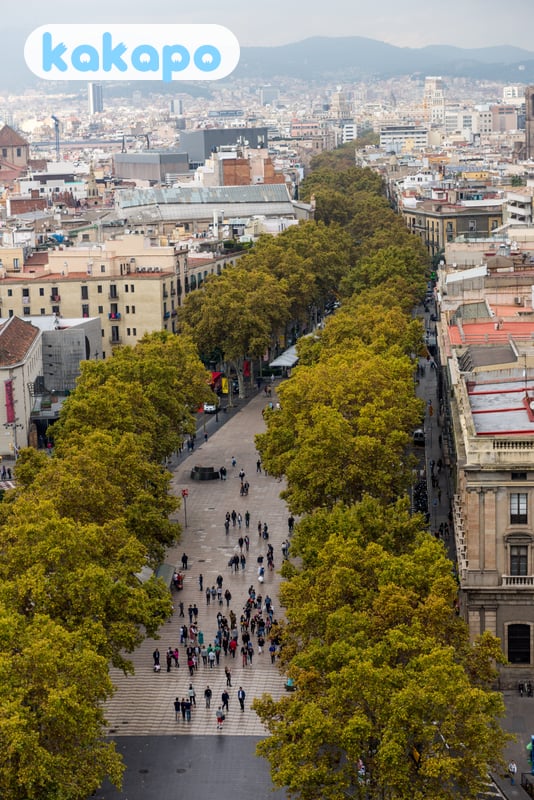
- Upper La Rambla / Rambla de Canaletes (Plaça de Catalunya to Carrer de la Portaferrissa) — busy, family-friendly, central. Fountains, café terraces. Heavily policed. Comfortable any hour.
- Middle La Rambla / Rambla de Sant Josep (the Boqueria stretch) (Portaferrissa to Liceu) — La Boqueria market entrance, the Liceu opera house, the Joan Miró pavement mosaic. Pickpocket-dense by day; less density at night but the scam-marketers (rosemary-women, bracelet-hustlers, three-cup-shells) work this stretch.
- Lower La Rambla / Rambla dels Caputxins and Rambla de Santa Mònica (Liceu to Drassanes / Columbus) — gets rougher late. Lower-tier souvenir shops, more sex-shops and bars, fewer tourists, more sex workers from ~22:00, occasional fights at the bar-cluster near Drassanes metro.
- The Drassanes-port end — fine during the day for the Maremàgnum / Port Vell complex; the surface streets immediately north of the port (between Drassanes Metro and the Columbus monument) feel different at 02:00.
- The east-side cross streets into Gothic Quarter (Carrer Ferran, Carrer Boqueria) vs west-side cross streets into El Raval (Hospital, Sant Pau, l'Hospital): east is family-friendly and tourist-dense; west into Raval thins out and has the El Raval safety profile (covered in a separate guide).
Hour by hour on La Rambla
- 20:00-22:00: peak evening crowd. Restaurant terraces full, family strollers, tourists with cameras, street performers. Pickpocketing density highest because the crowd is densest; the upper and middle stretches are comfortably busy.
- 22:00-00:00: thins gradually but stays busy. Bar-and-club crowds head toward Port Olímpic (taxi) or down toward Drassanes for the late bars. Café terraces remain occupied. Police presence visible.
- 00:00-02:00: noticeably thinner. Upper La Rambla still has café terrace stragglers; middle La Rambla is half its 22:00 density; lower La Rambla starts to show the rougher edge — sex workers, occasional verbal disputes, drunk groups.
- 02:00-04:00: the catch hours. Upper stays okay; middle is largely empty except for night-shift Boqueria delivery vans; lower is the messier stretch with occasional incidents. Walking it is fine but the feel is rough.
- 04:00-06:00: dead. Cleaning crews working; the boulevard is largely empty until first café opening around 07:00.
Pickpocketing — the constant
- The scale: Ajuntament data lists La Rambla among Barcelona's top three pickpocketing locations every quarter, alongside Plaça Catalunya and the Sagrada Família surrounds.
- The classic patterns: (1) "rosemary woman" approaches with a sprig, presses it into your hand and grabs you for a "blessing" while a partner works your pockets; (2) bracelet-hustler ties a string on your wrist; (3) the three-cup shell game with a "winning" tourist who is part of the team; (4) the spilled-drink distraction; (5) the asked-for-photo with handover of camera while bag is open; (6) crowd-bump in front of street performers.
- Hot spots on La Rambla: the Boqueria market entrance, the Liceu metro entrance, the Joan Miró mosaic at Liceu, the Plaça Reial side-street junction.
- The fix: bag in front, hand on top, phone in front pocket, refuse all close-contact approaches with a firm "no gracias" and keep walking. Don't stop for performers with valuables exposed.
Scam patterns specific to La Rambla
- The bracelet: man on the street ties a thread bracelet on your wrist before you can object; demands €20-30. Same dynamic as Paris Sacré-Cœur. Keep hands in pockets; walk past firmly.
- The rosemary (clavellinera): Romani woman offers a sprig of rosemary "for good luck", grabs your hand. While she "blesses" you, a partner picks your pocket. Refuse firmly; do not let her take your hand.
- Ronaldinho/Messi shirt vendors running on the boulevard — fake shirts, fine to buy if you want one as a novelty (€10-15) but be aware Guàrdia Urbana periodically clears the area and vendors will run, so don't let them block your route.
- "Italian/American tourist needs directions" — you're approached, asked to point at a map; while you read it, second person picks pocket. Move on.
- Beggars-with-children outside Boqueria — children approach with cards or signs, hands underneath the card.
- Restaurant overcharging: a real problem on Lower La Rambla. The €18 menú-del-día advertised becomes €45 once "service", "bread" and "cover" are added. Read the full menu before sitting, especially at the unbranded terraces.
Metro options and the late-night walk
- Plaça Catalunya (L1, L3, FGC, Rodalies) — the upper-end entry. Major interchange, well-lit, well-policed, runs latest of any local station.
- Liceu (L3) — middle La Rambla, opposite the Boqueria. Busy, well-trafficked at night.
- Drassanes (L3) — lower end, opposite the Columbus monument. Quieter; the surface area around the station has the lower-Rambla rougher feel.
- Last metro: ~midnight Sun-Thu, ~02:00 Fri, 24-hour Sat night (Saturday into Sunday). Sunday into Monday closes ~midnight again.
- NitBus night-bus network covers La Rambla after metro closes — the N4 runs along it directly.
- Taxis: licensed black-and-yellow Taxi Barcelona cabs are abundant on La Rambla and at the Plaça Catalunya rank; flag from the street or use the FreeNow app. Uber and Bolt operate but with restricted licensing in Catalonia.
Practical La Rambla rules
- Daytime to ~midnight: walk freely. La Rambla is one of the most-policed pedestrian streets in Europe; violent-crime risk is near-zero.
- Bag in front, phone in front pocket: this single move solves 80% of the pickpocket risk.
- Don't sit at unbranded restaurant terraces on Lower La Rambla — check the menu carefully.
- 02:00-05:00: walking the lower end is feasible but the feel is rough. Most travellers take a cab from Drassanes back to their hotel rather than walking up La Rambla to Plaça Catalunya.
- Stay on the central pedestrian boulevard, not the side service roads where traffic and scam vendors mix.
- Emergency: 112 (any), 091 (Policía Nacional), 092 (Guàrdia Urbana), 088 (Mossos d'Esquadra). Pickpocket reports: ABITS office on La Rambla 43 has English-speaking support.

Frequently asked questions
Is La Rambla safe at night in 2026?
Yes in the violent-crime sense — it's one of the most heavily policed pedestrian streets in Europe and incidents of violent street crime are rare. The catch is pickpocketing (Barcelona's highest-density location for it) and the rougher feel of the lower (Drassanes) end after midnight. Upper La Rambla and the Boqueria stretch are comfortable any hour; the lower end gets messier late.
What time does La Rambla get dangerous?
It doesn't get dangerous in the violent-crime sense at any hour, but the feel changes. 20:00-22:00 is peak pickpocket density (because crowds are densest). 02:00-04:00 the lower end (Liceu to Drassanes) has the rougher edge — sex workers, occasional verbal disputes, drunk groups. 04:00-06:00 the boulevard is nearly empty.
What scams should I watch out for on La Rambla?
Five main ones: (1) the rosemary-sprig 'blessing' grab (Romani women, hands tied while pocket is picked); (2) the friendship-bracelet (string tied on wrist, €20-30 demanded); (3) the shell-game three-cup; (4) the spilled-drink distraction; (5) restaurant overcharging on lower La Rambla terraces. Bag in front, phone in front pocket, firm 'no gracias' to all approaches.
Is La Boqueria market safe?
Yes — La Boqueria is among the safest individual attractions on La Rambla, internally well-policed, busy until evening close (~20:00). The catch is the entrance from La Rambla, which is the densest pickpocket spot on the boulevard. Bag in front going in and coming out.
Is the lower (port) end of La Rambla safe?
Daytime fine; the area near the Columbus monument and Drassanes metro is a tourist corridor. Late night (post-midnight) the feel is rougher — fewer tourists, more sex workers, some bar-cluster fights. Walking it is feasible but most travellers cab back to their hotel from Drassanes rather than walking up La Rambla in the early hours.
Should I avoid La Rambla?
No — it's one of Barcelona's defining experiences and the policing keeps the violent-crime risk near-zero. Skip the unbranded restaurant terraces (overcharging is a real problem), refuse all scam approaches firmly, keep your bag in front, and you'll have a fine night out. Lower La Rambla after 02:00 is the one section most people take a cab through rather than walking.
Is Plaça Reial safe at night?
Yes — the arcaded square one block east of La Rambla (entrance through Carrer dels Escudellers) is among Barcelona's most pleasant late-night dining spots. Jamboree (basement jazz/club) brings a Saturday-night crowd; the square is well-policed. The cross-street to La Rambla is short and busy with tourists.
Sources
Run a business in La Rambla, Barcelona?
Show visitors your La Rambla, Barcelona business is a safe choice. The free Verified by Kakapo badge puts La Rambla, Barcelona's live safety score on your website, links back to your verified page, and updates itself. No cost.
Get the free badge →