


Is La Candelaria, Bogotá Safe at Night? 2026
Bogotá's historic centre and backpacker district — the 'no dar papaya' rule applied block by block, the safer streets after dark, and what 'don't walk after 10pm' actually means in practice.

La Candelaria is Bogotá's historic centre, its university-and-museum district, and its main backpacker hostel cluster — all compressed into about ten blocks east of the Plaza Bolívar. It's also the part of Bogotá where Colombia's central rule of "no dar papaya" (literally "don't give papaya"; figuratively, "don't create an opportunity") matters most, because the muggings here are real, concentrated, and follow a predictable pattern.
The honest 2026 picture: La Candelaria during the day is fine — busy with students from Universidad de los Andes and Universidad Externado, museum-goers heading to the Botero Museum and the Gold Museum (Museo del Oro), tour groups doing the Plaza Bolívar circuit. The risk after dark is real and concentrated on three patterns: phone-snatch by passing pedestrians on quiet streets after about 8pm; "false-taxi" express-kidnapping (paseo millonario) on hailed kerb-taxis; and the occasional armed mugging on dark side-streets above Carrera 4.
What this means in practice: La Candelaria at night isn't off-limits but it isn't a casual-walk neighbourhood either. Locals, expats and experienced backpackers use Uber/Cabify for any walk longer than 5-10 minutes after dark, stick to specific busier streets when walking short distances, and don't display phones or jewellery in public. The page below covers the geography, the specific patterns, and the practical 2026 protocol.
| Night safety | 42/100 |
|---|---|
| Scam / petty-crime risk | High |
| Violent crime (tourists) | Medium |
| Most common scams | phone-snatch by passing pedestrians; false-taxi express-kidnapping (paseo millonario); armed mugging on dark side-streets |
| Safer neighbourhoods | Plaza Bolívar, Calle 12, Calle 11 |
| Data sources cited | 4 |
| Last verified |
Block-by-block — the safer streets and the riskier ones
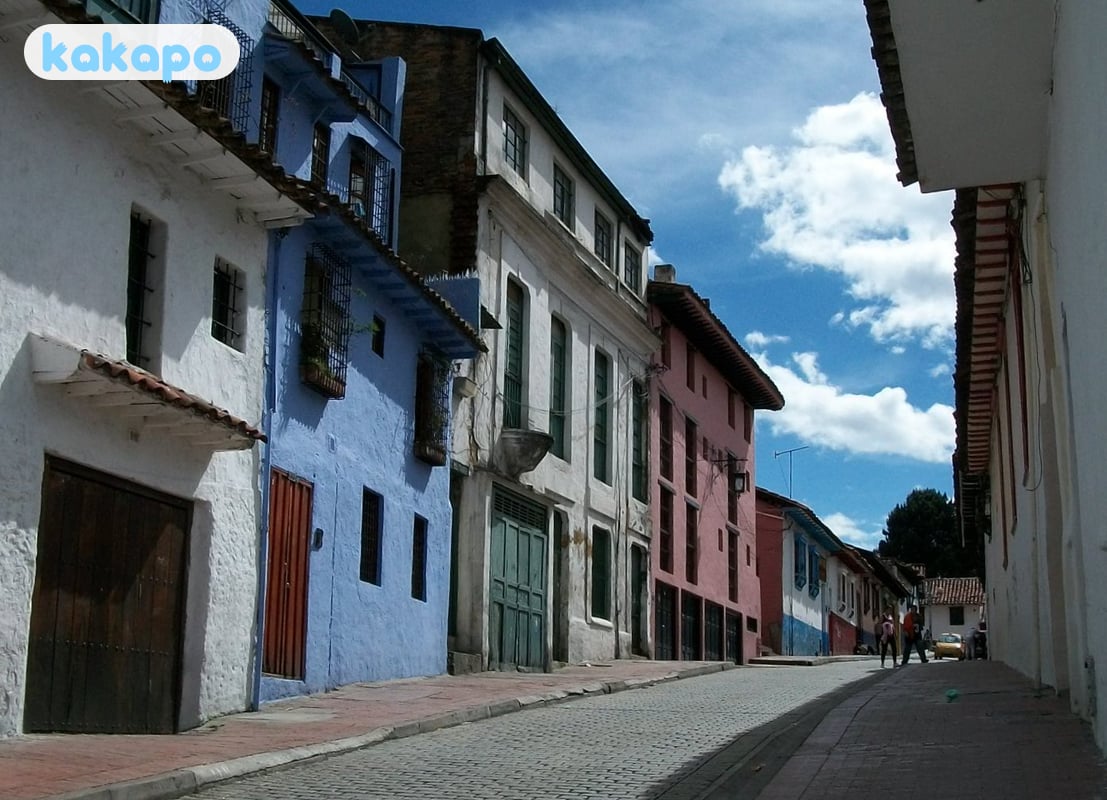
- Carrera 2 / Carrera 3 (the streets directly below Monserrate, east of the centre) — this is the area that empties out fast at night and where the muggings concentrate. Beautiful by day; not a casual walk after dark.
- Carrera 4 / Carrera 5 — the hostel-row spine. Several major hostels (Masaya, Cranky Croc, Fatima Hostel) cluster here. The streets stay busier into the evening but emptiness sets in after 10pm.
- Calle 12 / Calle 11 — the main east-west streets connecting Carrera 2 to the Plaza Bolívar. Lit, busier; safer than the perpendicular smaller streets.
- Plaza Bolívar and the streets immediately around it — well-lit, with the National Capitol, the Cathedral, and the Liévano Palace facing the plaza. Police presence visible. Safe to walk through into early evening; emptier after 9pm.
- Plaza del Chorro de Quevedo — the small plaza at the top of Carrera 2 / Calle 13. Daytime bohemian gathering point; evenings have a small bar scene; midnight onwards empties.
- South of Plaza Bolívar (around the Palace of Justice) — government district, calmer at night but emptier; not a walk-home zone.
- Border with Las Aguas and La Macarena — north end of La Candelaria. Las Aguas (along Carrera 3) has more bar life; La Macarena (further north, up the hill) is the gentrified restaurant district.
No dar papaya — the rule in practice
- The phrase: "no dar papaya" means literally "don't give papaya" — don't make yourself an easy target. It's the central Colombian street-safety idiom and it's specific guidance, not vague advice.
- What it means walking around La Candelaria: no phone in hand; no smartwatch visible; no DSLR around the neck; no expensive jewellery; no wallet in the back pocket; no expensive headphones (the snatchable kind); no map open on the phone while walking.
- Practical 2026 protocol: cheap day-phone (a 200,000 COP / US$50 Android) for use on the street, expensive phone in a hotel safe; cash limited to what you'll spend; one card not two; passport copy not original.
- What "papaya" looks like to a phone-snatcher: you, standing at the corner of Carrera 3 and Calle 11 at 8pm, looking at Google Maps. That's the pattern.
- If you must use your phone: step into a doorway, lit shop or restaurant. Don't use it on the open pavement.
Phone-snatch and street muggings — what to expect
- Phone-snatch by passing pedestrian — the dominant pattern. A young man on foot grabs the phone from your hand and runs. Concentrated on the quieter cross-streets and on the streets approaching Monserrate at sunset.
- Phone-snatch by bicycle / motorbike — less common in La Candelaria specifically than in Bogotá's wider central districts, but happens.
- Armed mugging — comparatively rare on the central hostel-row blocks; more common on the streets above Carrera 4 and after about 9-10pm. The pattern is two assailants with a small knife or rarely a gun; they demand phone, wallet, watch.
- Response: don't resist. Hand over. The phone is replaceable; physical resistance escalates risk meaningfully.
- "Scopolamine on a flyer" myth vs. reality — incapacitation by scopolamine in Bogotá happens but the actual delivery vector is almost always a spiked drink at a bar or a contact-poisoning over hours, not a flyer handed on the street. Don't be paranoid about strangers handing you brochures; do be careful about accepting drinks from new acquaintances.
- Express kidnapping (paseo millonario) — see the false-taxi section below.
Uber, Cabify, and the false-taxi risk
- Uber, DiDi, Cabify — all operate in Bogotá. Legally grey (the regulatory framework has been contested for years) but functionally normal and the standard tourist choice. Drivers usually ask you to sit in front to look less like a ride-hail passenger.
- Typical 2026 fares: La Candelaria to Chapinero 10,000-18,000 COP (US$2.40-4.30); to Zona Rosa 18,000-28,000 COP; to El Dorado Airport 35,000-55,000 COP.
- False-taxi / paseo millonario — the express-kidnapping scam where a hailed kerb-taxi turns out to be a fake; the victim is driven between ATMs while accomplices empty bank accounts. Documented in Bogotá and Medellín for decades. The fix: never hail a kerb-taxi. Use Uber/Cabify only.
- Yellow Bogotá taxis — legal and on the meter, but the false-taxi pattern means a tourist hailing one off the street has no way to know which is real. Locals routinely use only app-booked taxis or Uber/Cabify. Use the Tappsi or Easy Taxi apps if you want a legitimate taxi via app.
- From El Dorado Airport — official taxi booths inside arrivals (yellow cabs with fixed fare to central Bogotá ~30,000-40,000 COP) are safe; or order Uber/Cabify from the designated rideshare pickup.
Hostel row and the practical late-evening picture
- Carrera 4 and 5 between Calle 11 and Calle 14 — the central hostel cluster. Masaya Bogotá, Cranky Croc, Fatima Hostel, Casa Bellavista. All have 24-hour reception, secure entry, and lockers.
- Walking back from a bar at 11pm to your hostel — for the central hostel-row, walking the well-lit segments of Calle 12 / Calle 11 between Carrera 4 and Carrera 7 is normal practice and broadly safe with the no-dar-papaya protocol applied. Past midnight, Uber.
- Local hostel staff advice is the best 2026 source — they update by the week which streets are quieter than usual, which bars have had incidents recently, which evening events are worth going to.
- Group walking — backpacker culture in La Candelaria leans toward going out in groups assembled at the hostel. The standard 2-3am route back is Uber, not walk.
- Solo women hostel residents regularly do La Candelaria evenings — the dominant protocol is small-group movement after dark, Uber for distances over 5-10 minutes, and the standard hostel-coordinated activities (free walking tours, group dinners at Salto del Ángel, etc.).
If you're mugged or snatched
- Don't resist. Hand over phone, wallet, watch. The threat-level escalates fast with resistance.
- File a police report (denuncia) at the CAI (Centro de Atención Inmediata) on Carrera 8 with Calle 8, or via the centralised denuncia.policia.gov.co online system. The report is needed for insurance claims and card chargebacks.
- Cancel cards immediately — call your bank 24/7 line. International Visa/Mastercard support lines are accessible from any phone.
- Replace phone — Falabella, Éxito, Olimpica and Jumbo all sell cheap Android phones (200,000-400,000 COP). SIM cards from Claro, Tigo, Movistar at any phone shop with a passport.
- Embassies: UK Embassy +57 1 326 8300; US Embassy +57 1 275 2000; Canadian Embassy +57 1 657 9800; Australian Embassy +57 1 657 7800 (handled from the regional embassy). All operate 24/7 emergency lines.
- Insurance: travel insurance claims for Colombia mugging require the police report number. Document the items lost.
Frequently asked questions
Is La Candelaria safe at night in 2026?
Mixed. Daytime La Candelaria is fine — busy with students, museums and tour groups. After about 8pm the cross-streets empty out and the muggings get concentrated; after about 10pm Carrera 2 and Carrera 3 (the streets nearest Monserrate) are not a casual-walk zone. The hostel-row blocks on Carrera 4 and 5 stay busier; walking the lit segments of Calle 11 / Calle 12 with no-dar-papaya protocol applied is normal practice into late evening. Past midnight, Uber. The dominant risks are phone-snatch by pedestrians and (less commonly) armed muggings; not stranger violence.
What does 'no dar papaya' actually mean?
Literally 'don't give papaya'; figuratively 'don't create an opportunity'. It's the central Colombian street-safety idiom and it's specific. In practice walking around La Candelaria: no phone in hand, no smartwatch visible, no DSLR around the neck, no expensive jewellery, no wallet in the back pocket, no expensive headphones, no map open on the phone while walking. Cheap day-phone in pocket; expensive phone in hotel safe. Cash limited to what you'll spend.
Is it safe to walk back to my hostel at night in La Candelaria?
For short walks (5-10 minutes) on the lit central streets (Calle 11, Calle 12 between Carrera 4 and Carrera 7), broadly yes with the standard protocol. For anything longer or past midnight, Uber/Cabify is the local-standard answer — 6,000-15,000 COP for most central rides is trivial vs. the risk reduction. Hostel staff update by the week which segments are quieter than usual; ask at reception before walking out.
What is the false-taxi (paseo millonario) scam?
An express-kidnapping pattern where a hailed kerb-taxi turns out to be fake; the victim is driven between ATMs while accomplices empty bank accounts. Documented in Bogotá and Medellín for decades. The fix is simple: never hail a kerb-taxi in Bogotá. Use Uber, Cabify or DiDi instead — drivers usually ask you to sit in the front to look less like a ride-hail passenger. From El Dorado airport, use the official inside-terminal taxi booths or the designated rideshare pickup, not the unmarked tout-cars outside.
What should I do if I'm mugged in La Candelaria?
Don't resist — hand over phone, wallet, watch. Resistance escalates the threat level fast. After: file a denuncia (police report) at the CAI on Carrera 8 with Calle 8 or online at denuncia.policia.gov.co (the report is needed for insurance and chargebacks); cancel cards via your bank's 24/7 line; replace the phone (Falabella, Éxito, Olimpica sell cheap Androids for 200,000-400,000 COP). Embassies operate 24/7 emergency lines: UK +57 1 326 8300; US +57 1 275 2000; Canadian +57 1 657 9800.
Is the scopolamine 'flyer' scam real in Bogotá?
The scopolamine risk in Bogotá is real but the delivery vector is almost always a spiked drink at a bar or a contact-poisoning over hours of conversation — not a flyer handed on the street. The street-flyer version is mostly urban myth. Don't be paranoid about strangers handing you brochures; do be careful about accepting drinks, cigarettes or food from new acquaintances, especially at bars or in hostel common rooms where someone has been working a conversation for an unusually long time.
Is La Candelaria safe for solo female travellers?
It's not the friendliest neighbourhood in Bogotá for solo women at night, but it's also not off-limits. Daytime is fine; evenings require the standard hostel-coordinated protocol (group movement after dark, Uber for any walk longer than 5-10 minutes, no phone in hand). Catcalling on La Candelaria's streets is moderate by Latin America standards. Solo female backpackers stay at Masaya, Fatima Hostel and Cranky Croc routinely; the hostel staff are the best 2026 source for current street conditions.
Sources
Run a business in La Candelaria, Bogotá?
Show visitors your La Candelaria, Bogotá business is a safe choice. The free Verified by Kakapo badge puts La Candelaria, Bogotá's live safety score on your website, links back to your verified page, and updates itself. No cost.
Get the free badge →