


Is the Downtown Eastside Vancouver Safe?
East Hastings between Carrall and Main — the open drug-use scene, what tourists actually see, and whether the violence affects visitors.

The Downtown Eastside (DTES) is one of the most-discussed urban-distress neighbourhoods in North America, the site of Canada's only legal safe-injection facilities, and the densest concentration of poverty, drug use, mental-health crisis and Indigenous-community displacement in the country. The single most useful fact for tourists: violence in the DTES is overwhelmingly directed within the community itself — DTES-on-DTES — and tourists, while not target-victims, are exposed to one of the most-distressing urban environments in any rich country.
The DTES extends roughly from Carrall Street east to Main, between Cordova and East Pender, with East Hastings as the central spine. The neighbourhood is bordered by tourist Gastown to the west, Chinatown to the south, and Strathcona residential to the east. The 2026 reality continues the long trend: visible open drug use, sidewalk encampments, the highest overdose-death rate in BC (the toxic-drug crisis declared a public health emergency in 2016 continues), and persistent municipal-political conversation about treatment access vs harm reduction.
This guide does not recommend wandering through the DTES as a tourist activity. It covers what a tourist will actually encounter when adjacent (passing through to Chinatown, crossing the eastern Gastown edge), and the rules that keep an unintended exposure brief.
| Night safety | 72/100 |
|---|---|
| Scam / petty-crime risk | High |
| Violent crime (tourists) | High |
| Most common scams | aggressive panhandling in the Downtown Eastside; open drug use on sidewalks in the Downtown Eastside; sidewalk encampments in the Downtown Eastside |
| Safer neighbourhoods | Chinatown, Gastown, Strathcona |
| Data sources cited | 5 |
| Last verified |
The geography — what's where
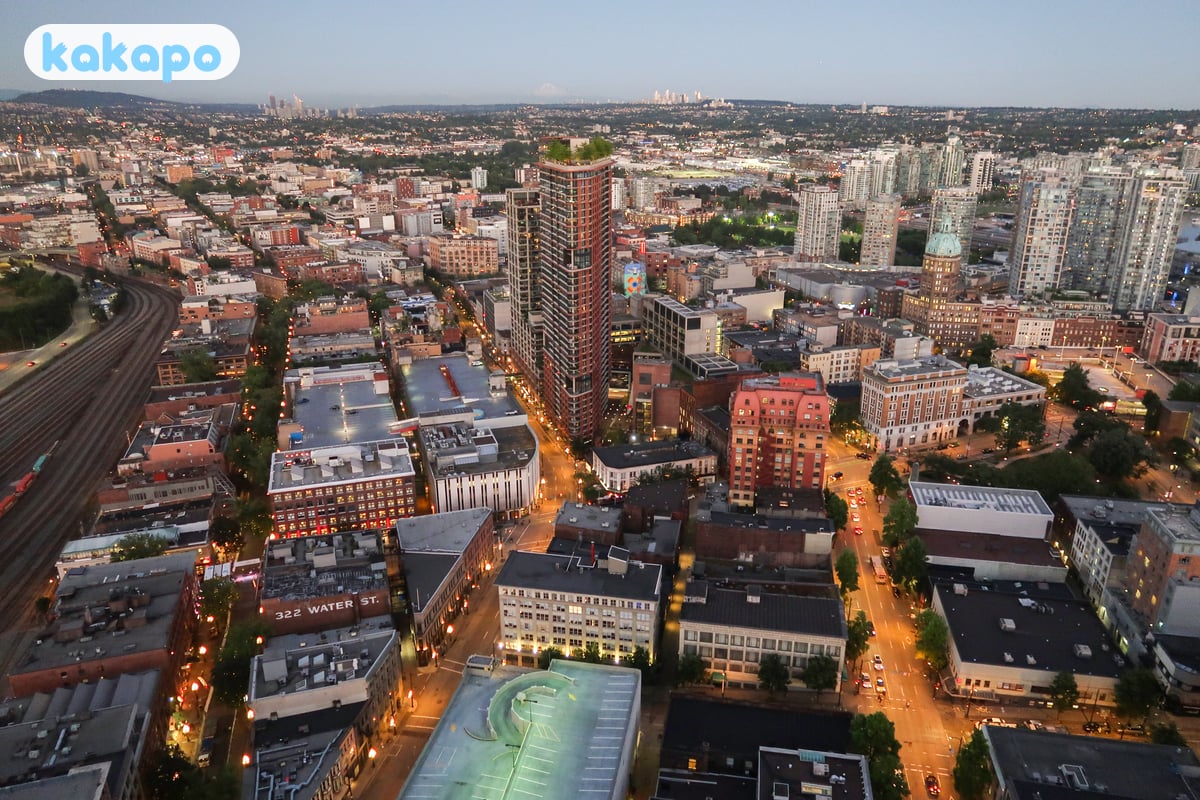
- East Hastings (Carrall to Main): the spine. Open drug use, sidewalk encampments, mental-health crises visible. The most-photographed urban-distress strip in Canada.
- Insite (139 East Hastings): North America's first sanctioned supervised consumption site, operating since 2003.
- Carnegie Community Centre (Main + East Hastings): the social anchor for the neighbourhood; library, meal programs, services.
- Oppenheimer Park (Powell + Dunlevy): longtime DTES gathering space and historic encampment site.
- The western boundary (Carrall): sharp transition to tourist Gastown.
- The southern boundary (East Pender): transition to Chinatown.
What tourists actually see and experience
- Open drug use: most-distressing element for first-time visitors. Drug use on sidewalks, doorways. The pattern is fentanyl-era opioid use; visible injection and smoking.
- Sidewalk encampments and tent communities: rotating, sometimes cleared by city; frequently reform.
- Mental-health-crisis encounters: visible across the strip. Mostly individual; rarely directed at passers-by.
- Aggressive panhandling: persistent; verbal more than physical.
- What you will not typically see directed at you: assaults, robberies. The interpersonal violence in the DTES is overwhelmingly between people who know each other.
Violence, data, and the tourist-incident question
- VPD crime data: the DTES has the highest violent-crime rates in Vancouver. The same data also shows that 90%+ of victims are residents of the neighbourhood; tourist-incident rates are very low in absolute terms.
- Random-attack risk: occasional incidents involving non-residents have occurred and made news; they are statistically rare but real. The 2022-23 stranger-attack cluster prompted increased VPD patrols.
- Property crime: significant. Car break-ins, bike theft, package theft prevalent.
- What raises risk: walking through at 03:00, intoxicated, alone, in flashy gear. None of which a tourist needs to do.
If you're passing through — Chinatown, Strathcona, the Skytrain
- To Chinatown: from Gastown to Chinatown the most-tourist-friendly route is south on Carrall to East Pender, avoiding East Hastings entirely. Chinatown itself is south of East Pender; safe.
- To Strathcona: further east; a mixed residential neighbourhood now gentrifying. Cab through; do not walk through the DTES at night.
- To the Stadium-Chinatown SkyTrain station: from Gastown, the route south through Carrall or Cambie is fine and avoids East Hastings.
- If you find yourself on East Hastings: keep walking at normal pace, eyes ahead, no eye contact with anyone in crisis, no engagement with panhandlers. Walk to Carrall (west) or Main (east) and out.
Why the DTES exists — context for visitors
- Historical: Vancouver's original downtown; declined through deindustrialisation; SRO (single-room-occupancy) hotels became the de facto last-resort housing.
- Toxic-drug crisis: BC declared a public-health emergency in 2016; cumulative deaths exceed 14,000 by 2025. Fentanyl-contaminated supply is the driver.
- Harm-reduction approach: Insite, supervised consumption, prescribed safer-supply pilots — Canada's most-developed harm-reduction infrastructure.
- Indigenous overrepresentation: ~30% of DTES residents are Indigenous, a continuing colonial-displacement legacy.
- 2026 political conversation: continued contention between harm-reduction advocates and treatment-mandate proponents; provincial policy under continual revision.
Practical — what to do if something happens
- Emergency: 911.
- VPD non-emergency: 604-717-3321.
- Mental-health crisis (yours or someone you encounter): 1-800-784-2433.
- Overdose response: if you witness an overdose, call 911 — the Good Samaritan Drug Overdose Act protects callers from minor charges.
- Hospital: St Paul's Hospital (1081 Burrard) is the nearest world-class emergency.
Frequently asked questions
Is the Downtown Eastside Vancouver safe for tourists?
Statistically, tourist-incident rates in the DTES are very low — violence in the neighbourhood is overwhelmingly directed within the community itself. But the visible open drug use, sidewalk encampments and mental-health crises make it the most-distressing urban environment most visitors will ever encounter. There is no tourist reason to walk through. Avoid East Hastings between Carrall and Main.
Is there violence against tourists in the DTES?
Rare but not zero — a 2022-23 stranger-attack cluster prompted increased VPD patrols. Statistically 90%+ of violent-crime victims in the DTES are residents of the neighbourhood. Standard urban awareness — daytime only, not intoxicated, not alone — keeps the risk minimal.
What about supervised drug-use sites like Insite?
Insite (139 East Hastings) is North America's first sanctioned supervised consumption site, operating since 2003. The model is documented to reduce overdose deaths and HIV transmission. The neighbourhood's distressing visible drug use is the broader fentanyl-era toxic-drug crisis BC declared a public-health emergency in 2016 — Insite is the response, not the cause.
How do I get from Gastown to Chinatown without crossing the DTES?
Walk south on Carrall to East Pender, then east into Chinatown. This avoids East Hastings entirely. Carrall is the de facto boundary between tourist Gastown (west) and the DTES (east). Chinatown south of East Pender is safe in the standard urban-awareness sense.
What if I witness an overdose?
Call 911. Canada's Good Samaritan Drug Overdose Act protects callers from minor drug-possession charges. Stay with the person until paramedics arrive; if you have naloxone (now available without prescription in BC) administer it. Insite at 139 East Hastings is also a place to bring someone in crisis.
Why is there a poverty zone next to downtown Vancouver?
The DTES is Vancouver's original downtown, declined through 20th-century deindustrialisation, with SRO hotels becoming the de facto last-resort housing. The fentanyl-era toxic-drug crisis, deinstitutionalisation of mental-health care, Indigenous-community displacement (~30% of DTES residents are Indigenous), and high housing costs across the city compound. Political conversation about treatment vs harm reduction is continuous.
Is the DTES dangerous at night?
Yes for residents; less so for tourists who are not on the street there at night. Random stranger violence has occurred but is statistically rare. The bigger issue is the disorientation — at 02:00 East Hastings is one of the most-distressing urban scenes in North America. Tourists have no functional reason to be there at any hour, including daytime.
Sources
Run a business in Downtown Eastside, Vancouver?
Show visitors your Downtown Eastside, Vancouver business is a safe choice. The free Verified by Kakapo badge puts Downtown Eastside, Vancouver's live safety score on your website, links back to your verified page, and updates itself. No cost.
Get the free badge →