


Is Caye Caulker, Belize Safe? A 2026 Travel Safety Guide
The Split swim-spot currents, snorkel and dive operator quality, hurricane season, golf-cart roads, and the realistic risks of Belize's 'go slow' island.

Caye Caulker is one of the safer beach destinations in Belize. The island is small (~7 km long), tightly tourism-managed, and the local culture is laid-back.
The realistic risks for visitors are the rip currents at "the Split" (the famous swim spot at the north end of the island — between two channels with strong tidal currents), snorkel and dive operator quality variation (Hol Chan Marine Reserve and the Blue Hole are world-class but boats vary), the Atlantic hurricane season (June-November), the standard golf-cart-on-sand-tracks road safety, and the boat from Belize City (rough seas in some weather).
Belize sits at Level 2 on the US State Department's advisory list, with most "exercise increased caution" language about specific Belize City zones — not Caye Caulker. UK FCDO is similar. The honest framing for first-time visitors: Caye Caulker is small, no cars (golf carts and bikes only), 3 main streets ("Front", "Middle", "Back"), and runs on the local "Go Slow" motto. Most visitors stay 3-7 nights, snorkel Hol Chan, dive the Blue Hole if budget allows, and unwind.
The thing first-timers misunderstand most about Caye Caulker is the geography. The island has two halves divided by the Split — the populated south island (where every guesthouse, restaurant, bar and dive shop sits, ~3 km long) and the wilder, mostly-uninhabited north island (mangrove, bird sanctuary, a handful of eco-lodges accessible by boat only). When people talk about "Caye Caulker" they almost always mean the south island. Front Street runs along the Caribbean side with the bars and water-taxi pier, Back Street runs along the lagoon side with the budget guesthouses and the locals' grocery shops, and Middle Street is exactly what it sounds like. You can walk Front to Back in about 90 seconds.
In 2026, the specific things that have changed since the 2017 era of cheaper, sleepier Caye Caulker include: post-pandemic prices have risen sharply (Hol Chan snorkel tours are now $50-80 USD where they were $35-50 in 2018; the Lazy Lizard bar at the Split is full tourist-strip pricing); Tropic Air and Maya Island Air both fly direct from Belize City municipal airport (TZA) for $79-95 one way, 10 minutes, which now seriously competes with the $15 water taxi; reef-safe sunscreen is enforced at Hol Chan and the Blue Hole, with fines for non-compliant brands at the boat-boarding check; and Hurricane Lisa (November 2022) reminded everyone that the island is genuinely vulnerable — most buildings are wooden + tin-roof — so confirm hurricane cancellation cover on travel insurance for any June-November visit.
| Night safety | 90/100 |
|---|---|
| Scam / petty-crime risk | Medium |
| Violent crime (tourists) | Low |
| Most common scams | variable boat safety on cheap walk-up tours; rough seas on the boat from Belize City |
| Safer neighbourhoods | Front Street, Back Street, the Split |
| Data sources cited | 4 |
| Last verified |
What the score means — 80/100
- Air quality (90) — clean Caribbean.
- Personal safety (84) — high. Tourist-area crime rare.
- Transport (78) — golf carts + bikes + walking.
- Healthcare (64) — basic clinic on the island; serious cases evacuate to Belize City or Mexico/USA.
The Split — the iconic swim spot and the currents
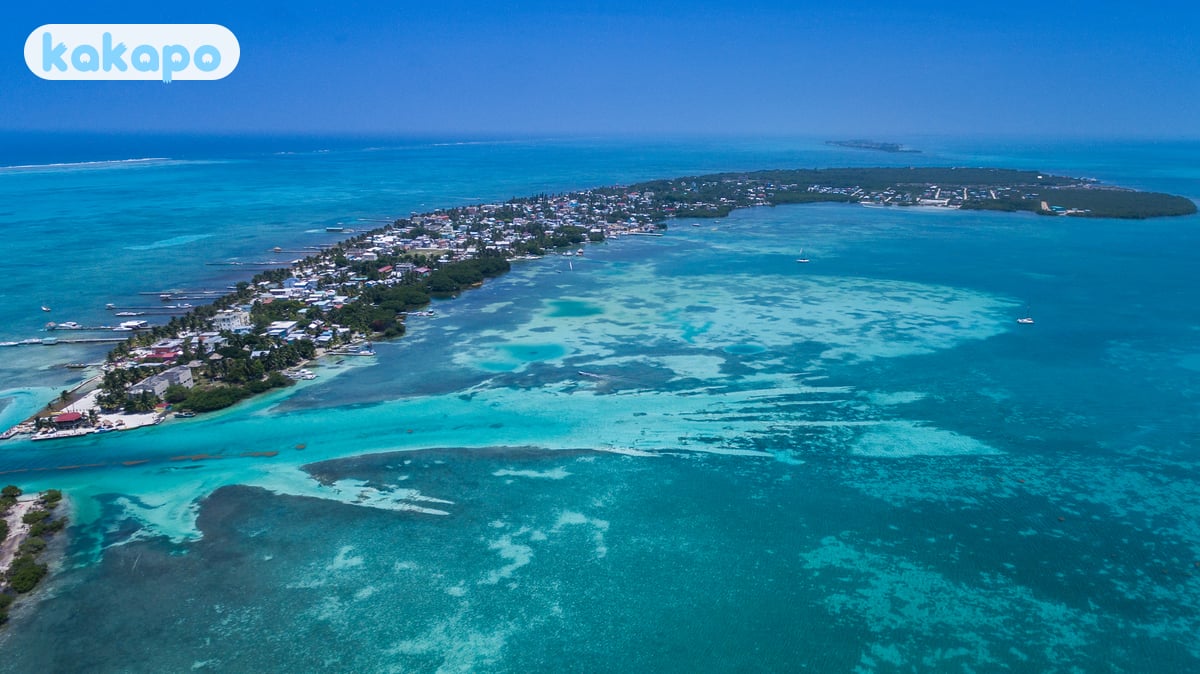
- The Split: a narrow channel at the north end of Caye Caulker, dredged after Hurricane Hattie (1961) actually split the island in two.
- The Lazy Lizard bar: the iconic palapa on the south side of the Split.
- Currents: real and tide-dependent. Most visitors swim near the seawall in the calm cove; the open channel itself has strong tidal currents.
- Don't swim across to the north side of the Split unless you're a confident open-water swimmer, and not at all if currents are visible.
- Boats in the channel: water-taxis and tours pass through. Don't swim in the boat lane.
- Children: in the cove only, with adult supervision.
- Stinging jellyfish + sea urchins: occasional. Reef shoes for snorkelling near the rocks.
Hol Chan, Shark Ray Alley, the Blue Hole
- Hol Chan Marine Reserve: 30-min boat ride south. Half-day snorkel tour ~$50-80 USD. Reef + nurse sharks at Shark Ray Alley.
- Reputable operators: Frenchie's Diving, Belize Diving Services, Caveman Snorkeling Tours.
- Cheap walk-up tours: variable boat safety, fewer briefings.
- The Blue Hole: 90-min boat ride to the open Atlantic; advanced dive only (40+ m). $200-300 USD day trip. Reputable: Belize Pro Dive Center, Splash Dive Center.
- Snorkel-not-dive Blue Hole option: surface views only; somewhat anticlimactic.
- Reef-safe sunscreen: required at marine reserves.
- Don't touch the wildlife: nurse sharks are docile but bites do happen if grabbed.
Hurricane season
- Atlantic hurricane season: June 1 - November 30.
- Belize hurricane history: significant. Hurricane Lisa (2022) damaged Belize City. Caye Caulker has weathered storms but is genuinely vulnerable (mostly wooden + tin-roof buildings).
- If a hurricane is approaching: heed evacuation orders. Most visitors evacuate to Belize City + inland.
- Travel insurance: confirm hurricane cancellation cover.
- Best season: December-April (dry).
- May-October: rainy but tropical-heat. Cheaper hotel rates.
Golf carts and the island roads
- No cars on the island: only golf carts, bikes, walking.
- Golf cart rental: ~$25-40/hour, $100-150/day. Can be a fun way to explore.
- Sand tracks: most "roads" are packed sand. Wet rainy days = mud.
- No helmets in carts: drive slow; "go slow" is genuinely the speed limit.
- Cyclists + golf carts + pedestrians + dogs: share the same roads. Slow caution.
The boat from Belize City
- Water taxi: from Belize City Marine Terminal to Caye Caulker. 45 min, ~$15 USD each way.
- Operators: Ocean Ferry, San Pedro Belize Express. Both reliable.
- Schedules: hourly. Last boat ~5pm.
- Sea conditions: usually calm. Rougher in winter "norther" winds (December-March) and hurricane season.
- Seasickness: rare on this short crossing.
- Belize City: don't linger if connecting same-day. The marine terminal is fine; outer downtown Belize City has security concerns. Connect direct to your boat.
Money, food, the cost story
- Currency: Belize dollar (BZD). $1 USD = $2 BZD (pegged).
- USD widely accepted: at 2-to-1.
- Cards: at hotels and bigger restaurants; cash needed for tours, beach bars.
- Tipping: 10-15% restaurants; $2-5 USD per dive crew member; $1-2 USD per drink.
- Tap water: not safe. Bottled.
- Cost: more expensive than mainland Belize. Mid-range dinner $20-40/person.
The island, street by street
- Front Street — the Caribbean-side strip running the length of the south island. Every dive shop, the water-taxi pier, the better restaurants (Pasta per Caso, Habaneros, Roy's Grill BBQ), and the busier guesthouses. Sand track, not paved. Where 80% of visitors spend 80% of their time.
- Back Street — the lagoon-side parallel, 100m west. Budget guesthouses, local grocery shops (Chan's, Atlantic), the school, the football pitch, the cheaper street-food stands (Fran's Grill, Errolyn's House of Fry Jacks). Less of a postcard and more of a real-village feel.
- The Split — the dredged channel at the north end of the south island, opened by Hurricane Hattie in 1961. The Lazy Lizard palapa is the iconic bar on the south side, with the cove swim spot. Strong tidal currents in the open channel itself — swim in the cove, not across to the north side.
- The Sec-Sec area + Hol Chan dive sites — Hol Chan Marine Reserve (30 min south by boat), Shark Ray Alley (nurse sharks + stingrays at the same site), Coral Gardens, and the "Sec-Sec" inner-reef dive sites accessible from Caye Caulker. Frenchie's Diving, Belize Diving Services and Caveman Snorkeling Tours are the reputable operators; cheap walk-up tours have variable boat safety.
- The Blue Hole day-trip — 90-min boat ride to the open Atlantic, advanced dive only (40+m). $200-300 USD with Belize Pro Dive Center or Splash Dive Center. Most Blue Hole trips depart from San Pedro / Ambergris Caye (CXM/SPR airport code) — from Caye Caulker you'll often transfer to a San Pedro boat or fly via Tropic Air. The snorkel-only Blue Hole option exists but is anticlimactic.
- The water taxi from Belize City — Ocean Ferry Belize and San Pedro Belize Express both run hourly from Belize City Marine Terminal ($15 USD one way, 45 min, last boat ~17:00). The Marine Terminal area is fine; the rest of downtown Belize City has documented security concerns — book your taxi-to-terminal direct, don't walk.
- Tropic Air / Maya Island Air — both fly Belize City municipal (TZA) to Caye Caulker (CUK) in 10 min for $79-95 USD. Worth the upgrade if you're connecting from an international flight at PGIA and the last water taxi has gone.
- North island — wild mangrove and bird sanctuary, accessible only by private boat. A handful of eco-lodges. Most visitors don't go.
If it's your first time visiting
- Pick the water taxi over the flight for the experience, the flight for the convenience. Ocean Ferry Belize / San Pedro Belize Express run Belize City Marine Terminal → Caye Caulker in 45 min, $15 USD each way, hourly until ~17:00. Tropic Air or Maya Island Air fly TZA → CUK in 10 min for $79-95 USD. If your international arrival into PGIA is after 16:00, fly — the last water taxi will be gone.
- Reef-safe sunscreen is now enforced at Hol Chan and the Blue Hole. Bring a mineral zinc-based sunscreen (Sun Bum Mineral, Stream2Sea, Thinksport) — chemical sunscreens (oxybenzone, octinoxate) are checked at the boat-boarding and fined. Reef-safe stuff costs $15-20 USD on the island vs $8-12 at home; buy before flying.
- Book Hol Chan with a known operator, not a Front Street walk-up. Caveman Snorkeling Tours, Carlos Tours, French Angel Tours (Frenchie's), Anwar Tours — half-day Hol Chan + Shark Ray Alley + Coral Gardens runs $50-80 USD. Walk-up beach-vendor tours have had documented boat-safety issues and few briefings.
- The Split currents are real — swim in the cove, not the channel. The Lazy Lizard cove on the south side is the safe swim spot. Water taxis and tour boats pass through the open channel itself; don't swim across to the north side unless you're a confident open-water swimmer.
- Cash + cards mix. Belize dollar (BZD) is pegged 2-to-1 to USD; USD is widely accepted at the same rate. Cards work at hotels and bigger restaurants (3% fee common); dive operators, beach bars and tours are cash only. Bring $300-500 USD in small bills. The ATM at Atlantic Bank on Front Street has runs out — don't rely on it on a weekend.
- Tap water is not safe — bottled is universal. Crystal and Belize Brewing bottled at BZD 3-5/litre. Most guesthouses provide refill jugs. Ice at the established Front Street restaurants is machine-made and safe.
- "Go Slow" is the actual speed limit on the sand tracks. Cyclists, golf carts ($25-40/hour rental), pedestrians and dogs share the same paths. No helmets on golf carts. The "roads" turn to mud in rainy-season afternoon storms.
- Don't try to do the Blue Hole from Caye Caulker as a casual snorkel day. The Blue Hole is a 90-min open-Atlantic boat ride each way and is a serious advanced dive ($200-300 USD). Day-trips depart from San Pedro / Ambergris Caye more often than from Caye Caulker. Most first-timers skip the Blue Hole and spend the saved money on a second Hol Chan day.
- Confirm hurricane cancellation cover for June-November visits. Atlantic season runs June 1 - November 30; Caye Caulker is genuinely vulnerable (Hurricane Lisa 2022 caused real damage). Best season is December-April (dry, peak prices). May-October is cheaper, rainier, hurricane-risk.
Practical info — emergency numbers
- Police: 911.
- Coast Guard: 911.
- Caye Caulker Health Centre: small clinic on the island.
- Karl Heusner Memorial Hospital (Belize City): +501 223 1548.
Bring: reef-safe sunscreen, water shoes for snorkelling, a hat, mosquito repellent, a Belize SIM (Digi, Smart) at airport, a contactless card or USD cash, and travel insurance with watersports + hurricane cover.
Frequently asked questions
Is Caye Caulker safe to visit in 2026?
Yes — Caye Caulker scores 80/100 here. US State Department rates Belize at Level 2 with most 'exercise increased caution' language about specific Belize City zones — not Caye Caulker. UK FCDO is similar. The island is small (~7 km long), tightly tourism-managed, no cars (golf carts and bikes only), and the local 'Go Slow' motto is genuine. The realistic risks are environmental: rip currents at the Split (the dredged channel at the north end), Atlantic hurricane season June-November, snorkel and dive operator quality variance for Hol Chan and the Blue Hole, and the basic clinic on the island for anything serious (Karl Heusner Memorial in Belize City +501 223 1548 is 45 min by water taxi). Police and Coast Guard 911.
Is Caye Caulker safe at night?
Yes. The Front Street strip has the bars (the Lazy Lizard palapa at the Split, I&I Reggae Bar) and gets busy without ever feeling unsafe — Caye Caulker is genuinely calm. Petty theft from unlocked golf carts and beach piles is the most-reported issue; lock things up. Drink-spiking has not been a documented island pattern the way it is in Belize City but standard precautions apply at the louder bars. The sand-track 'roads' have no lighting in most stretches between Front, Middle and Back streets — a headtorch or phone light is genuinely useful walking back to a guesthouse after dinner. Cyclists, golf carts, pedestrians and dogs share the same tracks; 'Go Slow' is the actual speed limit.
How dangerous are the currents at the Split?
Real and tide-dependent. The Split is a narrow channel at the north end of Caye Caulker that opened after Hurricane Hattie literally split the island in 1961. The Lazy Lizard bar sits on the south side. Most visitors swim near the seawall in the calm cove on the south side; the open channel itself has strong tidal currents and water-taxis and tours pass through. Don't swim across to the north side of the Split unless you're a confident open-water swimmer, and not at all if currents are visible on the surface. Don't swim in the boat lane. Children should be in the cove only with adult supervision. Reef shoes help with the rocks and the occasional sea urchin.
Can you drink tap water on Caye Caulker?
No. Tap water on Caye Caulker is not safe — bottled (Crystal, Belize Brewing) is universal at BZD 3-5 per litre. Most guesthouses and dive operators provide refill jugs; bring a refillable bottle. The island runs on rainwater catchment and trucked-in supply, which is fine for showering and washing but not drinking. Ice at the Lazy Lizard and the established Front Street restaurants is machine-made and safe; at small beach bars it's variable. The Belize dollar is pegged 2-to-1 to USD which is widely accepted at the same rate.
Is the boat from Belize City to Caye Caulker safe?
Yes — the 45-minute water taxi from Belize City Marine Terminal is reliable. Ocean Ferry Belize and San Pedro Belize Express are the two operators, both well-run, hourly departures and ~$15 USD each way. Last boat is ~17:00. Sea conditions are usually calm; rougher in 'norther' winds December-March and during hurricane season. Seasickness is rare on this short crossing. The honest caveat is Belize City itself: don't linger if you're connecting same-day. The Marine Terminal is fine but outer downtown Belize City has documented security concerns — book your taxi-to-terminal or terminal-to-airport (PGIA) direct, don't walk.
Sources
Run a business in Caye Caulker?
Show visitors your Caye Caulker business is a safe choice. The free Verified by Kakapo badge puts Caye Caulker's live safety score on your website, links back to your verified page, and updates itself. No cost.
Get the free badge →