


Is Bergen, Norway Safe? A 2026 Travel Safety Guide
Heavy rain (240+ days/year), the Bryggen wooden quayside, fjord cruises, the cost of everything, and the realistic risks of Norway's gateway to the fjords.

Bergen is one of the safest tourist cities in Europe. Crime against visitors is essentially nonexistent. The realistic risks for visitors are the genuinely heavy rain (Bergen averages 240+ days per year with rain — it's a defining feature of any visit), the slippery wooden quayside at Bryggen on wet days, fjord-cruise weather (winds and chop in the longer fjords), and the cost-shock that catches every first-time visitor.
Norway sits at Level 1 on the US State Department's advisory list. UK FCDO is the same. The honest framing for first-time visitors: Bergen is small (~290,000 in city, 420,000 metro), built around a sheltered harbour with mountains rising on every side. The UNESCO Bryggen wharf, the Fløibanen funicular, the Hanseatic Museum, and the daily Fish Market are the city anchors. Most visitors use Bergen as a base for fjord trips (Sognefjord, Hardangerfjord, Geirangerfjord).
Bergen was the largest city in Norway from the Middle Ages until the early 19th century, the western terminus of the Hanseatic League's North-Sea trade for 400 years (the German merchants ran the Bryggen wharf from the 14th to the 18th century — the wooden buildings you photograph today are direct descendants of that). It is the rain capital of Europe (240+ rainy days per year, ~2,250 mm annual rainfall — compare London at ~600 mm), the gateway to the Norwegian fjords via the Bergen-Oslo train (Bergensbanen, one of the world's most scenic rail journeys at 6.5 hours), and one of Northern Europe's busiest cruise ports with 350+ ship calls per season. Plan around the rain and the cruise calendar and Bergen rewards you; ignore both and you fight the city all week.
| Night safety | 90/100 |
|---|---|
| Scam / petty-crime risk | Low |
| Violent crime (tourists) | Low |
| Most common scams | cruise-day restaurants charging inflated prices; Fish Market tourist-pricing; long queues for Fløibanen funicular |
| Safer neighbourhoods | Bryggen, Fløyen, the wider fjord gateway |
| Data sources cited | 4 |
| Last verified |
What the score means — 91/100
- Personal safety (94) — exceptional. Crime against tourists is rare.
- Transport (92) — Bybanen tram + buses + ferries integrated.
- Healthcare (92) — Haukeland University Hospital is one of Norway's largest.
- Air quality (90) — clean coastal air; some winter inversions.
The rain — Bergen's defining feature
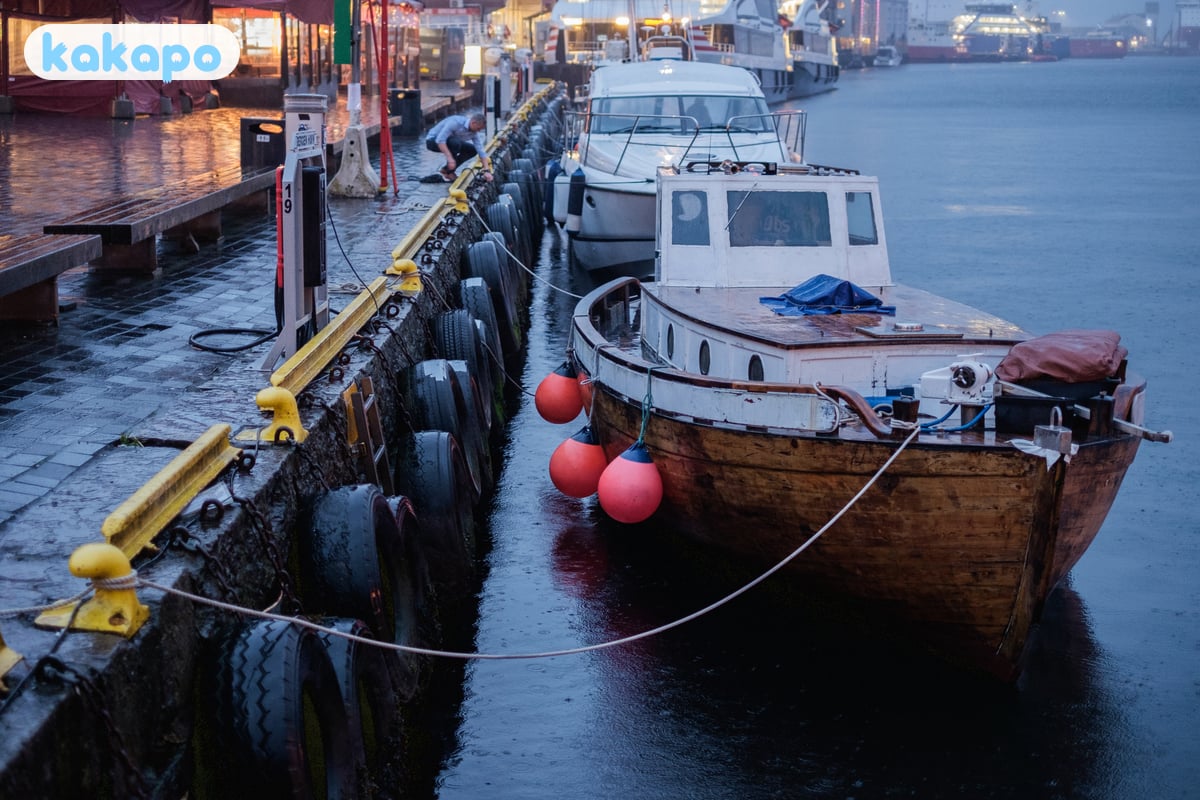
- Rainfall: 240+ rainy days per year. ~2,250 mm annual rainfall (compare London ~600 mm). Locals do not carry umbrellas — they use waterproof jackets.
- What to bring: a proper waterproof jacket (Gore-Tex or equivalent), waterproof shoes/boots, quick-dry trousers. Cheap "rain ponchos" don't last a Bergen morning.
- Wet Bryggen: the wooden Hanseatic quayside is photogenic, slippery, and uneven when wet. Sturdy soles essential.
- "Day of sun" planning: locals pack outdoor activities into rare clear days. Check yr.no (Norwegian Met) for the best window.
- Mid-summer: drier than autumn, never dry. Even July gets rain.
- If you genuinely can't tolerate rain: pick another Norwegian city. Oslo has half the rainfall.
Fløibanen funicular and Mt Fløyen

- Fløibanen: 1918 funicular, 320 m climb in 6 min. NOK 200 return.
- Mt Fløyen (399 m): viewpoint, café, hiking trails into the surrounding mountains.
- Hiking from the top: 5+ marked routes back down to the city, 1-3 hours. The classic loop is via Skomakerdiket lake.
- Weather in the mountains: changes fast. Layered clothing.
- Mt Ulriken (643 m): the higher peak, separate cable car. Connected to Fløyen via a 14-km demanding ridge hike ("Vidden") — for fit hikers only.
Fjord cruises and the Norway in a Nutshell route
- "Norway in a Nutshell": the standard packaged route. Bergen → train to Voss → bus to Gudvangen → ferry through Nærøyfjord (UNESCO) → Flåm → Flåm Railway to Myrdal → train back to Bergen. Full day. ~NOK 2,000-2,500.
- Self-booked vs packaged: same trains and ferries; package just bundles the tickets. Self-book on Vy.no for slightly cheaper.
- Sognefjord cruise: longer, multi-day options.
- Cruise weather: protected fjords are calm even in moderate weather. Outer crossings (Bergen-Stavanger, etc.) can be choppy. Take seasickness pills if prone.
- Cold water: 8-12°C in fjords. Don't fall in. Life jackets are at every dock and on every ferry.
- Self-driving fjords: rewarding but the roads have many tunnels and ferry crossings; budget extra time.
Transport, taxis, the airport
- Bybanen (light rail): Line 1 from city centre to Bergen Airport (Flesland). Reliable.
- Buses (Skyss): extensive city + regional. Tap a contactless card or bank card directly.
- Walking: the city centre is walkable end-to-end in 30 min.
- Taxis: regulated, expensive. Bolt operates.
- Bergen Airport (BGO): 18 km south. Bybanen Line 1 ~45 min, NOK 45. Taxi NOK 500-700.
- Bergen → Oslo: Bergensbanen train, 6.5 hours, world-class scenery — pre-book for 3-class options.
Money — the cost shock
- Currency: Norwegian krone (NOK). $1 ≈ NOK 11.
- Cards: universal — Norway is one of the most cashless societies in the world. Even small kiosks tap-only.
- Cost: a coffee NOK 50-65; mid-range dinner NOK 350-550; budget hotel NOK 1,200-2,000.
- Alcohol: state-monopoly liquor stores (Vinmonopolet) for spirits/wine; supermarkets for beer up to 4.7%.
- Beer at a bar: NOK 110-150 ($10-14).
- Tipping: 5-10% if service was good; not expected.
- Tap water: excellent.
Cruise-ship day playbook — when 5,000 people land on Bryggen
Bergen is one of Northern Europe's busiest cruise ports — 350+ ship calls per season, with peak summer days seeing 3-5 ships discharging 8,000-12,000 passengers into a small Old Town. The city has held off Dubrovnik-style caps but the surge dynamics are similar.
- Cruise schedule: published openly at cruise.portofbergen.no. Plan around it — midweek + late August are calmest.
- Worst hours: 09:00-15:00 on a 3-ship day. Bryggen + Fish Market are wall-to-wall.
- Best timing: dawn for Bryggen photos (the wooden Hanseatic wharf empty at 07:00 hits very differently); after 17:00 for the Fløibanen funicular (cruise passengers re-board by 16:30).
- Fløibanen queue management: pre-book online (NOK 200 return) to skip the 60-90 min midday queue.
- Fish Market tourist-pricing: the outdoor stalls at Torget charge NOK 350-450 for a fish-and-chips. The indoor Mathallen (covered fish hall) next door has similar quality for NOK 180-250.
- Cruise-day restaurants: book Bryggeloftet, Pingvinen, or Bare Vestland 24h ahead in summer.
- Best non-cruise season: late September-April. Rainier + colder but dramatically calmer.
Day trips — Flåm, Hardangerfjord, Stavanger, Mostraumen

- Flåm + Nærøyfjord (Norway in a Nutshell): the headline. Train Bergen-Voss-Myrdal + Flåm Railway descent + Nærøyfjord ferry to Gudvangen + bus back. Pre-book Vy.no.
- Mostraumen fjord cruise: 3h round-trip from Bergen city centre, NOK 750. The shortest fjord experience that's still genuinely scenic. Rødne Fjord Cruise operates daily.
- Hardangerfjord + Trolltunga: 2h drive east to Odda. Trolltunga rock formation hike is 22-28 km round-trip + 10-12 hours — serious. June-September only; guided tours required outside summer.
- Stavanger + Preikestolen (Pulpit Rock): 5h south by Fjord Line ferry overnight or 1h flight. 8 km / 4-hour hike to the 604m vertical cliff. May-September; chains/snow gear May + September.
- Voss: 1.5h east by train. Adventure-sports base (rafting, paragliding). Skiing in winter.
- Geirangerfjord: 6-8h north — better as overnight, not a Bergen day-trip. UNESCO; the most-postcard fjord.
- Bryggen + KODE Art Museums + Hanseatic Museum: within Bergen itself, on a rainy day. KODE 4 has the Munch collection.
- Self-driving warning: Norwegian tunnels + ferry crossings double the time vs Google Maps' optimistic estimates. Budget +30%. Bergen-Oslo by car is 7-8h, not the 6h Maps shows.
Areas — Bryggen, Fløyen, the wider fjord gateway

- Bryggen (UNESCO) — the wooden Hanseatic wharf, the iconic colour-stacked gable row along the eastern harbour. Working artisan shops, narrow alleys (smug-strete-style passages) running between buildings. The single most-photographed angle in Bergen and the cruise-day epicentre. Wet wooden boards are slippery — sturdy soles essential. The Hanseatic Museum at the southern end is closed for renovation until 2026-2027; the Bryggens Museum next door is open.
- Fløyen via Fløibanen funicular — the 1918 funicular climbs 320 m to Mt Fløyen (399 m) in 6 minutes. NOK 200 return. View café, walking trails into the surrounding mountains, the classic Skomakerdiket lake loop hike (1-3 hours back down). Pre-book online to skip the 60-90 min midday cruise-day queue.
- Fish Market (Torget) — the daily outdoor fish + souvenir market at the head of the harbour. Tourist-priced — outdoor stalls run NOK 350-450 for fish-and-chips; the indoor Mathallen (covered fish hall) next door has similar quality for NOK 180-250. Open ~09:00-23:00 summer; reduced winter hours.
- Old Hanseatic district + Skoltegrunnskaien cruise quay — the historic Hanseatic Office's grounds run from Bryggen north to Bergenhus Fortress. The Skoltegrunnskaien cruise pier handles most of the 350+ annual ship calls — when 3-5 ships discharge 8,000-12,000 passengers it's all within a 1 km radius.
- KODE Art Museums + Grieghallen — four art museums (KODE 1-4) clustered along Rasmus Meyers allé immediately south of Lille Lungegårdsvannet pond. KODE 4 holds the Munch collection (the largest outside Oslo); KODE 3 is the J.C. Dahl + Romanticism. NOK 175 single-museum entry, NOK 250 all four. Genuinely world-class.
- Mt Ulriken (643 m) — the higher peak with separate cable car (NOK 280 round trip) on the south side of the city. Connected to Fløyen via the 14-km demanding "Vidden" ridge hike — for fit hikers only.
- Bergen-Oslo train (Bergensbanen) — 6.5 hours through the Hardangervidda mountain plateau, one of the world's most scenic rail journeys. Vy.no for tickets (NOK 600-1,200 advance, NOK 1,800+ same-day). The "Norway in a Nutshell" route uses the same line as far as Myrdal then descends to Flåm.
- Fjord-cruise gateway — Bergen is the launch point for Nærøyfjord (UNESCO), Sognefjord (the longest), Hardangerfjord, and the multi-day Hurtigruten coastal voyage that runs from Bergen to Kirkenes. The 3-hour Mostraumen fjord cruise (NOK 750) from the city centre is the shortest genuine fjord experience.
- The rain reality — 240+ rainy days/year, ~2,250 mm annual rainfall. Locals do not carry umbrellas; they wear waterproof jackets (Helly Hansen and Bergans were founded here for a reason). A proper Gore-Tex shell + waterproof boots are non-optional. Even July gets rain. Check yr.no (Norwegian Met) obsessively for the rare clear-window planning.
- Bergen Airport (BGO) — Flesland, 18 km south. Bybanen Line 1 light rail runs every 10 min, NOK 45, 45 min to city centre. Taxi NOK 500-700; Bolt operates.
If it's your first time visiting
- Best arrival airport: Bergen Flesland (BGO), 18 km south. Bybanen Line 1 light rail to city centre 45 min NOK 45 (every 10 min, tap a contactless card directly on the reader); taxi NOK 500-700; Bolt NOK 350-500. Direct flights from most European capitals on SAS, Norwegian, KLM, Lufthansa. From Oslo: Bergensbanen train 6.5h NOK 600-1,200 advance — the journey is the attraction.
- Best neighbourhood for your first night: near Bryggen + the harbour (Radisson Blu Royal Bryggen, Clarion Hotel Admiral, Bergen Børs) for the iconic walks; near Bergen station (Scandic Ørnen, Magic Hotel Solheimsviken) for Bergensbanen access; near Sentralbadet + the KODE museums for slightly cheaper modern options.
- Day 1, jet-lag friendly: Bryggen dawn walk at 07:00 (the wooden Hanseatic wharf empty hits very differently); 09:30 Fløibanen funicular up to Mt Fløyen (pre-booked NOK 200 return, 1-3 hour Skomakerdiket lake loop hike back down); lunch at Bryggeloftet or the Mathallen indoor fish hall (NOK 180-280); afternoon KODE 4 Munch collection (NOK 175); 18:00 dinner at Pingvinen or Bare Vestland (book 24h ahead); fika at the Apollon record-shop café.
- Real prices in 2026: Bybanen single NOK 45 (tap a contactless card directly), day NOK 110; Fløibanen funicular NOK 200 return; Mt Ulriken cable car NOK 280 return; KODE single museum NOK 175, all four NOK 250; Hanseatic Museum closed for renovation 2026-2027; Bryggens Museum NOK 175; coffee NOK 50-65; mid-range dinner NOK 350-550; beer at a bar NOK 110-150; budget hotel NOK 1,200-2,000, mid NOK 2,000-3,500; Bergensbanen Bergen-Oslo NOK 600-1,200 advance; Norway-in-a-Nutshell package NOK 2,000-2,500; Mostraumen fjord cruise NOK 750.
- Currency + the cashless reality: Norwegian krone (NOK). $1 ≈ NOK 11. Cards are universal — Norway is ~98% cashless and even the Mt Fløyen mountain café is tap-only. You may not need cash at all on a 5-day trip. Always pay in NOK on card terminals — decline DCC (3-7% surcharge).
- Tipping: not expected; round up or leave 5-10% only if service was exceptional. Norwegian wages are good enough that tipping isn't part of the social contract.
- Common rookie mistakes: bringing an umbrella instead of a proper Gore-Tex shell + waterproof boots (the entire visit fights the weather); planning Bryggen photos for 12:00 on a 4-ship cruise day (8,000-12,000 day-trippers, wall-to-wall — go at 07:00 instead); booking the Norway-in-a-Nutshell package when self-booking on Vy.no costs the same with the same trains and ferries (just bundles the tickets); attempting Bergen-Oslo by car (7-8h not the 6h Google Maps shows because Norwegian tunnels + ferry crossings double your time); not booking a Bryggeloftet / Pingvinen / Bare Vestland dinner 24h ahead in summer; eating outdoor Fish Market fish-and-chips at NOK 450 when Mathallen indoor has the same for NOK 220; underestimating the cost-shock (a beer + small dinner can run NOK 600+); skipping yr.no rain-forecast planning for the rare clear day.
- Bring: a proper waterproof shell + boots, layered clothing year-round, an unlocked phone (Telenor, Telia, Ice prepaid SIMs or eSIM via Airalo / Holafly), a contactless card, and acceptance that you may not need cash at all.
- Bergen-Oslo train (Bergensbanen) — book Vy.no 3+ weeks ahead for the cheap fares. The Komfort class upgrade (~NOK 100) gets reserved seating, power outlets and free coffee. Window seat: book the right-hand side of the train heading toward Oslo for the best views of the Hardangervidda plateau.
Practical info — emergency numbers
- Police: 112.
- Ambulance: 113.
- Fire: 110.
- Sea rescue: 120.
- Haukeland Hospital: +47 55 97 50 00.
Bring: a serious waterproof jacket and footwear, layered clothing year-round, an unlocked phone (Telenor, Telia, Ice prepaid SIMs or eSIM), and a contactless card. Norway is ~98% cashless; you may not need cash at all.
Frequently asked questions
Is Bergen safe to visit in 2026?
Yes — among Europe's safest tourist cities. Crime against visitors is essentially nonexistent. Real risks are the genuinely heavy rain (240+ rainy days/year), slippery wooden Bryggen quayside on wet days, fjord-cruise weather, and cost-shock that catches every first-time visitor. Norway at US Level 1.
Does it really rain that much?
Yes — Bergen averages 240+ rainy days/year + ~2,250mm annual rainfall (compare London ~600mm). Locals don't use umbrellas; they use waterproof jackets. Bring a proper Gore-Tex jacket + waterproof boots. Even July gets rain.
How crowded does Bergen get on cruise days?
Severely — 350+ ship calls/season; peak summer days see 3-5 ships discharging 8,000-12,000 passengers into a small Old Town. Plan around cruise.portofbergen.no calendar; midweek + late August are calmest. Best timing: dawn for Bryggen photos; after 17:00 for Fløibanen funicular when cruise passengers re-board.
Is Bergen safe at night?
Yes — extremely. Crime against tourists is rare. Standard urban awareness around Centraal Station + the BLA nightlife area.
Is Bergen safe for solo female travellers?
Yes — Norway consistently ranks top-5 globally for solo-female-safety indices. Standard urban precautions only.
Why is Bergen so expensive?
Norway is one of Europe's most-expensive countries. A coffee NOK 50-65 ($5-6); mid-range dinner NOK 350-550 ($35-55); budget hotel NOK 1,200-2,000 ($120-200). Tap water is free + excellent — drink it.
Sources
Run a business in Bergen?
Show visitors your Bergen business is a safe choice. The free Verified by Kakapo badge puts Bergen's live safety score on your website, links back to your verified page, and updates itself. No cost.
Get the free badge →