


Is Addis Ababa, Ethiopia Safe? A 2026 Travel Safety Guide
Altitude (2,355m), the Tigray/Amhara conflict aftermath, Mercato pickpockets, the road from Bole airport, and the realistic risks of Africa's diplomatic capital.

Addis Ababa is moderately safe for tourists in central neighbourhoods (Bole, Kazanchis, Sarbet). The realistic risks for visitors are the high altitude (2,355 m — many visitors feel real effects), the country-wide context of the Tigray war (2020-2022) and ongoing Amhara conflict (2023-onwards) which shape advisory levels, the Mercato pickpocket density, the Bole airport road logistics, and the country's broader political instability.
Ethiopia sits at Level 3 on the US State Department's advisory list ("reconsider travel due to crime, civil unrest, communications disruptions, kidnapping, and the potential for armed conflict") with specific Level 4 carve-outs for Tigray, Amhara, Afar, Oromia border zones, Somali region, Benishangul-Gumuz. UK FCDO is similar with extensive regional carve-outs.
The honest framing for first-time visitors: Addis Ababa is large (~5.5 million metro), the diplomatic capital of Africa (African Union headquarters). Most visitors are business / NGO / diplomatic. Tourist visitors transit on the way to the historic north (Lalibela, Gondar, Axum) — but those areas have been variably accessible 2020-2025 due to conflict. Check current advisories carefully.
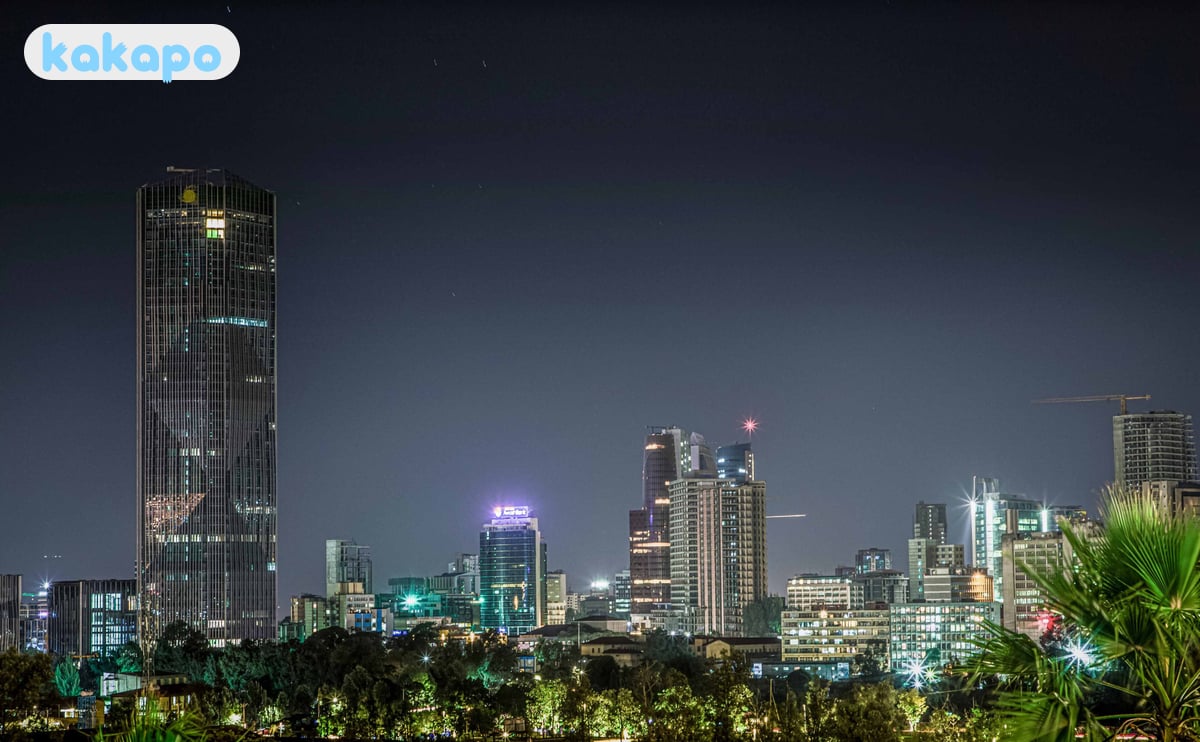
What the city looks like on the ground: Addis is a sprawl of diplomatic compounds, embassies, NGO HQs and the AU itself, threaded by two Light Rail lines (the first metro in sub-Saharan Africa, opened 2015) and a vast informal economy of minibus taxis. There is no walkable centre in the European sense — Bole (modern airport district), Kazanchis (UN/AU diplomatic), Sarbet (residential), Piazza (historic Italian quarter) and Mercato (Africa's largest market) are each their own city, and you'll Bolt between them. Most visitors stay in Bole within 10 minutes of the airport.
In 2026, what's changed: Ethiopia's currency reform of August 2024 freed the birr to float, and ETB has fallen from around 57 to the dollar to ~130 in 2026 — most prices visitors care about (hotels, tours, restaurants) now quote in USD anyway, and the parallel-market premium that defined the previous decade has collapsed. The Addis-Djibouti electric railway operates passenger service three days a week. Internet shutdowns continued through 2024-2025 around political tensions in Amhara and Oromia — visitors should expect intermittent connectivity and download offline Google Maps before flying in. The Sheraton, Hyatt Regency and Radisson Blu remain the diplomatic-grade hotels; the Skylight Hotel at Bole is the closest five-star to the airport for transit stays. Ethiopian Airlines transit visas are still issued on arrival for layovers of 8-72 hours at Bole.
| Night safety | 47/100 |
|---|---|
| Scam / petty-crime risk | High |
| Violent crime (tourists) | Medium |
| Most common scams | pickpockets at Mercato; Friendship hustles; free school visit fundraising hustle |
| Safer neighbourhoods | Bole, Kazanchis, Sarbet |
| Data sources cited | 4 |
| Last verified |
What the score means — 68/100
- Personal safety (64) — moderate. Tourist crime mostly opportunistic property; the country-wide context drags overall sense of security.
- Air quality (70) — moderate. Old vehicles + biomass cooking + altitude.
- Transport (60) — chaotic. Light Rail + buses + ride-hails.
- Healthcare (64) — Korean Hospital + St Gabriel are tourist-grade private; complex cases evacuate to Nairobi or Dubai.
Check advisories within 48h of travel
- Ethiopia's regional conflicts: Tigray war (2020-2022) ended formally; Amhara conflict (2023-onwards) ongoing; Oromia tension persistent.
- Addis itself: largely unaffected by the regional conflicts day-to-day.
- Don't travel: to Tigray, Amhara, Afar, parts of Oromia, Somali region. Check current advisory.
- Internet/communications shutdowns: Ethiopia has imposed nationwide and regional shutdowns periodically. Plan for the possibility.
- Travel insurance: confirm coverage in current advisory regime — many policies exclude Level 3+.
Altitude — the genuine risk
- Addis Ababa: 2,355 m (7,726 ft). Higher than Bogotá; lower than La Paz.
- Day 1-2 effects: faster fatigue, dehydration, occasional headache, sleep disruption.
- Mitigations: drink double water, no alcohol day 1, walk slowly, light meals.
- If symptoms severe: consider descending. Bole airport is at the same altitude, so Addis-stay altitude doesn't worsen.
- Travel to higher elevations (Simien Mountains, Ras Dashen 4,550 m) requires acclimatisation.
- Sun: stronger at altitude — sunscreen + hat.
Areas — Bole, Kazanchis, Piazza, Mercato
Recommended for visitors: Bole (modern district near airport, hotels, restaurants), Kazanchis (UN/AU diplomatic), Sarbet (residential), Piazza (historic Italian-quarter centre — daytime).
Stay aware: Mercato (largest open-air market in Africa — daytime fine with awareness; pickpockets dense), around Meskel Square at major political events, some peripheral kebeles.
Pickpockets, scams, the airport road
- Pickpockets at Mercato: significant; front pocket only.
- "Friendship" hustles: someone offers a coffee ceremony invite that ends in expensive bill or guided shopping.
- "Free school visit": occasionally legitimate but often a fundraising hustle.
- Bole airport road at night: reasonable; pre-booked transport recommended.
- Hire a registered driver/guide for outside-Addis travel. Galileo Travel Network and other Ethiopian-Tourism-Authority-registered firms are reputable.
- Photography: don't photograph government, police, or military buildings. Ask before photographing people.
Transport — Light Rail, taxis, the airport

- Addis Ababa Light Rail: 2 lines (north-south + east-west). Cheap (~ETB 2-6). Crowded.
- Bolt and Ride: ride-hail apps that work in Addis. Cheaper than negotiated taxis.
- Metered taxis: rare; agree price first.
- Bole International Airport (ADD): 6 km from centre. Pre-booked transfer ETB 600-1,000 ($10-18). Light Rail nearby. Bolt cheaper.
- Don't drive yourself: chaotic; arrange a driver.
Money, food, the cost story
- Currency: Ethiopian birr (ETB). $1 ≈ ETB 130 (rapidly devaluing).
- USD widely useful: for hotels, tours.
- Cards: tourist-hotel only; cash for everything else.
- ATMs: at major banks (CBE). Withdrawal limits often low for foreign cards.
- Tipping: 10-15% restaurants; round up taxis.
- Tap water: not safe; bottled.
- Local food: injera, tibs, doro wat, traditional coffee ceremony.
Neighbourhood-by-neighbourhood breakdown
- Bole — the modern airport district and where most visitors stay. Edna Mall, the Friendship City Center, the Skylight Hotel, the Hyatt Regency, the Radisson Blu, and the long stretch of cafés along Bole Road (Cafe Choche, Kaldi's). Walkable inside the immediate hotel cluster, Bolt for anything further. Safe day and night within the modern strip; the back-lanes get rougher.
- Kazanchis — the UN and AU diplomatic neighbourhood, with the AU's striking circular HQ (designed by China State Construction, opened 2012), the Hilton Addis Ababa, and most embassies. Quiet, heavily policed, manicured by Addis standards. Restaurants here cater to diplomats and trend USD-priced.
- Sarbet — residential, leafy, where senior expats live. The Sheraton Addis (still the city's grandest hotel, Sheikh Al-Amoudi's project from 1998) anchors the area. Lower density and feels suburban. Take Bolt anywhere — the streets aren't walked by tourists.
- Piazza — the historic Italian-quarter centre, north of Meskel Square. Italian-era buildings from the 1936-1941 occupation, Saint George Cathedral, the Itegue Taitu Hotel (Ethiopia's first, 1907). Charming by daylight but rundown — pickpockets work the bus stops, and the area empties at dusk. Worth a guided morning walk.
- Mercato — the largest open-air market in Africa, spread across 200,000 sqm of Addis Mercato sub-city. Spices, textiles, livestock, scrap metal, recycled tyres. Genuinely chaotic and the country's densest pickpocket zone — front pocket only, leave the camera in the hotel safe, go with a hired guide if it's your first visit. Daytime only; the market closes by 18:00 and the area gets rough after.
- Meskel Square — the vast public space south of Piazza, used for the Meskel ("Finding of the True Cross") celebration in late September with thousands gathered around the demera bonfire. Used for political rallies — avoid on rally days, when traffic shuts down for kilometres.
- Addis Ababa Light Rail — two lines (Green: north-south Menelik II Square to Kality; Blue: east-west Ayat to Tor Hailoch), opened 2015 (sub-Saharan Africa's first metro). Fare is ETB 2-6, crowded at peak. Useful for visitors going from Bole to Meskel Square or to Piazza but most just take Bolt.
- Bole International Airport (ADD) — Africa's busiest transit hub by passengers, the Ethiopian Airlines Star Alliance home base. Terminal 2 (international) is 6 km from central Bole, 10-15 minutes by Bolt for ETB 250-400. Don't accept the white-shirt "taxi" approaches at arrivals — use the Bolt app from inside the terminal, or pre-book through your hotel.
- Ethiopian birr currency context — ETB ≈ 130/USD in 2026 after the August 2024 float; the parallel-market premium that defined the 2010s has collapsed but inflation runs ~25% so quoted prices in birr move month to month. Tour operators, hotels and high-end restaurants quote in USD. Carry crisp USD bills (pre-2017 notes refused) for visa-on-arrival and tour deposits, ETB for taxis and restaurants. CBE, Awash and Dashen ATMs work with foreign cards (Visa/Mastercard) but withdrawal limits are ETB 5,000-10,000 per transaction.
- Level 3 advisory context — Ethiopia is at US Level 3 / UK FCDO "all but essential" for most of the country, with Level 4 carve-outs for Tigray, Amhara, Afar, Oromia border zones and the Somali region. Addis itself is calmer than the headline suggests; the advisory level matters for travel insurance (many policies exclude Level 3+ — get a specialist policy like World Nomads Explorer or IMG Patriot).
If it's your first time visiting
- Best arrival: Bole International (ADD) is 6 km from central Bole, 10-15 minutes by Bolt (ETB 250-400) or hotel pre-booked transfer (USD 15-25). Don't accept the freelance "taxi" approaches — use Bolt from inside the terminal or your hotel's car.
- Best neighbourhood for your first night: Bole inside the modern hotel cluster (Skylight, Radisson Blu, Hyatt Regency) for a soft landing, easy airport access, and walkable cafés. Kazanchis if you want the diplomatic Hilton/Sheraton feel. Avoid Piazza accommodation on a first visit — atmospheric by day but unsafe after dark.
- Day 1 jet-lag friendly: skip Mercato and the museums on arrival day. A hotel-hosted coffee ceremony (ETB 300-500 anywhere, USD 10-20 at the Sheraton) is the gentle introduction — drink three small cups, eat popcorn, watch the green beans roast. Holy Trinity Cathedral and the National Museum of Ethiopia (Lucy) are walkable from Kazanchis on day 2.
- Public transport: Addis has no real walking centre. Bolt and Ride are the working ride-hails — cheaper than negotiated taxis and tracked. Light Rail (ETB 2-6) is cheap but crowded. Minibus matatus require Amharic and are not where confused jet-lagged tourists want to be.
- Common rookie mistakes: photographing the AU HQ or any government/military building (genuinely arrestable); accepting "free" coffee-ceremony or shop invites from strangers in Piazza (the bill arrives at USD 50-100); changing money on the street (use CBE or your hotel — the August 2024 float collapsed the parallel-rate premium, so street rates aren't even better any more); pre-2017 USD notes (refused everywhere); underestimating altitude (2,355 m — drink double water, skip alcohol day 1).
- Currency: Ethiopian birr (ETB) ≈ 130/USD in 2026. Hotels and tours quote USD, restaurants and taxis quote ETB. Carry crisp post-2017 USD bills for visa-on-arrival and tour deposits, and ETB 5,000-10,000 in small notes for daily spend. Cards work only at tourist-grade hotels.
- Internet and SIM: Ethio Telecom and Safaricom Ethiopia sell tourist SIMs at Bole (ETB 500-1,000 with 10 GB). Both have suffered politically-ordered shutdowns since 2020 — download offline Google Maps and your hotel's address in Amharic before flying in. The Sheraton, Hyatt and Hilton have reliable WiFi when mobile is dark.
- Travel insurance: many standard policies exclude Level 3+ countries. Confirm coverage in writing before flying, or buy a specialist policy (World Nomads Explorer, IMG Patriot, Battleface) with explicit Ethiopia inclusion and medical evacuation to Nairobi or Dubai.
- Onward travel: Lalibela, Gondar, Axum and the Simien Mountains have been variably accessible 2020-2025 due to the Tigray and Amhara conflicts. Check FCDO/State Department within 48h of any internal flight, and use a registered operator (Galileo Travel Network, Imagine Ethiopia Travel, Abeba Tours) rather than freelancing.
Practical info — emergency numbers
- Police: 991.
- Ambulance: 907.
- Korean Hospital: +251 11 663 8344.
- St Gabriel General Hospital: +251 11 661 3225.
Bring: layered clothing (Addis is cool — 10-25°C), an Ethiopia SIM (Ethio Telecom or Safaricom Ethiopia) at Bole, USD cash, a contactless card backup, and travel insurance with explicit Level-3 coverage.
Frequently asked questions
Is Addis Ababa safe to visit in 2026?
Addis itself scores 64/100 here and is moderately safe in the central diplomatic neighbourhoods (Bole, Kazanchis, Sarbet). The country-wide context drags the headline: the US State Department lists Ethiopia at Level 3 (reconsider travel) with Level 4 carve-outs for Tigray, Amhara, Afar, Oromia border zones and the Somali region; UK FCDO mirrors this with regional carve-outs. Day-to-day risks for visitors who stay in Addis are pickpockets at Mercato (Africa's largest open-air market), altitude effects at 2,355m, and the country's periodic internet/communications shutdowns rather than violent street crime.
Is Addis Ababa safe at night?
Yes in the diplomatic core. Bole (near the airport, modern hotels and restaurants), Kazanchis (AU/UN district), and Sarbet are routinely fine after dark — these are well-lit, heavily-policed, walked by diplomats and NGO staff. Avoid Mercato and the peripheral kebeles after dark, and skip Meskel Square during political rallies. Bolt and Ride are the working ride-hails (cheaper than negotiated taxis and tracked in-app); metered street taxis are rare and you must agree the price first. Don't walk between neighbourhoods at night — Addis is a sprawl, not a strollable centre.
What scams should I watch for in Addis Ababa?
The signature pattern is the 'coffee ceremony friendship' hustle — a friendly local invites you to a traditional coffee ceremony or 'their cousin's shop' and the bill arrives at $40-100 for what should be ETB 100. The 'free school visit' approach is sometimes a real NGO and sometimes a structured donation hustle. Mercato pickpockets work the crush — phone in front pocket only. Never photograph government, police, or military buildings (this is genuinely enforced, not theoretical). For trips outside Addis hire an Ethiopian Tourism Authority-registered operator like Galileo Travel Network; don't freelance to Lalibela or Gondar without checking advisories.
Can you drink tap water in Addis Ababa?
No. Tap water in Addis is not safe for visitors — use bottled or filtered throughout. Bottled water is cheap (ETB 20-30 for 1L from any kiosk) and ubiquitous. Avoid ice in roadside juice stalls; in the major hotels (Sheraton, Hyatt, Radisson Blu) the ice is made from filtered water and is fine. Brushing teeth with tap is generally tolerated by most visitors but bottled is safer if you're sensitive. The altitude (2,355m) means you should be drinking roughly double your normal intake — buy a 5L jug for the room.
How bad is the altitude in Addis Ababa really?
Real but manageable. Addis sits at 2,355m (7,726ft) — higher than Bogotá, lower than Cusco or La Paz. Day 1-2 effects are common: faster fatigue, mild headache, sleep disruption, breathlessness on stairs. Mitigations: drink double water, skip alcohol the first night, walk slowly, eat light. Bole airport (ADD) is at the same altitude so there's no acclimatisation curve once you land — symptoms start immediately. If you're continuing to the Simien Mountains or Ras Dashen (4,550m), build in two acclimatisation days in Addis first. Severe symptoms (vomiting, confusion) warrant descent and a call to Korean Hospital (+251 11 663 8344).
Sources
Run a business in Addis Ababa?
Show visitors your Addis Ababa business is a safe choice. The free Verified by Kakapo badge puts Addis Ababa's live safety score on your website, links back to your verified page, and updates itself. No cost.
Get the free badge →