Where you can go out, stay out, and get home without incident
Kakapo Editorial28 May 20269 min readTravel safety
Most travel-safety advice about nightlife is: don't have any. Stay in your hotel after dark, don't talk to strangers in bars, never drink anything you didn't watch being poured. Which is fine advice if you're 65 and travelling for the museums. If you're not, the advice describes a different trip from the one you actually wanted.
The good news is that the cities where the nightlife is genuinely safe — where you can go out at 11pm, stay out until 3am, and walk back to the hotel without anything happening — are not the same cities most travel guides assume. The famous party destinations (Bangkok, Tijuana, Cancún) are not on this list. The cities where the locals themselves go out late, every weekend, without incident, are.
We weighted ten cities for the specific combination of "good night out" and "safe night out." None of them are the cheapest. All of them are the kind of place where you can spend an evening in the way you'd want to.
What we measured
Nightlife safety is its own metric, not just general safety extended by six hours. We focused on:
Late-night street safety — is the walk between bars uneventful?
Drink-spiking rates — under-reported globally, but local data is increasingly available.
Police presence and responsiveness in nightlife districts.
Cultural baseline around drinking — heavy-drinking cultures vary wildly in how much that translates into violence.
01
Tokyo
Safety score92/100
Japan
Personal
94
Transport
96
Healthcare
88
Night Safety
94
Tokyo's nightlife is the world's safest, full stop. Shinjuku's Golden Gai, Shibuya's late-night bars, Roppongi's clubs, the izakaya streets of Ebisu and Nakameguro — all of them safe in a way that resets your expectations of what a Friday night can feel like.
The one well-known exception: certain Roppongi club streets where touts try to draw foreigners into bar scams ("bottle keep," inflated bills). Avoid the touts; everywhere else is genuinely fine.
Last train is around 12:30am — plan your night around it or be ready to pay for a taxi that's not cheap but is safe.
Seoul is a 24-hour city in a way Tokyo isn't — many bars stay open until dawn, especially in Hongdae and Itaewon. The streets are busy and well-policed at 4am. Kakao Taxi handles getting home.
Drink-spiking is rare; violent crime in nightlife districts is among the lowest of any global capital. The aggressive touts of some Itaewon hill streets are the only real annoyance.
Reykjavik's runtur — the Friday/Saturday bar crawl down Laugavegur — is loud, rowdy, and almost violence-free. The locals drink heavily but the cultural baseline runs to good humour rather than aggression. Walking home at 4am is universally fine.
The price of a single drink is the only real shock. Pre-game at the hotel.
Madrid's nightlife runs until dawn six nights a week, and the streets are alive at 3am in a way no other European capital matches. Malasaña, Chueca, La Latina and Lavapiés all have the dense, walkable bar geography that nightlife actually needs.
Pickpocketing is a real annoyance in tourist-dense bars (Sol, Gran Vía). Otherwise the night-time street safety in Madrid is exceptional for a city of its size.
Dinner at 10pm, drinks at 1am, club at 3am. Fighting the schedule means missing the night.
Berlin's clubs go all weekend; the bars never close. Kreuzberg, Friedrichshain, and Neukölln are walkable nightlife clusters with reliable late transit (U-Bahn runs all night Fri/Sat) and a tolerant policing baseline.
Drink-spiking has been a documented issue at some larger clubs; the standard precautions apply. Otherwise the late-night street safety is genuinely high for a city of 3.7 million.
Amsterdam's nightlife centres — Leidseplein, Rembrandtplein, the Jordaan — are well-policed and busy until 4am. The cultural baseline around drugs (tolerant, regulated) keeps the worst behaviours rare. The city's compact size means most nights end with a walk or a cheap cab.
Bike accidents at night are the most underrated risk. Walk; don't bike home drunk.
Bairro Alto's stacked nightlife streets are dense, walkable and busy until 4am. Cais do Sodré and LX Factory are the alternative bases. Petty crime increases in the late-night crowds but violent incidents are extremely rare.
The trams stop running by midnight; Bolt and Uber are the late-night standard.
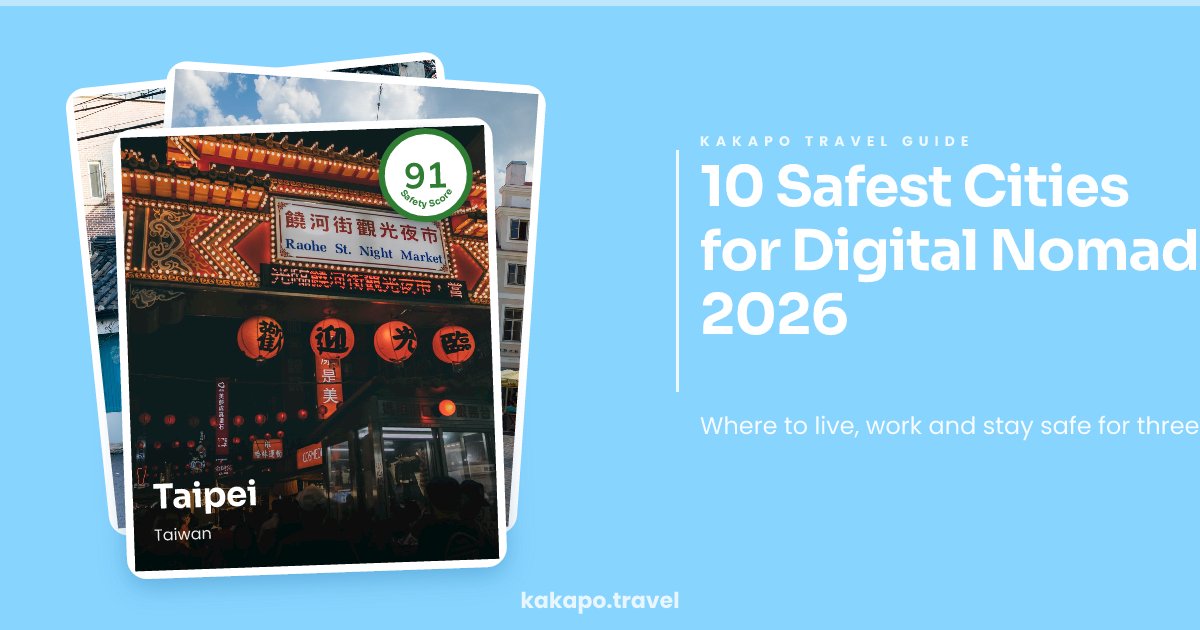
Taipei's Xinyi district nightlife and the late-night noodle and dessert shops around Ximending make for one of Asia's safest late nights. The MRT closes around midnight; taxis are cheap and metered.
Drink-spiking is rare; violent crime in nightlife districts is among the lowest in Asia.
Melbourne's laneway bar culture creates a dense, walkable nightlife in the CBD. Fitzroy and Collingwood add further options. Trams run late on weekends; late-night safety is good despite the city's occasional King Street trouble strip (avoid).
Buenos Aires nightlife runs later than anywhere else on this list — clubs in Palermo and Costanera don't fill until 2am and don't empty until 7am. The Palermo Soho and Hollywood bar grids are walkable, well-policed, and busy.
Use rideshare home rather than street taxis; otherwise the late-night safety in Palermo is genuinely high.
Don't book a club for midnight. Nothing happens. Bookings make sense for 2am+.
Some famous nightlife destinations we'd be more careful about in 2026:
Cancún and Playa del Carmen — recent uptick in nightlife-district incidents tied to organised crime.
Bangkok's Khao San and parts of Sukhumvit — drink-spiking and bar-bill scams remain endemic.
Rio de Janeiro's Lapa — alive and exciting, but petty crime against tourists is constant.
Most US college-town strips — drink-driving rates create traffic risks beyond the bars themselves.
Three rules that work everywhere
Habits the bartenders themselves recommend, in every city on this list:
Watch your drink being poured, never leave it unattended. Even in the safest cities, this is free insurance.
Set a "home by" alarm on your phone before you go out. Decide sober what "too late" means; let the alarm enforce it.
Use rideshare home, every time. The fare is always cheaper than the alternative cost of a bad night.
Frequently asked questions
What are the top picks in this 10 Safest Cities for Nightlife Travellers 2026 guide?
Kakapo's editorial team ranks 10 destinations in this guide using a composite safety index that weighs personal-safety, transport, healthcare, and night-safety signals from 50+ trusted sources. Tokyo leads at 92/100; see the per-entry score and sub-score breakdown below.
How are the safety scores calculated?
Each city's composite score is a weighted blend of national travel advisories from seven Western foreign ministries (US State Dept, UK FCDO, Canada, Australia, France, Germany, NZ), local crime indices (Numbeo + police-released stats), WHO Global Burden of Disease for healthcare, and air-quality APIs (IQAir, WAQI). Full methodology at https://kakapo.travel/about/methodology.
When was this article last updated?
Last reviewed on 2026-05-28T00:00:00.000Z. The underlying live safety scores recalculate automatically as advisories and incident data change — typically within 24 hours of a new national advisory or refreshed crime-index batch.
Where can I see the live safety report for each city?
Every destination in this guide links to its live safety report on Kakapo. The live report shows real-time sub-scores, current national advisories, emergency contacts, local phrases, and a profile-adjustment view that recalibrates the overall score for solo female, family, LGBTQ+, and elderly traveller profiles.
Is this guide updated for 2026?
Yes — the guide reflects 2026 conditions and is reviewed by the Kakapo editorial team when the safety picture meaningfully changes. Lowest score in this list: Buenos Aires. Per-source weighting and recalculation cadence at https://kakapo.travel/about/methodology.