Where queer travellers are welcomed, protected by law, and visible without risk
Kakapo Editorial28 May 20269 min readTravel safety
LGBTQ+ travel safety is shaped by two things: the law (does the country recognise your relationship, your gender, your existence?) and the street (do you actually feel safe holding hands in public?). The two don't always line up. Some of the most legally progressive countries have rising hate-crime rates; some places with weaker laws have strong cultural acceptance in major cities.
We weighted the 2026 ranking towards lived experience as well as legal status: ILGA-Europe and Equaldex legal scores, recent hate-crime trends, the visibility and safety of major Pride events, and the depth of queer infrastructure (bars, neighbourhoods, community organisations).
What follows are ten cities where LGBTQ+ travellers in 2026 consistently report feeling safe — both in the law and on the street.
What we measured
Several factors combine into a real safety score for queer travellers:
Legal protections: marriage equality, anti-discrimination law, gender-recognition rights.
Hate-crime trends: reported incident rates over the last three years.
Pride and visibility: size and police-protected status of annual Pride events.
Queer neighbourhoods: are there areas where LGBTQ+ people gather safely and openly?
Trans-specific safety: access to gender-affirming care, ID-document handling, transit safety.
01
Amsterdam
Safety score93/100
Netherlands
Personal
92
Transport
91
Healthcare
92
Night Safety
90
The Netherlands was the first country to legalise same-sex marriage (2001) and Amsterdam remains one of the most openly queer-friendly major cities in the world. The annual Canal Pride in early August is the largest waterborne Pride event globally and is heavily police-protected.
The Reguliersdwarsstraat area is the historic gay village; Amsterdam West and Nieuwmarkt are more mixed. Trans-specific healthcare is well-organised through the VUmc gender clinic.
Pride week (late July-early August) is the most exciting time to visit but accommodation prices triple — book six months ahead or visit in May for almost-as-warm weather and normal prices.
Berlin is Europe's queer capital and has been since the 1920s. The Schöneberg neighbourhood around Nollendorfplatz has been a continuously gay area for over a century; Kreuzberg, Friedrichshain and Neukölln have huge alternative-queer scenes.
Christopher Street Day (Berlin Pride, late July) draws over a million attendees. Trans healthcare in Berlin is among the most accessible in Europe through the Charité gender-identity clinic.
SchwuZ in Neukölln, SilverFuture in Neukölln and Möbel Olfe in Kreuzberg are the most-recommended queer bars for first-time visitors.
Spain has one of the world's most progressive LGBTQ+ legal frameworks (full marriage equality since 2005, world-leading trans-rights law passed 2023). Madrid's Chueca neighbourhood is the most concentrated gay village in Europe — entire blocks of bars, restaurants and shops openly cater to queer life.
Madrid Pride (Orgullo) in early July is Europe's largest Pride parade. Crime against LGBTQ+ visitors is rare and the Chueca area is heavily policed.
Stay in Chueca or Malasaña for the queerest, most lively neighbourhood feel. The Plaza de Pedro Zerolo is the heart of the area.
Iceland ranks #1 on the ILGA-Europe legal index for 2024. The country has the world's first openly lesbian head of government (Jóhanna Sigurðardóttir, 2009-13), and Reykjavik Pride in August has 80,000+ attendees in a country of 380,000.
Day-to-day life is safer for queer people than in almost any other country. The famous "rainbow street" (Skólavörðustígur) is painted year-round.
Kiki Queer Bar on Laugavegur is the main LGBTQ+ nightlife venue and is welcoming to all visitors.
Toronto's Church-Wellesley Village is one of the largest queer neighbourhoods in North America. Canada has strong federal anti-discrimination law and full marriage equality since 2005. Toronto Pride in late June is the largest in Canada and one of the largest in the Americas.
Trans-specific healthcare is well-organised through OHIP and Sherbourne Health Centre. The subway and streetcar systems are safe and well-monitored.
Stay in the Church-Wellesley area for proximity to the queer scene; Cabbagetown and the Annex are nearby and quieter.
Sweden has had full legal equality for LGBTQ+ people since the early 2000s and the cultural climate matches the law. Stockholm Pride at the end of July-August is the largest Pride in Scandinavia, with police protection and city sponsorship.
The Södermalm and Gamla Stan areas have the most queer bars and venues. Trans healthcare access is well-organised.
The SLM and Side Track are the long-running queer institutions; Patricia is a floating club venue popular with the LGBTQ+ scene.
Portugal legalised same-sex marriage in 2010 and Lisbon has emerged as one of Europe's most welcoming queer destinations. The Príncipe Real neighbourhood is the heart of LGBTQ+ life, with bars, cafés and the famous TR3S Lisboa club.
Lisbon Pride in late June draws strong support from the city. Trans healthcare is improving steadily, though still less comprehensive than northern Europe.
Príncipe Real is gentler and more residential than Bairro Alto — the best queer-friendly neighbourhood for solo travellers.
Australia legalised same-sex marriage in 2017 and Melbourne hosts Midsumma Festival every January-February, one of the largest queer cultural events in the Southern Hemisphere. The Fitzroy, Collingwood and Northcote neighbourhoods have visible queer scenes.
Trans-specific healthcare in Melbourne is accessible through the Royal Melbourne Hospital gender clinic. Crime against LGBTQ+ visitors is rare in central neighbourhoods.
Sircuit, The Peel and Poof Doof are the main queer venues — most concentrated in the Collingwood and Prahran areas.
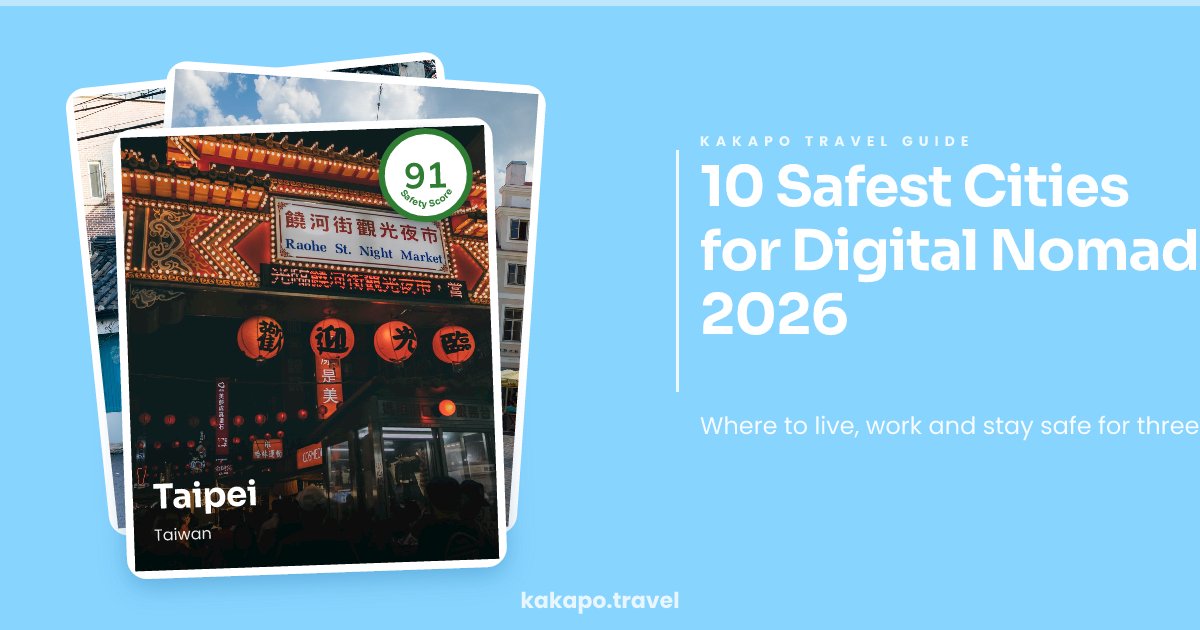
Taiwan was the first country in Asia to legalise same-sex marriage (2019). Taipei Pride in late October is the largest LGBTQ+ event in Asia, with 200,000+ attendees and strong police protection.
The Ximen district is the historic gay area, with bars like Café Dalida and G2 Paradise. Trans healthcare is gradually improving through Taipei Medical University Hospital.
Red House (Ximen) and the surrounding area is the most concentrated queer-friendly nightlife district — safe at any hour.
Montreal's Le Village (the Gay Village) is one of the largest dedicated queer neighbourhoods in North America — Rue Sainte-Catherine is closed to traffic in summer and lined with rainbow archways. Fierté Montréal in August is the biggest francophone Pride in the world.
Quebec has strong provincial anti-discrimination law. Healthcare is universally accessible, the metro is safe, and the queer scene is genuinely large and visible.
Stay in Le Village or the Plateau-Mont-Royal for the most queer-friendly accommodation and walking access.
Even within safer countries, situational awareness matters. Hate-crime rates have risen in some European countries (notably the UK and parts of Germany) in 2023-25, and rural areas often have very different cultural climates from the capital cities listed above.
Check Equaldex before you go. It's the most current per-country legal database for LGBTQ+ rights.
For trans travellers: carry a copy of your gender-recognition documentation; check airline policies on name mismatches in advance.
Travel insurance: make sure your policy covers same-sex partners and recognises your relationship.
The expanding map
The good news about 2026 is that the list of cities where LGBTQ+ travellers can be safe and visible is longer than it's ever been. Pick from this top 10 with confidence — and consider visiting during Pride season to see these cities at their most joyful.
Frequently asked questions
What are the top picks in this 10 Safest Cities for LGBTQ+ Travellers 2026 guide?
Kakapo's editorial team ranks 10 destinations in this guide using a composite safety index that weighs personal-safety, transport, healthcare, and night-safety signals from 50+ trusted sources. Amsterdam leads at 93/100; see the per-entry score and sub-score breakdown below.
How are the safety scores calculated?
Each city's composite score is a weighted blend of national travel advisories from seven Western foreign ministries (US State Dept, UK FCDO, Canada, Australia, France, Germany, NZ), local crime indices (Numbeo + police-released stats), WHO Global Burden of Disease for healthcare, and air-quality APIs (IQAir, WAQI). Full methodology at https://kakapo.travel/about/methodology.
When was this article last updated?
Last reviewed on 2026-05-28T00:00:00.000Z. The underlying live safety scores recalculate automatically as advisories and incident data change — typically within 24 hours of a new national advisory or refreshed crime-index batch.
Where can I see the live safety report for each city?
Every destination in this guide links to its live safety report on Kakapo. The live report shows real-time sub-scores, current national advisories, emergency contacts, local phrases, and a profile-adjustment view that recalibrates the overall score for solo female, family, LGBTQ+, and elderly traveller profiles.
Is this guide updated for 2026?
Yes — the guide reflects 2026 conditions and is reviewed by the Kakapo editorial team when the safety picture meaningfully changes. Lowest score in this list: Montreal. Per-source weighting and recalculation cadence at https://kakapo.travel/about/methodology.