Where you can land, connect and work in 60 seconds
Kakapo Editorial29 May 20268 min readTravel safety
The eSIM has changed the calculus of public Wi-Fi — most travellers no longer truly depend on it the way they did in 2015. But for the laptop-bound, the family multi-device, the conference-attendee, or anyone who wants to upload a 200MB photo without burning their data plan, public Wi-Fi still matters enormously. And the gap between cities that have invested in it and cities that haven't is enormous in 2026.
We pulled Ookla city-wide speedtest medians, public-network coverage maps from each city's tourism authority, and airport-Wi-Fi benchmark data from the major travel-tech reviewers. We weighted for what travellers actually use: airport speeds, hotel-district coverage, cafe and transit network availability, and the security of the public networks themselves.
Scores below are out of 100 and combine technical performance with realistic accessibility. The winners are the cities that treat public Wi-Fi as urban infrastructure rather than a hotel amenity.
How we ranked public Wi-Fi cities
Wi-Fi rankings often conflate things they shouldn't (residential broadband, mobile speeds, fibre-to-the-home). We measured only the traveller-facing public network:
Citywide free networks: the existence of a single SSID that follows you across the city.
Airport and transit Wi-Fi: median speeds at the international airport and on metro/train networks.
Cafe and hotel-district coverage: how easy it is to find reliable Wi-Fi in the central tourist quarters.
Network security: WPA2/WPA3 deployment on the public networks vs open-SSID-only deployments.
01
Seoul
Safety score96/100
South Korea
Personal
88
Transport
96
Healthcare
88
Night Safety
90
Seoul has the best public Wi-Fi infrastructure of any major city. The Seoul Public WiFi SSID covers buses, subway stations, parks and most public buildings; speeds routinely exceed 100 Mbps even on the subway between stations. The system has been free and rolling out since 2011.
Incheon airport ranks among the fastest in the world for free Wi-Fi. Stay in Gangnam or Myeongdong for double coverage from city plus hotel networks. The country is also the global eSIM leader if you'd rather skip public Wi-Fi entirely.
The Seoul WiFi app shows live coverage maps and signal strength — install it on arrival rather than hunting for SSIDs manually.
Tokyo's Free Wi-Fi & Tokyo SSID covers the JR network, all subway lines, and most convenience-store chains (7-Eleven, Lawson, Family Mart). The Japan Connected-free Wi-Fi app aggregates 200,000 hotspots nationally and works offline once installed.
Haneda and Narita both offer fast free Wi-Fi without time limits. Stay in Shinjuku or Shibuya for the densest combined coverage.
Download the Japan Connected-free Wi-Fi app before you land — the app needs an SMS verification you may struggle to receive on foreign SIMs.
Wireless@SG is the citywide free network covering more than 25,000 hotspots — every MRT station, every Changi airport terminal, every major shopping mall. Speeds are consistent at 30-50 Mbps and the network requires only an SMS-based one-time registration.
Changi airport's free Wi-Fi has been ranked among the world's fastest for years. Stay anywhere in the central districts — the network coverage is essentially total.
Skip the Wireless@SG SMS registration by using a hotel WiFi card with the @SSID-Premier suffix — comes with most major hotel bookings.
Estonia treats internet access as a constitutional right and Tallinn has had free public Wi-Fi citywide since 2002 — it was the first capital in Europe to do so. Coverage spans Old Town squares, parks, beaches and major streets.
Tallinn airport's free network is consistently in the European top 5 for speed. The Telliskivi creative quarter and most central cafes layer additional networks on top.
If you're working from Tallinn for more than a week, the e-Residency programme gives you legal-entity options unmatched anywhere — separate from Wi-Fi but worth knowing.
Helsinki's HSL transit network and the city's main libraries (especially Oodi) offer some of the fastest free Wi-Fi anywhere — the central library is purpose-built as a public workspace with terminals, lounges and free coffee.
Helsinki-Vantaa airport offers free Wi-Fi without time limits. Stay around Punavuori or Kallio for cafe-density that rivals Berlin.
Oodi library has dedicated co-working pods bookable for free — use the library app to reserve a quiet day's workspace.
Wi-Fi.HK is the government's umbrella network covering 32,000+ hotspots across MTR stations, parks, libraries and public buildings. The MTR's in-train Wi-Fi also runs on the same SSID for free.
Hong Kong International Airport offers excellent free Wi-Fi. Stay around Tsim Sha Tsui or Central for the densest coverage.
Most Hong Kong cafes will write the Wi-Fi password on the receipt — order anything first, then check the bottom of the slip.
Barcelona's Barcelona Wifi network covers more than 700 hotspots across the city, with metro-station coverage and beach-promenade hotspots that genuinely work. The city's smart-city investment since 2014 has produced one of Europe's most coherent municipal networks.
El Prat airport offers free Wi-Fi. Stay in Eixample or El Born for cafe density. The pickpocket warning applies citywide, but Wi-Fi access is excellent.
The Bicing bike-share Wi-Fi-locator stations double as power outlets — useful if your phone dies mid-route.
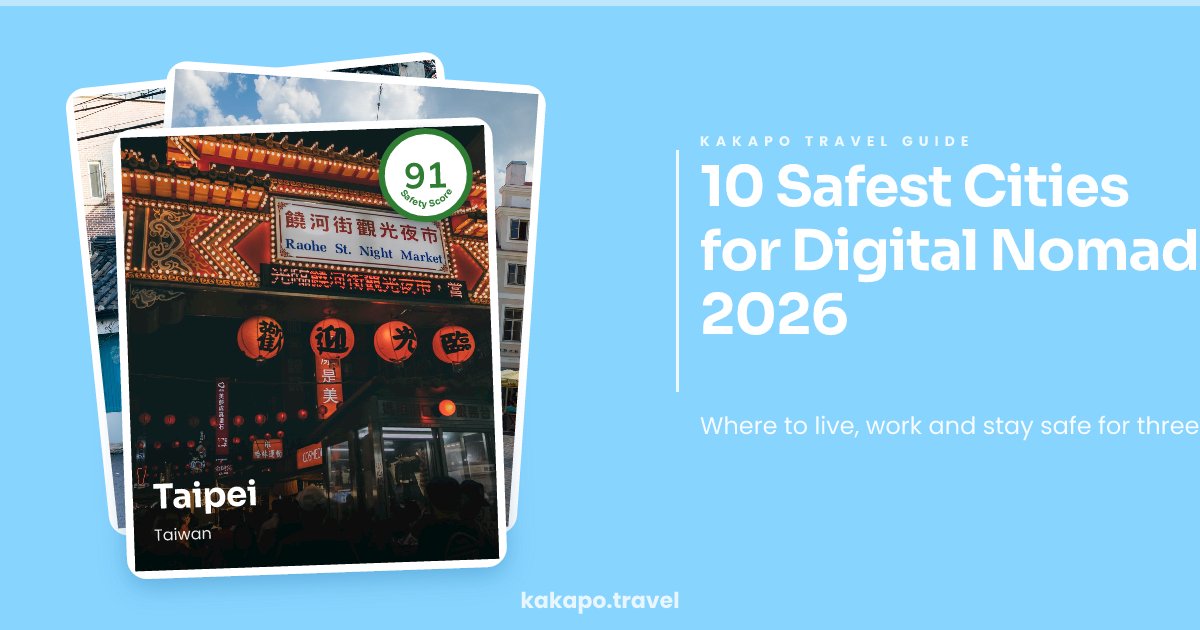
Taipei Free is the citywide network covering MRT stations, parks, night markets and most public buildings. Foreign visitors register once at a tourism office or online and the SSID then works automatically. Speeds are reliable at 30-50 Mbps.
Taoyuan airport offers fast free Wi-Fi. Stay around Da'an or Zhongshan for cafe-density and good metro Wi-Fi coverage.
iTaiwan is the separate national network covering smaller cities — register for both on arrival if you plan to travel outside Taipei.
New York's LinkNYC programme replaced payphones with free gigabit-Wi-Fi kiosks across the five boroughs; there are now more than 2,000 of them. Coverage is strongest in Manhattan below 96th Street and in Brooklyn's Williamsburg/DUMBO corridors.
JFK and Newark airports both offer free Wi-Fi (Newark's is faster). Stay in Midtown or Lower Manhattan for the densest LinkNYC coverage.
LinkNYC kiosks include a free domestic phone-call button and a USB charging port — useful in emergencies.
Stockholm's SL public-transit Wi-Fi covers the entire metro system plus most commuter buses and ferries. The city's main library and the Kulturhuset on Sergels Torg both function as de-facto co-working spaces with reliable free Wi-Fi.
Arlanda airport offers free Wi-Fi without time limits. Stay around Sodermalm or Norrmalm for the densest combined network coverage.
The Stadsbiblioteket main library has bookable study rooms by the hour — quiet, free, and one of the city's most beautiful interiors.
Public Wi-Fi has improved dramatically, but the security basics still matter:
Use a VPN for anything sensitive. Public networks vary enormously in their security — a paid VPN is $3-5/month and worth it.
Avoid logging into banking from open SSIDs. Use mobile data or a personal hotspot for financial transactions.
Forget the network when you leave. Phones that remember every hotspot they've ever joined are a security risk in airports.
Is public Wi-Fi still worth it in 2026?
Travel eSIMs from Airalo, Holafly, or Nomad cost $5-15 for a week of solid data in most countries — for most travellers, that has become the default. Public Wi-Fi matters most when you're uploading large files, working from a laptop for a full day, or travelling in a group with multiple devices.
The cities above all combine excellent public networks with reliable eSIM coverage — best of both worlds. Pick one and you won't think about connectivity once.
Frequently asked questions
What are the top picks in this 10 Cities with the Best Public Wi-Fi 2026 guide?
Kakapo's editorial team ranks 10 destinations in this guide using a composite safety index that weighs personal-safety, transport, healthcare, and night-safety signals from 50+ trusted sources. Seoul leads at 96/100; see the per-entry score and sub-score breakdown below.
How are the safety scores calculated?
Each city's composite score is a weighted blend of national travel advisories from seven Western foreign ministries (US State Dept, UK FCDO, Canada, Australia, France, Germany, NZ), local crime indices (Numbeo + police-released stats), WHO Global Burden of Disease for healthcare, and air-quality APIs (IQAir, WAQI). Full methodology at https://kakapo.travel/about/methodology.
When was this article last updated?
Last reviewed on 2026-05-29T00:00:00.000Z. The underlying live safety scores recalculate automatically as advisories and incident data change — typically within 24 hours of a new national advisory or refreshed crime-index batch.
Where can I see the live safety report for each city?
Every destination in this guide links to its live safety report on Kakapo. The live report shows real-time sub-scores, current national advisories, emergency contacts, local phrases, and a profile-adjustment view that recalibrates the overall score for solo female, family, LGBTQ+, and elderly traveller profiles.
Is this guide updated for 2026?
Yes — the guide reflects 2026 conditions and is reviewed by the Kakapo editorial team when the safety picture meaningfully changes. Lowest score in this list: Stockholm. Per-source weighting and recalculation cadence at https://kakapo.travel/about/methodology.