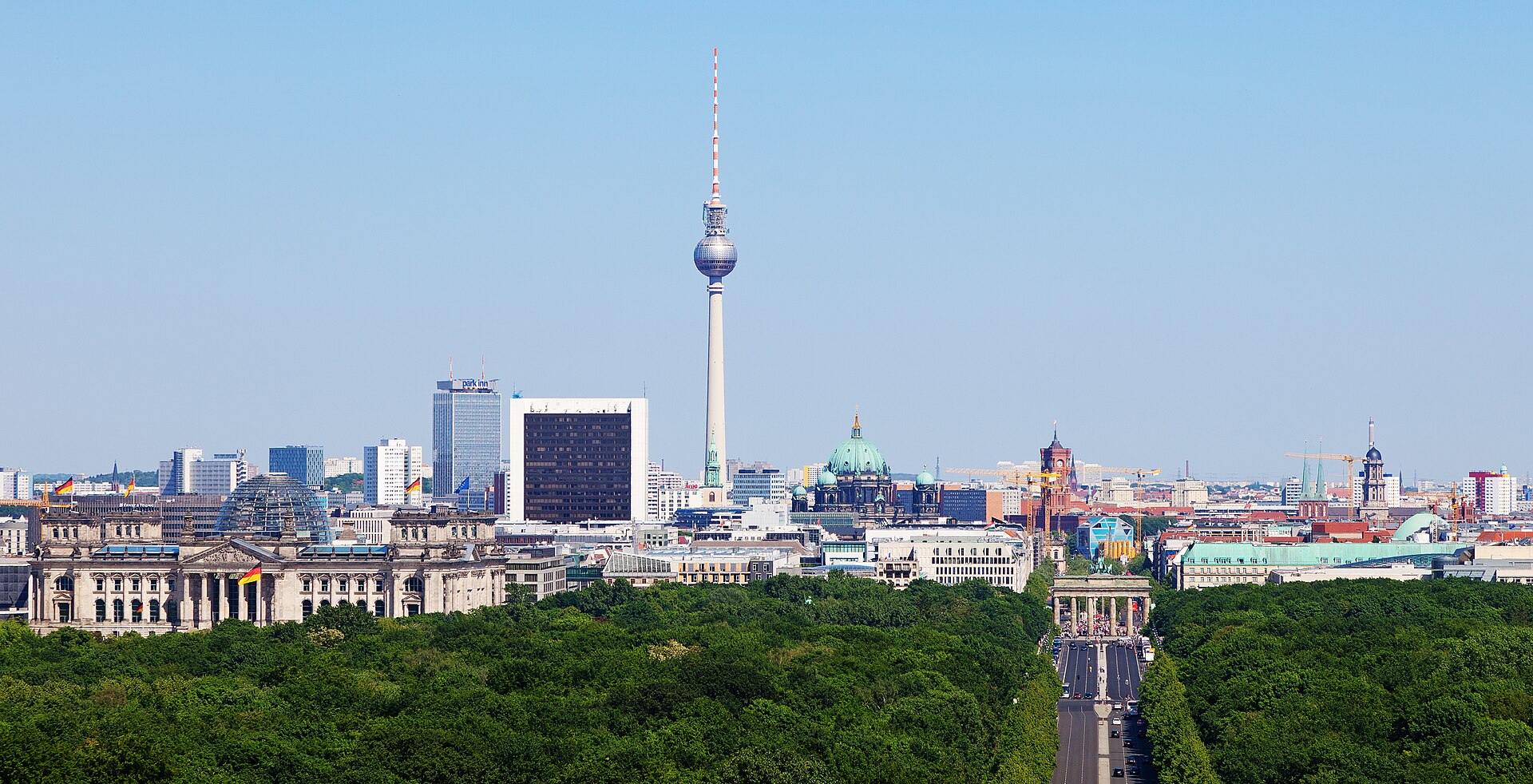
What happened
On the evening of Saturday 25 July 2026, at around 10 p.m., a man drove a van into crowds gathered for Berlin's Christopher Street Day (CSD) Pride celebrations in the Tiergarten park area, in the heart of the city near the Brandenburg Gate. After the vehicle came to a stop, the driver got out and attacked people nearby with a bladed weapon. One person was killed and 29 were injured, several of them with life-threatening injuries, according to reporting by Al Jazeera and NPR. Police ended the Pride party early and sealed off the surrounding area while a manhunt began.
The suspect was later named as Abdul Ballout, a 21-year-old man born in Germany with Lebanese roots. He was already known to authorities: he had a suspended sentence connected to an earlier attempt to join the Islamic State group and was described by officials as being part of Islamist circles in Berlin. After a search lasting roughly a day, police located him on Sunday afternoon at an allotment garden in the western Berlin borough of Spandau. Officers said he ran toward them while armed with a bladed weapon, and they opened fire. He died despite efforts to resuscitate him, as reported by CNN, The Washington Post and Time. Germany's interior minister, Alexander Dobrindt, said that everything investigators had seen pointed to an Islamist terror attack, and Germany's federal prosecutors took over the case.
In the hours and days after the attack, a large amount of false information circulated online. Fact-checkers at Euronews and Deutsche Welle found that several viral videos were AI-generated or misattributed. One widely shared clip that supposedly showed people fleeing the Berlin celebrations was in fact footage of an unrelated shooting at a salsa festival in Toronto earlier in July. Anonymous social media posts also spread an unfounded claim about a bomb threat and false reports of shots being fired in Tiergarten. Travelers reading about the event should treat unverified social posts with caution and rely on official police statements and established news outlets.
Why it matters for travelers
Berlin is one of Europe's safest large capital cities for visitors, and this attack does not change that underlying picture, but it is understandable that travelers with trips planned will want context. The attack was a targeted incident at a specific large public gathering rather than a sign of general street danger across the city. The suspect is dead, and the immediate threat from this individual has ended. There is no active manhunt and no ongoing siege situation.
That said, the event is a reminder that major open-air gatherings, parades, festivals and demonstrations are the settings where crowd incidents are most likely anywhere in Europe. Berlin hosts a busy summer calendar of exactly these kinds of events, and German authorities have responded to attacks in recent years by increasing the use of vehicle barriers, bag checks and visible policing at large public occasions. Vehicle-ramming attacks at Christmas markets and public squares elsewhere in Germany have led to heavier protective measures, and you should expect a stronger security presence at large events in Berlin for the rest of the season.
For most visitors going about ordinary sightseeing, using public transport, eating out and staying in central neighborhoods, the practical risk remains very low. The value in an event like this is not fear, it is a small adjustment in awareness at the specific moments and places where crowds are densest.
What to do
If you are in Berlin now or arriving soon, a few sensible steps cover the realistic risks without disrupting your trip.
- At large events and parades: When you attend a festival, demonstration or open-air celebration, take a moment on arrival to note where the exits are and where the crowd thins out. If an area feels dangerously packed, move to the edges. Follow instructions from police and event stewards promptly, as authorities showed they will shut a gathering down quickly if there is a threat.
- Trust official sources over social media: During any developing incident, rely on the Berlin police (Polizei Berlin) channels and established news organizations rather than viral videos or anonymous posts. As the fact-checks above showed, a great deal of what spreads online in the first hours is wrong, including AI-generated and misattributed footage.
- Know the emergency numbers: In Germany, dial 112 for police, ambulance or fire in an emergency. The non-emergency police number is 110. Save these before you travel. Operators in Berlin generally speak English.
- Check your government's travel advice: Your national foreign ministry (for example the UK Foreign Office, the US State Department, or your own country's equivalent) publishes current advice for Germany. There is no blanket warning against travel to Berlin, but reviewing the terrorism and safety sections before a trip is a good habit.
- Keep normal city-safety habits: Berlin's more common travel issues are ordinary ones, mainly pickpocketing on busy transit lines and at tourist hotspots such as Alexanderplatz and around the main station. Keep valuables secure and stay aware in crowds, which also happens to be the same habit that helps at large events.
Berlin's overall safety picture
Berlin carries a strong safety score in our tracker and remains a reassuring destination for solo travelers, families and LGBTQ+ visitors alike. Violent crime rates are low by international standards, the public transport system is efficient and well used at all hours, and the city has a large, visible and generally approachable police presence. Germany as a whole has robust emergency services and a high standard of medical care if something does go wrong.
This attack was a serious and tragic incident, and the fact that it targeted a Pride celebration has understandably shaken the city's large and open LGBTQ+ community. Berlin's authorities and residents have responded with public solidarity and a review of security at upcoming events. For a traveler weighing a visit, the honest summary is that Berlin remains a safe, welcoming and well-managed city. The right response to news like this is measured awareness at large gatherings, reliance on official information, and confidence that a single resolved incident does not define one of Europe's great capitals.
Cited sources
Reporting from the outlets below.
-
1
Al Jazeera Police shoot dead Berlin Pride car-ramming attack suspect
-
2
CNN Berlin Pride attack suspect shot dead by police after manhunt: what we know so far
-
3
Npr Suspect in Berlin Pride vehicle attack is dead, police say
-
4
Euronews How false information spread about the Berlin Pride attack amid suspect manhunt
Frequently asked questions
Is Berlin safe to travel to right now?
A man drove a van into crowds at Berlin's Christopher Street Day celebrations near Tiergarten on 25 July 2026, killing one person and injuring 29 before attacking others with a blade. The suspect was killed by police the next day, and authorities are treating it as an Islamist terror attack. See Kakapo's live Berlin safety report for the up-to-date composite score, neighbourhood-by-neighbourhood breakdown, and per-source advisories from US State Dept, UK FCDO, Canadian government, and Australian Smartraveller.
What happened in Berlin?
Berlin Pride vehicle attack kills one and injures dozens near Tiergarten; suspect shot dead by police. A man drove a van into crowds at Berlin's Christopher Street Day celebrations near Tiergarten on 25 July 2026, killing one person and injuring 29 before attacking others with a blade. The suspect was killed by police the next day, and authorities are treating it as an Islamist terror attack. This is a incident based on reporting from major travel-news outlets — see the cited sources below for the original coverage.
Should I cancel my trip to Berlin?
Most travel-safety events do not require cancelling a planned trip. Read the "What it means for travelers" section above for the specific guidance, check the live Berlin safety report for the current overall score, and consult your travel insurance for cancellation eligibility. Kakapo updates the Berlin safety profile as new advisories land.
Where can I find more travel safety news?
Kakapo publishes new travel-safety updates as events develop, sourced from BBC, Reuters, the Guardian, Al Jazeera, Deutsche Welle, France 24, US State Dept, and UK FCDO. Visit the live travel-news feed at kakapo.travel/travel-news for the latest.