
What happened
A magnitude 7.4 earthquake struck western Colombia at 07:34 local time on Monday 10 August 2026. The epicentre was about 20km from San José del Palmar in the department of Chocó, roughly 400km west of Bogotá, at a depth of around 100km. It was the most powerful earthquake to hit Colombia this century, and the deep focus is why the shaking travelled so far: cities well outside Chocó, Cali among them, took serious damage.
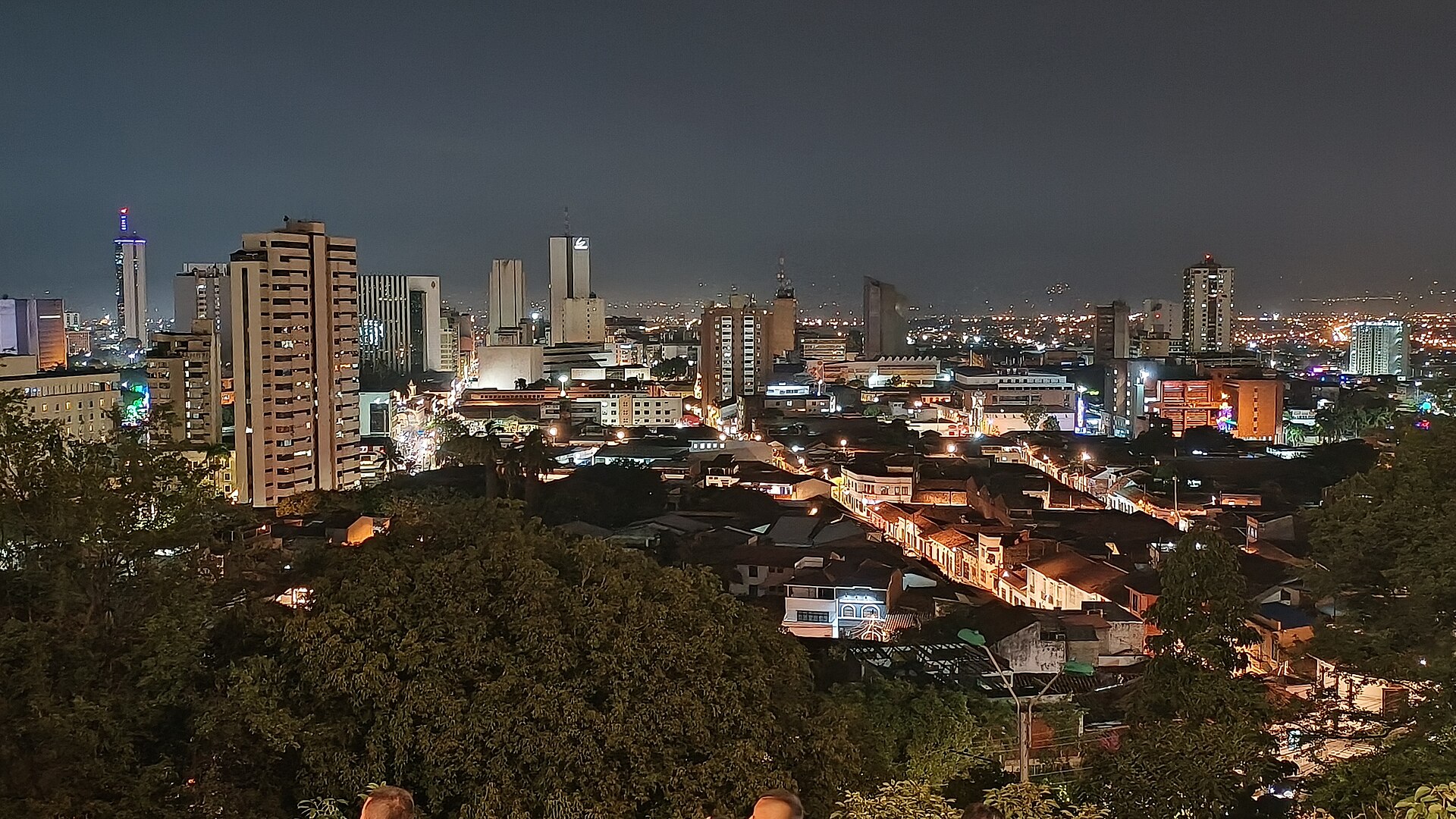
Cali, Colombia's third largest city and the capital of Valle del Cauca, was among the worst affected urban areas. Local authorities reported around 40 buildings collapsed and more than 5,000 damaged or destroyed. Eighteen hospitals sustained damage. The University Hospital of Valle, one of the region's main public hospitals, had roughly 70 percent of its infrastructure damaged and evacuated about 800 patients. The Estadio Olímpico Pascual Guerrero was damaged. Cali also recorded a large share of the national casualty figures, and search teams worked for days through collapsed structures, in some cases alongside neighbours forming human chains before heavy equipment arrived, as Al Jazeera reported.
National figures climbed through the week as rubble was cleared and reports were consolidated. By 14 August the death toll nationally had passed 280, with more than 4,000 injured and over 200 still listed as missing. More than 100,000 people were affected across more than 400 municipalities, with thousands of homes, schools and health centres damaged. President Abelardo de la Espriella declared a state of national disaster on 10 August, three days of national mourning, and an economic emergency on 12 August. Curfews were enforced in Cali and Pereira.
More than 100 aftershocks were recorded, the largest at magnitude 5.0. Rescue work continued into the weekend, and France 24 reported on the effort to free a survivor still trapped four days after the quake. Aid distribution has been uneven, with some communities relying on volunteers while government assistance reached them slowly.
The UK Foreign Office updated its Colombia travel advice on 14 August, noting the earthquake, warning of the possibility of aftershocks, telling travellers to expect disruption to travel and airport closures, and advising people to stay away from damaged buildings and follow local authorities. It also flagged heavy rainfall and flooding risk in the affected region on 16 and 17 August. Matecaña International Airport in Pereira was listed as closed. Several other airports across western Colombia suspended operations while engineers carried out structural inspections. The advisory did not introduce a blanket recommendation against travel to areas previously considered fine to visit.
Why it matters for travelers
The immediate danger of the earthquake itself has passed. What remains is a city operating with reduced capacity, and that is the practical issue for anyone with Cali in their plans over the next few weeks.
The most important reduction is medical. Eighteen damaged hospitals and the partial loss of a major public hospital means emergency and trauma care in Valle del Cauca is stretched thin at exactly the moment demand is highest. If you have a health condition that could need hospital care, or you were planning any kind of medical or dental procedure in Cali, this is the factor that should drive your decision rather than any headline about the quake itself.
The second is buildings. Structures that survived a magnitude 7.4 event are not necessarily sound, and more than 5,000 in Cali were damaged. Aftershocks in the magnitude 4 to 5 range can bring down already weakened walls, facades and stairwells. That risk sits mostly in older masonry and in buildings with visible cracking, not in modern hotels that have been inspected and cleared.
The third is timing. Heavy rain was forecast for the affected region on 16 and 17 August. Rain on ground loosened by a major earthquake raises landslide risk on hillside roads and in the mountainous corridors between Cali, Chocó and the coffee region. That matters most for overland travel rather than for staying in the city.
The fourth is that ordinary services degrade during a disaster response. Curfews change what is open and when. Police and emergency capacity is committed to the response rather than to routine work. Colombia's cities usually recover their rhythm quickly, but the first two or three weeks after an event of this size are not a normal visit.
What to do
If you are due to travel to Cali in the next week or two, contact your accommodation and ask directly whether their building has been inspected and cleared since 10 August, and whether they have water and power. A hotel that answers that question crisply is telling you something useful. One that will not is also telling you something.
Check your flight rather than assuming. Airports across western Colombia suspended operations for structural checks and reopened at different times, and Pereira's Matecaña was still closed as of 14 August. Confirm the status of your specific airport with your airline before travelling to it, and expect schedules to keep changing.
Reconsider overland routes through the mountains around 16 and 17 August given the rain forecast. Landslides close roads in this region even in ordinary weather. Flying between cities is the more reliable option right now.
If you are already in Cali, avoid damaged buildings entirely, including for photographs. Do not enter cordoned areas. Learn where the open space nearest your accommodation is, and if an aftershock hits while you are indoors in a sound modern building, the safest immediate action is usually to drop, cover and hold on rather than to run for stairs.
Carry more cash than usual in small notes, keep your phone charged, and download offline maps. Card systems and mobile networks can be patchy during a large response.
Do not join the relief effort informally. Well meant volunteers without equipment or training complicate professional search operations and can become casualties themselves. If you want to help, give money to an established organisation working in Valle del Cauca and Chocó.
If you are trying to reach someone in the affected area, use text and messaging rather than voice calls to reduce load on networks, and register your own status with family so search resources are not spent on people who are safe.
Travellers who choose to postpone should document the official advisory in force at the time of their decision, because insurers and airlines treat a documented government warning differently from a personal change of mind.
Context on Cali's overall safety
Cali carries a Kakapo safety score of 58, which is low compared with most cities we track, and that number is about everyday crime rather than natural hazards. Cali has long had a higher rate of violent crime than Bogotá or Medellín, concentrated heavily in eastern and peripheral districts such as the Aguablanca area, which visitors have no practical reason to enter. Robbery, phone theft and scams around nightlife districts are the realistic risks for a traveller, along with unlicensed taxis. The standard advice holds: use ride hailing apps rather than street taxis, do not display phones or jewellery in the street, avoid walking at night outside the main areas of San Antonio, Granada and El Peñón, and treat drink spiking as a real risk in nightlife areas.
None of that changed on 10 August, and we have not adjusted the city score for this event. The honest position is that Cali's baseline risks are unchanged while its near term conditions are worse than the score alone conveys, because of reduced hospital capacity, damaged buildings and an active disaster response. Those conditions should improve steadily over the coming weeks.
Colombia sits on an active seismic boundary and earthquakes are a permanent feature of travel there, as they are in Chile, Peru and Ecuador. That is not a reason to avoid the country. It is a reason to know what to do in the thirty seconds when the ground moves, and to pick accommodation built to modern standards.
The bottom line
Cali is dealing with the aftermath of the strongest earthquake to hit Colombia this century. The rescue phase is ending and recovery has started, but hospital capacity is reduced, thousands of buildings are damaged, aftershocks continue and heavy rain on 16 and 17 August raises landslide risk on mountain roads. Travel to Cali is not advised against by the UK Foreign Office, but if your trip is flexible, the next few weeks are a reasonable thing to postpone. If you go, verify that your accommodation has been inspected, confirm airport status before you set off, stay clear of damaged structures, and keep an eye on local guidance.
Cited sources
Reporting from the outlets below.
Frequently asked questions
Is Cali safe to travel to right now?
The 10 August earthquake in Chocó caused heavy damage in Cali, with about 40 buildings collapsed, 18 hospitals damaged and curfews imposed. Rescue work has wound down but hospital capacity is reduced, aftershocks continue and heavy rain on 16 and 17 August raises landslide risk. See Kakapo's live Cali safety report for the up-to-date composite score, neighbourhood-by-neighbourhood breakdown, and per-source advisories from US State Dept, UK FCDO, Canadian government, and Australian Smartraveller.
What happened in Cali?
Cali after Colombia's magnitude 7.4 earthquake: damaged hospitals, aftershocks and what travelers should do. The 10 August earthquake in Chocó caused heavy damage in Cali, with about 40 buildings collapsed, 18 hospitals damaged and curfews imposed. Rescue work has wound down but hospital capacity is reduced, aftershocks continue and heavy rain on 16 and 17 August raises landslide risk. This is a incident based on reporting from major travel-news outlets — see the cited sources below for the original coverage.
Should I cancel my trip to Cali?
Most travel-safety events do not require cancelling a planned trip. Read the "What it means for travelers" section above for the specific guidance, check the live Cali safety report for the current overall score, and consult your travel insurance for cancellation eligibility. Kakapo updates the Cali safety profile as new advisories land.
Where can I find more travel safety news?
Kakapo publishes new travel-safety updates as events develop, sourced from BBC, Reuters, the Guardian, Al Jazeera, Deutsche Welle, France 24, US State Dept, and UK FCDO. Visit the live travel-news feed at kakapo.travel/travel-news for the latest.