


Is Zakopane, Poland Safe? A 2026 Travel Safety Guide
Zakopane is comfortably safe in town. The honest concerns: Tatra mountain weather, the Morskie Oko hike, winter ice on Krupówki, ski-injury rates, and the road from Kraków.

Zakopane is comfortably safe in town. Crime against tourists is mild. The realistic concerns are alpine + environmental: the Tatra Mountains produce sudden weather + thunderstorms (people die on Rysy, Giewont, Świnica each summer); the Morskie Oko lake hike (Poland's most-visited mountain destination, ~1.4 million visitors/year) gets dangerous on icy spring/autumn days when the road becomes a 9 km black-ice slide; winter cold + ice on the Krupówki main pedestrian street produces falls; ski-injury rates at Kasprowy Wierch + Nosal are real; and the road from Kraków (110 km, the Zakopianka) becomes a 4-hour traffic crawl on winter ski-weekends.
Poland sits at low advisory levels in both UK FCDO and US State Department guidance. The honest framing for visitors: Zakopane is small (~27,000), 1,000 m altitude, the "winter capital of Poland." The town itself is calm + tourist-economy-friendly; the surrounding Tatra National Park is real mountain terrain. Górale (highlander) culture defines the architecture (steeply pitched wooden chalets) + the food (oscypek smoked sheep cheese, kwaśnica soup).
The defining experiences: Krupówki main pedestrian street, Kasprowy Wierch cable car (1,985 m), Morskie Oko lake hike (or carriage ride), Giewont mountain (the famous mountain shape; cable car-accessible from Kuźnice), Wielka Krokiew ski jump, Tatra Museum, and the Słowacki + Lenina monuments.
| Night safety | 83/100 |
|---|---|
| Scam / petty-crime risk | Medium |
| Violent crime (tourists) | Low |
| Most common scams | DCC (dynamic currency conversion) at card terminals; unlicensed 'mountain guides' for Giewont and Rysy; horse-drawn carriages to Morskie Oko |
| Safer neighbourhoods | Krupówki main pedestrian street, residential area around the parish church |
| Data sources cited | 4 |
| Last verified |
What the score means — 83/100
- Personal safety (88) — high.
- Air quality (88) — Tatra fresh; some winter wood-smoke from local heating.
- Healthcare (80) — Szpital Powiatowy Zakopane handles routine; complex cases referred to Kraków.
- Transport (78) — bus + rail to Kraków; in-town walkable; rural Tatra needs car or guided tour.
Tatra mountain weather + summer thunderstorms
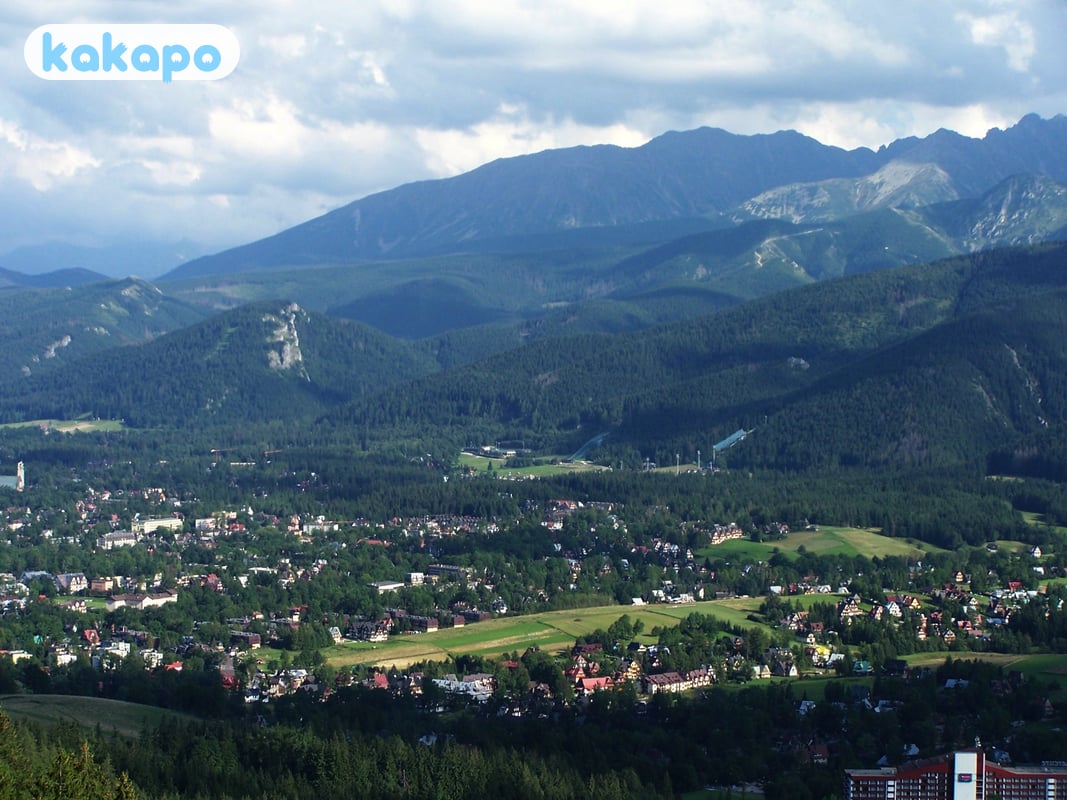
- The reality: the Tatras (highest 2,503 m Gerlach in Slovakia, 2,499 m Rysy in Poland) produce alpine-style weather. Summer thunderstorms typically after 1pm.
- The trap: visitors start late + get caught by lightning above the tree line. People die on Rysy + Giewont + Świnica each summer.
- Rule: be off ridges by noon in summer. Start hikes at 6-7am.
- TPN ranger advisories: tpn.pl daily.
- Footwear: proper hiking boots; not trainers. The Tatras are rocky.
- Mobile signal: spotty in deep valleys; download offline maps.
- Bring: layered clothing, waterproof shell, water 2 L, head torch.
- TOPR (mountain rescue): 601 100 300; 24/7. Free emergency; helicopter evacuation insurance check.
Morskie Oko hike — crowds + ice
- What it is: 9 km road-walk from Palenica Białczańska to Morskie Oko lake. Park entry PLN 8 (~€2).
- Crowd reality: 1.4 million visitors/year; at peak, the road is shoulder-to-shoulder.
- Walking time: 2-2.5h up, 1.5-2h down on paved road.
- Horse-drawn carriages: alternative; ~PLN 100 round trip. Animal-welfare debate is real.
- Winter + spring ice: the road becomes black ice on cold mornings; falls common. Microspikes useful Nov-April.
- Summer thunderstorms: arriving at the lake at 2pm + walking back in lightning is the recurring pattern. Start early.
- Beyond the lake: Czarny Staw + Rysy summit are real mountain terrain — proper boots + experience required.
- Parking at Palenica: limited; arrives 9am; consider bus from Zakopane (~30 min, PLN 9).
Kasprowy Wierch cable car + Giewont
- Kasprowy Wierch: 1,985 m via cable car from Kuźnice. PLN 89 round trip; book online same-day for slot.
- Top experience: 360° Tatra panorama; Polish-Slovak border runs along ridge.
- Hiking from top: serious mountain trails; proper kit + experience.
- Giewont (1,894 m): Zakopane's iconic mountain. 3-4h hike from Kuźnice; upper section has chains; lightning-strike fatalities each summer (avoid summit if storm forecast).
- Sunrise hike Kasprowy: spectacular; the cable car runs special early summer slots.
- Closures: weather-dependent; lightning + high wind close.
Winter — ski + ice on Krupówki
- Ski areas: Kasprowy Wierch (advanced), Nosal (closed since 2017 — check 2026 status), Harenda (intermediate), Polana Szymoszkowa (family), Bukovina (modern).
- Lift passes: PLN 200-280/day (~€45-€60).
- Ski-injury rates: 4-6 per 1,000 skier-days. Helmet standard.
- Off-piste avalanche: real in Kasprowy bowls; TOPR daily bulletin.
- Krupówki main street: gets glassy in cold spells. Sturdy boots.
- Insurance: confirm cover for Poland + skiing + helicopter rescue.
The road from Kraków — Zakopianka traffic
- Distance: 110 km on the DK7/S7 ("Zakopianka").
- Times: 1h45m off-peak; 3-4h+ on winter ski-weekends + holiday Fridays.
- Bus: Szwagropol + FlixBus + RegioJet from Kraków MDA bus station, ~2-3h, PLN 30-50.
- Train: PKP Kraków Główny ↔ Zakopane ~3-4h, PLN 30-60. Slower but scenic.
- Driving in winter: chains/winter tyres mandatory Nov-April. Mountain road sections need care.
- Petrol: fill up in Kraków + Nowy Targ.
- From Warsaw: 4-5h direct; via Kraków 6h+.
Money, language, the basics
- Currency: Polish złoty (PLN). 1 EUR ≈ 4.3 PLN.
- Cards: widely accepted in Zakopane restaurants + hotels; cash for some markets + bus.
- "Don't pay in PLN" (DCC): card-reader scam; always pay in złoty.
- ATMs: bank-branch (PKO BP, mBank, Santander) for the best rate.
- Tap water: safe.
- Tipping: 10% in restaurants if happy.
- Language: Polish; English moderate among under-30s; older Górale highlanders less so.
Practical info — emergency numbers
- European emergency: 112.
- Police: 997.
- Ambulance: 999.
- TOPR (mountain rescue): 601 100 300 or 985.
- Szpital Powiatowy Zakopane: +48 18 20 12 021.
- TPN (Tatra National Park): tpn.pl for trail conditions.
Bring: rubber-soled boots in winter, proper hiking boots for trails, layered alpine clothing, sunglasses, microspikes useful in winter, a contactless card + cash, an unlocked phone, and travel insurance with mountain-rescue + helicopter cover.
Frequently asked questions
Is Zakopane safe to visit in 2026?
Yes — Zakopane scores 84/100 and Poland sits at low advisory levels in both UK FCDO and US State Department guidance. Crime against tourists in town is mild — Zakopane is small (~27,000), tourist-economy-friendly, and the Górale (highlander) community polices itself. The realistic concerns are alpine and environmental: the Tatra Mountains produce sudden afternoon thunderstorms that kill hikers on Rysy, Giewont, and Świnica each summer; the Morskie Oko hike (Poland's most-visited mountain destination, 1.4 million visitors/year) becomes a 9 km black-ice slide on cold mornings; winter ice on the Krupówki main pedestrian street produces falls; ski-injury rates at Kasprowy Wierch are real; and the 110 km road from Kraków (the Zakopianka) becomes a 4-hour traffic crawl on winter ski-weekends.
Is Zakopane safe at night?
Yes. The Krupówki main pedestrian street is busy until late with restaurants and bars; the side streets and the residential area around the parish church are calm. Solo women are comfortable at any hour. The after-dark concerns are environmental rather than criminal: in winter, the Krupówki and many side streets become glassy with black ice on cold-snap mornings and stay treacherous through the day, so wear rubber-soled boots with serious grip. In summer, sticking around at high altitude bars on Gubałówka (the funicular hill) is fine, but the funicular stops running around 22:00 — check the last ride. Light wood-smoke pollution from highlander chalets is noticeable in winter but not severe.
What scams should I watch for in Zakopane?
Standard Polish patterns and a few tourist-economy specifics. DCC (dynamic currency conversion) at card terminals — always pay in złoty (PLN), never in 'your home currency' which is consistently 5-10% worse. Use bank-branch ATMs (PKO BP, mBank, Santander) rather than independent kiosk ATMs which sometimes apply heavy spreads. The horse-drawn carriages to Morskie Oko are not a scam exactly but the animal-welfare debate is real and prices fluctuate (around PLN 100 round trip); walking the 9 km road is the alternative. Unlicensed 'mountain guides' for Giewont and Rysy are documented — book through TOPR-affiliated outfits. Restaurant tourist menus on Krupówki are generally honest; the oscypek (smoked sheep cheese) and kwaśnica (sauerkraut soup) prices are standard. Counterfeit PLN notes are rare.
Can you drink tap water in Zakopane?
Yes — Zakopane tap water is safe and excellent, drawn from Tatra mountain springs and treated to Polish/EU standards. Locals are proud of it; ask for 'wodę z kranu' (tap water) at restaurants and many will bring it free, though Polish bottled-water culture is strong and some traditional pubs default to bottled. Carry a refillable bottle for hiking. On the trails themselves, do not drink directly from streams — Tatra streams look pristine but can carry giardia and chemical agricultural runoff at lower altitudes. Filter or treat any water taken from mountain sources.
What do I need to know about getting from Kraków and about Tatra hiking safety?
From Kraków, 110 km on the DK7/S7 ('Zakopianka'): 1h45 off-peak; 3-4h+ on winter ski-weekends and holiday Fridays. Bus (Szwagropol, FlixBus, RegioJet from Kraków MDA bus station) takes 2-3 hours for PLN 30-50. Train (PKP Kraków Główny to Zakopane) takes 3-4 hours for PLN 30-60, slower but scenic. Driving in winter requires chains or winter tyres mandatory November-April, and fuel up in Kraków or Nowy Targ before heading into the mountains. On Tatra hiking safety: summer thunderstorms typically build after 13:00, so be off ridges by noon — start hikes at 06:00-07:00, particularly on Giewont and Rysy where lightning fatalities occur each summer. Proper hiking boots (the Tatras are rocky), waterproof shell, 2 L of water, head torch, layered clothing, and download offline maps because mobile signal is spotty in deep valleys. TPN ranger advisories at tpn.pl update daily. TOPR (Tatra mountain rescue) is on 601 100 300 or 985 — 24/7, free emergency, but confirm your travel insurance covers helicopter evacuation. Microspikes are useful November-April even for Morskie Oko hikers.
Sources
Run a business in Zakopane?
Show visitors your Zakopane business is a safe choice. The free Verified by Kakapo badge puts Zakopane's live safety score on your website, links back to your verified page, and updates itself. No cost.
Get the free badge →