


Is Tirana, Albania Safe? A 2026 Travel Safety Guide
The chaotic traffic, taxi negotiation, the Bunk'Art communist-history museums, and the realistic risks of Europe's least-visited capital.

Tirana is one of Europe's safer underrated capitals for tourists. Crime against visitors is rare; Albanian hospitality is famously sincere. The realistic concerns are the genuinely chaotic traffic (Tirana's car ownership exploded post-1991 and the road network hasn't caught up), the taxi negotiation culture (no metered taxis traditionally; use ride-hails), the standard "polite caution" around the Albanian-organised-crime international reputation (which essentially doesn't touch tourists), and the road quality on day-trip routes to Berat, Krujë, or the Albanian Riviera.
Albania sits at Level 1 on the US State Department's advisory list. UK FCDO is the same. The honest framing for first-time visitors: Tirana is medium-sized (~520,000 in city, 870,000 metro), and has changed dramatically since 2000 — the brightly-painted communist-era apartment blocks are the visible legacy of mayor Edi Rama's "paint your buildings" initiative. Skanderbeg Square, Bunk'Art 1 and 2 (cold-war bunkers turned museums), Et'hem Bey Mosque, the Pyramid of Tirana, and the Blloku district are the city anchors.
The post-Hoxha context is the entire backdrop. Albania was the most isolated state in Europe under Enver Hoxha's communist regime from 1944 to 1985 — paranoid, atheist-by-law, with ~175,000 concrete bunkers built across the country in expectation of an invasion that never came. The country re-opened in 1991 and joined NATO in 2009; EU accession negotiations are ongoing. Tourists arriving in 2026 find a remarkably young, cheap, and friendly capital where 30 years of catch-up infrastructure is being built simultaneously — which is also why the traffic is chaotic and the road quality on day-trips varies wildly. The Albanian Riviera (Saranda, Ksamil, Himara, Dhërmi) along the Ionian coast has become Europe's most-talked-about beach destination since the early 2020s.
| Night safety | 63/100 |
|---|---|
| Scam / petty-crime risk | Medium |
| Violent crime (tourists) | Low |
| Most common scams | help me change money scam; pickpocketing at busy markets; drink-spiking in nightlife |
| Safer neighbourhoods | Skanderbeg Square, Blloku, Grand Park |
| Data sources cited | 4 |
| Last verified |
What the score means — 75/100
- Personal safety (80) — high. Crime against tourists is rare.
- Air quality (76) — moderate. Heavy traffic + valley geography.
- Healthcare (72) — Mother Teresa University Hospital is the major facility; private hospitals (American Hospital Tirana, Hygeia) for non-residents.
- Transport (70) — buses are functional; taxis need negotiation; chaotic driving.
Taxis — negotiate or use Bolt
- Tirana taxis: traditionally unmetered. The driver names a price; you accept or negotiate.
- Real prices: city-centre to airport ~ALL 2,500 (~€25). Within centre ~ALL 400-700.
- Bolt: works in Tirana. Cheaper than negotiated taxis. The default tourist option.
- Yandex Go and Uppi: also operate.
- Don't accept "no meter, fixed price" rides at the airport without checking the going rate first.
Traffic and crossing the street
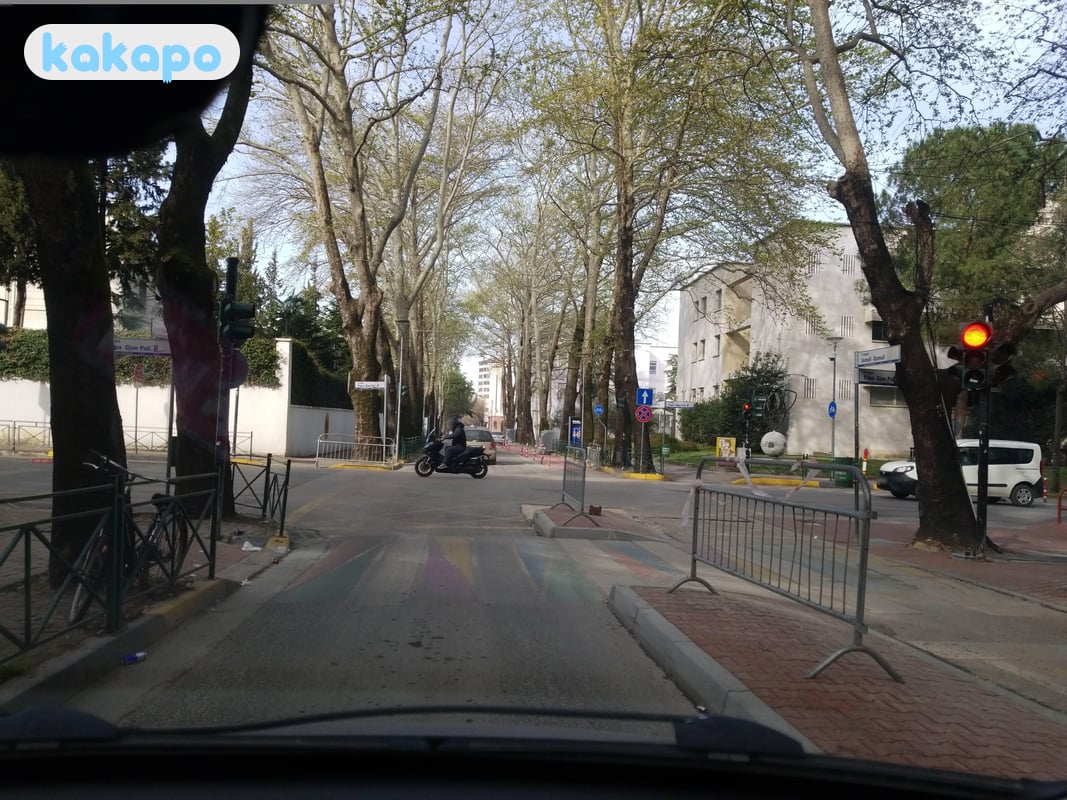
- Tirana traffic: dense, fast, lane-discipline-light. Pedestrian crossings are advisory rather than enforced.
- Crossing: cross with locals, walk steadily, don't dart. Drivers anticipate steady pedestrians.
- Driving as a tourist: not recommended in Tirana. Outside the city it's manageable, with the caveat that mountain roads are narrow and rural drivers can be aggressive.
- Cycling: improving infrastructure, but not yet safe enough for casual tourists in central traffic.
The bunkers and communist history
- Albania's communist legacy: dictator Enver Hoxha ruled 1944-85 — paranoid, isolationist, built ~175,000 concrete bunkers across the country.
- Bunk'Art 1: huge underground bunker complex 30 min outside Tirana, now a museum. Excellent and chilling.
- Bunk'Art 2: smaller bunker in the city centre, focused on internal-security history.
- House of Leaves: secret-police museum. Small but excellent.
- The Pyramid of Tirana: former Hoxha museum (1988), reopened 2023 as a culture/youth space after restoration. Climbable for the view.
- Tour guides who lived through communism: many; their personal accounts add depth.
Areas — Skanderbeg, Blloku, the centre
Recommended for visitors: Skanderbeg Square (the renovated central plaza), Blloku (the once-restricted Communist Party district, now the city's bar/café/restaurant heart), Pazari i Ri (the new bazaar), Grand Park (Liqeni Artificial — the artificial lake park).
Stay aware: around the central bus station at night. Outer industrial districts: residential, no tourist relevance.
There are no specific "no-go" zones for tourists in Tirana proper.
Scams and minor risks
- Pickpocketing: low-level, present at busy markets and the bus station. Front pocket only.
- Counterfeit currency: rare but check change from non-bank exchanges.
- "Help me change money" scam: the person needs help, you swap notes, you get a counterfeit. Just decline.
- Drink-spiking in nightlife: rare but possible. Watch your drink.
- Albanian organised crime: a real international reputation, essentially zero tourist impact. Don't worry about it; don't joke about it.
Day trips — Krujë, Berat, the Riviera
- Krujë: 30 min north. Skanderbeg's medieval citadel + bazaar. Easy half-day.
- Berat: 2h south. UNESCO Ottoman town, "city of a thousand windows". Requires overnight ideally.
- Albanian Riviera (Saranda, Ksamil, Himara): 5-6h south. Spectacular Ionian coast. Long drive — fly to Tirana, drive to Berat, then Riviera, then back.
- Theth and Valbonë: 5h north. Hiking in the Albanian Alps. Reputable guides essential.
- Driving conditions: motorways are good (A1 to Kosovo); rural roads variable. Watch for unsigned hazards.
Money and the cost story
- Currency: Albanian lek (ALL). $1 ≈ ALL 95.
- Euros: accepted in tourist hotels and many restaurants. ATMs dispense lek.
- Cards: widely accepted in Tirana; rural areas cash-only.
- Tipping: 5-10%.
- Cost: cheap. Dinner ALL 1,000-2,500 (€10-25).
- Tap water: technically safe in Tirana but locals drink bottled.
Areas — Skënderbej, Blloku, the wider Albanian context
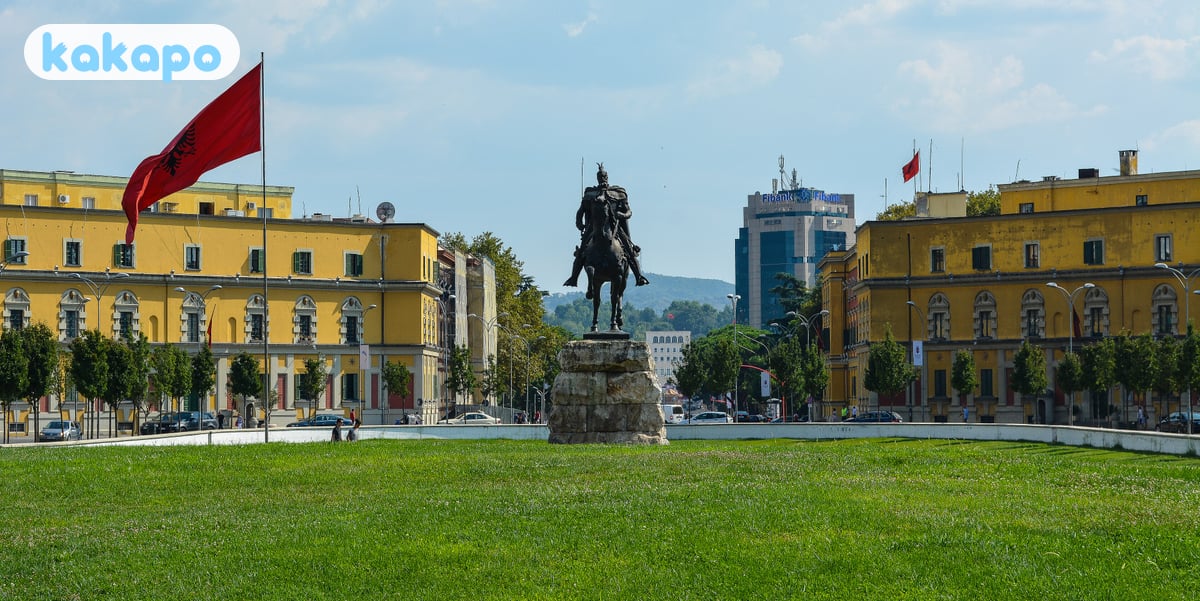
- Sheshi Skënderbej (Skanderbeg Square) — the renovated 2017 pedestrianised central plaza with the Skanderbeg equestrian statue, the National History Museum, the Et'hem Bey Mosque, the Clock Tower, and the Palace of Culture. Heavy police visibility, safe at any hour. The renovation turned it into one of Europe's largest pedestrian plazas; family-popular evening.
- Blloku — the once-restricted Communist Party-elite district immediately south of Skanderbeg Square (Hoxha's villa is still there). Now the city's bar / café / restaurant heart with the densest dining cluster. Walkable, well-policed, the standard expat-and-young-Albanian evening scene. Comfortable solo for women.
- Pyramid of Tirana (renovated 2023) — the 1988 former Hoxha museum reopened 2023 as a culture / youth / IT space after MVRDV-led restoration. Climbable up the new external stairs to the top platform for the city view. Free to enter the inside; €5 or so for some events.
- Bunk'Art 1 — huge 5-storey underground bunker complex 30 min outside Tirana (5,200 sq m, 106 rooms), now a museum on communist-era persecution and Albanian history. Excellent and chilling; allow 2-3 hours. ALL 500 entry.
- Bunk'Art 2 — smaller bunker in the centre at Skanderbeg Square, focused on internal-security / Sigurimi (secret police) history. ALL 500. Allow 90 min.
- House of Leaves (Sigurimi museum) — former secret-police HQ, intimate museum on surveillance and the dictatorship's apparatus. Small but excellent. ALL 700.
- Mt Dajti cable car (Dajti Ekspres) — the 4.2 km cable car from the eastern edge of Tirana up to Dajti Mountain (1,613 m). ALL 1,000 round-trip, 15-min ride. Restaurants at the top with the city view; hiking trails through the National Park. Half-day escape from the heat.
- Grand Park (Liqeni Artificial) — the artificial-lake park immediately south of Blloku. Joggers, paddleboats, weekend families. The Mother Teresa Cathedral (Catholic) and the Resurrection of Christ Orthodox Cathedral are nearby. Safe daytime + evening.
- Pazari i Ri — the gentrified "new bazaar" area east of Skanderbeg Square. Local-priced restaurants, traditional Albanian dishes (tavë kosi, byrek, qofte), the morning produce market. The least touristy place to eat in the centre.
- Bus to Berat + Gjirokastër + the Riviera — Tirana's main interurban hub is the Regional Bus Station (Stacioni i Autobusave) on the southern ring road. Berat (UNESCO Ottoman "city of a thousand windows") 2.5h south, ALL 500-700. Gjirokastër (UNESCO, hilltop Ottoman) 4h. Saranda (Albanian Riviera gateway, Ksamil, Butrint UNESCO ancient site) 5-6h. Driving the SH8 coast road south of Vlora is spectacular.
- Rinas Airport (TIA) — Mother Teresa International, 17 km north-west. Rinas Express bus to centre ALL 400 (~30 min, every hour 06:00-23:00). Metered taxi ALL 2,000-2,500; Bolt ALL 1,200-1,800.
If it's your first time visiting
- Best arrival: Rinas / Mother Teresa International Airport (TIA), 17 km north-west. Direct flights from most European capitals on Wizz, Ryanair, LOT, Lufthansa, Turkish, Air Albania. Rinas Express bus ALL 400 (€4) to centre 30 min every hour 06:00-23:00; Bolt ALL 1,200-1,800; metered taxi ALL 2,000-2,500. Ignore the "no meter, fixed price" pitchmen at arrivals — use Bolt or the official rank.
- Best neighbourhood for your first night: Blloku (Maritim Plaza, Mak Albania, Boutique Sky, Capital Tirana Hotel) for dining + nightlife walkability; near Skanderbeg Square (Plaza Tirana, Rogner) for monument-walking; Pazari i Ri side for local-priced restaurants and the morning market. Avoid the cheap budget options around the central bus station after dark.
- Day 1, jet-lag friendly: 10:00 Skanderbeg Square + the National History Museum (ALL 700, allow 2 hours for the "Albania since communism" floor); 13:00 lunch tavë kosi at Mullixhiu or Era (ALL 800-1,400 / €7-13); 15:00 Bunk'Art 2 + House of Leaves (combined 3 hours); 18:30 drinks at Komiteti Kafe Muzeum (a Hoxha-era nostalgia bar in Blloku) or Radio Bar; 21:00 dinner in Blloku at Mullixhiu or Padam Boutique.
- Real prices in 2026: Rinas Express bus ALL 400 (€4); Bolt within Tirana ALL 250-600 (€2.50-6); coffee in Blloku ALL 150-250 (€1.50-2.50); local beer (Tirana, Korça) ALL 200-350 at a bar; mid-range dinner ALL 1,500-3,500/person (€15-35); Bunk'Art 1 ALL 500, Bunk'Art 2 ALL 500, House of Leaves ALL 700, Pyramid free; Dajti cable car ALL 1,000 round trip; Berat bus ALL 500-700; tap water is technically safe but locals drink bottled (ALL 50-80 for 1.5L).
- Currency: Albanian lek (ALL). $1 ≈ ALL 95, €1 ≈ ALL 100. Euros accepted at many tourist hotels + restaurants but at unfavourable rates — pay in ALL. ATMs at Raiffeisen, Credins, BKT, ProCredit for fair rates; avoid the standalone exchange booths around Skanderbeg. Cards work in central Tirana; rural Albania is cash-only.
- Tipping: 5-10% at restaurants if service was good; round up Bolt fares.
- Common rookie mistakes: accepting "no meter, fixed price" taxi rides at the airport when Bolt is cheaper and metered (real rate to centre €25; freelance taxi quotes €30-40); ignoring the chaotic traffic and trying to cross streets dart-style (cross with locals, steady pace); driving in central Tirana without local experience (don't); falling for the "help me change money" street scam (decline); booking a Saranda / Riviera trip as a single day-trip from Tirana (it's 5-6h each way — overnight in Berat or Vlora instead); not booking Bunk'Art 1 + 2 in the same day (the bunker fatigue is real, space them across the visit); confusing Albania's organised-crime international reputation with day-tourist risk (essentially zero overlap).
- Bring: a Vodafone AL / ONE Albania prepaid SIM at the airport (€10-15 with 8GB), comfortable walking shoes for the chaotic street-crossings, layered clothing (Tirana summer hits 35°C+, winter 0-10°C), a contactless card, and travel insurance with road-trip cover if you plan to drive south.
- Bus to the Riviera: from the Regional Bus Station head to Saranda (5-6h, ALL 1,500-2,000); Ksamil + Butrint are 30 min further south. The coastal SH8 between Vlora and Saranda is spectacular but slow.
Practical info — emergency numbers
- European emergency: 112.
- Police: 129.
- Ambulance: 127.
- American Hospital Tirana: +355 4 235 7535.
- Hygeia Hospital Tirana: +355 4 239 0000.
Bring: a contactless card, an unlocked phone (Vodafone AL, ONE Albania prepaid SIMs at the airport), comfortable walking shoes, and travel insurance. Use Bolt for taxis.
Frequently asked questions
Is Tirana safe to visit in 2026?
Yes. Tirana is one of Europe's safer underrated capitals — crime against tourists is rare and Albanian hospitality is famously sincere. Albania sits at US State Department Level 1 and UK FCDO has no specific advisory. The realistic concerns are the genuinely chaotic post-1991 traffic and lane-discipline-light driving culture, the taxi negotiation system (no metered traditional taxis — use Bolt), winter air quality in the valley, and road conditions on day-trip routes to Berat, Krujë, and the Albanian Riviera. The Albanian organised-crime international reputation has essentially zero tourist impact.
Is Tirana safe at night?
Yes. Blloku — the once-restricted Communist Party district that is now the city's bar/café/restaurant heart — is alive late and well-policed. Skanderbeg Square is renovated and patrolled. Solo walking from a Blloku dinner back to a central hotel is routine; Rruga Murat Toptani and the Pazari i Ri area stay busy. The area around the central bus station and outer industrial districts thin out and are best avoided after dark. Drink-spiking in nightlife is rare but possible — standard awareness in big clubs. Bolt operates city-wide for late-night rides.
Is Tirana safe for solo female travellers?
Yes. Tirana is one of the more comfortable Balkan capitals for solo women — low harassment, friendly atmosphere, and the central walking circuit (Skanderbeg Square, Blloku, Grand Park) is policed and busy. Solo dining in Blloku cafés and Rainbow-Street equivalents works fine. Use Bolt rather than negotiating with street taxis, particularly late. Modest dress isn't required culturally but is sensible at the Et'hem Bey Mosque (cover hair, knees, shoulders — abayas usually loaned). Standard nightlife drink-watching applies.
Can you drink tap water in Tirana?
Technically yes — Tirana tap water is treated to drinking standards — but in practice almost all locals drink filtered or bottled because of older Soviet-era plumbing in many buildings and irregular pressure. Bottled water is cheap (ALL 50-80 for 1.5L) and ubiquitous. On day trips to Krujë, Berat, and the Albanian Riviera, stick to bottled. Carry a refillable bottle for sightseeing — summer hits 35°C+.
What's the biggest scam to avoid in Tirana?
Two recurring ones. First, unmetered taxi flat-rate quotes — particularly at Rinas (TIA) airport where 'no meter, fixed price' rides are pitched at €30-40 against a real €25 fare. Use Bolt (or Yandex Go / Uppi) for transparent pricing. Second, the 'help me change money' street scam where the person needs help, you swap notes, and you receive counterfeit — just decline. Lesser patterns: counterfeit-currency change from non-bank exchanges (use Raiffeisen, Credins, BKT ATMs), and 'free' boat-tour leaflets handed out near Skanderbeg that lead to high-pressure pitches. Cards work in central Tirana but rural day-trip stops are cash-only (ALL).
What should I know about the bunker museums and communist-era sites?
Albania's dictator Enver Hoxha (1944-85) was paranoid-isolationist and built ~175,000 concrete bunkers across the country. Three Tirana sites are essential and entirely safe to visit: Bunk'Art 1 (huge underground complex 30 min outside the city — excellent and chilling, ALL 500 entry), Bunk'Art 2 (smaller bunker in the centre focused on internal-security history, ALL 500), and House of Leaves (former secret-police HQ, small but excellent, ALL 700). The Pyramid of Tirana (former 1988 Hoxha museum) reopened 2023 as a youth/culture space and is climbable for the view. Many local guides lived through communism — their personal accounts add depth that no museum can match.
Sources
Run a business in Tirana?
Show visitors your Tirana business is a safe choice. The free Verified by Kakapo badge puts Tirana's live safety score on your website, links back to your verified page, and updates itself. No cost.
Get the free badge →